

We present a concise roundup of the best machines for Singapore homes. Our list focuses on real-world stain removal, drying times and ease of ownership. We test performance on rugs, upholstery and car interiors to keep recommendations practical for compact flats.
We set clear expectations on what these units can and cannot do versus a standard dry vacuum. That includes wet spills, set-in dirt and odours trapped in fibres. We also cover formats such as upright units, portable spot devices and wet/dry types so readers can shortlist suitable models quickly.
Our picks are chosen for suction, tank design, accessories, manoeuvrability, maintenance workload and overall value. We write for Singapore conditions — humid drying, limited storage and frequent multi-surface cleaning. Use our guide to compare products and choose confidently before checkout.
Why we’re reviewing water carpet cleaner vacuums in Singapore right now
In humid Singapore conditions, stains that involve liquids or oils quickly outmatch simple dry suction. We review these combined machines to show when a single pass with a dry vacuum cleaner won’t cut it.
When a dry vacuum cleaner isn’t enough
Dry-only units remove loose dust and light grit, but they struggle with residue that needs a solution to dissolve and lift. Oils, sugary spills and tracked-in grime bond to fibres and resist suction alone.
Common Singapore use-cases and practical goals
- Bubble tea or kids’ snacks ground into rugs — quick spot response beats prolonged scrubbing.
- HDB flats and condos demand compact machines with fast drying and easy storage.
- Cars: sand, debris and pet hair often need hoses and targeted tools for seats and mats.
- Our goal: cleaner carpets and upholstery with fewer passes and less lingering damp in humid weather.
How water carpet cleaners work: water, cleaning solution, agitation and suction
We explain how modern extractors dispense a measured mix of liquid and cleaning solution, scrub fibres and then remove the soiled fluid. This three-step cycle is simple to follow and explains why results vary between models.
Two-tank designs and hygiene
Two separate tanks keep clean fluid apart from the dirty return. That prevents re-depositing grime and reduces odour build-up in internal hoses.
Agitation and extraction: why brushes matter
Rotating brushes or vigorous agitation lift embedded debris that dry tools miss. Strong suction then pulls loosened particles and liquid into the dirty tank for disposal.
Steam versus “steam” claims
Most makers heat the tank and call it steam, but true steam output is rare. In our testing, only a few units—such as the Bissell Revolution HydroSteam—produce real steam that can help with stubborn stains and faster drying.
| Component | Role | What to check |
|---|---|---|
| Clean tank | Stores fresh mix of liquid + solution | Easy-fill, clear markings |
| Agitator | Loosens embedded dirt | Replaceable brush heads, gentle on fibres |
| Dirty tank | Collects extracted grime and moisture | Large capacity, easy-empty design |
| Filter & pathways | Controls residue and odour | Removable, washable filters; rinse-friendly hoses |
How we assess performance and value in a product roundup
We test each model in real homes to see how it performs on fresh spills and stubborn, set-in marks. Our approach blends timed lab checks with hands-on cleaning in HDB flats and cars to keep findings practical for Singapore living.
Stain removal on fresh versus set-in messes
Fresh spills show a machine’s immediate extraction and chemical mixing. These are useful for quick wins.
Set-in marks need sustained agitation and greater power. We score machines higher when they lift older discolouration without repeated passes.
Drying time, residue and ease of maintenance
Drying speed matters in our humid climate. We time how long fibres feel dry and check for soapy residue after backstrokes—some models leave suds occasionally.
Maintenance is practical: we look at how easy it is to rinse tanks, clear a nozzle or untangle a hose so odours don’t build in storage.
Manoeuvrability, reach and storage footprint
Weight and turning radius affect use in tight flats and stairways. Cord length and hose reach matter: some units offer ~25 ft cords; smaller portables keep hoses near 4 ft.
We also measure storage space and onboard organisation to prevent lost attachments in compact homes.
Accessories we prioritise
We favour useful attachments: pet tools for embedded pet hair, tough-stain nozzles for targeted scrubbing, and secure onboard storage. Good accessories reduce extra work and raise overall value.
For independent test methodology and more appliance comparisons, see our reference to published tests.
Choosing the right format for your home: wet/dry drum, cordless stick, upright carpet cleaner or portable spot cleaner
Different formats excel at distinct tasks, so match the model to how you clean daily and during deep jobs.
Wet and dry drum machines
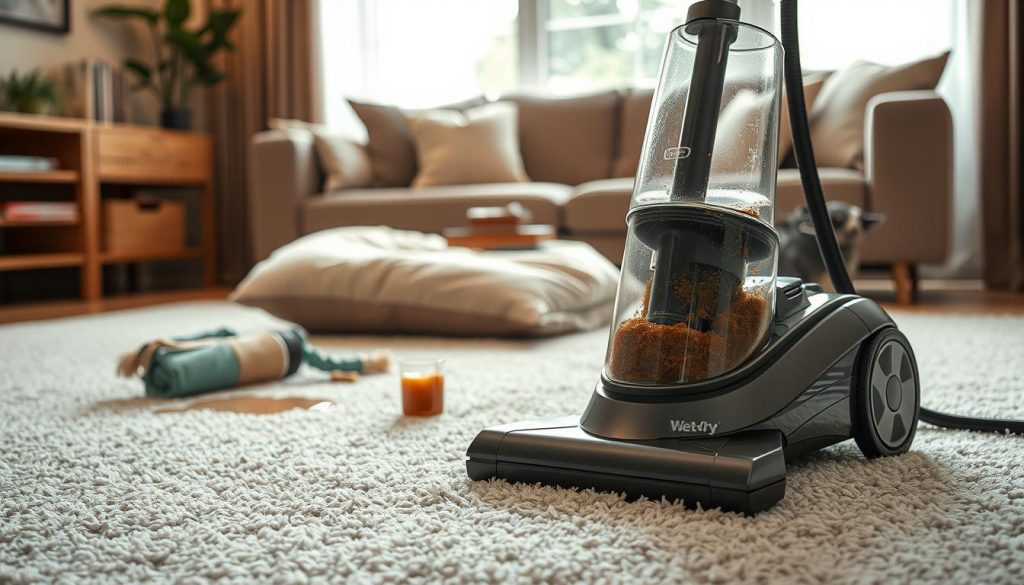
Best for heavy-duty pickup and renovation dust. Drum wet dry units cope with large amounts of water, debris and dry dust without frequent emptying.
Why choose one: big tanks and robust hoses suit spill-prone households and outdoor-to-indoor mess.
Cordless stick wet/dry models
These are convenience-first. A cordless stick combines mop-and-suction in one pass for everyday hard-floor cleaning and quick touch-ups.
Full-size carpet machines
Heavier but more capable for deep carpet refreshes and whole-room work. Expect stronger agitation and repeat passes to lift embedded grime.
Portable spot models
Small, handheld units win for sofas, stairs and car interiors where hose reach and tools matter more than tank capacity.
| Format | Typical use | Capacity / reach | Key advantage |
|---|---|---|---|
| Wet dry drum | Spills, renovations, outdoor debris | Large tank, long hose | High capacity, multi-surface pickup |
| Cordless stick wet/dry | Daily hard-floor cleaning | Small tank, cordless reach | Fast setup, vacuum-and-mop in one pass |
| Full-size carpet machine | Whole-room deep cleaning | Medium tank, wide nozzle | Strong agitation for embedded grime |
| Portable spot cleaner | Sofas, stairs, cars | Small tank, handheld tools | Quick response, easy storage |
Water carpet cleaner vacuum models we recommend for Singapore homes
Our recommended line-up pairs each model to a typical Singapore scenario, from pet care to deep restorations. Below we list machines that balance performance, drying and storage for compact flats.
Bissell Revolution HydroSteam
Why pick it: produces real steam and Speed Dry mode leaves fibres touch-dry in under 30 minutes. It offers wide reach with a 25 ft cord and 8 ft hose, plus a pet-hair upholstery tool and a tough-stain attachment. At 31 lbs it is sturdy but manageable.
Hoover SmartWash Pet
Why pick it: automatic solution mixing; forward clean and backward dry operation. It includes an antimicrobial nub tool and pre-treater wand. We like the 22 ft cord and 8 ft hose for cars and stairs.
Bissell Little Green & Big Green
Little Green: lightweight, 9.65 lbs, hydro-rinse hose flush and neat storage — ideal for sofas and cars.
Big Green: rental-style 1.75-gallon tank and 9 ft hose for full-room jobs; heavy but high capacity for deep restorations.
- CrossWave: best for low-pile rugs and mixed-floor touch-ups — not a deep restorer.
- Electrolux Z823, EFW81713, EFW71711: range from budget wet dry options to premium cordless multi-function models with antibacterial tanks and self-cleaning features.
Kärcher wet and dry vacuum cleaners: where they shine beyond carpets
When renovations, garage tasks or balcony debris need clearing, Kärcher systems step up where lighter machines falter. We like their strong suction and efficient motor design for heavy-duty chores around a Singapore home.
Diverse applications
Practical uses: garage floors, workshop benches, garden patios, post-renovation rubble and cars between seats. Their large container capacity handles damp rubble and puddles quickly.
Accessories and dust control
Coordinated accessories include dedicated tools for coarse debris and fine dust. Using a suction tool during sawing or sanding reduces airborne dust and keeps the workspace cleaner.
Convenience and maintenance
Compact design stores hose and accessories on the unit. The innovative filter allows no-contact dirt handling, so emptying wet or fine dirt is less messy.
- Blower function for clearing leaves and chips.
- Special nozzle available for soft floors and rugs.
- Robust build and high energy efficiency for long life and repeated heavy use.
Electrolux wet and dry vacuum cleaners in Singapore: what we consider before buying
For tight flats and busy households we weigh mobility and tank capacity first when comparing Electrolux formats.
Drum versus stick: matching tank size, mobility and tools to your space
We start by checking tanks and capacity. Larger drums mean fewer refills and better handling of heavy debris. They suit bigger jobs and periodic deep cleans.
By contrast, a cordless stick is lighter and easier to store. Sticks combine vacuuming and mopping for quick upkeep on hard floors. The trade-off is smaller tanks and fewer heavy-duty attachments.
Choose drum models when power, stability and robust tools matter more than sleek design. Pick a cordless stick if daily convenience and minimal storage footprint are priorities in your home.
Typical pricing in Singapore and how promos can affect value
Electrolux models span a wide price range depending on spec and promos. Official offers can include free delivery, 0% instalments and discounts up to 47%.
We advise comparing inclusions, warranty length and bundled accessories. A tempting discount means less if key nozzles or filters are not included.
Finally, factor in long-term costs: replacement filters, solution refills and spare parts. These affect total ownership more than headline price alone.
What to look for before you checkout: suction power, tanks, filters and nozzles
Practical performance depends on more than brand names; inspect core parts first. We focus on the specs that change how a machine cleans in a real Singapore flat.
Suction and pick-up across mess types
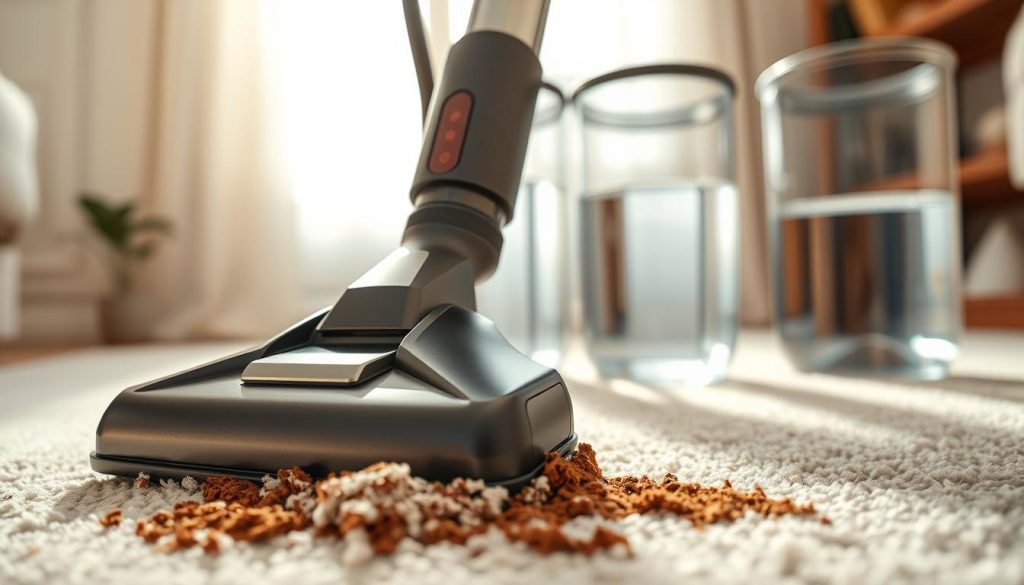
Check measured suction for lift on wet spills, dry dust and everyday debris. Good suction removes trapped grit and pet hair from upholstery without repeated passes.
Tank capacity and refill cadence
Choose tanks sized for your routine. Smaller tanks suit quick spot work; larger water tanks minimise refills for whole-room jobs. Think about how often you’ll empty the dirty tank during a single clean.
Filtration for fine dust and allergens
We prioritise models with a robust filter or microfilter system. These reduce airborne dust when switching from dry dust pickup to heavier tasks and lower maintenance by preventing clogs.
Nozzles, hoses and attachments that improve reach
A well‑designed nozzle concentrates suction and reduces leftover moisture. Long hose reach and varied attachments make stairs, sofa seams and car seats accessible. Consider onboard storage so accessories stay handy.
“The right nozzle and a long hose often matter more than extra power.”
Ease of use in real homes: storage, noise, and cleaning up after cleaning
How a unit fits into daily life — not just how it cleans — decides its real value for homes. We look beyond specs to see whether a model is easy to store, quiet enough for apartments, and simple to maintain after use.
Compact design and onboard accessory storage for small Singapore flats
Compact design matters in tight space. Units that store nozzles and cords on the chassis stay ready and reduce clutter.
We favour models with neat onboard accessories bays. Kärcher’s built‑in hose and tool clips are a good example for small flats.
Self-cleaning and hose-rinse functions to prevent odours during storage
Practical rinsing features remove trapped dirt and standing liquid that cause smells. The Bissell Little Green’s hydro‑rinse and the CrossWave self‑clean cycle cut the second job of ownership.
Simple post‑clean routine: empty tanks, rinse hoses, then let parts dry. This preserves suction seals and extends the life of the unit.
- Onboard storage reduces setup time and makes the unit more likely to be used.
- Low noise ratings improve apartment liveability and neighbour relations.
- Self‑clean cycles lower manual effort and keep odours at bay.
“A slightly less powerful model that’s easy to store and maintain often delivers better results overall.”
Carpets, rugs and upholstery: matching the right tool to the right surface
Different surfaces need different mechanics. We recommend matching machines and attachments to the job so results are efficient and fabrics are protected.
Deep-extraction versus light freshening
For wall-to-wall carpet and set-in stains you need strong agitation and extraction. Deep extraction lifts ground-in debris and dinginess that a light unit cannot remove.
For low-pile rugs, a light freshening pass is often enough. The Bissell CrossWave can refresh low-pile rugs quickly, but it does not replace a rotating-brush, deep-extraction model.
Upholstery, stairs and car seats: hose length and handheld tools
Reach matters. Good Housekeeping notes hose length is essential for stairs and for accessing tight car-seat gaps.
Practical runs: the Bissell Big Green includes a 9-ft hose and handheld stain tool, Hoover SmartWash has an 8-ft hose, and the Little Green offers a 4-ft hose for portability. Choose longer hoses for stairs and cars to avoid constant repositioning.
| Surface | Best approach | Recommended hose length |
|---|---|---|
| Wall-to-wall carpet | Deep extraction with rotating brush | Not critical; wide nozzle preferred |
| Low-pile rug | Light freshen pass (CrossWave-style) | Short to medium |
| Upholstery / stairs | Handheld tool + strong extraction | 8–9 ft |
| Car seats | Narrow nozzle, crevice tool for pet hair & debris | 8–9 ft |
Controlled spray plus strong extraction beats soaking. The right attachments cut cleaning time and reduce residue on delicate fabrics.
Cleaning solutions, maintenance and warranty considerations
A clear maintenance plan and correct detergent choice prevent odour, residue and avoid invalidating guarantees. We stress that the wrong cleaning solution can void a manufacturer’s warranty, so follow the manual and approved formulas.
Using approved liquids to protect your warranty
Why it matters: some makers list specific cleaning solution types in the warranty terms. Using unapproved mixes can cause seals and pumps to fail and may not be covered.
Routine upkeep that keeps performance high
Do a final extraction pass after heavy treatments to reduce residue. Dilute solutions as the manual directs to avoid soapy build‑up.
Simple checklist:
- Rinse tanks after each use to stop smells.
- Clear nozzles and crevice tools of hair and debris.
- Wash or replace filters regularly so airflow stays strong.
“Leftover solution and dirty water traces are the most common cause of musty storage smells.”
| Task | How often | Benefit |
|---|---|---|
| Rinse tanks | After every use | Stops odour and bacterial growth |
| Clear nozzle or nozzles | Weekly or after pet/hair jobs | Maintains spray pattern and suction |
| Freshen or replace filter | Monthly or as manual advises | Preserves airflow and extends motor life |
| Check warranty & manual | Before first heavy clean | Avoids voiding warranty; matches rug care guidance |
Final note: diligent upkeep improves drying times, reduces long‑term costs and keeps your home care routine simpler. A well‑looked‑after unit cleans better and will serve your flat or car for longer.
Conclusion
To finish, we give a practical shortcut to match each machine to the messes you face at home.
Pick an upright extractor for whole-room work, a portable spot model for sofas, stairs and cars, or a wet dry unit for mixed spills and renovation dust. Dry vacuum cleaners still excel at daily dust and quick touch-ups, but they won’t lift set-in stains or do true extraction.
Focus on key buying criteria: stain performance, extraction and drying, tank size, filtration, attachments and how easy the unit is to clean and store. Match features to your budget and routine use, and choose from our recommended models based on those needs.
Buy wisely: the right machine saves time, cuts repeat cleaning and keeps upholstery and carpet looking better for longer.

