

We know fabric seating is common in Singapore homes: cosy, stylish and often more affordable than leather.
Daily use, pets and snacks mean spills and grime build up across large surfaces. Our guide explains what true sofa deep cleaning means for flats and condominiums, and how it goes beyond quick wipe‑downs to lift trapped residue from fibres.
We set clear expectations: a fresher smell, improved look and better hygiene, though results vary with fabric type, stain age and past care.
In simple steps we will cover: prep, dry vacuuming, extraction clean, spot treatment, optional steam sanitising and thorough drying. We note safety checks: read the care label, patch‑test, avoid overwetting and prioritise full drying to prevent mould.
We also outline tools you can use at home and when to consider professional help. For appliance tips see our carpet cleaner guide.
Why deep cleaning matters for sofas in Singapore’s humid climate
Warm, sticky air makes upholstery hold on to odours and grime in ways a drier climate does not. We need to treat fabric more carefully here because moisture slows drying and lets residue stay behind after spills.
How humidity, body oils and everyday use change the surface
Daily contact—skin, hair and perspiration—leaves a thin film that attracts dirt. Over time colours dull and armrests, headrests and seat fronts show the most wear.
Dust mites, bacteria and allergens hiding in upholstery
Hidden soil looks like fine dust in seams, crumbs beneath cushions and grime embedded below the pile. This build-up feeds dust mites and supports bacteria growth, which can worsen allergies and smells.
Why fabric traps moisture and dust more than other materials
Fabric upholstery soaks up humidity and dust faster than leather or PVC. That is why proper drying and periodic maintenance extend lifespan and keep the living area healthier.
- Slower drying increases chance of musty odour and mould.
- Embedded dirt needs extraction, not just surface wiping.
- Regular care reduces fibre wear and keeps colours brighter.
Before we start: check your sofa material and prep the area
The first step is to check the upholstery type; this determines whether we use moisture, steam or a dry approach. We identify fabric, velvet, leather or PVC so our method matches the material.

Identify material and choose method
Fabric and velvet often trap water and dust and usually need extraction or gentle steam. Leather needs minimal water and a conditioner afterwards. PVC cleans with mild detergent and a soft wipe to keep shine.
Patch test routine
Pick an inconspicuous spot. Apply diluted cleaner or solution and blot dry. Wait for 15–30 minutes and check for colour transfer, stiffening or watermarking.
Prep the area and removal
Clear cushions, throws and loose items. Remove crumbs and pet hair with a brush or quick vacuum. Protect floors and ensure good ventilation for proper drying.
| Material | Preferred approach | Patch test check |
|---|---|---|
| Fabric / velvet | Extraction or light steam | No colour fade, no stiffening |
| Leather | Low moisture, conditioner | No darkening, no cracking |
| PVC | Mild detergent, soft wipe | No loss of gloss, no residue |
Tip: Have clean cloths, a soft brush and separate vessels for water and solution. Stop if dye bleeds, fabric feels stiff, a strong chemical smell appears or the material soaks up too much water. Older stains may only lighten, not vanish, but correct prep prevents setting.
Dry vacuuming for a cleaner base before any deep clean
Start by removing loose grit and crumbs so wet methods later do not smudge fibres. This first step keeps the upholstery surface ready for extraction and reduces the chance of muddy residue.
Using an upholstery nozzle to reach seams and creases
We use a targeted nozzle to work into seams, piping and creases. Focus on the backrest‑to‑seat junction and piping where crumbs and hair gather.
Why strong filtration matters in small flats
Good filtration stops dusty exhaust air from recirculating. A water‑filter machine such as the Kärcher DS6 delivers about 99.5% dust‑free exhaust, which helps indoor air quality.
Our practical technique and upkeep rhythm
- Work top to bottom with slow, overlapping passes.
- Repeat passes on armrests, headrests and visibly darker areas.
- Lift removable cushions and vacuum both sides plus the base deck underneath.
- Keep a simple routine: weekly or fortnightly vacuuming depending on pets and use.
Next step: With loose dust removed, spray extraction can target embedded dirt and stains rather than loose debris.
Sofa deep cleaning with spray extraction for embedded dirt and stains
Spray extraction works by sending a fine wash into the fabric and recovering the dislodged soil with strong suction. This method flushes suspended dirt and lifts oils that sit below the surface, not just on top.
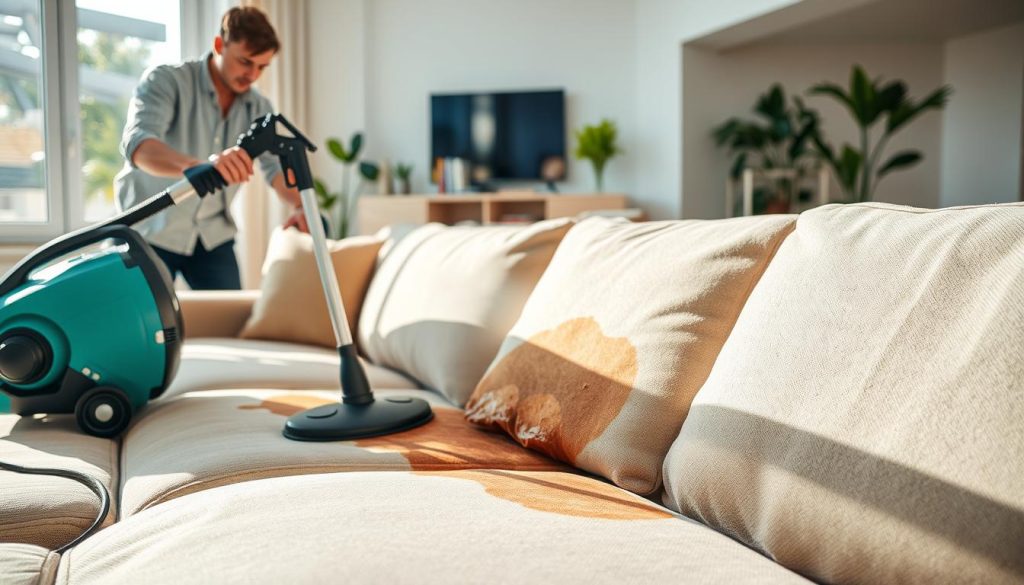
Mixing and dwell time
We mix 100–200 ml of recommended cleaner into warm water (around 50°C), checking the care label first. Avoid over‑concentrating the solution to prevent sticky residue.
For heavy stains, apply evenly and let the solution dwell for at least five minutes before extracting. Repeat if the stain remains visible.
Extraction technique, rinse and drying
- Make slow, overlapping passes with the nozzle sealed to the fabric to reduce leftover water.
- If the upholstery feels tacky or foam persists, run a clean‑water rinse pass to lower build‑up.
- Drying in Singapore needs airflow: use fans, open windows and avoid stacking damp cushions to prevent mould.
| Step | Action | Typical time |
|---|---|---|
| Mix | 100–200 ml cleaner + warm water | 2–5 minutes |
| Dwell | Apply to stains and wait | 5–10 minutes |
| Extract | Slow passes, overlap areas | 10–30 minutes (room size dependent) |
| Dry & finish | Airflow, then vacuum once dry | Several hours to overnight |
Final step: After full drying we vacuum again to lift the pile, restore texture and remove any remaining particles.
Spot cleaning and stain removal without damaging a fabric sofa
Quick action on fresh marks keeps them from sinking into the weave and becoming permanent. We must act calmly and follow a simple routine to lower risk of discolouration and long‑term odour.
Blotting vs rubbing: For immediate care, blot firmly with a clean, dry cloth. Do not rub; rubbing spreads the mark and forces the stain deeper into fibres.
Stopping spills from spreading
Work from the outer edge of the stain towards the centre. This prevents migration and keeps the visible area smaller.
Targeting common kitchen and drink marks
Patch‑test any cleaner first on an unseen area. Apply the chosen stain removal solution to a cloth, not directly to the fabric, and dab gently. Change to a clean section of cloth as the mark lifts.
When to follow up with extraction
If a ring remains, if sugars or oils were involved, or if an unpleasant odour lingers, we recommend a spray extraction pass. That removes leftover cleaner and trapped dirt so the set fabric stays fresh.
Older stains: You may reduce visibility and smell, but long‑set marks sometimes need repeated cycles or professional products suited to the material.
Quick reminder: For fuller stain‑removal advice and recommended products, consult our guide on professional upholstery care via stain‑removal advice. Acting fast protects the results of periodic efforts to clean fabric sofa and keeps the living room healthy.
Steam cleaning for upholstery sanitising and dust mite control
Using a steam device brings sanitising heat to upholstery, which helps reduce allergens in humid homes. Hot vapour can eliminate up to 99% of germs, bacteria and many allergenic particles without added chemicals. This makes steam a useful option when families seek a chemical‑light refresh between full services.
What steam does well
Steam applies high temperature vapour that sanitises surfaces and loosens light grime. It also kills or displaces dust mites and other tiny pests, improving indoor air quality.
Choosing steam or extraction
For many synthetic fibres we recommend a steam approach. It sanitises without saturating and lowers shrinkage risk.
For natural fibres, opt for controlled extraction instead. Extraction removes heavy embedded dirt more reliably and reduces the chance of fabric distortion.
Our simple steam process
Step 1: Vacuum thoroughly to remove loose debris.
Step 2: Run the steam cleaner evenly—keep the head moving and avoid lingering on one spot.
Step 3: Allow full air drying with good ventilation; do not close doors or stack cushions while damp.
Step 4: Vacuum again to lift fibres and remove dislodged particles, including dead mites.
Note: Steam works well as a standalone refresh or after extraction once the fabric is not overly wet. Prioritise airflow and quick drying to protect fabrics and maintain hygiene.
Conclusion
Small, repeatable steps protect your investment and make maintenance manageable.
We recommend a simple routine: identify the material, prep the area, vacuum, treat spots promptly, and use extraction or steam when needed. These actions form a reliable approach to sofa cleaning and regular upkeep.
In Singapore’s humid living spaces, ventilation and drying time matter as much as the wash. Allow good airflow after any wet step to avoid musty smells or mould risk.
For best results use correct dilution, control moisture, make slow extraction passes and wait for full drying. Regular vacuuming and quick spill response keep a fabric sofa looking brighter and reduce wear.
Start with one habit this week—fortnightly vacuuming, a ready spot‑clean kit, or scheduling a quarterly clean—and you will notice lasting improvements in cleanliness and comfort of your sofas.

