

We tested a range of kits and single-step options on real sofas, including an older West Elm couch that had gone dry and patchy. Our aim was simple: find products that deliver visible tone improvement, a softer feel and practical use in Singapore homes.
We set clear expectations: something quick for busy lives, safe on upholstery finishes, and effective in humid climates and air‑conditioned rooms that can still dry surfaces out.
Hands‑on checks covered stain lift, reduction of body‑oil build‑up, and the crusty dryness that older cushions show. We also compared sprays, liquids and wipes and checked cross-surface performance via cross-surface testing.
Note: while many shoppers want one product to do everything, our tests showed two‑step kits often restore much better when a couch is truly thirsty. We followed a simple safety baseline: spot testing, lint‑free cloths and avoiding harsh household detergents.
How we tested leather cleaner conditioner products on leather sofas</h2>
We set up a decade-old West Elm couch as our primary sample, splitting the centre cushion to run two systems side by side. The seat showed dryness, wrinkles and minor stains that mimic everyday wear in Singapore homes.
Our test setup, condition and success criteria
We defined success as grime lifted with no streaks, a more supple feel after treatment, and an even finish rather than patchy shine. We used white microfibre cloths to reveal soil and followed each maker’s directions to control amounts and buffing.
Scoring: ease, effectiveness, scent, value
We scored each item on ease of use, real-world effectiveness, scent profile in a compact flat, and value. This mirrors industry testing so our results align with broader comparisons across couches, boots and car seats.
Formats compared and practical notes
We compared spray (fast, can mist unevenly), pour-on/cloth methods (better control), wipes (convenient), and two-step kits (more time, often superior restore). Sprays sometimes ran at seams if a nozzle was weak.
Quick comparison
| Format | Speed | Control | Best use |
|---|---|---|---|
| Spray | Fast | Moderate | Quick freshen, car seats |
| Pour-on / cloth | Slower | High | Deep restoration, larger cushions |
| Wipes | Very fast | Low | On-the-go touch-ups |
| Two-step kits | Slow | High | Thorough revives |
Note:In our head-to-head we used Lexol on one side and Leather Honey on the other. That hands‑on split test helped isolate formula effects rather than technique.
What a leather cleaner and a conditioner actually do for your leather sofa</h2>
We want to make clear how cleaning and conditioning work together to keep a couch looking and feeling its best.
Cleaning vs conditioning: removing grime and restoring natural oils
Cleaning lifts dirt, sweat, body oils and surface grime so the finish can breathe. The Spruce notes that some products will strip natural oils while they remove buildup.
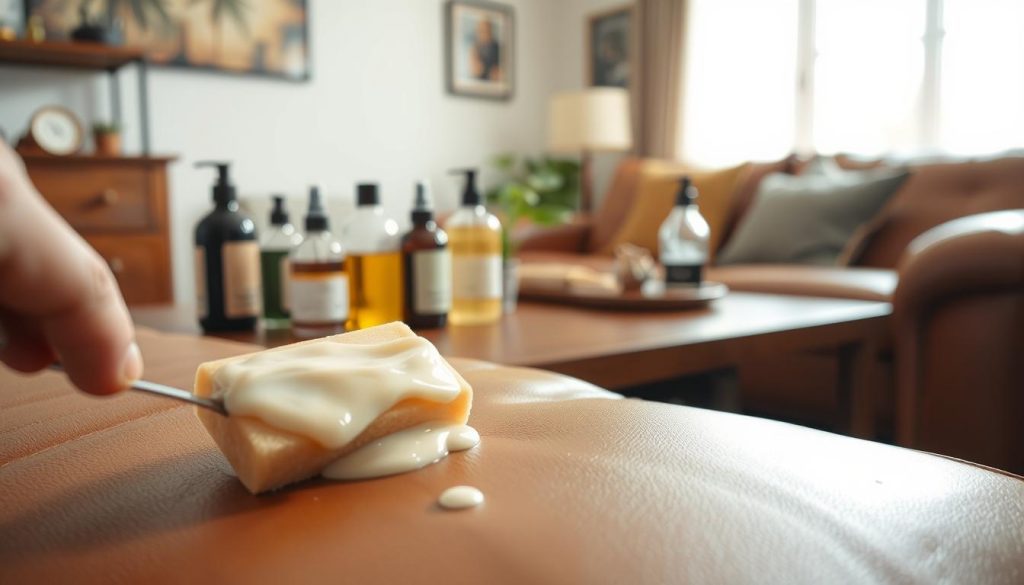
Conditioning replaces those oils to soften and reduce dull patches. Leather Honey likens hide maintenance to skin care and recommends treating items at least every six months; see the Leather Honey guide.
Why conditioning helps prevent cracking, dullness, and early ageing
When material dries it becomes brittle, which leads to cracks, wrinkles and rough patches. Regular conditioning leather treatments slow that process and extend the usable life of your leather furniture.
Practical note: always spot test on an unseen area, especially with older finishes. For a simple how-to on timely maintenance try this easy clean steps.
Leather cleaner and conditioner for sofa: our top picks for Singapore homes</h2>
Here are the practical picks that performed best in bright, humid homes like those in Singapore. We chose items that balance low‑fuss use with protection against sunlight and daily wear.
Best overall kit: Chemical Guys Complete Leather Care Kit
Why it wins: a pH‑balanced spray cleaner that lifts deep grime plus a vitamin E treatment that replenishes oils and adds UV protection. This complete leather care system suits both sofas and car interiors.
Best for couches: Leather Honey Leather Conditioner
Why use it: thick honey texture restores very dry hides. It is odourless and water‑repellent. Note that leather honey can take hours to absorb; apply thin layers and spot test first.
Best one‑step option: Weiman 3‑in‑1
Simple clean, nourish and buff in a single pass. Ideal when seats are lightly soiled and you want a quick routine without many tools.
Best quick clean: Armor All Leather Wipes with Beeswax
Great for spills and weekly touch‑ups. The beeswax adds short‑term protection; store wipes away from heat to prevent drying out.
Best value for car use (when not to use it on upholstery): Tyger Tonneau
Strong on sweat and road grime with UV defence, but the watery formula and uneven nozzle make it a poor choice on fine‑grained furniture. Use it in cars, not on natural‑grain seating.
- Best for family sofas: Chemical Guys or Leather Honey.
- Best for quick refresh: Armor All wipes.
- Best for car interiors: Tyger Tonneau.
Head-to-head: Lexol vs Leather Honey on a dry, older couch</h2>
We ran a direct comparison on a ten‑year‑old West Elm leather couch that showed the kind of wear many Singapore homes see after years of use.
Cleaner step — cloth vs spray
We used white microfibre cloths to judge soil pickup. The pour‑on‑to‑cloth method (Lexol) soaked the rag evenly and required fewer passes to lift grime. The spray‑to‑cloth approach (leather honey) took longer to saturate the cloth and felt patchier mid‑clean, so coverage demanded extra time.
Conditioner step — spreadability and immediate feel
Lexol’s treatment moved across the surface with ease. It buffed in quickly and left a smooth, buttery finish with no obvious scent. The honey product arrived thick and tacky. It stubbornly sat in low areas and tempted over‑application to get even coverage.
Drying time and colour shift after 24 hours
Immediate appearance differed. The honey formulation darkened the hide at first, then mellowed over roughly 24 hours. Lexol produced a more consistent tone much sooner, so colour shift was minimal after a day.
Our verdict
For an even, buttery result with predictable application we preferred Lexol. It gave a softer touch and needed less fuss. The honey product will restore very dry pieces, but expect a tacky feel while it soaks in and a temporary darkening that eases over a few hours.
How to choose the right cleaner conditioner for leather furniture</h2>
Choosing the right treatment starts with matching ingredients to your home’s light, humidity and daily use.
What to look for
Seek nourishing actives: vitamin E helps replenish oils, while beeswax adds a protective, softening layer. A water‑repellent finish pays off in homes where spills or damp items are likely.
What to avoid
Avoid alcohol‑heavy formulas and harsh household detergents. These strip oils and leave the hide dry and prone to cracking. The Spruce notes neutral pH is safer than acidic or alkaline mixes.
pH, UV and finish choices
Pick pH‑balanced products (close to neutral) to reduce drying and discolouration. If seats face strong sun or you drive with bright interiors, choose an option with UV protection to limit fading.
Finish matters: some treatments leave a natural, matte look while others add sheen. Test a small patch to confirm the final layer matches your preference.
- Practical checklist: ingredient list, pH rating, UV claim, bottle/nozzle control, estimated amount per cushion, and smell.
- Brand notes: Chemical Guys adds vitamin E and UV defence; Armor All wipes include beeswax; Leather Honey is water‑repellent but lacks UV protection.
- Tip: always spot test and use measured amounts to avoid over‑application.
How we clean and condition a leather couch without damage</h2>
We follow a safe, repeatable step-by-step method to avoid dark patches, streaks and over‑saturation on older cushions. Our approach balances careful prep with measured application and realistic drying time so results are predictable in humid Singapore flats.
Prep: remove debris with a lint-free cloth and vacuum crevices
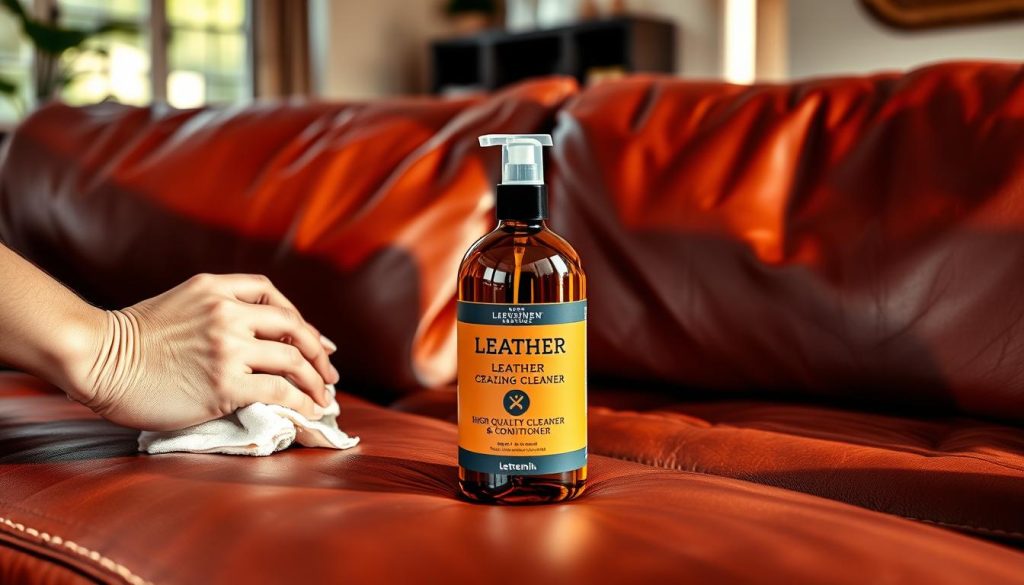
First, wipe loose dust with a lint‑free cloth. Then vacuum seams and crevices to lift grit that can abrade the surface when rubbed.
Spot testing to prevent discolouration surprises
We always spot test on an unseen panel and wait until it is fully dry. A small patch can reveal dramatic colour shifts only visible after hours, so patience here saves repair work later.
Clean, then wait: letting the couch dry fully before conditioning
Apply the chosen cleaner in a controlled step. After cleaning, allow the piece to dry completely — often overnight — before the next step. This prevents trapping moisture under any product layer.
Conditioning technique: thin layers, circular motions, and even coverage
When applying conditioner, use a small amount on a soft cloth. Work in thin layers with circular motions to build even coverage. We focus on thin passes rather than flooding thirsty areas in one go.
Wipe away excess and buffing for a smoother final surface
After the recommended dwell time, wipe away excess with a clean cloth and buff gently. This removes tacky residue and gives a uniform finish.
Drying and cure time: what “leave it overnight” really changes
Short waits may show a darker tone. After 24 hours most colour shifts settle and excess product absorbs or can be removed. We let treated cushions cure to confirm appearance and handleability.
“Small amounts, slow steps and patient drying are the difference between a patchy result and a natural finish.”
Maintenance schedule and long-term leather care for couches</h2>
A realistic upkeep plan keeps a couch looking fresh across months and years in humid Singapore flats.
How often we recommend cleaning and conditioning: every six months
Deep maintenance every six months is our baseline. The Spruce guidance and our tests align: plan a full clean plus conditioning roughly every six months to protect colour and suppleness.
Between deep cleans: quick refresh options and dust removal
Between major sessions, use wipes or a light spray to refresh high‑use areas. HEPA vacuum seams and crevices monthly to remove grit that abrades the surface.
Everyday habits that extend furniture life
Keep couches out of harsh direct sun where possible. Quickly blot spills and avoid placing damp items such as towels or swimwear on the seat; moisture marks can set fast.
Tip: air‑conditioning dries hides over time, so choose a product with UV protection when living rooms get bright sun.
- Product rotation: use wipes for touch‑ups; reserve full products for scheduled care to prevent build‑up.
- Thick treatments: honey‑textured formulas, including Leather Honey, need longer drying time — plan a day when the couch is unused.
“Small, regular steps are the best defence against rapid ageing.”
Conclusion</h2>
, We found the biggest difference comes from matching time to need: two-step systems often revive very dry hides best, while sprays and wipes suit quick upkeep.
Our top pick remains the Chemical Guys complete leather care kit for balanced cleaning plus UV-aware conditioning. A one-step cream is handy when time is tight, and wipes are ideal for frequent touch-ups.
From the Lexol vs leather honey test we learned spreadability and patience matter; an even-applied leather conditioner can look better than a thick formula that needs long drying.
Choose pH‑safe, avoid alcohol-heavy options, spot test older pieces, and treat on a six‑month schedule. That approach gives the best long-term value and keeps seats looking premium.

