

We publish clear starting prices so Singapore homeowners and tenants can estimate total charges before they book. Our aim is simple: no vague “from” figures, just transparent rates and an honest explanation of what may add to the final bill.
We explain how we calculate the typical cost for a visit. Time on-site, the unit’s condition and any required add-ons all affect the final figure. Before we start, we confirm scope, timeframe and likely extras.
This page is a practical pricing guide. It compares recurring visits — weekly or fortnightly — with one‑off appointments. We also note how weekend demand can change the price.
Transparent pricing is part of our promise. We match what customers pay to the work we do, so the outcome — better indoor quality — is clear and measurable.
Transparent pricing for air purifier and air filter cleaning in Singapore
Our pricing is broken down by time and task so homeowners can compare options quickly. We show fixed hourly rates and explain what each visit includes before we start.
What we mean by “cleaning” versus full unit servicing
Cleaning covers accessible components: the filter area, covers and the main air pathway surfaces. It keeps performance steady and improves indoor quality with routine upkeep.
Servicing is deeper. It includes internal checks, diagnostics and any mechanical work needed for lasting repairs or performance issues.
How we price jobs today: hourly rates and what they cover
- Weekly/fortnightly visits and one-off home visits are billed per hour.
- Weekend appointments (Fri–Sun) carry a surcharge, except evening slots which are discounted.
- Hourly rate typically covers labour, standard tools and routine steps. Replacement parts or specialist methods are extra unless agreed.
We advise when a simple upkeep visit will suffice and when a full service is the better option—odours, reduced flow or unusual noise are signs to choose servicing.
Before work begins, we confirm scope, likely time ranges and the agreed price basis. That way there are no surprises at the end of the visit.
air purifier cleaning cost and service price guide
We map typical fees to common scenarios so you can plan visits with confidence.
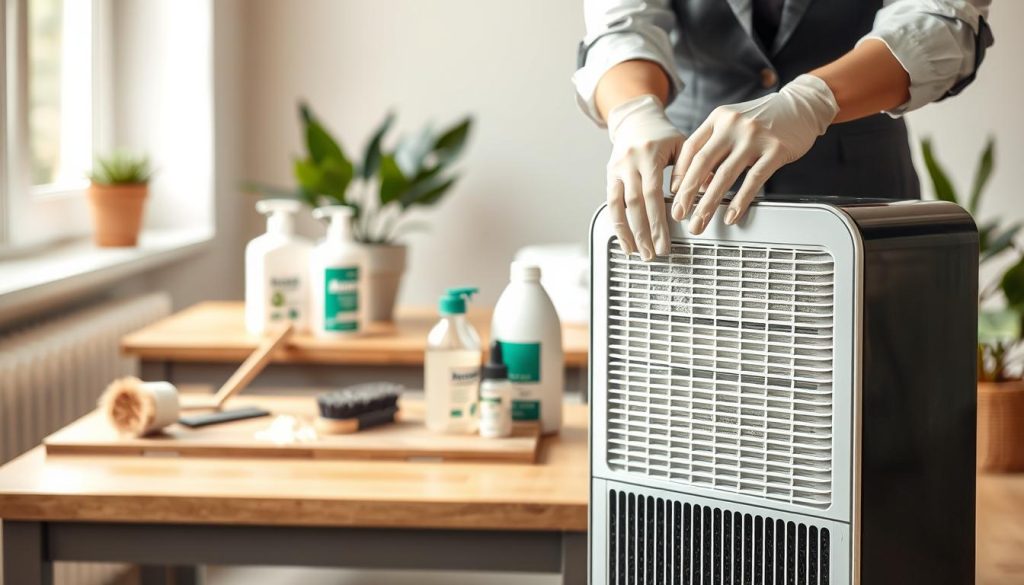
Weekly/fortnightly cleaning rates and typical use cases
Recurring visits are billed per hour. We recommend this for households with pets, allergies or high daily use.
Regular upkeep keeps performance steady and lowers the chance of a larger service later.
One-off cleaning rates for home visits
One-off visits are billed per hour. These suit move-ins, post-renovation dust or when you notice reduced airflow.
Weekend appointment surcharges and discounted evening slots
Appointments on Friday, Saturday or Sunday carry a surcharge. Evening slots may be discounted to balance peak demand.
When additional charges may apply
Extra fees arise for heavy contamination, restricted access, or time‑heavy disassembly beyond our routine scope. We assess and discuss any additions before work begins.
How we keep pricing transparent (before we start work)
We confirm scope, estimated duration and the chosen approach on-site. That way the agreed price reflects the actual work.
| Visit type | Typical use |
|---|---|
| Weekly/Fortnightly | High use, pets, allergies |
| One-off home visit | Move-in, post-reno, airflow drop |
| Weekend (Fri–Sun) | Peak demand; evenings may be cheaper |
Note: For larger scale work we follow familiar unit-based models used in local servicing. See our guide to whole-house pricing for a broader view via whole-house pricing. For DIY maintenance tips we link a practical method using a wet-dry vacuum at home maintenance tips.
What’s included in our cleaning and servicing scope
You’ll get a clear itemised list of what we carry out during each service call. We make the scope visible so you can compare our offering with other providers in Singapore.
Filter, front panel and cover work for improved quality
We remove, inspect and wash the filter and front cover. This reduces trapped dust and helps steadier airflow.
When needed we deodorise or apply a purifier treatment to the air filter to reduce odours and recirculation of particles.
Indoor coil and drainage tray checks
We clean the indoor coil to restore heat exchange and limit dust build‑up that reduces efficiency.
We also clear and disinfect the drainage tray so water does not pool and cause hygiene or odour issues.
Drainage system vacuuming
We vacuum the drainage run as a preventative step. This reduces blockages and lowers the risk of unwanted discharge or overflow.
Fan and blower wheel checks
We inspect the fan and blower wheel for dust and imbalance. Bearing lubrication is applied only when necessary.
This reduces noise and helps the unit run smoothly.
System checks and performance tests
Where relevant we record compressor suction and discharge pressures to spot early faults.
We document everything. After each visit we give a simple checklist of tasks completed and any observations so the service is transparent and auditable.
For a practical how‑to on drainage system vacuuming see our drainage system vacuuming guide.
Deeper cleans for aircon units: chemical wash, steam wash and chemical overhaul
When standard servicing no longer restores performance, a deeper approach is needed. We recommend intensive work if you notice reduced airflow, persistent odour or visible dust and mould inside the indoor unit.
Chemical wash scope — This targets the coil and fan components with a controlled detergent treatment. Typical steps we follow include removal of the fan coil unit cover, detaching the water tray and blower where model‑dependent, spraying a chemical compound onto the coil, rinsing with clean water, vacuuming the drainage run, wiping internal surfaces, then reassembling and testing.
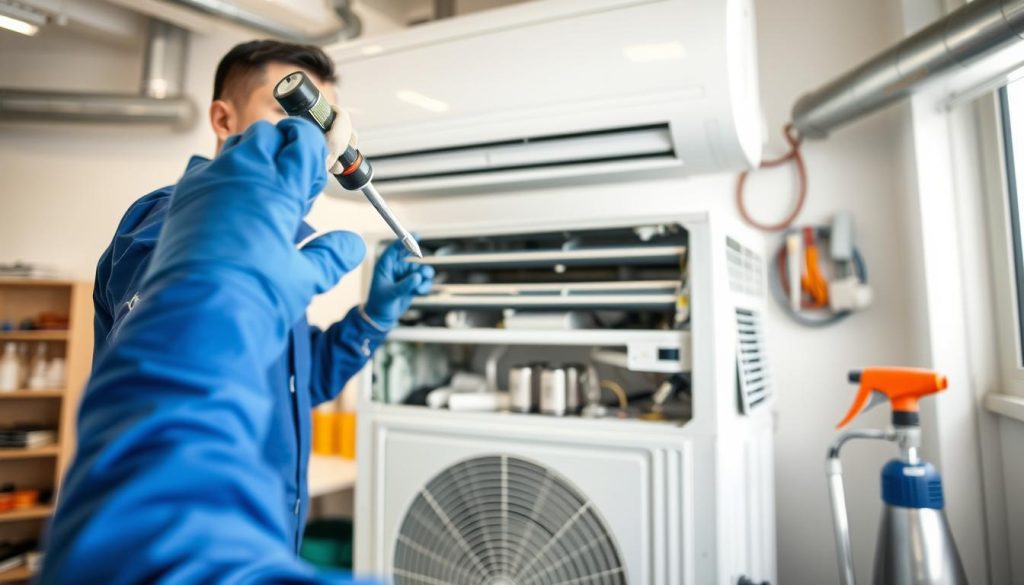
Chemical wash pricing by BTU and number of fan coil units
Rates depend on the unit’s capacity (typically 9K to 24K BTU) and how many units are being serviced; message us for current pricing.
Steam wash and when to choose it
Steam wash uses pressurised hot vapour to loosen grease and biological growth while limiting liquid ingress. Choose this when you want intensive decontamination with fast drying and minimal residual moisture. It suits units with stubborn grime on coils or hard-to-reach fan blades.
Chemical overhaul for heavily soiled indoor units
Chemical overhaul is our most thorough option. We dismantle the unit to access each component, chemically treat the blower and filters, wash the water tray, rinse thoroughly, wipe down and then reassemble and test.
Expect more labour and access needs for deeper cleans. We always confirm scope, timings and any weekend surcharges before starting so there are no surprises.
Add-on services that affect total cost: gas top up and condenser cleaning
Extra services can change the final invoice, so we only recommend them after a clear diagnosis.
Gas top up pricing by refrigerant
Refrigerant top-up charges depend on the refrigerant type your system uses (R22, R410A or R32); contact us for current rates.
We explain ranges depend on leak suspicion, required volume and labour. The top up process involves exposing service valves, connecting gauges and topping up carefully to avoid overfilling.
Condenser options and example prices
- Normal condenser cleaning.
- Dry or steam wash.
- Chemical wash.
High jet wash versus chemical wash for outdoor units on ledges
High jet wash costs less and suits light grime on accessible units. Chemical wash removes stubborn deposits and mould.
For ledge installations we recommend an overhaul when access is restricted: ledge wash or bring-in options are available at different rates. Safety, drainage routing and discharge direction influence time on-site and final pricing.
Our approach: we check the unit, explain options and only proceed when the chosen method improves reliability or performance.
Conclusion
Deciding between regular visits and one-off servicing hinges on how your units are used and the signs they show. For high use, pets or visible dust we recommend weekly or fortnightly visits billed per hour. For isolated issues, a one-off visit often suffices.
We confirm scope and any add-ons before we start so our pricing is transparent. Weekend slots carry a surcharge; evenings may be discounted.
What you get: steadier airflow, cleaner filter areas, fewer drainage and water problems, and reduced fan noise over time.
Choose deeper work only when inspection or symptoms—persistent odour, heavy dust on the coil or leaks—justify it. This keeps servicing cost‑effective.
Book the right service for your home: have the number of units, any fan noise, leak history and visible coil dust ready for a faster quote.

