

We know a leather sofa is a major buy and needs proper care. In Singapore’s humid climate, routine cleaning and conditioning saves time and expense later.
Our aim is simple: to find safe, effective solutions that lift daily grime without stripping finishes or leaving a sticky film.
We test products by effectiveness, ease of use, scent and value. We also group top picks by format — kits, liquids, sprays and creams — so you can match a product to how you actually clean.
Cleaning then conditioning is our baseline rule. Removing contaminants first helps prevent premature ageing, cracking and fading on high-touch areas like arms and headrests.
This roundup suits households using air‑con, with bright rooms and high humidity, but the advice is broadly useful at home. Ahead, we detail selection criteria, matching by leather type and a step‑by‑step safe method.
Why a dedicated leather cleaner matters for sofa care at home
A sofa’s large surfaces and frequent handling demand a different approach than small leather items. Dust, body oils and food splashes build up where people touch most. Over time these contaminants darken high-contact zones and dull the finish even if the seat looks fine at a glance.
What everyday dirt and oils do
Body oils and airborne dust attract grime and can lead to cracking and fading. Humidity in Singapore speeds this process by keeping particles moist and more likely to stain.
Cleaner versus conditioner: why order matters
A cleaner removes contaminants; a conditioner restores oils and suppleness. We always clean first. Conditioning over trapped dirt seals the problem in and can worsen damage.
When to stop and get professional help
Avoid treating unfinished, suede or nubuck with standard products. Stop and call a pro if colour transfers, the finish looks compromised, you detect mould odour, or cracking is present.
Safety tip: Always spot test, work in a ventilated space and keep products away from children and eyes.
How we selected and compared these leather cleaners
Our test bench compared cleaning power, application control and end‑feel across common formats.
What we prioritised
- Measured effectiveness at lifting grime and stains.
- Ease of application without overspray or mess.
- How tolerable the scent is in a living room and overall value.
Types we considered
Sprays suit large surfaces but carry overspray risk. Creams add hydration yet can leave a greasy residue if not buffed. Liquids give controlled application with a cloth but may oversaturate in careless hands.
Our non-negotiables
- pH-balanced formulas that respect leather chemistry.
- Gentle action that does not strip natural oils.
- A true non-greasy finish so dust does not cling in humid Singapore conditions.
We penalise products that mask issues with heavy shine, demand excessive buffing, or leave visible lines. We prefer clear instructions and a repeatable process you can use every 3–6 months.
For further context on how we compare top brands and formats, see our wider guide on recommended leather cleaners.
Best leather cleaner for sofas: our overall top choice
We favour a two-step kit that cleans first, then replenishes oils. In lab testing the Chemical Guys Leather Cleaner and Leather Conditioner Kit delivered unmatched restoration. Scratches and dull patches became far less visible after one coat of conditioner and full drying.
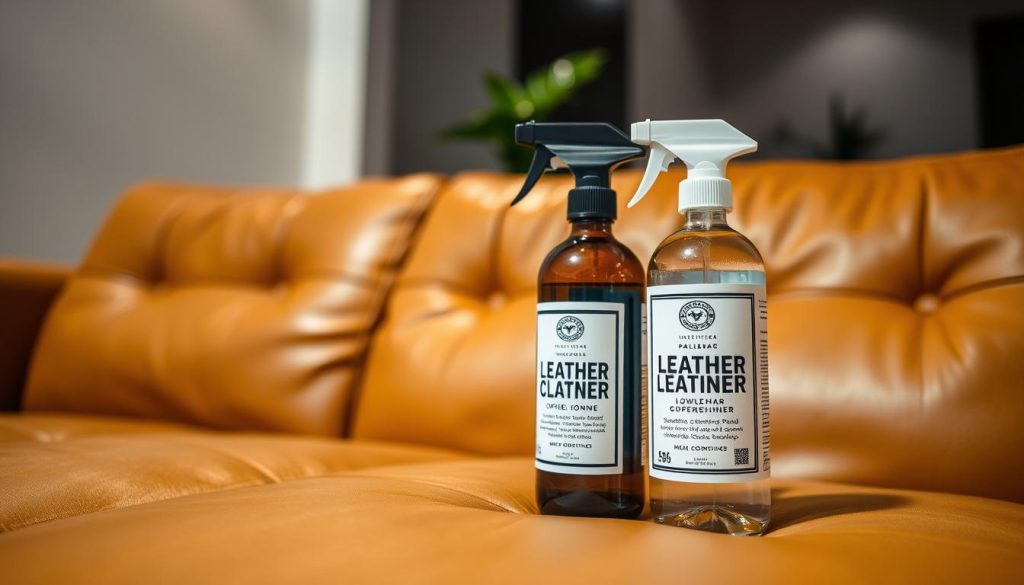
Chemical Guys Leather Cleaner and Leather Conditioner Kit
The practical gain of a leather care kit is clear: remove grime, then restore softness. This approach suits worn seating panels and armrests where dirt and dryness coexist.
Why we rate it for visible restoration and a “like‑new” finish
- Standout effectiveness: testing showed dramatic visual improvement and reduced scratch visibility once conditioned.
- Complete solution: a matched cleaner conditioner pair avoids compatibility issues common when mixing brands.
- Versatile use: designed for both car and home furniture surfaces, so it translates well to Singapore living rooms.
What to know before you buy: application effort and ventilation
The trade-off is labour. Expect more elbow grease on textured grain or ingrained lines than with quick sprays. Application in small sections gives the best result.
Note the cleaner has a mild rubbing‑alcohol scent while the conditioner is essentially odourless. Work in a ventilated room and allow adequate drying time before use.
Best liquid leather cleaner for sofas for deep, targeted cleaning
When stains are localised, a liquid approach gives us the control we need. We prefer a pour‑to‑cloth method to avoid wetting trims and nearby cushions.
Leather Honey Leather Cleaner
Leather Honey is our top liquid pick for spot work. In tests the product removed 100% of makeup marks and about 95% of sunscreen and oil. You pour a little onto a cloth, then work gently into the affected area.
Where it shines
Targeted lifting: it excels on armrest build‑up and small oily discolouration. The cloth‑first application reduces overspray risk on fabric and timber.
Trade-offs and practical notes
The main compromise is drying time; the solution can stay damp longer than sprays. It also does not remove surface scratches, so we pair it with a separate conditioner when the item looks dull.
- Use small sections and light pressure.
- Avoid over‑wetting seams and cushions.
- Wipe excess so the finish stays natural, not tacky.
Best spray leather cleaner for sofas for fast coverage on large areas
When the goal is routine upkeep across broad surfaces, a spray option makes the job far quicker. Sprays deliver even coverage and speed when you need to tidy backs, seats and arm panels without lengthy preparation.
Weiman Leather Cleaner and Conditioner Spray
Weiman earns our pick in this category thanks to a powerful nozzle and a pleasant citrus scent. In testing the product lifted most surface oil and left a refreshed aroma suitable for living rooms in humid climates.
Best for maintenance cleans on large surface areas
Sprays are ideal for quick routine cleaning across sectionals. They reduce product measuring and interruptions, so application is fast and uniform. Use this spray as a finishing step after spot‑treating visible marks.
Limitations: heavy stains, residue risk and why pre-treatment matters
We found the spray struggled with set‑in discolouration and heavy stains. For those, treat the mark first with a targeted product, then follow with the spray to blend the finish.
Residue note: some spray cleaner‑conditioner hybrids can leave a waxy or slightly greasy feel. Wipe and buff each area to a dry touch to avoid trapped residue.
| Feature | Performance | When to use | Limit |
|---|---|---|---|
| Nozzle | Powerful, even mist | Large panels and quick upkeep | Not for deep stains |
| Scent | Pleasant citrus | Home and car surfaces | May attract dust if greasy |
| Finish | Natural if buffed | Routine maintenance | Possible waxy residue |
Pro tip: Spot-clean visible marks first, then use the spray across the whole panel for an even finish. For an extended routine on sectionals, see how to clean your couch for complementary steps.
Best cream cleaner-conditioner hybrid for reviving tired-looking leather
When a sofa’s finish looks dull and the surface feels dry, a cream hybrid can revive both tone and touch.
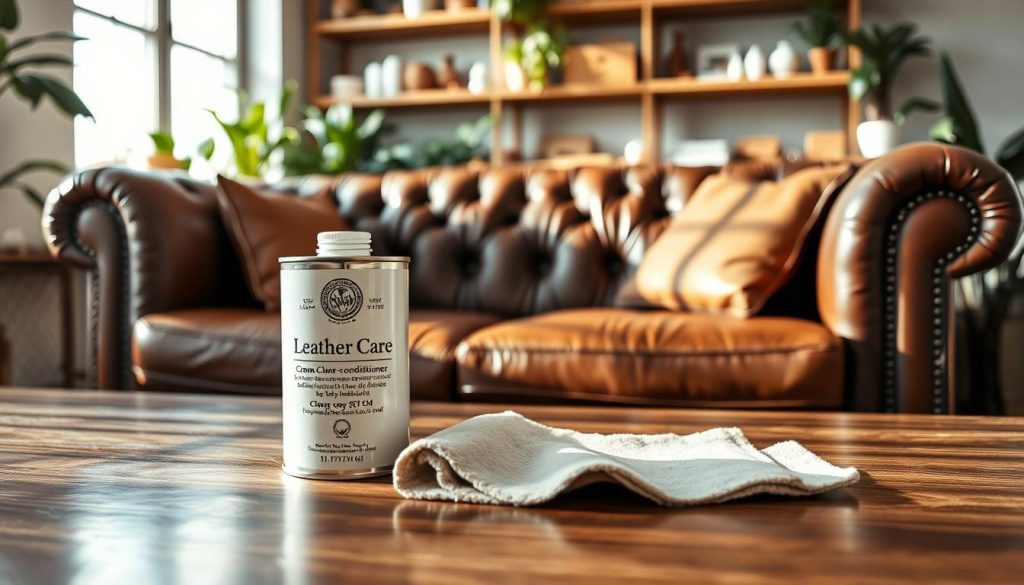
Leather CPR 2-in-1 Leather Cleaner & Conditioner
Leather CPR works as a one-step cream that cleans and conditions. It is easy to apply, leaves almost no scent and improves uniformity and softness on worn panels. The formula is dermatologist tested, which reassures households with sensitive skin.
When we use it: restoring softness and improving uniformity
We recommend a cream 2-in-1 when seating is mainly dull, dry or uneven rather than heavily stained. The conditioning element does the visual revival work, making surfaces look more consistent without a lengthy routine.
Expect noticeable softening after one application. Deeper scratches may persist, so heavy repair still needs specialist attention.
“One product, fewer steps — ideal for routine refresh days when time is limited.”
- Application: apply sparingly to a cloth or sponge, massage in, let it soak briefly, then wipe and buff.
- Residue control: buff thoroughly; skipping this can leave a cloudy or slightly tacky finish.
- Repeat only a light second coat if needed to avoid build-up on seating areas.
Practical note: This cream suits busy homes in Singapore where minimal odour and quick results matter. Use it as part of regular leather care to keep panels supple and even.
Our full shortlist of top leather cleaners for sofas to consider
We present a concise roster of proven options to match different leather types and household needs. Each entry notes the main strength so you can pick a solution that suits your sofa’s finish and daily use in Singapore’s climate.
Furniture Clinic Leather Ultra Clean
Gentle chemistry made for premium or delicate upholstery. Prepares the surface for conditioning without fading sensitive finishes.
Meguiar’s Leather Cleaner & Conditioner
One-step convenience: a practical pick when you want simple maintenance and light soil control.
Chemical Guys Leather Cleaner & Conditioner
Added UV defence helps protect panels near windows and bright rooms against fading over time.
Gliptone Cleaner‑Conditioner
Professional-grade feel and a pH-balanced approach to restore sheen and softness.
| Product | Strength | Best use |
|---|---|---|
| Bickmore Bick 1 | Versatile across items | Multi-item homes: chairs, bags, footwear |
| Colourlock | Wide compatibility | Aniline to pigmented finishes |
| Zymöl | Natural ingredients | Eco-friendlier cleaning plus nourishment |
| TriNova | Strong stain lift | Stubborn marks without greasy residue |
| Lexol | pH-balanced routine | Maintenance cleans that respect leather chemistry |
Quick note: We offer this shortlist so you can choose by leather type and household need. For step‑by‑step cleaning guidance, see our linked care guide how to clean a leather sofa.
What to look for in the best leather cleaner for your sofa
Choosing the right product starts with understanding how it interacts with real upholstery day to day.
Gentleness first
Gentle action matters. We prefer cleaners that lift dirt and oils without stripping natural oils or dulling the finish.
pH-balanced formulas
pH-balanced solutions match leather chemistry and cut the risk of long-term damage. Alkaline or acidic products can change texture and cause drying over time.
Built-in conditioning vs separate conditioner
One-step products save time but may offer lighter nourishment.
Using a separate leather conditioner gives us greater control and deeper restoration when panels feel dry.
Non-greasy finish
A true non-greasy finish prevents residue that attracts dust in humid air. Always wipe excess to avoid tacky build-up.
Protection features
Look for UV protection, water repellency and stain resistance if the sofa sits near windows or sees frequent spills.
| Criterion | Why it matters | What to expect |
|---|---|---|
| Gentleness | Prevents surface damage | Lift dirt without drying |
| pH-balanced | Matches leather chemistry | Stable texture and colour |
| Conditioning | Restores suppleness | Built-in or separate options |
| Finish & protection | Keeps surfaces clean longer | Non-greasy, UV and water repellent |
Decision rule: pick the mildest product that removes your level of soiling, then add a conditioner only if the surface looks or feels dry.
Matching a cleaner to your sofa’s leather type, colour and finish
The right product depends on whether your seating soaks in spills or wears a protective coat. Identifying the type steers our cleaning process and helps avoid lasting damage or colour transfer.
Aniline and semi-aniline: why gentle really matters
Aniline and semi‑aniline look natural and absorbent. They pick up oils and dyes quickly, so we always use the mildest leather cleaner and very little moisture.
Work small areas and blot rather than scrub to reduce staining risk and surface change.
Pigmented leather: durability and protection
Pigmented finishes have a topcoat that resists wear and makes cleaning easier. They tolerate routine cleaning better, but harsh chemicals can haze or strip that protective film.
Choose pH‑balanced products and avoid long dwell times to keep the surface uniform.
Light colours and dyed finishes: reduce discolouration risk
Light shades and intense fashion colours are prone to colour transfer and visible patchiness. We prioritise a discreet spot test before treating panels you can see.
Follow manufacturer guidance and always spot test
Check care labels and any brand instructions. If in doubt, test in a hidden area: apply a small amount, wait 24 hours, then inspect for fading or transfer.
- Identify the type: natural grain versus uniform coat.
- Use minimal product and dry quickly.
- Stop if you see colour change or surface dulling.
| Type | How to treat | Risk |
|---|---|---|
| Aniline | Very gentle, low moisture | Staining, absorption |
| Pigmented | pH‑balanced products, brief contact | Hazing from harsh chemicals |
| Light/dyed | Spot test first, small area work | Colour transfer, patchiness |
How we clean a leather sofa safely and effectively
A clear, repeatable process saves time and protects the surface over years. We keep the routine simple so anyone at home can follow it without fuss. Below we outline each step and the tools we rely on.
Preparation: remove dust and debris to prevent scratching
We start by vacuuming creases gently and wiping dust with a dry microfibre cloth. This prevents dirt acting like an abrasive when wet cleaning begins.
Patch testing: checking for colour transfer and adverse reactions
Patch testing is non-negotiable. We try a small hidden area, wait an hour and check for colour change, stickiness or dulling.
Application: cloth-first method, small sections and circular motion
Do not spray directly onto the surface. We apply the leather cleaner onto a cloth or sponge, not the seating. Work in small areas with light, circular motions to lift grime and avoid forcing water into seams.
Wipe-down: removing excess product to prevent residue build-up
After cleaning each area we use a fresh dry cloth to remove excess and prevent residue. Leftover product can attract dirt and create shiny patches where people sit.
Tools we keep on hand
- Clean microfibre cloths for wiping and buffing.
- A soft sponge for creams and gels.
- A horsehair brush for textured grain where dirt hides.
| Step | What we do | Why it matters |
|---|---|---|
| Prep | Vacuum and dry-wipe | Removes loose dirt to avoid scratches |
| Patch test | Small hidden area | Checks colour transfer and adverse reactions |
| Application | Cloth-first, circular motion | Controlled cleaning without oversaturation |
| Finish | Wipe off excess, air dry | Prevents residue and attracts less dirt |
Timing note: Allow the sofa to dry fully before re-use and only condition when the surface feels dry. Ventilate the room and keep products away from eyes and children.
Conclusion
Small, consistent actions prevent heavy wear and keep finishes uniform across high‑use panels.
Choose a dedicated product matched to your sofa’s type, then add a conditioner only when panels look dry or dull. Our simple rule: clean first, then nourish.
Top picks by scenario: Chemical Guys for maximum restoration, Leather Honey for deep liquid stain removal, Weiman for quick spray maintenance, and Leather CPR as a one‑step revival. Each has clear strengths in effectiveness and value.
Protect your investment: always spot test, wipe off excess to avoid residue, ventilate while working, and follow a full clean every 3–6 months at home. If stains worsen or the finish lifts during testing, stop and seek professional upholstery advice.

