
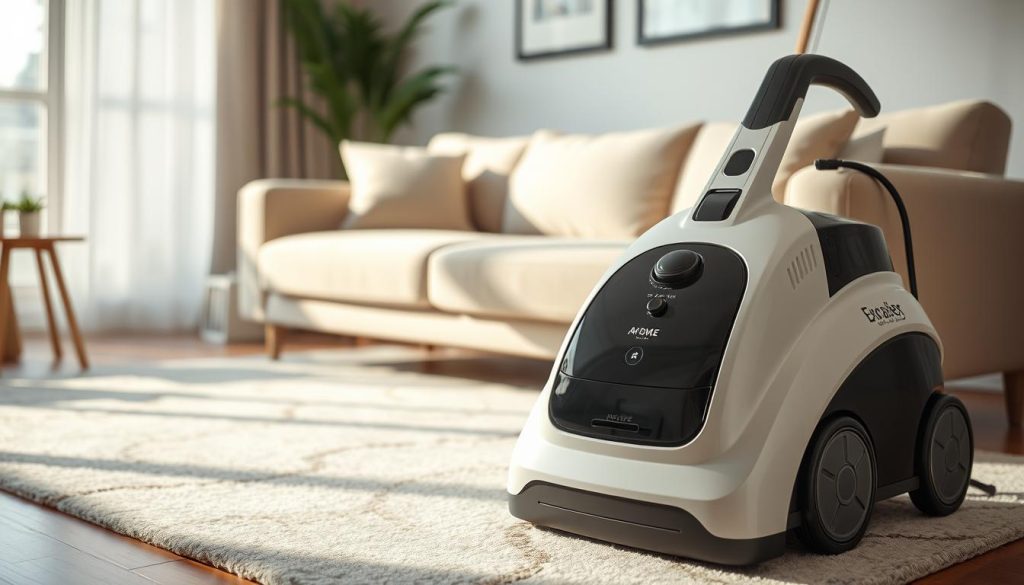
We set clear expectations from the start. In our view, a compact extraction unit works best for everyday spills and set-in marks on upholstery in Singapore.
We explain why portable, spot-extraction devices suit sofas, cushions and car seats — they reach armrests, have manageable tanks and dry faster in humid conditions.
Social posts can imply instant miracles. Our tests and reviews of 50+ upholstery products show fresh stains lift quickest, but some messes need scrubbing and several passes.
This guide is a product roundup: what to buy, who each model suits, and the trade-offs that matter — tank size, suction, hose reach and ease of cleaning.
We also preview our shortlist chosen for Singapore’s climate and small homes, and signpost maintenance, fabric codes and when a spray is enough versus when a device is worth it.
Our top picks at a glance for Singapore homes
To help readers choose quickly, we list our top spot picks with a short snapshot for each model. These selections reflect sources such as Southern Living and The Spruce and focus on portability, drying and real-world performance for local living spaces.
Kenmore SpotLite Portable Carpet Spot Cleaner
Who it suits: Homes that need reliable suction for set-in stains.
What it does well: Strong extraction for spot work; praised by Southern Living and The Spruce.
One drawback: No self-clean hose feature.
Shark StainStriker HairPro
Who it suits: Pet households handling hair and accidents.
What it does well: Hair-grip tools and sanitary separation for pet messes.
One drawback: Slightly heavier than compact rivals.
Bissell Little Green Portable Carpet Cleaner
Who it suits: Users who value easy handling and maintenance.
What it does well: HydroRinse-style hose flushing makes upkeep simple.
One drawback: Spray can be erratic on tight angles.
Dirt Devil Portable Carpet and Upholstery Cleaner
Who it suits: Budget-focused buyers who still want punchy suction.
What it does well: Intense lift and neat cord/hose organisation.
One drawback: Solution tank empties faster on big jobs.
Bissell Little Green Pro
Who it suits: Larger furniture refreshes and occasional deep work.
What it does well: Bigger tanks and wider heads reduce refills.
One drawback: Longer drying times after deep sessions.
Bissell Little Green HydroSteam Pet
Who it suits: Homes needing steam for oily or sticky stains and pet odour control.
What it does well: Adds steam modes for tougher grime.
One drawback: Less nimble in tight crevices.
Little Green Machine Mini
Who it suits: Small flats, HDBs and car interiors with limited storage.
What it does well: Compact storage and quick touch-ups.
One drawback: Small tanks and short hose limit deep work.
Quick take: Match carry handles, cord reach and hose length to your layout. In humid Singapore, stronger suction and minimal wetting speed drying and reduce musty odours. These are extraction spot devices for targeted cleaning, not full-room carpet washers, and attachments often decide how well a model handles seams, cushions and pet hair.
What makes a sofa cleaner machine worth buying in Singapore
Singapore’s humidity and compact homes change how we judge a device’s value.
Humidity, drying time and avoiding musty odours
High air moisture means we need stronger suction to remove more water from upholstery. Southern Living notes stronger pull leaves less moisture behind, which shortens dry time and cuts odour risk.
“Skip hose flushing and lingering smells can follow.”
Small spaces and storage-friendly portable design
Compact footprint, neat cord and hose storage, and light weight make real-life use more likely. Good design helps a unit tuck away in a cupboard or under a bed in an HDB flat.
Everyday realities: spills, stains and pet messes
We buy based on frequency: kopi spills, kids’ snacks and pet messes need quick action. A longer cord and usable hose reach corners and car seats without constant socket swaps.
- Fast setup and easy rinse-out
- Tools that fit seams and tufts
- Minimal lingering odours after use
| Criterion | Why it matters in Singapore | What we look for |
|---|---|---|
| Dry time | High humidity encourages mustiness | Strong suction, multiple dry passes |
| Storage | Limited space in flats | Compact design, cord/hose tidy |
| Reach | Sectional corners and car seats | Longer cord, usable hose length |
How we tested spot cleaners and upholstery machines
We designed a practical test routine that mirrors everyday spills and busy Singapore homes. Our aim was visible improvement and reduced odour, not flawless removal on every fabric.
Real-world stain testing
We used a common stain set: red wine, chocolate, butter/grease, dark soda and sauces. Each represents a typical accident — wine and soda for drinks, chocolate for snacks, butter for greasy marks.
Key scoring criteria
Effectiveness: removal and lightening of stains. Ease of use: setup and controls. Portability: weight and storage. Maintenance: rinsing, hose flushing and upkeep.
| Criterion | Why it matters | How we scored |
|---|---|---|
| Effectiveness | Visible lift and odour reduction | Passes needed, final shade |
| Ease | Daily use in small homes | Setup time, controls |
| Maintenance | Prevent lingering smells | Tank/hose cleaning |
What “multiple passes” means
Multiple passes are repeated spray–scrub–extract cycles. We add extraction-only passes to pull moisture and speed drying. Tests compared device results with simple manual methods and a DIY mix — readers can judge whether a device beats a spray-and-cloth approach. For scale, sources tested dozens of products over many hours (56 products, 56 hours, 48 testers, 336+ stains; Southern Living ran 31 products). The consistent finding: fresh messes lift faster; older stains improve but need more effort.
For a step-by-step on manual cleaning alternatives, see our guide how to clean a sofa with a carpet.
Best sofa cleaner machine for most homes: Kenmore SpotLite Portable Carpet Spot Cleaner
When we considered suction, tank size and simple controls, one portable carpet model stood out for everyday Singapore use.
Why we chose it
Powerful suction removes fresh and set-in stains with fewer passes, which shortens dry time in humid flats. Southern Living’s tests back this up: the unit performs well on both fresh spills and older marks.
Key specs that matter
- Clean tank: 76.8 oz; dirty tank: 64 oz — larger tanks mean fewer stops mid-job.
- 20-foot cord and 6-foot hose for good reach around couches and car seats.
- Weight about 10.2 lb and a simple on/off switch for easy handling.
Where it falls short
The unit has no self-cleaning hose, so we must flush the hose after use to avoid lingering odour. The clean-tank opening is small; fill carefully to prevent spills when dosing solution.
| Feature | Spec | Why it matters |
|---|---|---|
| Tank capacity | 76.8 oz / 64 oz | Fewer refills, less dampness in humid air |
| Reach | 20-ft cord, 6-ft hose | Works across rooms and car interiors |
| Portability | 10.2 lb | Easy to move and store in small HDB flats |
Best for pet owners: Shark StainStriker HairPro
For households with pets, we prioritise features that cut hair, neutralise odour and make upkeep hygienic. The Shark StainStriker HairPro targets those needs with pet-first engineering and easy maintenance.
Pet-first engineering: hair filter, collection cup and hair-gripping fins
Hair management is a stand-out feature. A removable hair filter and a dedicated collection cup stop tangles before they reach the pump.
Hair-gripping fins on the head lift fur and dander so we need fewer passes and less brushing afterwards.
Sanitary cleanup: pet mess extractor with separate chamber
The unit traps semi-solid waste in its own chamber. That keeps the main dirty tank cleaner and reduces clog risk.
Onboard self-cleaning for hoses and attachments
Built-in flushing clears the hose and attachments after use. In humid Singapore, that lowers residue build-up and odour over time.
Performance notes: fresh vs older stains, moisture and dry time
Southern Living found the Shark StainStriker effective on fresh and set-in stains. Older marks need extra passes and dwell time.
Results leave surfaces damp, not wet, thanks to reasonable suction and extraction. Specs: clean tank 40.6 oz, dirty tank 24.4 oz; 12-ft cord, 4.5-ft hose; weight about 9 lb.
| Feature | Why it matters | What to expect |
|---|---|---|
| Hair system | Stops tangles and easier emptying | Less maintenance between uses |
| Separate chamber | Improves hygiene | Fewer clogs, safer disposal |
| Self-clean | Reduces smell and residue | Better long-term ownership in humid climates |
Easiest to use: Bissell Little Green Portable Carpet Cleaner
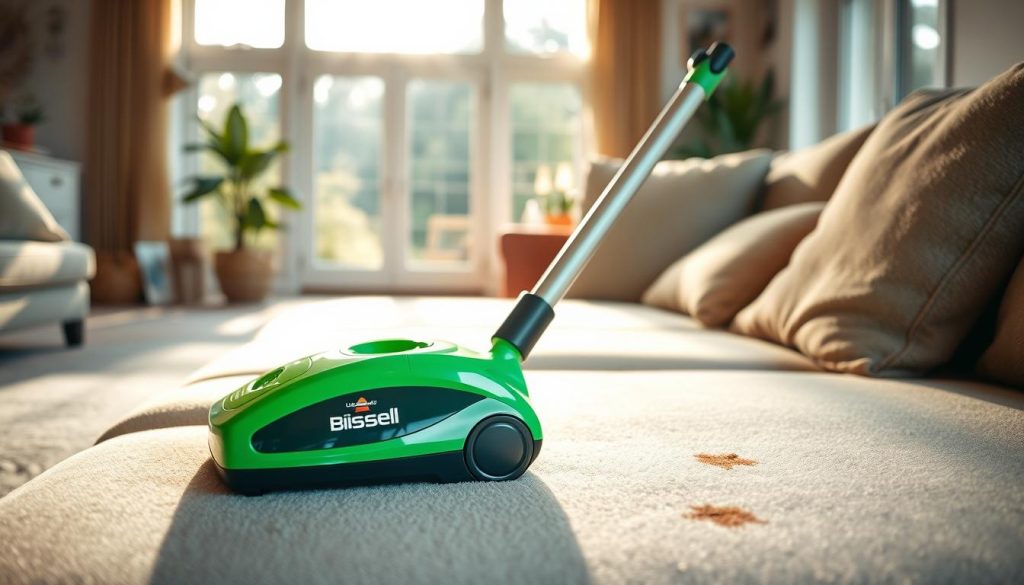
Few units marry simple controls and tight-space agility like the Little Green does. We find the bissell little green a low-friction option for quick spills and small sofas in Singapore flats.
Why it’s a favourite
Compact handling and clear setup reduce hesitation. The bissell little design means one person can tackle armrests, cushions and car seats without fuss.
HydroRinse flushing tool
The HydroRinse-style tool rinses the hose and helps prevent hidden build-up that causes smells. Regular flushing is the single best habit to keep the unit odour-free in humid conditions.
Heads-up for users
We note erratic spray patterns and occasional splashing on tight angles. Prep the area and test spray direction to avoid overspray on floors and walls.
Practical specs
Model 1400B is light at about weight 9.7 lb, with a 15-foot cord and useful attachments. The tanks are rounded and the hose can feel stiff, but the single basic brush tool covers seams and edges well.
“Portable, easy to use and clean; great on fresh stains but needs a few passes on older marks.”
| Feature | What it means | Practical note |
|---|---|---|
| HydroRinse tool | Hose flushing | Prevents odour build-up in humid storage |
| 15-ft cord | Good reach | Works across rooms without socket swaps |
| 9.7 lb weight | Portable | Easy to lift and store in small flats |
Best affordable suction: Dirt Devil Portable Carpet and Upholstery Cleaner
This value pick gives strong extraction without the high price tag, which matters for frequent spot rescues in Singapore flats.
Standout strength: The unit delivers intense suction that lifts visible dirt through a clear head. We can watch stains lighten and stop when the water runs clear, which saves time and effort.
Portable design and tidy storage
The 15‑ft cord and neat hose corrals make this very grab‑and‑go. It weighs about 11.2 lb, so one person can carry and stow it in a small cupboard.
Practical trade-offs
The solution tank is small and will run out faster if you use undiluted formula. Spray action can be splashy, so we protect nearby surfaces with towels and use controlled trigger pulls.
Tufted upholstery and tools
For deep tufts, we recommend a separate scrub brush or a microfibre cloth to loosen stubborn chocolate or set‑in marks before extracting. The unit includes a self‑cleaning port to flush the hose, which helps prevent residue and odour in humid conditions.
- Who it suits: Budget‑minded households that need serious suction for carpet and upholstery spot work.
- What we like: Visible stain lift through the clear head and compact cord/hose organisation.
- Main caution: Fast solution consumption and occasional splash on tight angles.
| Feature | Why it matters | What to expect |
|---|---|---|
| Suction | Speeds stain lift and reduces dampness | Powerful pull; fewer extraction passes |
| Cord & Hose | Easy storage in small flats | 15‑ft cord, organised hose corrals |
| Solution | Limits run time between refills | Small tank; use diluted mix for longer jobs |
“Intense suction and a clear head let us clean smarter, not harder.”
Best for larger refresh jobs: Bissell Little Green Pro
When we plan a deep refresh across a sectional and a large rug, runtime and tank capacity guide our choice. The bissell little green pro suits sessions that cover multiple cushions, armchairs and broad fabric panels.
When we’d choose it
We choose it for periodic maintenance rather than emergency spots. One full clean tank handled a six-seat sectional and half a large rug in our trials, so momentum stays high.
Tank size and workflow
Large tanks matter. The clean tank is 96 oz and the dirty tank 74.2 oz. Fewer refills mean continuous work across big surfaces and fewer interruptions.
What to expect
Southern Living found upholstery looks revived and smells fresher without altering fabric texture. Expect visible improvement, not perfect removal of old stains.
Trade-off: drying took about six hours in tests, so plan for ventilation and fan use in humid Singapore.
| Feature | Spec | Why it matters |
|---|---|---|
| Tank capacity | 96 oz (clean) / 74.2 oz (dirty) | Fewer stops during big cleaning sessions |
| Reach | 20‑ft cord, 5‑ft hose | Covers large furniture and rugs without moving the unit often |
| Use case | Sectionals, armchairs, rugs | Designed for routine deep cleaning, not quick spot rescue |
Best multipurpose steam option: Bissell Little Green HydroSteam Pet
For homes that need one versatile unit for fabrics and hard surfaces, steam adds useful muscle. We tested the HydroSteam Pet across couches, rugs, mattresses and tile to see where steam genuinely helps.
Three cleaning modes explained
SteamWash: combines steam and solution to loosen oily or sticky marks before extraction.
Steam: a dry refresh step to reduce odour and soften set-in residue.
Wash: standard spray‑and‑suck for fresh spills and enzyme‑based pet accidents.
Where steam helps most
Steam is most useful on greasy food smears and tacky residues that resist simple extraction. It also eased older stains in our trials, including red wine and soda.
Attachment considerations
The unit ships with a 5‑inch Tough Stain Tool and a Multi‑Surface Tool for broad coverage. These tools cut cleaning time on cushions but struggle in tight seams and deep tufting.
| Spec | Value | Why it matters |
|---|---|---|
| Clean / Dirty tanks | 64 oz / 51 oz | Fewer refills during long jobs |
| Hose / Cord | 4.8 ft / 15 ft | Good reach for small flats and patios |
| Included tools | Tough Stain + Multi‑Surface | Fast coverage; consider a small crevice tool for seams |
Best compact spot cleaner for small flats: Little Green Machine Mini
For quick touch-ups in tight Singapore homes, a truly small unit often wins on convenience.
We find the Little Green Mini ideal for light spills, snack smudges and car seats. It is compact and lightweight, which helps with storage and fast access.
Ideal use cases
- Quick messes on armrests and cushions.
- Regular touch-ups for car upholstery and mats.
- Small-area spot work where portability matters.
Limitations to know
The clean tank is only 16 oz and the dirty tank 13.5 oz, so expect frequent refills when tackling several seats.
The 4 ft hose and 12 ft cord mean more repositioning close to the stain. It pulled surprising grime in long-term tests, but it struggles with deep set-in stains.
Practical takeaway: treat it as a maintenance tool for frequent, small bursts of cleaning rather than a restoration unit for old marks.
| Spec | Value | Note |
|---|---|---|
| Tools | 4-inch tough stain + HydroRinse | Useful for rinsing hose to prevent odour |
| Hose / Cord | 4 ft / 12 ft | Good for car interiors; expect more repositioning |
| Tanks | Clean 16 oz / Dirty 13.5 oz | Great for a single cushion; refill for multiple seats |
Spray vs machine for upholstery cleaning
Choosing between a spray and a powered unit depends more on how often mishaps happen than on a single stain. We weigh effort, odour risk and the type of fabric before advising a path forward.
When a spray is enough for spot cleaning with minimal setup
For a fresh, small mark we reach for a spray. The Spruce notes sprays work well for surface spots without scrubbing. A DIY solution (water + dish soap + rubbing alcohol) often equals store formulas on upholstery, Southern Living found.
If we can blot quickly and avoid soaking the cushion, spray and a cloth save time and storage space. This suits one-off spills and light day-to-day cleaning.
When a machine wins: deeper extraction, odour removal, and frequent spills
We choose a powered unit when stains are regular, pets are present, or odour persists. Extraction pulls dirty water from fibres rather than just moving it around. That reduces lingering smells and cuts repeat work.
Think of sprays as a vacuum for the surface; extraction units reach the fibres beneath.
Keeping expectations realistic: no miracle cures for every stain
No product erases every mark. Grease behaves differently from wine, and timing matters a lot. We recommend starting with spray/DIY for occasional spills and upgrading to a device if we clean weekly or monthly.
“Sprays can beat a quick panic, but extraction wins on repeat use and odour control.”
| When to use | What it does | Practical note |
|---|---|---|
| Small fresh spot | Surface lift with minimal wetting | Spray, blot, repeat as needed |
| Frequent spills / pets | Deep extraction and odour reduction | Invest in a good extraction unit |
| Old or greasy stains | May need pre-treatment and multiple passes | Manage expectations; patch test fabrics |
Stain reality check: what these cleaners can and can’t remove
Not every spill yields to a quick wipe — understanding stain behaviour helps us choose the right approach.
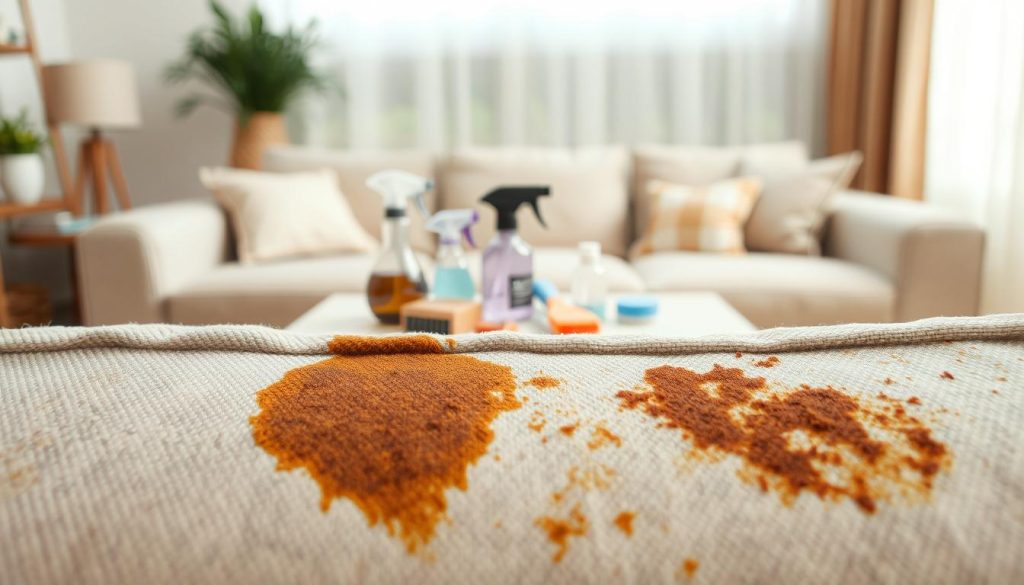
Fresh spills vs set-in stains: timing is everything
Fresh stains are the easiest to remove. The Spruce found that early action often means fewer passes and less water left in fibres.
As a mark sits, it bonds to strands and needs more agitation and longer dwell times. We blot first, pre-treat, then extract rather than soaking repeatedly.
Grease and butter stains: why they’re the toughest and what helps
Butter and oily residues resist many spot methods. The Spruce noted none of their tested units fully removed butter stains without stronger chemistry.
What helps: enzyme-based removers, absorbent powder, a grease-cutting dish soap or ammonia diluted with water, and agitation with a soft brush before extraction.
Dark liquids like wine and coffee: what “lightened” results look like
Wirecutter found compact extractors often significantly lighten red wine and coffee but may leave a faint shadow on pale fabrics.
Success is usually “lightened” rather than erased. Stop when the extracted water runs clearer, then let the fabric dry and reassess.
Practical workflow we use:
- Blot excess, don’t rub.
- Apply a small amount of solution or pre-treatment.
- Agitate gently with a brush, then extract until water clears.
- Dry fully and check results; repeat only if needed.
“Technique matters: the right pre-treatment and a few deliberate passes beat endless spraying.”
| Stain type | How it behaves | What we recommend |
|---|---|---|
| Fresh spill | Soluble; lifts with blotting and quick extraction | Blot, mild solution, extract; few passes |
| Grease / butter | Bonds to fibres; repels water | Absorbent powder, degreaser or enzyme, brush, then extract |
| Dark liquids (wine/coffee) | Often dyes fibres; may fade, not vanish | Pre-treat, agitate, multiple passes; expect lightening |
For step-by-step methods and a deeper how-to on treating specific marks, see our stain cleaning guide.
Attachments and tools that actually matter for sofas
Attachments change a good clean into a great one by targeting the places a broad head misses.
Crevice tools for seams, tufts and tight edges
Crevice attachments reach between cushions, along piping and into tufted buttons where grime hides. The Spruce highlights crevice tools as essential for tufts; we find a narrow spray-and-suck tool stops repeated scrubbing.
Wide-path heads for cushions, armrests and larger panels
A wide-path head covers large cushions and armrests faster and evens extraction. Use it when you want fewer passes and a consistent finish across a whole seat or rug.
Pet tools and mess extractors for hair, dander and accidents
Pet-specific attachments add real value: hair-grabbing fins, a removable hair filter and a separate mess chamber. Southern Living and Shark note these parts cut tangles and make disposal more sanitary.
Practical kit: we recommend a minimal sofa kit — crevice tool, wide head and a pet tool — to handle 90% of spot and upholstery jobs without paying for rarely used extras.
Good attachments improve agitation and reach, which means less over-wetting and faster drying in humid Singapore. For product options that pair well with these tools, see our shortlist and a curated list at top upholstery cleaners.
Tank capacity, suction, hose, and cord length
We weigh tanks, suction and reach by how they change a cleaning session in real homes. A larger tank cuts interruptions but adds weight. Stronger suction means fewer passes and less moisture left in fibres.
Balancing portability with fewer refills
Tanks trade convenience for bulk. Smaller tanks suit quick touch-ups; larger tanks suit bigger refresh jobs. Kenmore’s large tanks and the Little Green Pro’s big reservoir reduce stops during long jobs.
Why stronger suction reduces passes and speeds drying
Suction pulls more water per pass, which shortens dry time and lowers odour risk in humid Singapore. The Spruce and Southern Living note this real benefit: fewer repeat cycles save time and fuss.
What to look for in hoses and cords when cleaning sectional sofas
Choose a hose long enough to reach a seat while the unit stays on the floor. Aim for a 15–20 ft cord to avoid socket swaps. Be mindful: a rigid hose harms manoeuvrability even if the unit feels light.
“Hose flexibility matters as much as raw power.”
| Spec | Practical effect | Quick guidance |
|---|---|---|
| Tank size | Runtime vs weight | Large for whole-section cleans; small for quick spots |
| Suction | Fewer passes, faster drying | Prefer stronger pull for humid climates |
| Hose & Cord | Reach and manoeuvre | 4–6 ft hose for close work; 15–20 ft cord for rooms |
Spec to lifestyle: small flats favour compact, lightweight units; homes with pets or frequent spillages benefit from larger tanks, stronger power and longer reach for furniture and floors.
How to clean and maintain your sofa cleaner machine
Routine care keeps performance high and odour low in humid Singapore homes. Below we set out a short, repeatable after‑use routine that prevents residue and keeps parts ready for the next job.
After every use: empty and rinse the dirty water tank
Always dump the dirty tank immediately. Leftover water and debris rapidly harden and cause smells.
Rinse with warm water until it runs clear. We wipe seals and the tank mouth before reassembling.
Flushing the hose: self‑cleaning ports vs HydroRinse‑style tools
Some models have onboard self‑cleaning ports that flush the hose automatically. Others need a HydroRinse tool to push clean water through the hose.
| Method | Pros | Cons |
|---|---|---|
| Onboard self‑clean | Fast, reduces manual steps | Adds cost; can fail if not run |
| HydroRinse tool | Thorough flush, low tech | Extra step; needs access to tap |
| Manual disconnect | Simple, no special parts | More handling; easier to miss residue |
Cleaning bristles and attachments with hot water
Remove attachments and rinse bristles and heads in hot water. Hot water loosens trapped food and solution residue.
Allow brushes and attachments to air‑dry fully before storage to avoid mildew.
Odour prevention: extra rinse after pet messes
For pet accidents we run an additional rinse cycle through the system. That extra water stops bacterial build‑up and lasting odour.
Storage tip: leave lids and parts ajar to dry in a ventilated area in Singapore’s humid climate. Maintenance effort should influence what we buy — a unit with self‑cleaning features saves time if we clean often.
Fabric safety and upholstery cleaning codes
Fabric care starts with knowing the label on your upholstery — that tag tells us if we can safely use water, a solvent or neither.
W, S, W‑S, X explained
W: Use water-based spray or extraction only. Avoid solvent products.
S: Solvent-only fabrics — do not apply water or an extraction
W‑S: Either water or solvent methods are allowed; choose the gentlest approach first.
X: No home products; consult a professional cleaner.
When to call a professional
We call a pro for velvet, velour or high-end upholstery marked S or X. The Spruce notes solvent-only fabrics and velvets need specialist care to avoid texture loss or permanent marks.
“If the tag is S or X, avoid DIY wet methods and contact a textile specialist.”
Patch testing and timing
Always patch test on a hidden area. Apply the spray or small amount of solution, wait 30–60 minutes to dry, then check for colour transfer, distortion or watermarking.
In humid Singapore, drying is slower, so allow extra time and use fans to reduce the chance of rings.
| Code | Allowed | Avoid |
|---|---|---|
| W | Water-based spray, light extraction | Solvents, heavy soaking |
| S | Solvent products applied by pros | Water, extraction, DIY sprays |
| W‑S | Either method; start gentle | Aggressive scrubbing or excess solution |
| X | Professional restoration | Home products and DIY extraction |
Practical rule: match method to fabric and resist using more solution or force; correct design and technique beat extra chemistry every time.
Getting the best value in Singapore
We can stretch our budget by timing purchases and choosing recurring supplies wisely. A smart buy balances upfront price with the cost of solution refills, spare attachments and long‑term support. Small choices matter in humid Singapore, where drying time and maintenance affect satisfaction.
When to buy: sale windows worth watching
Local platforms run large promotions on fixed dates: 9.9, 10.10, 11.11 and 12.12 on Lazada and Shopee. Amazon, Prime Day, Black Friday and Cyber Monday also produce notable dips.
Tip: set price alerts and compare listings; Bissell Little Green models often reach attractive sale prices during these windows.
Consumables and ongoing costs
Budget beyond the unit for regular solution refills and occasional replacement tools. Pet households should favour enzyme or pet formulas to control odour; they repay the cost in time saved and fabric care.
For light, infrequent spills a DIY mix (water, dish soap like Dawn, and rubbing alcohol) can match some products for spot work, as Southern Living notes.
Simple add-ons that improve results
Microfibre cloths for blotting, a small scrub brush for tufts, and plain towels to catch overspray are high-value, low-cost extras. A narrow crevice tool helps reach seams and under cushions.
| Item | Why it matters | When to choose |
|---|---|---|
| Solution (commercial) | Formulated for enzymes and odour control | Pet accidents or heavy use |
| DIY mix | Cheap and effective for fresh spots | Occasional spills, quick touch-ups |
| Microfibre + brush | Improves agitation and blotting | All households; low cost |
| Spare attachments | Replace worn parts and extend life | Frequent cleaners and pet homes |
Final buying advice: check warranty terms and local plug/voltage compatibility, and prioritise strong suction, usable hose/cord reach and easy maintenance over gimmicky extras. Those three choices deliver the best long‑term value.
Conclusion
To wrap up, we offer a concise guide to matching a model to your home size, pets and cleaning habits.
Our pick for most Singapore homes remains the Kenmore SpotLite — Southern Living’s tests show it handles fresh and set‑in stains well. For pet households, compact storage or tight budgets, choose the portable carpet options we listed that fit your routine.
Prioritise strong extraction, manageable tanks, and a workable hose/cord reach. Regular rinse‑out and prompt action on fresh spots cut dry time and reduce odour. No machine removes every mark; timely technique matters as much as power.
Quick rule: use sprays for tiny, fresh spots but invest in a spot cleaner for frequent spills, odour control and deeper upholstery work. Always check fabric codes and patch test — the safest clean is the one that preserves your furniture.
Choose the model that matches your home, pets and how often you’ll really use it.

