
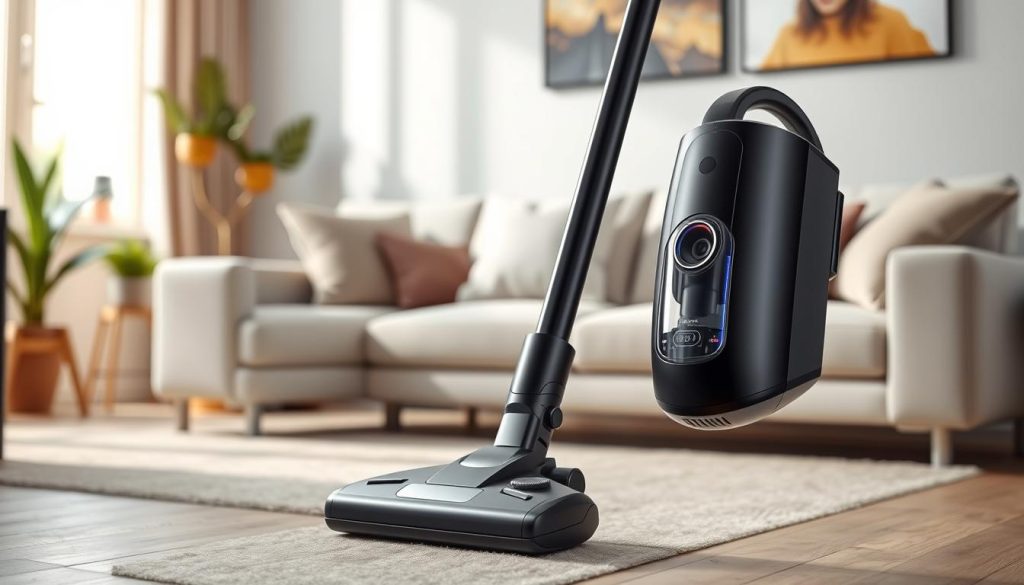
We introduce what a vacuum cleaner with water means for Singapore shoppers. These wet‑dry models, floor washers and water‑based mopping heads tackle spills and everyday dirt in one routine.
Our roundup is for busy homes, families with children and pets, and anyone who prefers fewer chores. We focus on performance for tile, vinyl and sealed hard floors found across HDB flats and condos.
We preview our top picks and explain how we test each item: suction power, tank size, edge cleaning, battery life, hygiene and manoeuvrability. Expect honest notes on noise, weight and upkeep.
We also highlight current shopper priorities in 2026: faster daily maintenance, odour control and easy self‑cleaning to prevent stale smells. Use our buyer’s guide to jump to the best match for your floor type and household size.
Why we recommend a wet-dry vacuum cleaner for Singapore homes in 2026
In humid Singapore homes, an all‑in‑one wet dry system handles daily spills and tracked‑in grime faster than separate tools.
Everyday life here means kopi slips, sudden rain footprints and fine dust in corridors. A wet dry vacuum picks up loose debris and wipes light spills in one pass. That makes routine upkeep simpler on hard floors such as tile and vinyl.
Families and pet owners see the biggest gains. Sticky food, milk drips and constant crumbs clear quicker. Paw prints and light stains are easier to manage, and odour problems fall if the system is emptied and dried after use.
We also note trade‑offs. These units can be bulkier and noisier than standard models. They need regular upkeep to avoid stale smells. Still, the time saved — fewer tool changes and fewer cleaning passes — often outweighs those downsides.
| Benefit | Typical result | What to expect |
|---|---|---|
| One‑pass cleaning | Less set‑up and fewer passes | Saves time on daily touch-ups |
| Hard floor care | Better removal of dirt and wet messes | Ideal for tile and vinyl |
| Family and pet friendly | Faster clearance of crumbs and paw prints | Reduces lingering odours if maintained |
What a wet and dry system does and how it works
Modern wet‑dry systems pair suction and a rinsing roller so we clear dry debris and light spills in one pass.
Wet messes vs dry debris
Dry debris like dust, hair and crumbs is lifted by the motor and held in a dust compartment. Liquid spills are absorbed, then routed to a separate container.
Clean tank vs dirty tank
Dual‑tank designs keep the clean water in one tank and collect dirty water in another. During a session, clean fluid feeds the roller or head while dirty water stores used fluid and grime.
How floor washers differ from other forms
Floor washers focus on hard floors and often have wider heads and larger tanks. A wet‑dry machine handles broader pickup; a stick type with a wet attachment has smaller tank capacity and suits quick touch‑ups.
- Session flow: fill the clean tank, clean room‑by‑room, empty dirty water, run a self‑clean if available.
- Why it matters: dual tanks mean we wash with fresh water rather than spread dirty water around.
- Role of suction and brush design: good suction and a well‑designed roller cut streaks and speed up drying on smooth tiles.
What we look for when choosing the best vacuum cleaner with water
We prioritise features that matter in everyday Singapore homes, not just headline specs. Our checklist balances performance, upkeep and price so readers can pick a model that suits flats, condos or landed houses.
Tank capacity matters for storage and refills. Small tanks suit compact HDB flats; larger tanks reduce interruptions in landed homes. We check both the clean tank and dirty water reservoir for easy emptying and splashes.
Real-world suction power and debris pickup
We test suction power on crumbs, rice, hair and fine dust. Numbers are useful, but roller and water flow design often decide real results.
Edge cleaning and head design
Edge cleaning is vital for skirting lines and corners. We measure how close the head gets to walls and whether grime is removed in one pass.
Battery life, cleaning modes and hygiene
Battery life is recorded in minutes across eco, auto mode and turbo. We note how modes affect runtime and whether an extra battery is worthwhile.
Filtration matters for allergens. HEPA and odour control reduce stale air if users empty dirty water and allow brush drying. For deeper buying guidance, see our detailed buying guide.
Our testing approach for wet-dry vacuums on hard floors
We focus testing on real-life scenarios that matter in flats: quick spills, rain grit and the dust that builds overnight.
Spills, sticky messes and fine dust on tile and vinyl
We lay down rice, fine dust and common kitchen spills to judge one-pass cleaning on hard floors. We check for streaks, residue and how fast the surface dries.
Pet hair and long-hair anti-tangle checks
We test pet hair and human hair around the brush. We note how often hair wraps the roller, how easy it is to cut out tangles, and whether suction stays consistent.
Under-furniture reach and lie-flat performance
Lie-flat claims are measured against typical condo sofas and TV consoles. We record which heads actually fit and whether we must reposition furniture to finish edges.
“Good performance is fast setup, steady suction, few tangles and a simple emptying routine.”
- Edge approach: how close the head gets to skirting in one pass.
- Drying time: slip risk and time to touch-dry on glossy tile.
- Practicality: refill and empty frequency for a medium flat session.
| Test area | What we measure | Pass indicator |
|---|---|---|
| Fine dust | Visible pickup, streaks | All dust gone, no streaks |
| Sticky spills | Residue, drying time | Clean surface, dries within minutes |
| Hair & tangles | Brush wrap, ease of removal | Minimal wrap, tool-free removal |
| Under-furniture | Fit and head articulation | Reaches common 10–12 cm gaps |
In short: we reward models that deliver quick setup, consistent suction, low tangles and a straightforward cleanup after each session.
Best overall: Tineco Floor One Switch S7 Stretch
For busy Singapore homes that need one reliable tool for mixed spills and daily dust, this model stands out.
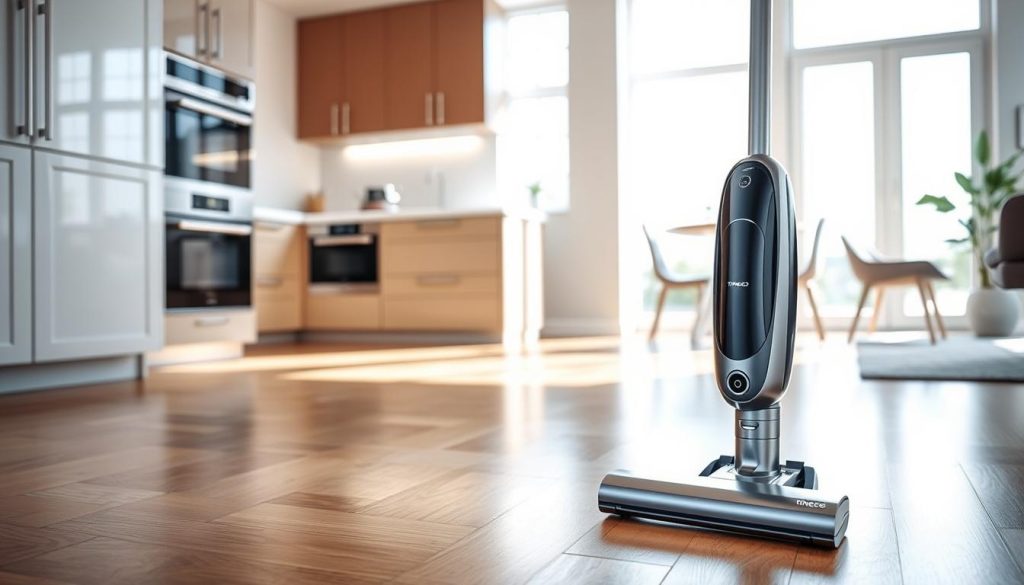
Who it suits: Households that prefer an automated approach for mixed messes. The unit senses floors and adjusts so we do not toggle modes constantly.
Key specs: 22,000 Pa suction; 1,000 ml clean tank; 720 ml dirty water tank; weight 4.7 kg; charge time 4.5 hours.
The smart iLoop sensing and LCD feedback mean the device reads soil levels and adapts suction and flow. We watch the display and know when a zone is clean.
Edge cleaning: A dual-side brush roller reaches about 0.5 cm from skirtings, so grime at edges is cleared in one pass.
Runtime guidance: expect up to 50 minutes in floor‑washer mode and up to 70 minutes as a stick vacuum. That covers most flat‑by‑flat sessions or several short daily touch-ups.
Why the switchable stick format matters: It halves storage fuss and replaces two machines. Note the weight and charge time if users prefer a lighter handheld option.
| Feature | Spec | Practical note |
|---|---|---|
| Motor suction | 22,000 Pa | Strong pickup on crumbs and damp trails |
| Clean / dirty tanks | 1,000 ml / 720 ml | Good for medium flats; fewer refills |
| Runtime | 50 min (washer) / 70 min (stick) | Daily touch-ups and weekly cleans covered |
| Edge cleaning | Dual-side roller | Reaches ~0.5 cm from walls |
Best for hot water stain-cutting: Dreame H15 Pro Heat
For homes that battle oily kitchen spills and stubborn marks, a heat-assisted floor system can be a genuine time-saver. We recommend the Dreame H15 Pro Heat when heat makes the difference between a lingering stain and a one-pass clean.
Hot mopping at 85°C for tough grease
Hot water at 85°C helps break down oil faster than cold rinses. In practice, that reduces repeated scrubbing on kitchen tile and cuts greasy residue.
Key specs that matter
The h15 pro pairs 22,000 Pa suction and a robust heat system. The 800 ml clean tank and 650 ml dirty water tank support longer runs before we refill or empty.
| Spec | Value | Note |
|---|---|---|
| Suction | 22,000 Pa | Strong pickup for crumbs and oily trails |
| Clean / dirty tanks | 800 ml / 650 ml | Good balance for medium flats |
| Runtime | Up to 70 / ~25 minutes | Normal / hot water mode (approx minutes) |
| Weight & design | 6 kg, flat-folding | Sturdy but heavier than daily options |
Manoeuvrability and practical design
The flat-folding design helps reach under low cabinets. Auto-traction wheels and a cordless layout reduce push effort in tight Singapore kitchens.
Runtime, modes and what to watch
Expect up to 70 minutes in standard mode and roughly 25 minutes when using hot water mode. Plan sessions accordingly; the heat mode uses more power and shortens minutes of run time.
What to watch: the unit is 6 kg, so it can be tiring for some users. Be cautious on delicate timber floors; select gentler cleaning modes or skip heat on sensitive surfaces.
Who we recommend it for: households that prioritise stain-cutting and hygiene. If you favour ultra-light handling or mainly timber floors, the dreame h15 pro may not be the best fit.
Best for pet hair: Bissell CrossWave X7 Cordless Pet Pro
Homes that battle constant shedding need a tool built for fur, tracked-in dirt and quick refreshes on rugs and hard floors.
Turbo Pet mode for fur, tracked-in dirt, and stains
Turbo Pet mode boosts suction and dispenses a cleaning solution to break down stubborn stains near feeding areas and doors.
Key specs
| Spec | Value | Note |
|---|---|---|
| Suction power | up to 20,000 Pa | Good for crumbs and fur |
| Clean tank | 820 ml | Fewer refills for medium flats |
| Dirty water | 420 ml | Empty more often in heavy-use zones |
| Runtime | ~30 minutes | Plan room order for larger layouts |
Where it shines and runtime reality
We recommend the CrossWave X7 for pawrents who want fast one-pass cleaning on hard floors and to freshen low rugs.
Hair handling: it manages pet hair well, but we still perform quick post-clean checks to remove wraps and prevent odours.
- Practical tip: use Turbo mode at entrances and feeding spots.
- Buying note: strong mid-range option; not the longest runtime for large landed homes.
Best budget pick: Simplus Cordless Wet-Dry Vacuum Cleaner
We rate the Simplus as our top budget pick for buyers who want wet dry performance without a high price. It delivers strong suction power at 21,000 Pa and sensible features for small Singapore homes.
Performance and tanks
The unit pairs 21,000 Pa suction and a 500 ml clean tank plus a 550 ml dirty water tank. In a typical HDB flat we refill the clean tank once and empty the dirty tank after cleaning two to three rooms.
Design and reach
The 180° flat‑folding design helps reach under sofas. A 6.5 cm brush head improves corner and edge access, making corridor runs faster.
Battery and real‑world use
Battery life runs up to 50 minutes. In practice that covers steady, moderate‑speed cleaning rather than continuous max‑power use. Charge time is about 4.5 hours.
| Spec | Value | Practical note |
|---|---|---|
| Suction | 21,000 Pa | Good pickup for crumbs and fine dust |
| Clean / dirty tank | 500 ml / 550 ml | Fits a medium flat session with one refill |
| Brush head | 6.5 cm | Better edge reach in tight corners |
| Runtime | Up to 50 minutes | Best for paced, room‑by‑room cleaning |
Overall, Simplus is a sensible first wet dry purchase for renters and new homeowners who prioritise value, usable design and reliable cleaning for everyday messes.
Most manoeuvrable option: Narwal S20 Pro
For flats where manoeuvreability matters more than raw power, a nimble model makes daily upkeep painless. We recommend the Narwal S20 Pro for tight layouts and homes full of furniture.
Lightweight handling and triple-sided edge cleaning
Light at 4.27 kg, the unit is easy to steer around chairs and tables. Triple-sided edge cleaning reduces follow-up passes along skirtings and keeps corners from building up dirt.
AI Dirt Sense and five cleaning modes for daily maintenance
AI Dirt Sense raises effort when floors are soiled and backs off for quick refreshes. The five cleaning modes suit light refresh, normal daily clean and stronger passes at entrances.
Hot water support and why it matters for hygiene
Hot water support helps cut grease and improves surface hygiene in kitchens and dining areas. Use hot water sparingly and follow drying steps to avoid stale smells.
Key specs and runtime
Key figures: 20,000 Pa suction power; 790 ml clean tank and a 720 ml dirty water reservoir. Expect up to 60 minutes runtime and about 3.5 hours to charge the battery.
| Feature | Value | Practical note |
|---|---|---|
| Suction | 20,000 Pa | Good for daily dirt and crumbs |
| Tank sizes | 790 ml / 720 ml | Fewer emptying stops mid-clean |
| Runtime / charge | 60 minutes / 3.5 hours | Plan short daily runs or a deeper weekend session |
Who it suits: households that value control, easy handling and strong edge performance over headline suction figures.
Best for low-maintenance hygiene: Shark HydroVac
For buyers who prize simple upkeep and fresher‑smelling floors, this model puts hygiene first. We recommend the Shark HydroVac WD210SM when odour control and easy drying matter more than long runtimes.
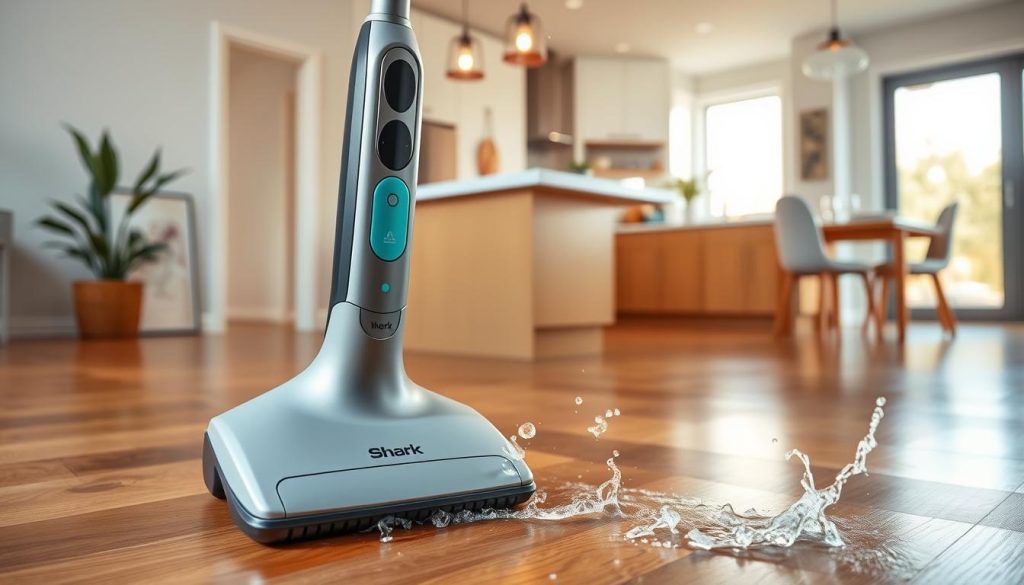
Antimicrobial brush rollers and odour control benefits
Antimicrobial brush rollers are built to reduce bacterial build‑up on the roller itself. In plain terms, that helps keep smells down when we empty the tank and allow the head to dry after each session.
Tank sizing and suitability for smaller flats
The HydroVac has a 500 ml clean water tank and a 360 ml dirty water tank. That sizing fits quick, frequent cleans in compact flats rather than long, whole‑home sessions.
Runtime expectations for quick daily cleans
Expect roughly 30 minutes of run time on a full charge. At 3.9 kg and 2,700 Pa suction power, it performs as a practical floor‑refresh unit for kitchens, entries and dining areas.
| Spec | Value | Note |
|---|---|---|
| Clean / dirty tank | 500 ml / 360 ml | Best for short, frequent runs |
| Suction power | 2,700 Pa | Practical for dust and light debris |
| Runtime / weight | ~30 minutes / 3.9 kg | Easy to carry; plan sessions by zones |
Who we recommend it for: households that want a low‑fuss routine, good odour control and simple upkeep. Who might skip it: larger homes or users who need higher power and longer minutes without stops.
For more wet‑dry vacuum options and comparisons, see our recommended roundup at best wet‑dry vacuum models.
Best lightweight premium: Dyson V12s Submarine models
For compact flats that value weight and finesse, a slim premium stick often makes daily upkeep feel effortless.
We see the V12s Submarine range as a premium, lightweight route for buyers who want a high‑end dry vacuum system that also offers a wet‑capable head for hard floors. Both Origin and Detect Slim share a 300 ml clean tank and a 360 ml dirty water reservoir.
Which Submarine suits us: Origin vs Detect Slim
Origin is very light at 2.2 kg and feels effortless for quick touch-ups. It provides 130 Air Watts of suction and up to 60 minutes run time.
Detect Slim trades a little weight (3.1 kg) for 140 Air Watts, a HEPA filter and an illuminated head that reveals fine dust. That laser helps us catch hidden dirt faster.
Filtration and allergens
Whole‑machine filtration on the Detect Slim matters for homes with sensitivities. We noticed improved air quality after a session compared with non‑HEPA options.
“Laser visibility changes how thoroughly we clean; seeing fine dust often means we clean more precisely.”
| Model | Air Watts | Weight | Tank (clean/dirty) | Runtime / charge |
|---|---|---|---|---|
| V12s Origin Submarine | 130 | 2.2 kg | 300 ml / 360 ml | 60 minutes / 3.5 hours |
| V12s Detect Slim Submarine | 140 | 3.1 kg | 300 ml / 360 ml | 60 minutes / 3.5 hours |
Trade-offs: the smaller tank volumes mean more frequent refills and emptying than larger floor washers. The premium price reflects Dyson R&D, cyclonic power and the slim design.
Who we recommend them for: small flats, users who prefer a single premium stick ecosystem, and buyers who value advanced technology and lighter handling over maximum tank capacity.
Other strong alternatives worth considering in Singapore
Some households prefer larger tanks or steam power; the following models answer those specific needs.
Philips AquaTrio
Why consider it: a true 3‑in‑1 system that vacuums, washes and converts to a handheld for spot tasks. It uses high‑speed brushes and LED nozzle lights and docks into an Auto‑Clean System.
Spec highlights: ~4.2 kg, up to 45 minutes per battery and extendable runtime with a second pack. The design reduces manual maintenance and speeds end‑of‑session hygiene.
Who it suits: busy households that want an all‑round cleaning tool that simplifies upkeep.
Tineco Floor One S9 Artist Steam
Why consider it: steam‑led deep cleaning for sticky floors. The steam system and strong suction combine to cut residue without harsh scrubbing.
Who it suits: kitchens and dining areas where hot water steam and anti‑tangle technology improve cleaning and drying cycles.
Dibea HC26
Why consider it: a value option with dual 700 ml tanks and self‑propelled traction. At ~3.85 kg and roughly 38–42 minutes runtime, it covers larger rooms with fewer stops.
Who it suits: value seekers who prioritise tank capacity and ease of push over premium technology.
“Pick a system that fits your floors, storage and realistic cleaning rhythm, not only the biggest suction numbers.”
How to match the right water tank and dirty water capacity to our home size
Choosing tank sizes saves us stops mid-clean and makes routine sessions smoother. The right balance reduces refill time, affects weight and changes how we store the unit.
Small spaces: portability and easier storage
For compact flats we prefer smaller tanks that keep the unit light and easy to stow. A modest clean tank and a small dirty water reservoir suit quick daily touch-ups in tight kitchens and service yards.
Medium flats: fewer refills without excessive weight
Medium homes need a sweet spot. Choose a tank size that cuts refill frequency but does not make the device awkward to move. This balance saves us time and keeps manoeuvrability intact during a single session.
Larger homes: runtime and tank volume balancing act
For larger layouts, larger tanks help, but only if battery runtime matches the volume. Big tanks with short runtime still force interruptions. Check both clean and dirty tank specs before buying.
Practical habits: pre-sweep heavy debris, empty dirty water promptly and plan runs by zones to make any tank design work harder for us.
Suction power, cleaning modes, and edge cleaning: what matters most day to day
Not all power figures translate into better floors; practical design and cleaning modes often decide results in busy households. We focus on how suction power pairs with roller contact, flow control and accessible modes to deliver reliable one-pass cleaning.
When higher Pa or Air Watts actually helps
Higher Pa or Air Watts can make a clear difference on heavy debris, dense pet hair and gritty entryways. We find extra suction helps when particles are embedded or clumped.
However, good roller contact and consistent fluid control usually beat raw numbers on smooth tile and vinyl.
Auto mode versus manual modes for mixed debris
Auto mode often wins for mixed dirt because it adjusts power and flow as conditions change. That reduces micromanagement and saves battery life during a normal run.
Manual modes remain useful for targeted tasks. Use eco or normal for daily upkeep, a stronger mode for dining areas and a brief burst for sticky spots.
Edge cleaning and gap coverage for skirtings and corners
Edge cleaning is a daily quality-of-life feature. Better gap coverage means less hand-wiping along skirtings and fewer missed lines of dust.
If your layout has many tight corners or built-ins, prioritise models with proven edge reach over the highest suction figures.
“Practical design and accessible modes often matter more than headline power when we clean real homes.”
| Item | When it helps | Practical tip |
|---|---|---|
| Suction power | Clumped debris, pet hair mats | Use higher mode briefly for confident pick-up |
| Auto mode | Mixed debris and spills | Let the system adjust; saves battery and fuss |
| Manual modes | Sticky stains, heavy crumbs | Switch to stronger mode for problem zones |
| Edge cleaning | Skirtings and tight gaps | Choose heads that reach close to walls |
Battery life, charging time, and running time in minutes
Runtime claims are useful, but mapping minutes to rooms gives a clearer picture for real use.
Understanding runtime claims across eco, auto, turbo and hot water modes
Manufacturers list runtime in minutes per mode. Eco or normal mode lasts longest. Turbo and hot water modes cut minutes sharply because they draw more power.
Use the runtime number to plan whether a single charge covers a living room and kitchen, or only quick touch-ups.
Charging time planning for weekly deep cleans versus daily touch-ups
Charge times of 3.5–4.5 hours change how we schedule cleaning. For daily touch-ups, nightly top-ups work well. For a weekly deep clean, we reserve a full charge and check tanks and filters first.
When a second battery or swappable pack is worth it
- Large flats or heavy mess: a second pack gives back‑to‑back sessions without waiting.
- Frequent deep cleans: swap in a charged battery to keep power and consistent suction.
- Quick tip: protect battery performance by drying the head, emptying the dirty tank and keeping filters clean.
Maintenance, hygiene, and long-term running costs
Routine upkeep is often decided by how easy a system is to maintain rather than by peak performance figures. We treat maintenance as the real cost of ownership: a fiddly routine reduces use, no matter how well a model cleans.
Self-clean cycles, brush drying and preventing stale odours
Choose a model with a reliable self-clean cycle and an effective brush dry step. These features cut the risk of stale smells after a session.
Always empty the dirty water tank immediately and run the self-clean. Leave the head to air in a ventilated spot in humid Singapore conditions.
Filter care: HEPA vs standard
HEPA filters trap finer dust and allergens, so we recommend them for sensitive households. Standard filters suit general dust and routine cleaning.
Clean or wash washable filters on a set schedule to keep air flow strong and extend filter life.
After-clean routine and running costs
- Empty dirty water and rinse tanks if needed.
- Remove hair from the brush and inspect anti-tangle parts.
- Run self-clean, then allow parts to dry in a ventilated area.
Consider ongoing price items: replacement filters, spare rollers, and cleaning solution. Models with washable parts and antimicrobial rollers cut long-term expense and reduce odour risk.
Conclusion
Choosing the right wet‑dry system matters more than chasing the biggest numbers. Pick a model you will use often and it becomes the fastest way to manage everyday messes on hard floors in Singapore.
Our top picks cover common needs: Tineco for all‑round versatility, Dreame H15 Pro for hot water stain cutting, Bissell for pet hair, Simplus for budget value, Narwal for manoeuvrability, Shark for hygiene, and Dyson for lightweight premium ease.
Match tank size to your flat, favour good edge cleaning and be realistic about battery life and runtime when using turbo or hot modes.
Finally, maintenance decides long‑term satisfaction: empty dirty water after each run, dry the head and keep filters clean. Once we shortlist two or three models, compare price, accessories and local support to buy with confidence.

