

Yes, in practical terms we answer the question up front: it is possible to restore hygiene and freshness, though the method varies by bed type, stain severity and Singapore’s humid climate.
We outline what a routine home deep clean will achieve: remove surface dust, lift light stains and reduce odours. Professional mattress cleaning goes further, offering sanitisation and stronger extraction for persistent soiling.
Our guide is a step‑by‑step how‑to that we use ourselves. We show simple prep, thorough vacuuming, careful spot treatment, deodorising and fast drying before remaking the bed.
Moisture control is central. Slow drying risks mould and mildew in tropical conditions, so we highlight when to call in pros in Singapore — for heavy staining, stubborn odours, suspected infestations or worsening allergy symptoms.
Why we deep clean mattresses in Singapore homes
Over time our sleep surface gathers more than just crumbs — it traps oils, dead skin and dust that affect comfort. In Singapore’s warm, humid climate this build-up can worsen odours and invite moisture‑related issues.
What builds up over time
Daily use leaves behind dead skin, sweat and dirt across the top layer and seams. Dust mites feed on skin flakes, so even with covers these particles still collect inside.
How cleaning supports healthier sleep
Cleansing the surface reduces allergens and limits irritants that trigger sneezing or itchy skin. Regular maintenance helps us breathe easier and sleep more soundly.
- Routine vacuuming and targeted stain care remove trapped dust and residue.
- Managing moisture in a tropical home prevents stale odours and mould risks.
- True cleaning targets seams and creases, not just a quick surface tidy.
| Issue | What collects | Benefit of cleaning |
|---|---|---|
| Allergens | Dust, dust mites, dead skin | Reduced irritation and better breathing |
| Odour | Sweat, body oils | Fresher sleep environment and less persistent smells |
| Wear | Dirt and residue in seams | Extended lifespan and preserved comfort |
To keep our mattress clean long‑term we must do more than change bedding. Periodic vacuuming plus stain control is the baseline. For step‑by‑step guidance we link to our cleaning method here: what to use to clean a.
Signs your bed is overdue for a deep clean
Subtle clues during sleep tell us when the bed needs more thorough care. Watch for patterns over several nights rather than single incidents. Look, smell and note symptoms to judge condition and time for action.
Frequent sneezing, coughing or nasal congestion at night
Persistent sniffles or nightly coughing often point to trapped dust and allergens in the sleep surface. If symptoms ease outside the bedroom, cleaning may reduce exposure.
Itchy skin, rashes and irritation
Itchiness or unexplained rashes can follow from dust mites and body residue in fabric layers. Treating the surface and seams lowers irritation and improves skin comfort.
Fatigue and disrupted sleep linked to hygiene and comfort
When the bed feels dusty or smells stale, we sleep less well. Poor rest from comfort issues adds to daytime tiredness.
Visible stains and persistent odours
Stains are more than cosmetic. They often signal moisture and trapped residue that hold odours and worsen with time.
Asthma or allergic rhinitis worsening in the bedroom
If breathing symptoms flare most at night, mattress cleaning and allergen control usually help. For heavy infestations or stubborn smells, see when professional help is needed. For a quick guide to signs, read our note on top signs it’s time.
Can a mattress be deep cleaned at home, and when we recommend going pro
Home cleaning tools can restore surface hygiene, but there are clear limits.
What home deep cleaning can realistically achieve
With a vacuum, baking soda and an enzyme or mild soap solution we improve surface feel, reduce dust and lift light odours.
Spot treatment will often remove fresh stains mattress without soaking. Careful blotting and minimal water are essential to avoid slow drying and mould risk in Singapore’s humidity.
When professional mattress cleaning in Singapore makes more sense
Professional services use UV‑C sanitisation, steam and hot water extraction to reach deeper layers and remove embedded residues safely.
If stains are old, allergy symptoms persist, or infestations are suspected, we recommend using pro teams. Bed bug signs require professional pest control rather than further home treatment.
| Issue | Home outcome | When to go pro |
|---|---|---|
| Light dust and odour | Vacuum and baking soda suffice | Only if odour persists after DIY |
| Deep stains or set-in spills | May lift if recent; risk of wetting | Pro extraction recommended for large or old stains |
| Allergy flare-ups | Reduce allergens on surface | Professional sanitisation if symptoms continue |
| Bed bugs or infestations | Cleaning alone is inadequate | Engage professional pest control immediately |
Practical triggers to call professionals include persistent odours, repeated allergy flare‑ups, large spills, or valuable items that need careful protection. For costs and local options see our note on professional cleaning rates in Singapore: professional mattress cleaning costs.
Before we start: tools and cleaning supplies we prepare
We start by assembling a small kit of proven tools to avoid mid‑clean improvisation. This saves time and helps us control moisture in Singapore’s humid climate.

Essentials we recommend:
- Vacuum with upholstery attachment and adjustable suction to clean the mattress surface and reach seams without damaging fibres.
- Enzyme cleaner for biological stains, or a mild dish soap solution for everyday marks; apply with a cloth rather than soaking.
- Baking soda to neutralise odours and absorb any residual moisture after spot work.
- Clean white cloths to avoid dye transfer, plus cold water for gentle blotting of blood or delicate areas.
Why these items matter:
Using the right supplies reduces the urge to scrub aggressively, which can spread stains and harm surface fibres.
Keep product use minimal. Less liquid supports faster drying and lowers mould risk. With this checklist ready, we move on to prep the sleep area confidently.
Prep the sleep area for safe, effective cleaning
Preparation shapes outcome: a tidy area and washed bedding make the next steps safer and faster.
Remove all sheets, pillowcases and covers and wash them per care instructions. Where labels allow, hotter cycles reduce dust‑mite counts and give the room an immediate freshness.
Check care labels and material type
We always read manufacturer guidance before any cleaning. Different construction — foam, latex or hybrid — needs specific care to avoid damage or warranty issues.
Ventilate and protect the bedroom area
Open windows, switch on the exhaust fan or air‑con and clear nearby items that might get damp from cloths or light splashes.
“Start early in the day to give the surface time to dry; in Singapore humidity, time management matters.”
- Control dust first: removing bedding prevents loose dust from settling back.
- Limit water use: prepare fresh cloths and only dampen where necessary to speed drying.
- Protect items: move clothes, electronics and soft furnishings away from the cleaning area.
| Prep step | Why it matters | Practical tip |
|---|---|---|
| Remove and wash bedding | Reduces dust and allergens | Use hot wash if fabric label permits |
| Check care label | Prevents damage and voided warranty | Note material type: foam, latex, hybrid |
| Ventilate bedroom | Speeds drying and removes odours | Start early; use fan or air‑con in humid weather |
| Protect nearby items | Prevents damp or staining | Clear bedside tables and cover nearby soft goods |
Vacuuming for a true deep clean foundation
Effective vacuuming sets the groundwork for all subsequent cleaning steps. We begin by removing dry particles to prevent them from spreading when we treat stains or use any moisture.
How we vacuum the entire surface without damaging fibres
Use an upholstery attachment on low suction. Work slowly in overlapping passes across the mattress surface to avoid stressing fibres.
Do not use harsh brush heads or high suction. Rushing causes fibre wear and reduces removal of embedded dirt.
Where allergens hide: edges, seams and crevices
Pay special attention to edges, seams and crevices where dust and dust mites collect. Spend extra time along the sides and near any handles.
When the bed frame allows, vacuum both sides to improve overall mattress clean results and help allergy relief. Dry removal reduces what becomes airborne during later steps.
- Start on low suction with the upholstery tool.
- Work in slow, overlapping strokes across the surface.
- Finish by focusing on seams, edges and crevices for thorough removal.
Spot-cleaning stains without soaking the mattress
Spot treatment is where careful technique beats heavy soaking every time. We avoid excess water because wet fills inner layers, extends drying time and raises mould risk in humid Singapore. Slow drying harms materials and worsens odour problems.
Blood stains and cold water technique
For blood, we start with cold water blotting to lift fresh marks. Use a clean cloth and press; do not rub. If the mark remains, apply an enzyme cleaner to the cloth and blot repeatedly until the blood fades.
Lifting sweat and body oil
For sweat and oil marks we work in thin layers. Lightly apply cleaner, blot, air briefly, then repeat. This protects the surface and reduces the need for harsh scrubbing.
Dish soap foam for everyday spills
Mix a small amount of dish soap with water and whip to foam. Take the foam on a cloth and dab the stain, then blot away. Foam limits liquid transfer and helps removal without soaking.
Test first and know when to call pros
Always try solutions on an inconspicuous area to check colourfastness and condition. If stains are old, extensive or recurring, professional extraction is the safer next step.
“Treat stains with the least moisture possible; blot, not scrub, and test before you apply any solution.”
Deodorising and refreshing the mattress surface
Our aim when deodorising is simple: leave the sleep surface neutral, not scented. We favour low‑moisture steps that limit drying time in Singapore’s humid climate.
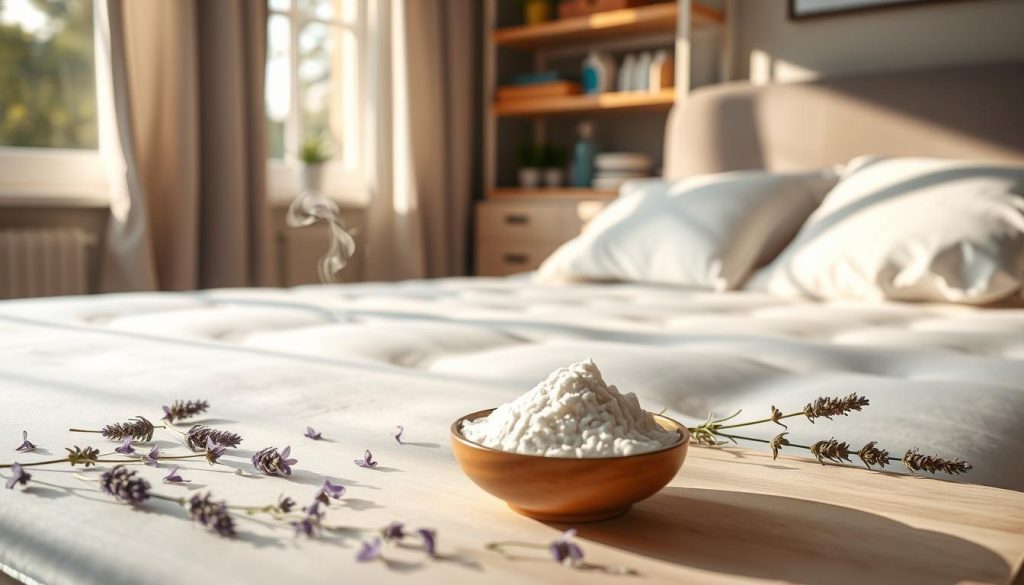
How baking soda breaks down acids and soaks up smells
Baking soda reacts with acidic compounds left by sweat and body oils. This helps neutralise odour molecules while absorbing light moisture from the fabric.
How long we leave the powder to work
Apply an even, light dusting across the mattress surface, focusing on stained or high‑contact zones. Let it sit for at least 15 minutes; longer contact time improves results. When time allows, we leave it for several hours for stronger neutralisation.
Final vacuuming and airing for full removal
After waiting, we vacuum thoroughly to remove powder and trapped odours. Pay attention to seams and edges for best removal results.
Tip: Propping the bed slightly or opening windows speeds odour dispersion. A routine low‑moisture approach helps us keep a clean mattress without long drying times or added scent.
Drying and post-clean care to keep your mattress in good condition
Drying after cleaning decides whether our work improves hygiene or creates new problems. Post-clean care is essential in Singapore’s humid environment. If moisture remains, odour and mould risk increase.
Airflow tips for Singapore humidity
We prop the bed to allow air under the base and across the surface. Aim fans across — not directly down into — the fabric so air moves laterally and speeds evaporation.
Run air-conditioning where possible to lower room humidity. Keep windows open when weather permits and use an exhaust fan to improve ventilation.
When it’s safe to remake the bed
Know what “dry enough” means: the surface should feel cool and neutral, never clammy. Press a clean cloth into seams; if it stays dry, the internal layers are likely dry too.
If we used spot cleaning, we wait longer. Surface dryness can hide moisture in inner layers, so allow extra time before replacing sheets.
Protecting the mattress with a mattress protector after it’s fully dry
Only fit a protector once the mattress is completely dry. A fitted protector preserves condition and prevents trapped dampness.
- Use waterproof, breathable protectors to stop stains while letting vapour escape.
- Wash protectors regularly to keep the bedroom environment fresh and reduce cleaning time.
- Protectors extend lifespan by cutting down wear and simplifying routine care.
“Drying is not optional — post-clean care determines whether cleaning improves hygiene or creates moisture problems.”
How often we should deep clean a mattress
How often we schedule a full refresh depends on household habits, health needs and Singapore’s humid climate.
Our baseline recommendation for standard households is every 6–12 months. This timetable balances effort with measurable benefits to sleep quality and general hygiene.
Allergies, asthma or pets
For homes with allergies, asthma or pets we advise more frequent care: every 3–6 months. Higher allergen load and pet hair accelerate dirt build-up and reduce comfort.
Young children, bedwetting or spills
Child‑related incidents require immediate spot treatment, then regular cycles. Tackle accidents straight away to limit odour and moisture, then return to the chosen schedule.
After illness recovery
After someone recovers from an infection, perform a full mattress cleaning to reset the sleep environment and lower risks for others.
“Remember: ‘clean every months’ is not just cosmetic — it supports breathing comfort and reduces irritants in the bedroom and home.”
- Baseline: every 6–12 months for standard use.
- Higher risk: every 3–6 months for allergies, asthma, pets.
- Immediate action: for spills, bedwetting or illness recovery.
Professional mattress cleaning methods in Singapore: what to expect
Most Singapore providers combine non‑wet and wet methods so we choose based on fabric type and condition.
UV‑C sanitisation
UV‑C offers chemical‑free, fully dry disinfection. It suits every mattress type and kills around 99% of germs, bacteria and many allergens.
This method leaves no residual moisture, so there is no drying time and minimal disruption to the room.
Steam cleaning
Hot vapour helps reduce allergens and lessen odours by loosening surface grime. It improves comfort overnight for sensitive sleepers.
Steam may not fully remove embedded dirt without follow‑up extraction, especially on thicker or natural fabrics.
Hot water extraction
Extraction uses specialised solutions plus powerful suction to remove most dirt, staining residues and trapped odour molecules.
It is often recommended for natural fibre types but needs careful drying to avoid trapped water in humid climates.
Realistic stain and odour outcomes
Professionals often lighten stains and reduce odours significantly. Some old or deeply set marks may remain depending on type and penetration.
Bed bugs and infestations
Cleaning reduces allergens but confirmed infestations require professional pest control for full eradication. Treating and cleaning together helps restore rest and comfort.
| Method | Main benefit | Typical drying / time |
|---|---|---|
| UV‑C sanitisation | Chemical‑free; fully dry; ~99% germ kill | Immediate use; session 30–60 mins |
| Steam cleaning | Reduces allergens and odours | Surface dry in hours; session 45–90 mins |
| Hot water extraction | Deep removal of dirt, residue and odour | Drying can take several hours; session 1–2 hours |
“We aim for clear expectations: which method suits your mattress type, likely stain removal, and realistic drying time.”
Conclusion
To finish, small, consistent steps keep the sleep surface hygienic and supportive. Yes, we confirm a mattress can be cleaned effectively with careful vacuuming, spot treatment, deodorising and thorough drying.
Reducing dust and dirt improves sleep and eases symptoms for allergy‑prone households. Prioritise minimal moisture, follow care labels and speed drying to avoid mould and persistent odours.
Regular cleaning, plus a breathable protector fitted only when fully dry, helps prevent stains and keeps the bed fresher for longer. Set a home schedule and call professionals if stains, odours or symptoms persist.
If the bed no longer gives support or comfort after treatment, replacement is the wiser long‑term choice.

