
We introduce the concept in plain language and explain why this design is gaining attention in Singapore homes.
In this short guide we set expectations for the practical content ahead. We will cover how the water-based system works, how it affects indoor air, and how we use it on floors and carpets.
We clarify who benefits most: households with dust, pet hair and allergy concerns. Cleaner exhaust air means fewer particles recirculate after cleaning.
At a high level, these machines use liquid as a filtration medium rather than dry bags or multi-stage filters. We also outline practical steps: set up, tool choice, and simple post-clean routines for humid climates.
Key decision factors we will explore later include system type, filter stages, weight and running costs so readers can link operation to purchase choice.
What is water filter vacuum cleaner and why it’s different from bagged and bagless vacuum cleaners
We open with the basic idea: using a liquid bath to trap particles changes how exhaust air behaves.
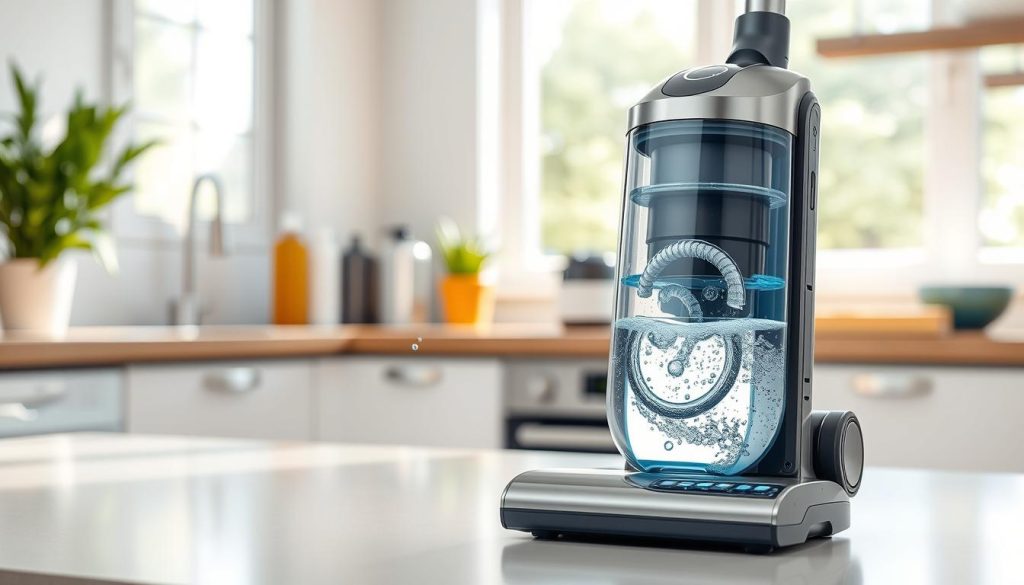
Basic capture: incoming air carries dust and dirt into a water chamber where particles get dampened and sink. The result is cleaner exhaust and visible dirty water that shows debris has been removed.
Rotating column and suction: some brands use a high-speed swirl inside the tank. This rotating column keeps airflow steady and helps pull fine particles into the liquid, while the motor provides the suction power to move debris from floor to tank.
Why a final HEPA stage still helps
Even with liquid capture, a HEPA stage often sits after the tank as a safeguard. It catches tiny droplets and remaining particles to deliver very clean exhaust air.
- Liquid capture: traps bulk and fine dust by entrainment.
- Cyclonic systems: use centrifugal force to separate debris into a bin.
- Paper-bag systems: capture in disposable bags but need replacements.
| Feature | Liquid-based | Cyclone | Paper bag |
|---|---|---|---|
| Primary capture | Particles entrained in liquid | Spun out by centrifugal force | Collected in disposable bag |
| Maintenance | Empty and rinse tank | Empty dust bin, clean filters | Replace bags regularly |
| Final exhaust safeguard | HEPA commonly added | HEPA or filters recommended | Often HEPA before exhaust |
For a deeper technical read, see our overview of how liquid-based systems operate or a practical buyer’s note at LURA.
How water filtration improves indoor air quality in Singapore homes
In Singapore homes, the air we breathe after cleaning matters as much as the dirt we remove.
We manage common household allergens such as dust mites, pollen and bacteria so rooms feel fresher after a session. A machine that keeps tiny particles from returning to indoor air helps reduce allergies and improves overall air quality.
Allergies and allergens: dust mites, pollen and bacteria
HEPA stages capture pollen, fungal spores, bacteria and dust mite faeces, lowering irritants in the exhaust. This matters when we clean in closed, air‑conditioned flats where recirculation is high.
Multi-stage performance for fine particles
Manufacturers report multi-stage systems can extract particles down to about 0.3 µm, with some claiming a 99.99% clean exhaust. A water core, intermediate element and a HEPA final stage limit particle re‑entry to the room.
No bags, less dust cloud and better hygiene
Not using paper bags means fewer places for allergens to build between uses. Emptying dirty water removes mite excretions without the dry puff that happens when tipping a dust cup or bag.
“Emptying a liquid chamber reduces the cloud of dust and lowers the chance of allergen spread.”
| Benefit | How it helps | Outcome |
|---|---|---|
| Multi-stage capture | Water + intermediate + HEPA | Fewer fine particles in exhaust |
| No paper bags | Less storage of allergens | Cleaner emptying, lower allergen growth |
| HEPA final stage | Catches tiny particles and droplets | Better indoor air and reduced allergies |
How we use a water filter vacuum cleaner for floors, carpets and everyday messes
We show a simple routine that keeps performance high across floors, rugs and everyday spills. Start by filling the tank to the manufacturer mark, secure the lid and check seals so airflow and suction work correctly.
Choosing heads and attachments
We pick a wide floor head for open areas, a soft-brush for delicate timber, a hose for edges and a crevice tool for skirting boards and sofa gaps.
Technique for hard floors and carpets
On hard floors we make slow, overlapping passes to lift fine dust without stirring it into the air.
For carpets we balance agitation with steady movement and avoid overloading the head so suction stays consistent and debris moves into the tank.
Handling wet and dry messes, emptying and aftercare
Only use wet pickup if the model permits. Avoid hot ash and unknown liquids.
Empty dirty water carefully to avoid splash-back, rinse the tank and dry all washable parts quickly to prevent odour and mould in humid Singapore conditions.
| Check | When to do it | Why it matters |
|---|---|---|
| Water level in tank | Before each run | Ensures correct airflow and capture |
| Hose and head clear | If suction drops | Removes clogs that reduce power |
| Washable filters and tank | After emptying | Prevents odour and mould |
“Our habit: correct tank level + correct tool + prompt drying keeps suction and clean exhaust consistent.”
Choosing the best water filter vacuum cleaner system for our home
Deciding on the right choice means matching a system’s strengths to our floorplan and daily routine.
Canister or upright: capacity, weight and portability
Canister models often hold more liquid and cope with larger runs, but they tend to be heavier to move around. Upright models suit compact flats and quick jobs, though they may limit tank volume and run time.
Filtration checklist
We look for a transparent water filter chamber, a washable intermediate filter and a final HEPA stage such as HEPA 12 for very clean exhaust.
- Transparent water filter — check agitation and colour.
- Washable intermediate filters — catch carry‑over moisture.
- HEPA 12 — final safeguard for fine particles.
| Feature | Why it matters | Example |
|---|---|---|
| Filtration stages | Stops re‑entry of fine dust | Kärcher DS 5.800: transparent core, washable mid, HEPA 12 |
| Comfort bits | Ease of daily use | casters, telescopic tube, storage, parking |
| Cost | Upfront vs running costs | No bags but possible detergent costs |
Comfort, capability and cost of ownership
Smooth caster wheels, an adjustable telescopic tube and tidy accessory storage make a real difference in Singapore homes. Parking positions save time during short pauses.
We accept higher purchase prices for quality seals and easy‑clean tanks, then enjoy lower day‑to‑day expense by skipping bags. Confirm whether models need detergent, as that adds to ongoing cost.
“Pick the system that fits your space, allergy needs and weekly routine; prioritise filtration stages and features you will actually use.”
Conclusion
Finally, we wrap up the key points that help our homes stay fresher after every cleaning session.
In essence, a liquid bath captures dust and dirt so exhaust air leaves the room cleaner. Paired with a HEPA stage, this water filtration approach helps protect indoor air and improves overall air quality in Singapore homes.
Our routine keeps the system working: set the correct tank level, pick the right head for floors and carpets, handle wet or dry messes only where supported, and empty and rinse with care.
To avoid odour and mould in humid flats, dry the tank and washable parts promptly. The advantages over bagged and bagless machines include simpler emptying, no bag purchases and a clear view of removed debris.
Buying and usage checklist: prioritise multi-stage filtration (HEPA if possible), match the format to your space and strength, and commit to quick maintenance to keep airflow and suction consistent for lasting performance and cleaner home air.

