

We know that velvet is a delicate fabric with a dense pile that draws dust, pet hair and stains. Our aim is to explain the cleaning velvet sofa process in clear, practical steps so you can keep your furniture looking its best at home in Singapore.
This guide sets realistic expectations: gentle routine care plus targeted spot treatment, not aggressive scrubbing or soaking. We outline preparation, routine upkeep, stain response, deeper options and a simple long-term plan.
We also stress a few safety rules: always check the care label, test any solution on a hidden area, and avoid rubbing to protect the pile. These small acts preserve colour, texture and comfort.
Throughout, we balance DIY tips with advice on when to call a professional upholstery cleaner. Our goal is to restore the nap and keep sofas consistent, not just remove marks.
Understanding velvet upholstery before we start
Understanding how the pile sits and reacts is the first step to sensible care in a living room. We define velvet upholstery by its dense pile, or nap, which gives depth and a soft hand but also traps debris.
Why the fabric traps dust and hair
The dense pile physically catches dust, pet hair and crumbs. In a busy interior, particles lodge in seams and between fibres, so marks show more than on flat textiles.
Finding the nap and brushing the right way
We identify the nap by stroking the surface and noting any colour shift. Always brush gently in the direction of the pile to lift and align fibres.
Brushing the wrong way can leave patchy shading. Small, consistent strokes restore an even look without flattening the pile.
Natural versus synthetic fibres
Natural fibre velvet (cotton, mohair, viscose) is typically more delicate. Synthetic blends (polyester, mixed fibres) tolerate slightly more moisture and careful steam work.
If we are unsure of fibre content, we treat the fabric as high risk and use less moisture. For more step-by-step advice on safe methods, see our detailed guide.
What we need for cleaning velvet sofa safely
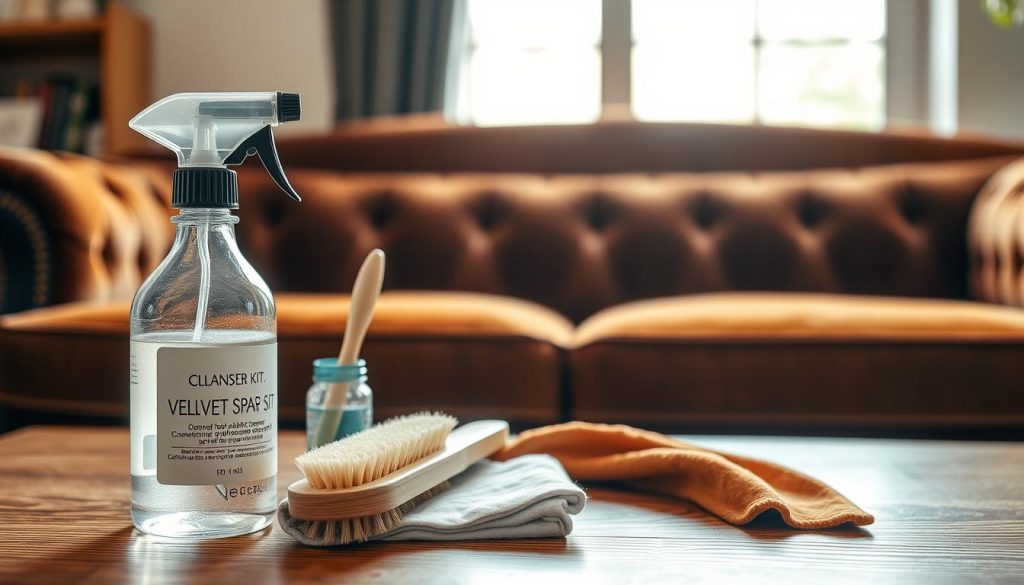
- Soft-bristle or soft brush and a vacuum with an upholstery attachment (low power).
- Clean white microfibre cloths, a non-abrasive sponge and a small bowl of distilled water.
- Gentle cleaning solution options: mild dish soap diluted in water, and a white vinegar mix for stubborn marks.
Check the care label
We always read the manufacturer instructions and warranty notes before using any product. Identify the fabric type and follow the coded guidance. Using the wrong liquid can discolour fabric and may void coverage.
Choose the right spot
Work in a well‑ventilated area and plan time for air‑drying. Position furniture away from direct sunlight to reduce fading. For related maintenance tips, see these leather-care steps.
Routine care to keep velvet sofas looking their best
A simple weekly routine keeps upholstery looking fresh in a busy Singapore living room.
We recommend light, frequent attention rather than heavy, infrequent work. This helps avoid set-in marks and preserves the pile.
Vacuum correctly with an upholstery attachment
Use a low power setting and the soft head on your vacuum attachment.
Make gentle, overlapping passes along the direction of the pile. Pay special attention to seams, edges and crevices where dust and crumbs gather.
Brush to lift the pile
After vacuuming, use a soft brush to lift the nap and reduce shading.
Work in small sections with light strokes to restore an even surface and improve the look of your velvet furniture.
Weekly upkeep checklist
| Task | Why | Frequency |
|---|---|---|
| Vacuum with soft head | Removes dust without flattening fibres | Weekly |
| Brush nap gently | Restores pile and colour uniformity | Weekly |
| Fluff cushions & clear crevices | Prevents uneven wear and traps | Weekly |
| Spot-check for debris | Helps get rid of crumbs before they set | Weekly |
Make sure jewellery or sharp items are removed before care so we do not snag the fabric. Fluff cushions regularly to keep shape and reduce dust build-up between the frame and cushions.
How we spot clean stains on a velvet sofa without damaging the pile
When a spill happens, quick, careful action keeps the pile intact and the mark small.
Act fast. Press a clean, white microfibre cloth to the liquid and lift—do not rub. Blotting means press and lift repeatedly to absorb the spill. This reduces the time the stain has to bond with fibres.

Test before you treat
Always try any cleaning solution on an inconspicuous area, such as the back panel or under a cushion.
Let the test dry and check for colour shift, watermarking or pile flattening before you proceed.
Fresh stains: mild soap and water
Mix a few drops of mild dish soap with distilled water. Use sparingly on a white cloth, dab the spot and blot gently.
Work from the outer edge toward the centre to avoid spreading the mark.
Set‑in stains: lemon and bicarbonate foam
Combine lemon juice and bicarbonate of soda to form a foam. Apply the foam only; avoid soaking the fabric.
Gently dab the foam, then remove residue with a damp cloth and blot dry.
Tougher marks: vinegar mix
For ink or wine, try equal parts white vinegar and distilled water. Apply with a cloth, moving from the edge to the centre.
Finish and restore the nap
Allow the area to air dry completely—no heat. When dry, brush or vacuum lightly to blend the pile and restore texture.
| Stage | Action | Why it matters |
|---|---|---|
| Immediate | Blot with clean white cloth | Removes most liquid before it sets |
| Test | Try solution on hidden area | Prevents unexpected discolouration |
| Treatment | Soap mix / foam / vinegar as appropriate | Treats different stain types without over‑wetting |
| Finish | Air dry, then brush/vacuum | Restores nap and avoids water rings |
When to use a cleaner, steam, or professional upholstery cleaning
Knowing when to choose a home cleaner, a steam machine or a professional service saves time and avoids damage.
We move past routine care when stains are widespread, recurring or have penetrated the padding. At that point, a deeper process is justified to restore the fabric and protect warranty terms.
Commercial products and warranty guidance
Use commercial upholstery cleaners only if the manufacturer approves them for your fabric type. Read labels and follow instructions closely to avoid colour change or pile distortion.
Safe-use rules: apply minimal product, work with a damp white cloth, and allow adequate time to air dry before brushing.
Crushed pile: foam-only approach
Crushed velvet is very sensitive to liquid. We recommend using suds or foam rather than wet solutions to avoid flattening the texture.
Apply foam lightly, blot excess with a white cloth and let the area dry naturally. Finish with a gentle pass using a soft brush to lift the nap.
Steam at home versus a specialist
Synthetic blends usually tolerate cautious steam at low settings. Natural fibre velvet, especially cotton mixes, risks watermarking and shrinkage.
For natural fibre upholstery, we favour professional upholstery cleaners who can use dry‑clean methods or controlled steam without harming the fabric.
| Situation | Recommended action | Why it matters |
|---|---|---|
| Surface marks or crumbs | Routine vacuum and spot treat | Prevents set‑in stains and reduces wear |
| Large or recurring stains | Commercial cleaner (manufacturer approved) or pro | Effective removal while protecting warranty |
| Crushed pile affected | Foam only, minimal liquid | Preserves texture and prevents matting |
| Natural fibre fabric | Professional service | Reduces risk of colour change and distortion |
Conclusion
, Consistent care and quick responses are the best way to protect upholstery from day‑to‑day wear in a busy living room.
Keep a weekly rhythm: vacuum gently, brush in the direction of the pile and remove dust and crumbs before they set. This simple routine will help keep velvet furniture looking even and fresh.
For spills, remember the mental checklist: blot with a clean cloth, test any solution in a hidden area, treat sparingly and let the area air dry fully.
If stains are widespread, the fabric is delicate or you want a deeper refresh, we recommend a professional upholstery service every few years. With steady care, your velvet sofa will remain a strong, lasting feature in your home interior.

