

We introduce what “heavy duty wet and dry” means for Singapore homes and light job-site users. In one machine, you get dry dust pickup and liquid spill recovery, plus multi-surface tools for floors and upholstery.
This is a product roundup with clear commercial intent. We compare formats and features people weigh before paying: suction in real cleaning, filtration for fine dust, tank handling, tools, longevity and overall value.
Our top Electrolux picks include a budget drum model, a premium cordless hard-floor option and a hygiene-first multi-function unit. We explain who each model suits and when a professional-grade Kärcher-style alternative is more sensible.
We also flag Singapore purchase perks — free delivery, 0% instalment plans and promotions up to 47% — so performance links to total ownership cost.
How we selected the best wet dry vacuum options for Singapore homes and job sites
We compared machines by how they perform where Singapore homes and job sites actually need them to. Our shortlist blends specification checks with hands-on criteria so readers can choose for real-world use.
Commercial intent: what buyers typically compare before purchasing
Price bands, corded versus cordless, wet pickup safety, ongoing filter costs and included tools are the first filters we apply. Electrolux models span budget to premium, so value at each price point matters.
Where performance matters most in Singapore
We focused on renovation dust, workshop debris, car boot sand, balcony spills and post-storm water tracking. These tasks expose weaknesses in suction and tank handling.
What we prioritised
- Suction consistency — feel at the nozzle, and performance as filters load.
- Filtration — fine dust control to reduce haze in enclosed flats.
- Capacity & convenience — tank size, splash-free emptying and mode switching.
- Durability signals — build materials, castors, hose fittings and accessory storage.
“We balance specs with real-world practicality so you get the right machine for your needs.”
Wet and dry vacuum cleaners explained: what they do (and what they don’t)
We explain what these multi-use machines actually pick up, and where their limits lie.
What they do: These units collect both loose debris and liquid spills into a single tank. That saves space and cuts the need for separate tools when you tidy a car, balcony or workshop.
What they don’t do by default: Not every model mops. Only stick-style floor systems with water tanks offer integrated mopping. Using a dry-only unit on liquids risks damage and safety issues.
Wet dry vs dry vacuum: the practical difference
A dry vacuum is designed only for dust and solids. It lacks seals, float shut-offs and tank drainage that liquid handling requires. Using the wrong type can ruin filters or motors.
Typical formats: drum vacuums and cordless stick systems
Electrolux lists models from robust drum tanks for renovations to cordless sticks for daily floor care. Drum tanks suit garages, renovation sites and cars. Stick systems suit daily hard-floor upkeep.
| Format | Key use | Strength |
|---|---|---|
| Drum/tank | Garages, renovations, patios | Large tank, blower function, rugged attachments |
| Cordless stick | Daily floors, quick spills | Lightweight, integrated mopping options |
| Hand/portable | Car interiors, tight spots | Quick reach, compact storage |
Terminology we use: tank/container, filtration, attachments and blower. For practical tips and unusual uses, see our short guide unusual uses for your wet-and-dry unit.
Why choose a wet dry vacuum instead of a standard vacuum cleaner
When a spill or a mess appears, having one machine that copes with both liquids and solids changes how we clean at home.
Spills, leaks and quick water pickup
One clear benefit is fast water removal without swapping machines. In Singapore that means clearing kitchen drink spills, bathroom puddles and balcony rainwater before floors become slippery.
We also rely on it after mopping or small leaks to cut drying time and reduce odour risk.
Dust, dirt, pet hair and general debris
These units handle dust, tracked-in dirt from void decks and carparks, pet hair and sand in car boots. They move easily between living rooms, car interiors, workshops and patios.
- Less clutter: one device replaces two, which saves storage in compact flats.
- Versatile tools: using the right setting and nozzle preserves filters made for fine dust.
Practical choice: a single, well-used machine is a tidy, space-saving solution for busy Singapore homes.
What “heavy duty” really means in a wet and dry vacuum
True industrial-grade capability shows up when a machine keeps suction steady through heavy loads.
Motor performance and sustained suction
We look for motors that maintain airflow rather than peak numbers on a spec sheet. A steady draw matters when filters load or when coarse grit passes through.
Suction power that holds under load prevents repeated passes and saves time on renovation and car tasks.
Container design for large liquid volumes and coarse debris
Good container layout pairs capacity with stability. Tanks must accept sand, nails or sludgy water without frequent clogs.
Drainage, wide inlets and simple emptying are key features of smart design.
Build quality for frequent, demanding use
We check housings, castors, secure clips and reinforced hoses. These parts signal machine lifespan and day-to-day reliability.
“A cut above normal dry units in contamination handling, with housings and cables built for daily challenging use.”
| Aspect | What to expect | Why it matters |
|---|---|---|
| Motor & airflow | Consistent power under load | Keeps performance steady during long jobs |
| Container capacity | Large, clog-resistant tank | Less emptying and safer wet pickup |
| Build & fittings | Metal clips, rugged hose, robust castors | Durability for repeated site use |
- Safety: float systems or auto cut-off prevent overfilling.
- Self-assess: choose based on occasional spills or frequent mixed debris.
Buying criteria that make or break performance
Choosing the right features makes the difference between a tool that sits unused and one we rely on every week.
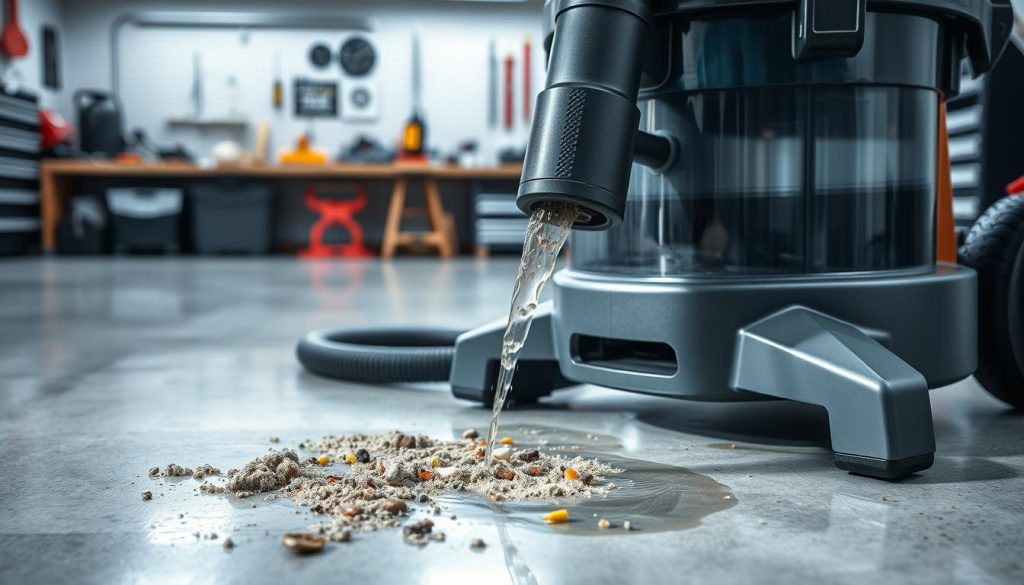
Suction power and airflow for real-world vacuuming
We look beyond watts. Airflow at the nozzle determines how grit, pet hair and heavy debris move into the tank. Brands may quote peak figures; we test suction power at the tool head to judge real vacuuming performance.
Tank capacity, clean water handling, and emptying convenience
Choose tank size for the task: modest for everyday spills, larger for renovation dust. Easy drainage and splash-free emptying save time and mess.
Stick systems with refillable clean water tanks must separate dirty water well. That separation keeps floors hygienic and shortens drying time.
Attachments and floor tools for hard floors, carpets, and tight spaces
Match tools to surfaces: wide nozzles for tiles, soft brushes for laminate, motorised heads for rugs, crevice tool for car footwells. Good on-board storage keeps tools ready.
Mobility and design: castors, 360° handling, cords, and storage
We favour units with smooth castors, 360° manoeuvrability and sensible cord length. A neat storage system reduces lost parts and makes the system usable every day.
Total cost: price, filter costs, and accessories
Consider lifetime costs: initial price, filter replacements, optional bags and extra tools. A lower upfront price can still be costly if filters need frequent replacement.
| Criterion | Why it matters | What to check |
|---|---|---|
| Suction power | Real matter pick-up | Airflow at nozzle, not just watts |
| Tank & clean water | Capacity and hygiene | Drain plug, refill/separation for floor washing |
| Tools | Surface adaptability | Included heads and on-board storage |
| Mobility & system | Daily use likelihood | Castors, 360° turn, cord length |
| Price | Total ownership | Filter cost, accessories, warranty |
To compare models and learn more about choosing the right unit for your needs, see our guide on how to choose — it helps match features to tasks so you avoid overpaying for unused products.
Filtration and fine dust: choosing the right filter system
The right filter system keeps our indoor air clearer after every clean. It decides whether fine particles stay trapped or return to the room. That matters in flats, cars and workshops in Singapore where renovation dust and pet hair are common.
“A vacuum cleaner is always only as good as its filter.”
Kärcher’s point is simple: clogged media cut suction and spread more dust.
Microfilter and cartridge filters for fine particle control
Microfilters and cartridge or pleated types trap the smallest particles. They keep fine dust from reaching the motor and from exiting the exhaust. Regular cleaning preserves airflow and prevents loss of suction.
Bagless operation vs filter bags
Bagless systems give larger usable container volume and lower consumable cost. But they expose us to dust when emptying. Filter bags simplify disposal and limit contact with dust, which helps allergy sufferers.
- Choose higher filtration if you have allergies, pets or frequent renovation dust.
- Prefer bags for fuss-free disposal; choose bagless if you want lower running costs and easy volume checks.
Next: we explain why automatic filter cleaning matters once fine dust loads rise during long jobs.
Self-cleaning and automatic filter cleaning: staying powerful during long cleans
Keeping suction steady across hours of work is where smart filter tech pays off.
What a self-cleaning system does is clear dust from the filter so suction stays stable during long jobs. A good self-cleaning system reduces filter handling and keeps performance consistent.
Semi-automatic cleaning for smaller fine dust loads
Some makers use a semi-automatic approach. You trigger a cleaning pulse when small to medium fine dust builds up. Kärcher’s AP method suits workshop dust, drilling residue and short renovation bursts.
Triggered air cleaning technology
Tact uses sensors to decide when to blast the filter with reversed airflow. The system fires powerful air bursts to eject clinging dust so suction does not fall off mid-task.
Practical gains
- Less downtime: fewer stops to clean the filter.
- Lower exposure: we handle less dust during maintenance.
- Cost and time savings: fewer bags or changed filters and faster completion.
“Automatic cleaning keeps our tools working while we work.”
For routine home tidying with low fine dust, a simple filter will do. For renovation weeks or repeated drilling dust, a self-cleaning system is a valuable feature that keeps the system productive.
Safety and shut-off features for wet pickup and hazardous dust
Safety matters wherever liquids meet fine particles. Overfilling can flood the motor area and create a shock or fire risk, so protection systems are essential for both the machine and the user.
Float systems and automatic cut-off to prevent overfilling
Mechanical float systems block airflow when the tank reaches a set level. You will notice a sudden drop in suction or the unit will stop; that is the float sealing the inlet to prevent motor damage.
Electronic cut-off uses conductive contacts to sense liquid. When triggered, power is cut automatically so the motor cannot run while water reaches critical points.
Dust classes L, M and H: matching risk to equipment
Classes match a machine to the risk posed by the dust it collects. L suits lime and plaster. M covers wood, concrete and paint dust and is often the legal minimum for construction sites. H is for hazardous materials such as asbestos, lead and mould.
When safety models are the right call
We recommend safety-grade cleaners for regular work with respirable fine dust, hazardous substances or site work. For one-off household tidying, a general-purpose unit can suffice, but not for renovation or remediation jobs.
“If your tasks generate silica, MDF or plaster dust, choose the correct class and follow safe disposal — do not rely on a standard home machine.”
Drum wet dry vacuums vs cordless stick wet dry cleaners
Deciding between a tank-style unit and a cordless stick comes down to capacity versus convenience. We outline the practical differences so you can match a model to your routines and space.
Tank-style models: capacity and site-style function
Tank units favour larger tanks, robust fittings and a blower function for clearing leaves or workshop dust.
They are often corded, offer 360° manoeuvrability and store accessories on-board. That makes them ideal for garages, renovation sites and heavy car cleaning.
Cordless stick models: daily care for hard floors
Cordless sticks combine vacuuming with mopping and are built for quick, frequent use on hard floors.
Features such as inverter motors, TriAction nozzles, smart dirt detection and self-cleaning options speed daily resets in flats and kitchens.
Which format fits your home, garage or workshop?
Choose a tank if you need large capacity, blower function or rugged handling for renovation work.
Choose a cordless stick if you mostly clean tiled or wooden hard floors and want rapid, space-saving upkeep.
“Match format to task: bulk clearing and workshop work suit tanks; frequent floor care suits cordless sticks.”
| Format | Best use | Key design difference |
|---|---|---|
| Tank-style | Garages, renovations, heavy car work | Large tank, blower mode, corded power, on-board tool storage |
| Cordless stick | Condo kitchens, HDB living rooms, daily floor care | Integrated mopping, lightweight, charging dock, smaller footprint |
| Shared traits | Multi-surface cleaning around the home | Filtration options, detachable hand units on some models |
Practical tip: if your flat has mostly hard floors and you clean frequently, a cordless stick saves time and space. For larger or mixed tasks, a tank-style unit gives better capacity and versatility.
For deeper reading on format choices and specs, see our concise wet-dry guide.
Top pick for budget heavy-duty versatility: Electrolux Flexio Power Wet and Dry Vacuum Cleaner Z823
For buyers after robust multi-function performance without a high outlay, the Electrolux Flexio Power Z823 is our budget pick. It is sold as a 3-in-1 drum unit with wet dry and blower modes, with promotions often lowering the final price.
Best for: value-focused users who need wet, dry, and blower function
We recommend this model for households that want workshop-style capability in a compact form. It suits garages, patios, car boots and light renovation tasks where grit and spills coexist.
Key features
- 1600W motor — practical pickup on coarse debris and faster clearing of dusty piles.
- On-board tools storage — keeps nozzles and brushes close at hand so switching tasks is quicker.
- 360° manoeuvrability — useful in cluttered porches, tight carparks and balcony corners.
Typical Singapore use cases
We use the Z823 for patio sand, car interior sand, post-renovation rubble and occasional liquid spills where a drum format excels. The blower mode also helps clear leaves or sawdust from work areas.
Value note: this product offers strong baseline utility for the money. Before buying, check which accessories are included, filter replacement costs and warranty terms so you know total ownership costs for these products.
“A practical, affordable drum option that keeps daily chores fast and organised.”
Top pick for premium cordless hard-floor care: Electrolux 800 3-in-1 Wet & Dry Cordless Cleaner EFW81713
For busy flats that favour quick upkeep, the Electrolux 800 3-in-1 sits as our premium pick for daily hard-floor routines. It combines cordless convenience with integrated mopping and vacuuming in one unit, often with promotions available.
Best for: daily vacuuming and mopping with minimal effort
We recommend this model for households that clean often and want fast turnarounds. The detachable hand unit helps clear crumbs, sofa edges and tight corners without hauling the main unit.
Performance highlights
The inverter motor delivers steady suction with efficient energy use, so performance stays smooth during routine jobs. The TriAction nozzle claims a 99% debris pick-up and is focused on strong edge-to-centre pickup across hard floors.
Convenience and maintenance
Dirt detection sensors guide where to focus effort, reducing guesswork and improving results. A built-in self-cleaning system reduces manual contact with dirty water and residue after mopping, which keeps ownership more hygienic over time.
- Highlights: inverter motor, TriAction floor tool, detachable hand unit.
- Practical note: check water tank handling and filter costs to match the model to your cleaning frequency.
“A refined option for flats where fast, reliable floor care matters every day.”
Top pick for hygiene-first wet and dry cleaning: Electrolux UltimateHome 700 multi-function vacuum cleaner EFW71711
For households where hygiene tops the list, this Electrolux model is built around bacterial control and fast spill response. It targets kitchens, dining areas and other high-contact zones where cleanliness matters most, often with promotions available.
Best for: health-conscious households prioritising bacteria control
We recommend the UltimateHome 700 when preventing bacterial build-up is a priority. Electrolux states the antibacterial water tanks achieve 99.9% bacteria elimination, which reduces stored-water contamination between uses.
Hygiene features: antibacterial water tanks and self-cleaning nozzle
The unit combines antibacterial tanks with a self-cleaning system for the nozzle. That pairing shrinks residue and odour risk after mopping or liquid pickup, so maintenance is simpler and safer for families.
Everyday practicality: quick floor drying and spill response
We find quick floor drying is a genuine benefit in Singapore’s humidity. Faster drying reduces slipperiness and makes rooms usable sooner after a clean.
The model claims 99% debris pick-up and suits hard floors, sticky footprints, daily spills and short clean-up moments without swapping tools. For busy homes, it acts as a single, hygienic cleaner that saves time and gives added peace of mind.
“Designed to limit bacterial growth and speed up tidy-ups, this model suits kitchens and high-traffic floors.”
- Best suited surfaces: hard floors and sealed tiles.
- Key hygiene wins: antibacterial water tanks, nozzle self-cleaning.
- Retail pricing varies; check for local promos and warranty terms.
Professional-grade alternatives: what Kärcher-style commercial wet dry vacuums prioritise
When work demands rarely stop, operators choose robust systems that keep suction steady across hours of use.
Commercial models optimise long run-times, simple service and durability. We look for machines that resist clogging, offer reliable filter cleaning and deliver consistent airflow under heavy fine dust loads.
High-demand worksites: consistently high suction with filter cleaning
NT Tact-style systems use sensor-controlled automatic cleaning to eject dust from the filter. That keeps suction from collapsing mid-job when fine dust loads rise.
We value these systems for renovation sites, workshops and maintenance squads where downtime costs money.
All-rounders for mixed dirt: dry, damp, and liquid pickup
AP-class commercial units use semi-automatic pulses to clear medium fine dust. They balance dust control with liquid handling so teams can switch between dry debris and puddles without frequent stops.
Specialised solutions: pumps, industry-specific machines, and hazard zones
Standard-class machines prioritise large liquid volumes and coarse dirt for contractors and hospitality teams. For bulk water removal, some units include built-in disposal pumps suited to flood response or site drainage.
Specialised designs exist for bakeries, food production and emergency services. Safety-grade options meet dust class M and H requirements, while explosion-proof machines serve zone 22 hazard areas.
| Class | Best use | Key feature |
|---|---|---|
| NT Tact / Automatic | High fine dust loads, trades | Sensor-controlled filter blasts for steady suction |
| AP / Semi-automatic | Mixed dirt, renovation tasks | Semi-auto pulses for moderate fine dust control |
| Standard | Large liquid volumes, coarse debris | Big tanks, robust fittings, pump options |
| Specialised / Safety | Bakery, hazardous sites, zone 22 | Pumps, food-grade designs, M/H and explosion-proof variants |
“For sustained site work we favour systems that keep suction consistent and make filter care simple.”
Price, value, and where to buy in Singapore
Price shapes which features we can reasonably expect from a model and how it fits our routines in Singapore.
Typical price range and what you get at each tier
Electrolux lists products from entry level to premium depending on model and promotions. At the entry tier you get a robust drum with large tank and basic tools. Mid-range models add better filtration, tidy storage and cleaner maintenance. Premium cordless systems trade tank size for cordless convenience and refined design.
Promotions, free delivery, and instalment plans to look for
Watch for official offers: free delivery for bulky units, 0% instalment plans and discounts up to 47% on select models. These perks often change the effective price more than seasonal sales.
“Judge value by performance plus ownership costs, not just the sticker price.”
| Tier | Typical price (S$) | What improves |
|---|---|---|
| Entry | Varies | Capacity, basic tools |
| Mid-range | Varies | Filtration, accessories, hygiene features |
| Premium | Varies | Cordless convenience, smart features |
When comparing offers, check replacement filter costs, accessory packs and whether key tools are included. Buy from official channels for warranty clarity and authentic parts, or from trusted marketplaces only when bundles and return policies are clear.
Final thought: balance the sticker price with running costs to choose the best long-term cleaning solution for your flat or home.
Using your wet dry vacuum for better results and longer life
Small routine steps greatly extend a machine’s life and improve each clean. We focus on practical habits that prevent common faults and keep performance steady in Singapore’s humid environment.
Switching between wet and dry: preventing filter issues
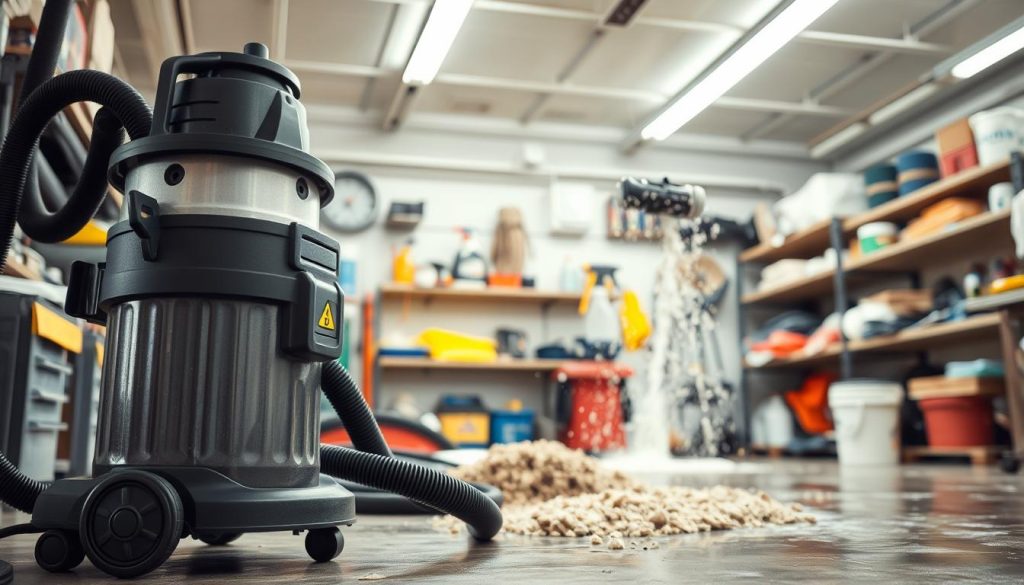
Before any liquid pick-up, remove or protect dry filters. Kärcher-style float systems or electronic cut-off guard against overfilling, but a soaked filter will still lose suction.
After wet work, dry or replace the filter promptly. Use semi-automatic or automatic cleaning where available to blast trapped fine dust and restore airflow.
Emptying and cleaning the container to avoid odours and blockages
Empty the container immediately after use. Rinse and dry parts where possible to stop residue and mould in Singapore’s humidity.
Check the hose path for grit and residues; a blocked airway reduces suction and stresses the motor.
Tool choice for floors, edges, upholstery, and car interiors
Match the tool to the task: wide nozzles for open floors, crevice tools for skirting and corners, and soft upholstery heads for sofas.
For cars, use a narrow brush for seat rails and a short nozzle for footwells to lift sand without scattering dirt. Electrolux models with on-board accessory storage keep tools handy so we use the right head every time.
“Routine filter checks and correct tool choice keep cleaning quick, effective and extend the machine’s life.”
Conclusion
Practical results come from choosing the right format, not the biggest power figure on the spec sheet.
We summarise the choice: pick a wet dry system based on how often you need water pickup, the volume of dust you handle, and whether rugged build matters. For large clear-ups, drum machines give capacity and versatility; for daily hard-floor cleaning, cordless stick systems save time and space.
Key make-or-break items are filtration quality, steady suction and sensible container handling. Factor total cost — price, replacement filters and accessories — when you compare models. Our top Electrolux picks match common Singapore use cases and budgets, with promotions and instalment options often available.
Quick checklist: task frequency, dust level, tank size, filter class, and running costs. A wet dry unit pairs well with a robot vacuum for layered cleaning and faster results across the home.

