
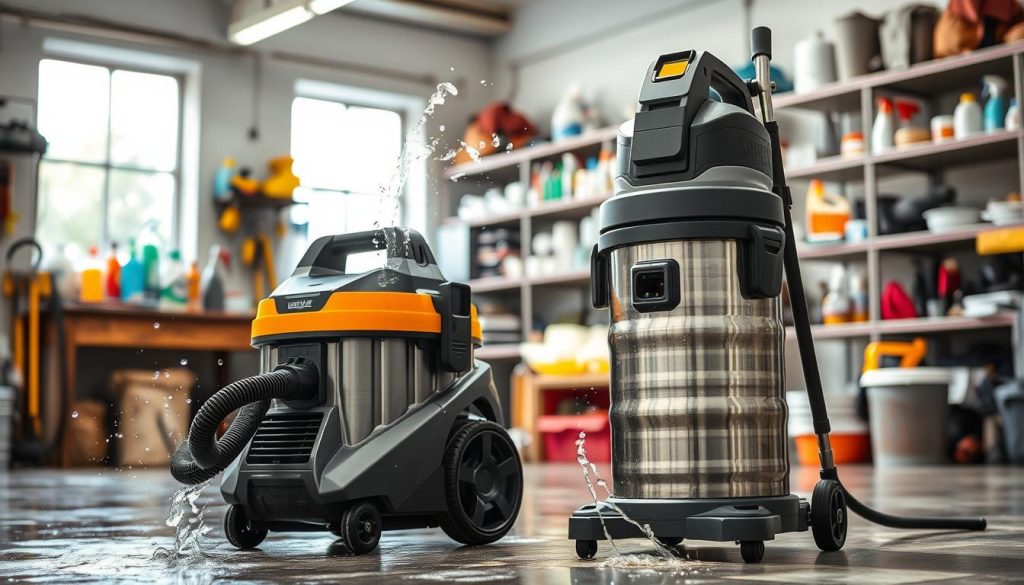
We set out to test common workshop and home options available in Singapore. Our aim is simple: show which model suits an HDB flat, a pet home, mixed floors or a small workshop.
These machines handle liquid spills and solid messes. They often have stronger motors, larger tanks and tougher builds for consistent performance.
We preview Tineco, Bissell, Simplus, Narwal, Dreame, Shark and Dyson picks and explain who each fits best. We focus on real use: refill frequency, edge reach, streaking and odour control in humid climates.
Key buying choices we cover include suction metrics, tank size, filtration class, noise levels, cordless practicality and running cost. Our comparisons balance headline specs with actual cleaning outcomes so you get value that matches your needs, not just marketing.
How we review wet dry vacuum cleaners in Singapore
The models we test must deliver steady suction when facing both fine dust and pooled water. We base our method on real Singapore use — small bathrooms, HDB corridors and busy workshops — not lab-only figures. Our focus is on repeatable results that matter in daily cleaning.
Our scoring: suction power, tanks, run time, filtration, noise and real-world cleaning
We rate sustained suction under load rather than peak numbers. That covers how performance holds up when tanks fill or brushes clog.
Tank testing checks usable volume, ease of emptying and whether the clean water tank and dirty section stay separated during repeat passes.
Run time tests mirror mixed-use sessions to see if stated run time matches practical cleaning cycles. We also score filtration for allergen control and whether dust escapes on emptying.
Noise is judged in real homes. We compare perceived loudness in corridors and evenings and note pitch, which affects comfort during use.
What “heavy-duty” means for homes, workshops and site use
For a home, it means durable build and reliable liquid pickup with easy storage. For workshops, it emphasises fine-dust handling and steady power.
On sites, systems with filter-cleaning technology such as Kärcher NT Tact get higher marks for reducing downtime. We make clear that more motor power is not always the best choice for small flats — manoeuvrability and maintenance matter.
- Pickup and streak control on hard floors
- Sustained suction under real loads
- Practical tank design and mess-free refill
- Real-world run time and charging behaviour
- Filtration for pets and allergy-prone households
- Noise impact in Singapore living spaces
For further context on market choices, see our roundup of the best models in Singapore.
Wet dry vacuum vs dry vacuum cleaners: what changes in day-to-day cleaning
Moving to an all-in-one model alters how we manage crumbs, tracked-in grit and puddles across a small Singapore apartment. The main shifts are practical: one device tackles both dust and water, but the trade-offs affect speed, noise and upkeep.
Handling dry messes, dust and fine debris
For dust, a good dry vacuum still wins for quick touch-ups. Brush design and filtration matter as much as raw suction for picking up crumbs and fine debris.
Handling water, liquid spills and wet dirt safely
Proper wet pickup uses bypass blower suction to move water into a tank. A float shut-off or electronic cut-off prevents overfill and protects the motor.
“Float shut-off systems stop liquid reaching the fan to avoid motor damage.”
Why wet and dry models are often heavier and noisier
Dual tanks, reinforced housings and larger motors add weight. Higher airflow needs raise noise, though some models offer noise-reduction design features.
- When to keep a dry unit: fast dust-only cleans and lighter carry.
- When to opt for all-in-one: kitchens, entryways and rainy seasons where water and dirt mix.
- Time trade-offs: less tool swapping but more tank emptying and drying.
| Feature | Dry unit | All-in-one unit |
|---|---|---|
| Best for quick dust | Yes | No (bulkier) |
| Handles water | No | Yes (float/electronic cut-off) |
| Weight and noise | Lower | Higher |
For creative uses and tips on multi-use models, see our guide to unusual uses for your unit.
Buying guide: what to look for before you choose a heavy wet and dry vacuum cleaner
We focus on the features that affect real-world cleaning, not just headline figures. Below are the points we use when deciding which unit suits a Singapore flat or workshop.
Suction metrics made practical
Suction power appears as Pa for many floor washers and as Air Watts on premium cordless models. Higher numbers matter most for gritty debris and pet hair clumps on tiles and laminate.
Water tank trade-offs
Separate clean water and dirty water tanks keep grime from being re-deposited. Larger tanks reduce stops but add bulk; smaller tanks suit narrow HDB corridors and tight storage.
Filtration, power source and tools
Standard filters work for general dust. Choose HEPA if allergens affect your household air quality. Cordless gives quick deployment; corded wins for long uninterrupted use and avoids battery life decline.
- Useful tools: edge brush, crevice tool, dosing cap, self-clean dock.
- Noise: seek models with low-noise modes or sound insulation for evening use.
- Price vs running costs: factor in filters, brush rollers and cleaning solution replacements when judging long-term value.
Best overall: Tineco Floor One Switch S7 Stretch review
We rank the Tineco Floor One Switch S7 Stretch as our top pick for typical Singapore hard-floor homes. The unit pairs smart sensing with strong pickup to reduce repeat passes and fuss.
Key specs and what they mean in use
Core figures: 22,000 Pa suction power, 1,000 ml clean water tank and a 720 ml dirty water tank. In practice, 22,000 Pa gives confident grit and pet-hair pickup on tiles and laminate.
Smart sensing and automatic modes
The iLoop technology detects wet versus dry messes and adjusts suction and water flow. In real cleaning, the system reduces guesswork and cuts streaking in maintenance passes.
Edge reach and performance on hard floors
The dual-side brush roller reaches about 0.5 cm from the wall, so edge cleaning around skirtings is solid. On tiles and vinyl the S7 Stretch lifts grit, leaves minimal residue and dries quickly in humid conditions.
- Runtime: up to 50 minutes in floor washer mode; up to 70 minutes in vacuum mode.
- Ownership: converts to a stick function, stores compactly and needs only weekly brush and tank care for mixed use.
| Feature | Spec | Real-world effect |
|---|---|---|
| 22,000 Pa | suction power | Confident pickup of grit and hair on hard floors |
| 1,000 ml | clean water tank | Fewer refills for whole-room cleaning |
| 720 ml | dirty water | Handles longer sessions before emptying |
| iLoop | technology | Automatic cleaning modes reduce over-wetting and streaks |
“Balanced power, smart modes and tight edge cleaning make the S7 Stretch a practical fit for Singapore flats.”
Best for pet hair: Bissell CrossWave X7 Cordless Pet Pro review
For households with pets, quick spot cleans decide whether a model works in daily life. We tested the CrossWave X7 Cordless Pet Pro for fur pickup, stain removal and everyday manoeuvre in Singapore flats.
Turbo Pet mode, suction and cleaning solution performance
Turbo Pet mode raises suction to the unit’s peak of up to 20,000 Pa. It pairs with the specified cleaning solution to tackle dried drips, muddy paw prints and hair clumps.
In practice, Turbo Pet helps lift embedded hair from rugs. It increases noise and drains battery faster, so we use it for short bursts on stubborn spots.
Where it excels: fur, tracked-in dirt and everyday spills
The dual-tank layout (820 ml clean, 420 ml dirty) suits frequent spot-cleans. For a typical HDB living room, expect to empty the dirty tank once during a full session.
On mixed surfaces the unit transitions well between hard floors and rugs. It picks up tracked-in dirt near entrances and handles small amounts of water without smear issues.
| Spec | Number | Real-world effect |
|---|---|---|
| Suction | Up to 20,000 Pa | Strong pickup of hair and grit on hard floors and rugs |
| Clean tank | 820 ml | Less frequent refills for short whole-room passes |
| Dirty tank | 420 ml | Requires a mid-clean empty on larger jobs |
| Run time | Up to 30 minutes | Enough for several spot-cleans; Turbo shortens runtime |
Day-to-day, the X7 is easy to move around bowls and furniture. Brush maintenance after hairy sessions is straightforward.
Who should buy it: multi-pet homes and families who value fast spill response and reliable fur control over maximum tank size. For a full field review, see our Bissell CrossWave X7 review.
Best budget pick: Simplus Cordless Wet-Dry Vacuum Cleaner review
For budget-conscious buyers seeking reliable daily pickup, the Simplus Cordless model offers a pragmatic entry point.
We position Simplus as the value route for Singapore households that want strong headline performance without premium price. Its 21,000 Pa suction power is competitive for crumbs, grit and small spills.
Key specs and practical expectations
The unit has a 500 ml clean water tank and a 550 ml dirty water reservoir. These sizes favour shorter, more frequent sessions rather than long, uninterrupted jobs.
Best-fit use cases
At 4.4 kg and with a 180° flat-folding feature, the design helps reach under low furniture and tight corners. The 50-minute max run time covers routine maintenance, though heavy modes shorten that span.
| Spec | Value | Real-world effect |
|---|---|---|
| Suction | 21,000 Pa | Strong pickup for everyday debris |
| Clean tank | 500 ml | Quick refills for short jobs |
| Dirty tank | 550 ml | Handles several spot-cleans before emptying |
| Weight | 4.4 kg | Easy to carry and store in compact homes |
We note trade-offs: lower price may mean more manual maintenance and a less refined noise profile versus flagship models. Overall, Simplus suits renters, first-time users and anyone who values portability and straightforward weekly use.
Most manoeuvrable: Narwal S20 Pro review
In tight Singapore homes, a lightweight, nimble unit often beats raw power. The Narwal S20 Pro weighs 4.27 kg and folds flat for storage. That makes it easier to push down narrow corridors and under low sofas.
AI Dirt Sense and five cleaning modes
AI Dirt Sense uses sensors to raise suction only when it detects more dirt. In our tests it increased intensity for tracked-in grit but avoided over-wetting clean areas.
There are five cleaning modes. We found them useful for specific chores: quick touch-ups, post-meal crumbs, rainy-day footprints and deeper passes. Mode choice saves time by matching effort to the mess.
Triple-sided edge cleaning for corners and skirting lines
The triple-sided head improves edge cleaning. It reaches corners and skirting lines where dirt gathers and many rollers miss. That leads to fewer repeat passes along walls and built-ins.
Handling is smooth. The turning radius is tight, steering takes little effort and the flat-folding design helps reach under furniture. Even as the 720 ml dirty tank fills, stability remains good.
| Spec | Value | Real-world effect |
|---|---|---|
| 20,000 Pa | suction | Enough for common grit on hard floors |
| 790 ml / 720 ml | clean / dirty tanks | Balanced capacity for short to medium sessions |
| 60 min | max runtime | Full-room passes in typical HDB areas |
| 4.27 kg | weight | Easy manoeuvre and faster coverage per minute |
“The S20 Pro is a grab-and-go option that favours mobility and edge performance over larger tanks.”
Who should buy it: busy households and anyone who values fast, frequent cleaning with excellent edge cleaning rather than maximum tank volume. Its technology and compact design suit small Singapore areas where ease of use drives consistent upkeep.
Best for hot water cleaning: Dreame H15 Pro Heat review
Hot-water mopping changes what ‘deep clean’ means in a kitchen, especially when grease is involved. The Dreame H15 Pro Heat brings near-boiling water to the floor to tackle oily splashes and set-in sauces with a single pass.
How 85°C hot water works in practice
The unit sprays 85°C hot water while a 22,000 Pa suction power lifts residue into the 650 ml dirty tank. This combo breaks down oil so less scrubbing is needed.
Trade-offs: battery life, weight and wood-floor care
Expect up to 70 minutes in normal mode but only about 25 minutes when using hot water mode. That affects whole-home cleaning plans and overall life between charges.
Weighing roughly 6 kg, the design folds flat for storage but feels firm when carrying up stairs. On timber floors, hot water can be harsh; we advise a small spot-test, brief passes and no lingering to reduce risk.
“Best for homes that face oily mess often and want a deeper clean rather than a featherweight machine.”
| Spec | Value | Effect |
|---|---|---|
| 22,000 Pa | suction power | Strong pickup on hard floors |
| 800 ml | clean tank | Good for kitchen sessions |
| 25 min | hot water mode | Shorter runs for targeted cleaning |
Shark HydroVac WD210SM review: value-focused wet dry cleaning
The Shark HydroVac WD210SM aims to deliver practical, no-frills cleaning for small homes. We position it as a value-leaning pick for frequent, short chores rather than heavy-duty jobs.
Antimicrobial brush rollers and odour control
Antimicrobial rollers reduce bacterial build-up and help limit odours after use. They do not replace proper rinsing or full drying, so regular maintenance remains essential.
Specs matter for expectations: 2,700 Pa suction and a 30-minute max runtime suit everyday maintenance and light spills. The 500 ml clean tank and 360 ml dirty tank fit a “little and often” routine typical in HDB flats.
- Good for quick spot cleans near entries and kitchens.
- Leaves floors tidy with minimal streaking; not ideal for heavy grit.
- Simple controls, low entry price and fast deployment.
“A sensible solution for shoppers who prioritise odour management and quick prep over headline power.”
| Spec | Value | Real-world effect |
|---|---|---|
| 2,700 Pa | suction | Everyday maintenance, light spills |
| 500 ml / 360 ml | clean / dirty | Frequent emptying fits short sessions |
| 30 min | runtime | Enough for spot work; whole-home may need more time |
In short, we see the HydroVac as a practical wet dry vacuum option at a sensible price for Singapore homes that value odour control, portability and quick turnaround time over maximum suction.
Dyson wet and dry options in Singapore: what to know before paying the premium
We find Dyson models sell a clear promise: low weight, precise air control and refined filtration rather than large tanks or long spill capacity.
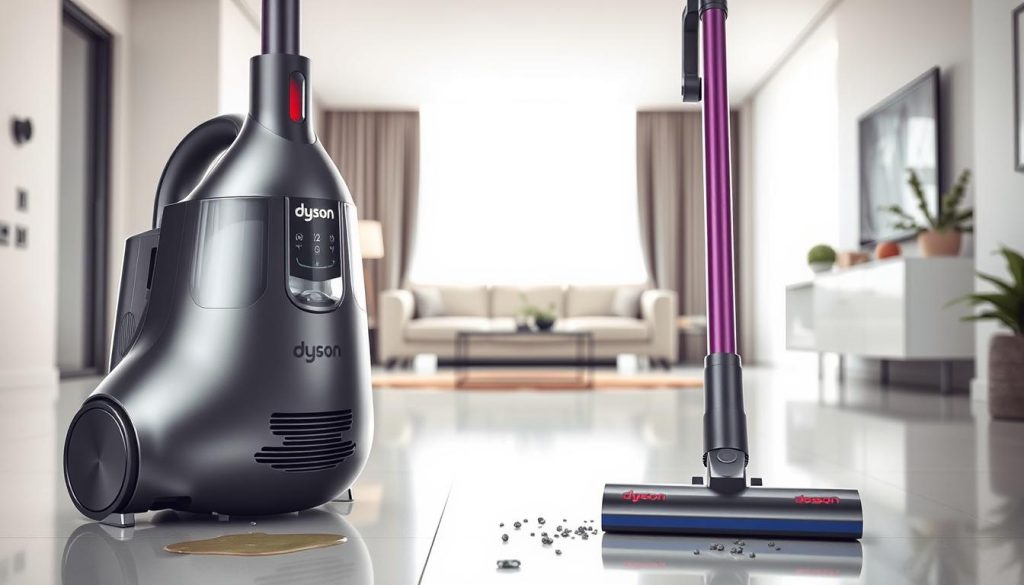
V12s Origin Submarine — light, agile and practical
Core data: 130 Air Watts, 2.2 kg, up to 60 minutes run time and 3.5 hours to charge.
Its low weight makes stair-to-stair chores and quick spot cleans less tiring. The unit favours strong dry performance and easy handling over large onboard liquid volume.
V12s Detect Slim Submarine — cleaner air and visible dust
Core data: 140 Air Watts, HEPA filtration, Fluffy Optic head, similar 60-minute run time and 3.5-hour charge.
The Fluffy Optic helps reveal fine particles, while HEPA improves household air quality. This model suits allergy-aware households that value filtration and particle visibility.
Digital Slim Submarine — compact form, shorter run time
The Digital Slim targets tight storage and light handling. You trade runtime — roughly 40 minutes — for a smaller footprint and simpler carrying ergonomics.
“You pay for engineering, cyclonic technology and filtration more than for tank size or long spill capacity.”
Is Dyson worth it versus other machines on this list?
We think Dyson is worth the price when your priorities are lightweight design, strong dry suction, and premium filtration technology.
For larger spills, longer uninterrupted floor washing or bigger tanks, other models offer better value per dollar.
| Model | Air (Air Watts) | Weight | Max run time | Key strength |
|---|---|---|---|---|
| V12s Origin Submarine | 130 | 2.2 kg | 60 min | Light handling and practical suction |
| V12s Detect Slim Submarine | 140 | ~2.2 kg | 60 min | HEPA filtration and Fluffy Optic visibility |
| Digital Slim Submarine | — (compact) | Lightest/smallest | ~40 min | Compact design for tight storage |
Performance showdown: suction, dirt pickup and edge cleaning across models
What separates top performers is not just raw airflow but how that force is delivered across rollers, nozzles and tank systems. We tested each model in a small flat scenario to judge real outcomes: visible edges, streaking and residue on common Singapore floors.
Fine dust versus larger debris
Fine dust stresses filters and airflow. When filters clog, suction drops and particles bury into fibres.
Larger debris stresses nozzle design and brush rollers. Good models resist blockages and move bits into the tank without stalling.
Spills, dirty water management and streaking
Separation between clean and dirty water matters. Better separation reduces re-depositing and shortens drying times.
Units with suction-off-the-floor or float shut-offs limit streaking by cutting fluid flow before overfill occurs.
Hard floors versus mixed surfaces
Some systems excel on tiles and laminate but struggle on rugs. Strong suction power alone is not enough; brush agitation and nozzle seal make the difference.
| Test | Key factor | What to look for |
|---|---|---|
| Fine dust | Filtration & airflow | HEPA or auto filter-clean feature |
| Large debris | Nozzle & roller design | Wide throat, anti-tangle brush |
| Edge cleaning | Head shape & side brushes | Tri-sided heads or tight edge seals |
| Wet pickup | Tank separation & suction cut-off | Float/electronic shut-off and clear dirty water paths |
Tank systems, cleaning solution and maintenance that affect daily use
Daily ease often hinges on tank layout more than on peak suction figures. We find the system design sets how fast a room is ready again and how messy upkeep feels.
Separate clean water and dirty water compartments are a core hygiene feature. Keeping clean water pure prevents re-spreading soils and gives consistent cleaning results across rooms.
The clean water tank size affects refill frequency; larger water tank volumes cut stops but add bulk. Respect max fill lines and use built-in float or electronic shut-off to avoid overfills that can damage the system.
Self-clean cycles, brush care and drying time
Self-clean cycles save time by flushing rollers and hoses. They do not remove hair wraps or sludge in tight corners, so manual attention remains necessary.
After each session we rinse brushes, clear trapped hair and leave parts to air-dry. Proper drying prevents mould and stale smells in humid Singapore conditions.
Preventing odours, mould and build-up
Use the right cleaning solution at recommended dilution to avoid over-foaming and residue build-up. Occasional deep rinses and not leaving dirty water overnight are simple, effective habits.
| Aspect | What to do | Benefit |
|---|---|---|
| Clean / dirty separation | Rinse clean water, empty dirty tank after use | Hygienic floors; consistent cleaning |
| Self-clean cycle | Run after heavy jobs, then dry components | Saves time; reduces manual rinsing |
| Brush care | Remove hair, rinse and air-dry | Stops mould and odour build-up |
For step-by-step maintenance tips, see our cleaning guide. Regular care keeps the system working reliably and reduces long-term service time.
Professional-grade tech explained: Kärcher Tact filter cleaning and why it matters for suction power
We look at how filter-cleaning technology keeps suction consistent during long, dusty jobs. This matters in workshops and renovation sites where fine dust can choke a machine fast. The Kärcher NT Tact system uses short air blasts to clear the filter so the system keeps working without frequent stops.
Triggered air cleaning technology for consistently high suction
Triggered Air Cleaning Technology reverses airflow briefly to dislodge lodged dust from the filter. Sensors monitor differential pressure on M/H class units and trigger cleaning automatically. The result is sustained suction and fewer interruptions during sanding, cutting or plaster removal.
Semi-automatic vs fully automatic filter cleaning
Semi-automatic (Ap) modes let the user trigger a cleaning cycle. Usually you press a button quickly three times and run power cleaning with the hose port closed. Fully automatic Tact systems remove that step by timing blasts when pressure shows the filter needs it.
“Automatic cleaning reduces contact with dust, saves time and keeps suction reliable on long jobs.”
When bagless fine-dust pickup makes sense
Bagless collection works well if the filtration and cleaning system are built for fine particles. Benefits include lower running costs and full use of the container volume. Choose this approach only when the system supports sustained airflow and robust hose and tool connections for direct tool extraction.
- Practical tip: for direct tool connection, favour systems with large-diameter hoses and secure tool ports to avoid flow loss.
- Health benefit: auto-clean cycles reduce filter handling and airborne dust exposure.
- Productivity: fewer stops for filter maintenance improves job speed on sites.
| Feature | Ap (semi-auto) | Tact (fully auto) |
|---|---|---|
| Trigger method | User button | Sensor-controlled (differential pressure) |
| Interval options | Manual; power-clean as needed | L-class selectable (e.g., 60s / 15s); M/H auto intervals |
| Contact with dust | Requires occasional handling | Minimal handling; safer for operators |
| Suitable for | Occasional heavy dust | Continuous extraction from tools and long tasks |
Safety and filtration for fine dust: understanding L, M and H dust classes
We treat dust classification as a safety tool. Fine dust from renovations or material removal can harm lungs and must be matched to the right filtration level.
Dust class L: moderate-risk dusts
L class suits low-risk materials such as chalk, lime and plaster. Kärcher rates L with a permeation ≤ 1.0%, which keeps routine home and light workshop cleanup safer.
Dust class M: construction-site minimum
M class is the construction baseline. Its permeation is
Dust class H: hazardous dusts and higher protection needs
H class offers the tightest control. With permeation
When safety vacuum cleaners are the right solution
Choose a safety unit when dust is respirable, persistent or legally regulated. Use sealed bags or containers, select the correct filter class, and follow safe disposal to reduce re-exposure.
| Class | Permeation | Typical use |
|---|---|---|
| L | ≤ 1.0% | Plaster, chalk, light workshop |
| M | Construction dust, hardwood, paint | |
| H | Asbestos, lead, mould, carcinogens |
Choosing the right model for Singapore homes, workshops and commercial spaces
Match the tool to the job: small flats need nimble units while back-of-house areas favour larger tanks and robust components.
HDB flats and condos: storage, noise and quick clean-ups
For compact Singapore homes we prioritise footprint, easy storage and low noise. Choose a light unit that deploys fast for daily spills and crumbs.
Pet households: hair, allergens and HEPA considerations
Pet homes benefit from models with strong hair pickup and HEPA filtration to reduce allergens. A mid-size tank keeps runs short while avoiding bulky handling.
Workshops and renovation dust: when pro systems pay off
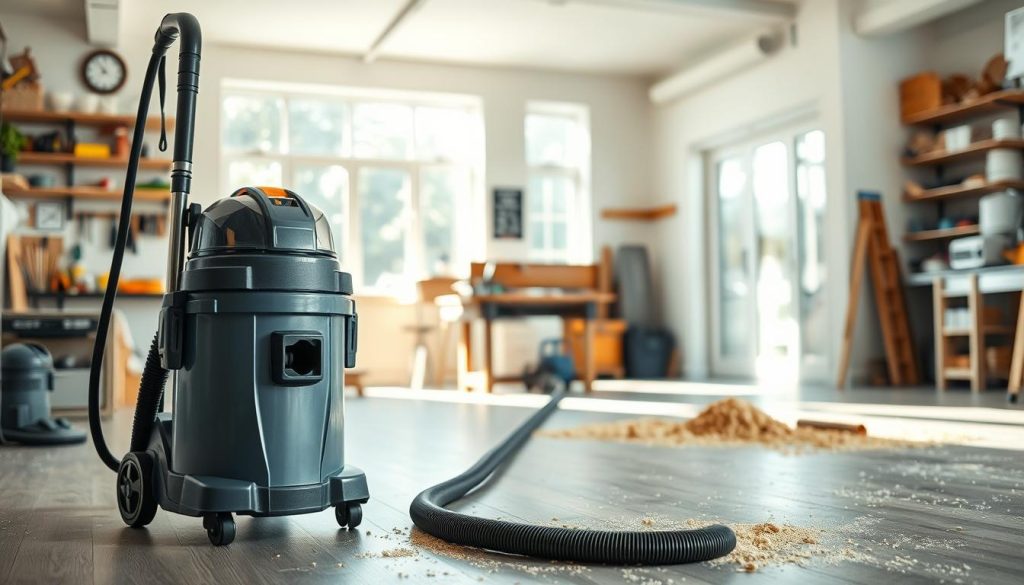
For sanding or renovation dust, we recommend systems with sustained suction, robust housings and automatic filter-cleaning like Kärcher NT Tact. These reduce downtime and protect filters.
Hotels, restaurants and back-of-house spills: large liquid volumes
Commercial areas need larger water capacity, fast recovery from spills and durable parts that tolerate daily use. Spending more makes sense when it cuts labour time or prevents replacements.
- Decision checklist: floor type, likely mess (dust vs liquid), cleaning frequency, who will maintain the unit, and acceptable price for long-term value.
Conclusion
In closing, pick a model by matching its strengths to where you actually clean. We summarise the top choices by buyer type so you can prioritise the right features for your flat, pet home or workshop.
For regular upkeep choose the Tineco for balance, Bissell for pets, Simplus for value, Narwal for tight spaces, Dreame for hot-water degreasing and Shark for odour control. Dyson stays as a premium, light option. These picks reflect real use, not just specs.
Remember the trade-off: wet dry versatility saves time on spills but needs more maintenance plus higher noise and weight. For sites with fine dust, select the correct dust class and a filter-cleaning system to protect health and keep suction steady.
Next step: shortlist two models, compare ongoing costs for filters and rollers, then choose the one that fits your space, routine and maintenance tolerance.

