

High-traffic areas in homes and offices often show visible signs of wear. Flattened fibers, discoloration, and ingrained dirt are common issues. These darkened trails indicate frequent footpaths, making maintenance essential.
Specialized cleaning methods are crucial for maintaining the appearance and hygiene of carpets. Regular vacuuming helps, but it’s not enough for deeply embedded dirt and stains. Odor retention can also become a problem over time.
Practical solutions like dry or foam cleaning can effectively address these challenges. For stubborn issues, professional services offer advanced techniques. In Singapore, factors like humidity and common flooring types add unique considerations to carpet care.
Key Takeaways
- High-traffic areas develop visible wear patterns over time.
- Specialized cleaning methods are essential for maintaining carpets.
- Common challenges include embedded dirt, stains, and odors.
- Dry or foam cleaning can be effective solutions.
- Professional services are recommended for stubborn issues.
- Singapore’s humidity and flooring types require specific care.
Introduction to High Traffic Carpet Cleaning
Carpets in busy zones face unique challenges due to constant use. Hallways, entryways, and living rooms are common examples of high-traffic areas. These spaces accumulate dirt and debris three times faster than less-used zones.
Regular maintenance is essential to keep these carpets looking fresh. Beyond appearance, proper care reduces allergens, bacteria, and mold. This is especially important in humid climates like Singapore, where moisture can accelerate wear.
DIY methods like vacuuming and spot treatment can help. However, professional carpet cleaning services often provide deeper restoration. Techniques like steam cleaning remove embedded dirt and restore the carpet’s original texture.
Here’s a quick comparison of DIY vs. professional methods:
| Method | Effectiveness | Best For |
|---|---|---|
| DIY Cleaning | Surface-level dirt | Regular maintenance |
| Professional Cleaning | Deep-seated stains | Restoration and hygiene |
Preventive care is also crucial. Using rugs in entryways and implementing a no-shoe policy can minimize dirt buildup. These steps, combined with regular cleaning, ensure your carpets stay in top condition.
Understanding High Traffic Areas
Spaces with heavy footfall, like entryways and corridors, often face unique challenges. These high-traffic areas are prone to wear and tear due to constant use. In offices, 67% of damage occurs in lobbies and hallways, making them hotspots for maintenance.
Foot traffic grinds dirt into carpet fibers, causing discoloration and flattening. Fibers in these zones flatten 40% faster than in less-used areas. Over time, this leads to matted fibers, lingering odors, and visible stains.
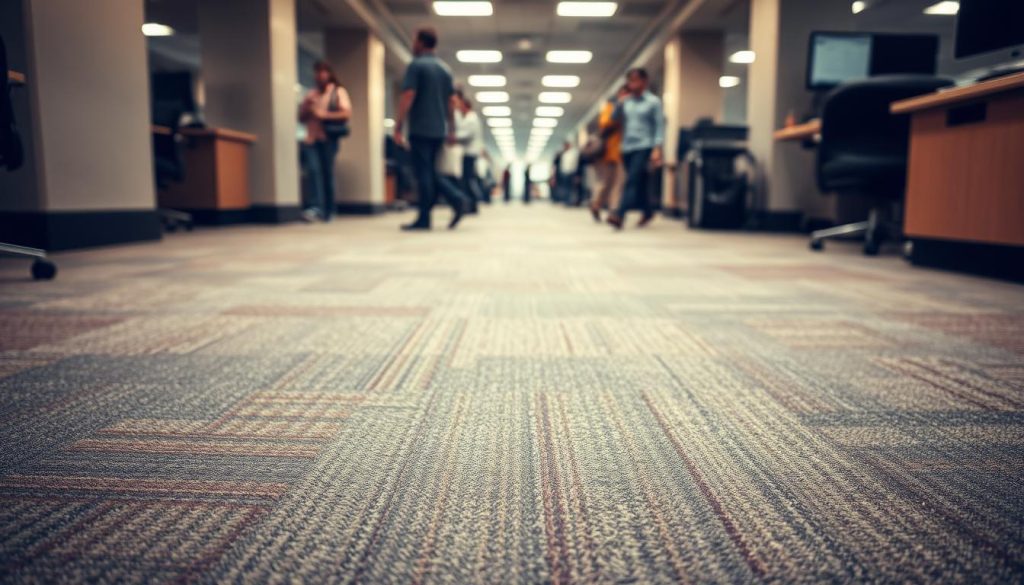
In Singapore’s tropical climate, humidity exacerbates these issues. Moisture can lead to mold growth, further damaging the carpet and affecting indoor air quality. Proper care is essential to prevent these problems.
Regular maintenance not only keeps carpets looking fresh but also improves hygiene. Clean carpets reduce allergens and bacteria, creating a healthier environment. Identifying and addressing these areas early can save time and effort in the long run.
Preparation for Cleaning High Traffic Carpets
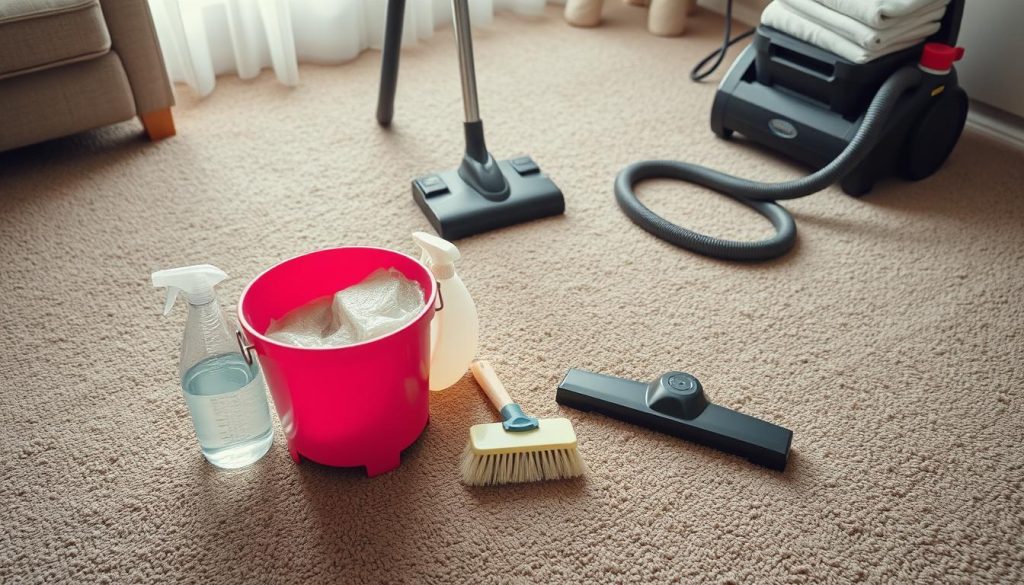
Proper preparation is key to restoring and preserving carpets. Before starting, gather the right tools and assess the carpet’s condition. This ensures a thorough and safe process.
Gathering the Right Tools and Products
Start with essential tools like microfiber cloths, pH-neutral cleaners, and steamers. A vacuum with a HEPA filter and rotating brushes is ideal for removing surface dirt. These tools help maintain carpet fibers without causing damage.
Choose a cleaning solution suitable for your carpet’s material. Test it on a hidden area first to avoid discoloration. For eco-conscious options, consider Singapore-approved products that are safe for both carpets and the environment.
Assessing Carpet Condition
Identify the carpet’s material, such as nylon, polyester, or wool. Each type requires specific care. For example, avoid using baking soda on natural fibers like wool, as it can cause damage.
Next, evaluate the stain remover needed based on the stain’s nature. Organic stains, like food or drink spills, differ from chemical stains, such as ink or paint. Addressing the correct type ensures effective removal.
| Material | Recommended Solution |
|---|---|
| Nylon | pH-neutral cleaners |
| Polyester | Mild detergents |
| Wool | Specialized wool cleaners |
By preparing properly, you ensure a smoother cleaning process and better results. This step is crucial for maintaining the carpet’s appearance and longevity.
Step-by-Step Guide on How to Clean High Traffic Carpet
Restoring the vibrancy of heavily used carpets requires a systematic approach. Proper techniques ensure dirt, stains, and odors are effectively removed. This guide walks you through the essential steps for maintaining your carpets.
Vacuuming Before Cleaning
Start with thorough vacuuming to remove surface dirt. Use slow, overlapping passes to lift embedded debris. A vacuum with a HEPA filter and rotating brushes works best for deep cleaning.
Pay extra attention to corners and edges, where dirt often accumulates. Regular vacuuming not only keeps carpets clean but also extends their lifespan.
Choosing the Right Cleaning Method
Selecting the appropriate method depends on the carpet’s material and stain type. Dry cleaning is ideal for delicate carpets, as it preserves color and texture. Foam cleaning, on the other hand, requires post-rinsing to avoid residue buildup.
Here’s a quick comparison of popular methods:
| Method | Best For | Considerations |
|---|---|---|
| Dry Cleaning | Delicate carpets | Preserves color |
| Foam Cleaning | Stubborn stains | Requires rinsing |
Applying Cleaning Solutions
For DIY stain removal, mix vinegar and water in a 1:3 ratio. Apply the solution gently using a microfiber cloth. Always blot stains instead of rubbing to prevent spreading.
In Singapore’s humid climate, drying times may be longer. Use fans or dehumidifiers to speed up the process and prevent mold growth. Proper application ensures your carpets look fresh and last longer.
Maintaining Your High Traffic Carpet
Keeping heavily used carpets in top shape requires consistent care. A well-planned maintenance routine ensures they remain fresh, hygienic, and visually appealing. Here’s how to achieve the best results for your carpets.
Regular Vacuuming and Spot Cleaning
Regular vacuuming is the foundation of carpet care. For high-traffic zones, vacuum at least twice a week to prevent dirt from embedding into the fibers. Use a vacuum with a HEPA filter for deeper cleaning and allergen removal.
Spot cleaning is equally important. Address spills immediately to avoid permanent stains. Blot the area with a microfiber cloth and a mild cleaning solution. For stubborn spots, consider using baking soda. Apply it, let it sit for 24 hours, then vacuum it up for a fresh, odor-free carpet.

Professional Carpet Cleaning
While DIY methods are effective, professional carpet cleaning offers unmatched results. Services like Sterling Cleaning Services use advanced techniques, such as hot-water extraction, to remove 98% of allergens and deeply embedded dirt.
In Singapore, bi-annual professional cleaning is recommended for high-traffic areas. This not only restores the carpet’s appearance but also extends its lifespan. For more tips, explore our guide on carpet cleaning for high-traffic areas.
By combining regular maintenance with professional services, you can keep your carpets looking and feeling their best. Consistent care ensures they remain a welcoming part of your home or office.
Preventive Measures for High Traffic Carpets
Preventing wear and tear in busy spaces starts with smart strategies. Simple changes can significantly reduce dirt buildup and extend the life of your carpets. By taking proactive steps, you can maintain their appearance and functionality for years to come.
Using Rugs and Mats
Placing durable rugs and mats in entryways can reduce dirt by up to 80%. Opt for rubber-backed mats, especially in Singapore’s humid climate, as they provide better grip and durability. Rotate these mats regularly to distribute wear evenly and maintain their effectiveness.
Machine-washable rugs are a practical choice for easy maintenance. They can be cleaned frequently without losing their quality. This simple step not only protects your carpets but also keeps your space looking fresh and inviting.
Implementing a No-Shoe Policy
Encouraging a no-shoe policy indoors can significantly reduce foot traffic damage. Shoes carry dirt, debris, and moisture, which can quickly wear down carpets. Polite signage at entrances can help enforce this rule without causing inconvenience.
Studies show that a no-shoe policy can extend carpet life by 2-3 years. This small change not only preserves your investment but also improves indoor hygiene. For more tips on maintaining carpets after professional cleaning, visit this guide.
By combining these preventive measures, you can save on long-term costs and keep your carpets in excellent condition. Smart choices today lead to lasting benefits tomorrow.
Conclusion
Maintaining the beauty and hygiene of your floors requires consistent effort and the right approach. Regular vacuuming and spot treatment are essential for daily care. For deeper results, professional carpet cleaning services like Sterling Cleaning Services are highly effective.
In Singapore’s humid climate, consistent maintenance prevents mold and extends the life of your carpet. Proper cleaning not only enhances appearance but also improves indoor air quality and home value.
For a thorough deep clean, contact Sterling Cleaning Services today. Keep your space fresh, healthy, and welcoming with expert solutions tailored to your needs.

