

We present a clear, practical method for maintaining your sofa in the Singapore home. Our approach balances quick spot care with deeper work so you can plan downtime and drying time realistically.
We follow a simple routine: prepare the area, vacuum and target stains, perform deeper cleaning when needed, then dry correctly. This helps preserve fabric, stitching and finishes while reducing dust and allergens.
We select the safest steps based on material and care labels, and we explain which tools to use: vacuum attachments, soft brushes, clean cloths and, where suitable, extraction or steam options. Good upkeep improves appearance and supports a healthier indoor environment.
For guidance on leather-specific care, we link to a concise leather sofa guide that complements our method and timing recommendations.
Why sofas in Singapore need more regular care
Singapore’s warm, humid air makes regular care of upholstered seating essential for comfort and health. We find moisture and heat change how dust and microbes behave in a living space.
Humidity, dust mites and allergens in a warm home
Moisture plus warmth helps dust mites and mould thrive inside cushions. Fabric sofa materials can trap dampness, so drying matters as much as any surface treatment.
How dirt, body oils and pet hair collect on large surfaces
A sofa’s broad area becomes a collection zone for dirt, skin flakes and oils from daily use. Pet hair and dander cling to fibres and seams, adding to dust and allergy triggers.
When routine wiping is not enough
Quick wiping can remove visible soil but often leaves residue or embedded grime. If odour returns, stains persist or household allergy symptoms rise, we recommend a scheduled deep clean.
| Visible sign | Likely cause | Recommended action |
|---|---|---|
| Dull fabric | Layered dirt and oils | Vacuum, then spot treat and consider extraction |
| Persistent odour | Trapped moisture or microbes | Deep clean and dry with ventilation |
| Allergy flare-ups | Dust mites, pet dander | Upholstery steam or extraction; improve room filtration |
| Recurrent stains | Spills soaking below surface | Professional-grade spot removal and rinse |
Maintaining upholstery links directly to whole-room hygiene. When we address materials and use the right tools first, we avoid damage and improve results.
Before we start: identify your sofa fabric and check care labels
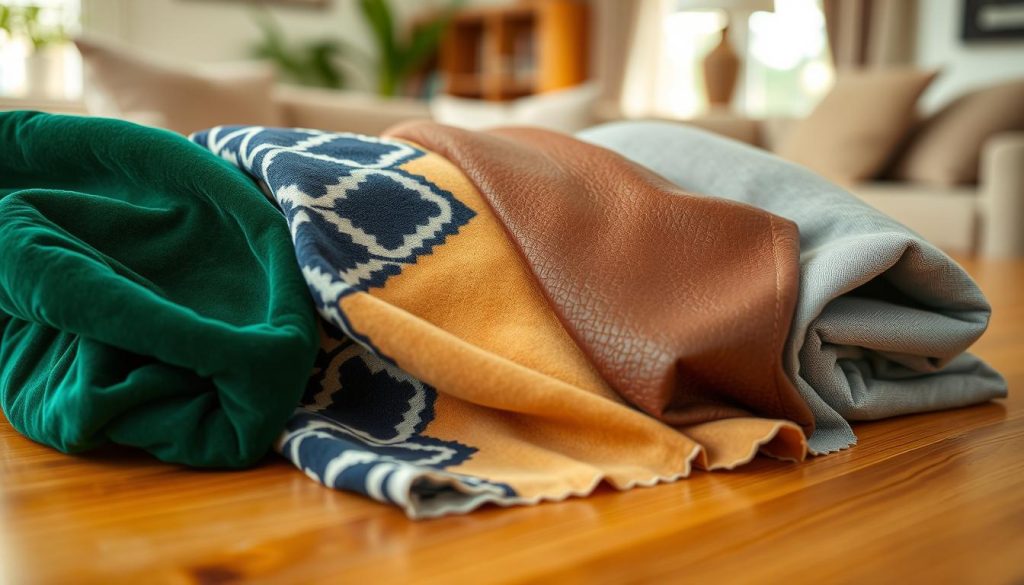
Before any work begins, we identify the upholstery type to avoid mistakes that damage fibres or finish. Correct identification guides whether we use light surface care, extraction or steam and which products are safe to try.
Fabric and velvet: moisture, mould risk and colour-fastness checks
Fabric and velvet upholstery trap dust and water more readily in Singapore’s humidity. We read the care label, then do a small colour-fastness rub test in a hidden area using a clean cloth and a mild solution. If dye transfers, we choose low-water methods and fast extraction to reduce mould risk.
Leather: why conditioning matters
For leather, cleaning alone is not enough. We condition the material after any wet work to keep leather supple and to prevent drying and cracking. Conditioning restores oils and keeps the surface comfortable to touch.
PVC and coated finishes: residue and shine
PVC and coated finishes can lose shine when residues build up. We favour gentle chemistry, rinse well and avoid abrasive agitation so the finish stays smooth and resists future soil. This step also helps us decide later between steam, extraction or simple surface care.
Our essential kit for sofa cleaning at home
We rely on a few core items to tackle both light upkeep and deeper maintenance. Choosing the right kit saves time and reduces risk to fabric and finish.
Primary tools we use
Vacuum cleaner with an upholstery turbo nozzle (about 160mm) and a rotating air-driven brush lifts crumbs, pet hair and ground-in dirt from seams and creases. A water-filter model such as the Kärcher DS6 can produce extremely low exhaust dust levels for cleaner air.
Cloths and agitation
We keep multiple clean cloths and dry cloths so we can blot rather than smear. A soft brush helps with gentle agitation; we use light pressure by hand to avoid pile damage.
Safe solutions and machines
For routine work we use family-safe cleaner products or a mild water-based mixture after label tests. Baking soda is useful to neutralise odours; we vacuum it away once it sits for a while.
When to step up to extraction
Wet-dry and spray extraction units remove residue more thoroughly than surface care. A wet dry vacuum or spray extraction follows a spray-and-suction cycle, reducing re-soiling and sticky deposits. We keep a steam cleaner as an option for sanitising when fabric and labels permit.
| Tool | Purpose | Tip |
|---|---|---|
| Upholstery turbo nozzle | Lifts hair and debris from seams | Use slow passes along stitched edges |
| Water-filter vacuum (e.g., Kärcher DS6) | Reduces exhaust dust | Good for allergy-prone homes |
| Wet-dry / spray extraction | Removes residue and deep dirt | Spray-and-suction cycles for best results |
| Soft brush & cloths | Safe agitation and blotting | Keep several clean cloths and dry cloths ready |
Routine maintenance: vacuum sofa and remove loose dirt first
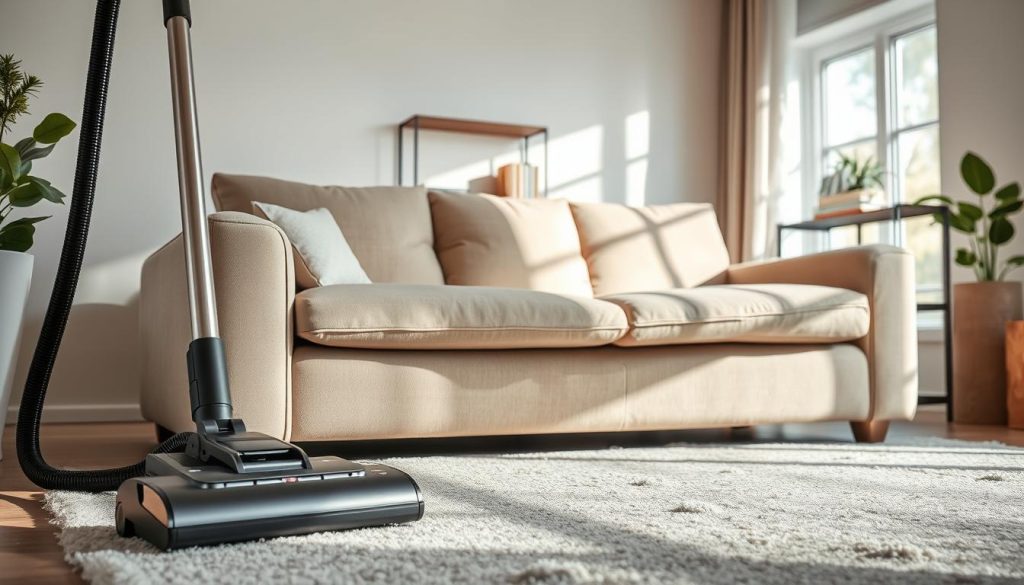
A short weekly session with the right vacuum cleaner saves time and avoids bigger jobs later. We treat routine care as preventive work: remove loose items, lift out cushions and take off any removable sofa covers so we can access every surface.
Preparation: clearing cushions, covers and large debris
Start by stripping covers where possible and placing cushions aside. This lets us reach seams, the seat front edge and areas under cushions.
Technique: top-to-bottom passes and extra attention to seams and high-touch areas
We always work from the top down. Slow, overlapping strokes remove surface dirt without missing patches.
Armrests, headrests and favourite seats get extra time. A soft brush attachment or rotating nozzle lifts embedded debris by hand.
How better filtration helps keep dust from returning to the room
Good filtration matters. A water-filter or high-efficiency unit reduces exhaust dust and stops particles from re-entering the home. For example, some models claim over 99% dust-free exhaust, which helps allergy-prone households.
How often we do it: weekly or bi-weekly depending on use, pets and allergies
We recommend weekly vacuuming for busy homes, pets or allergy concerns. For lighter use, a bi-weekly routine keeps fabric fresh and prevents grit build-up.
Effective pre-vacuuming makes spot treatments and deep work faster and more successful. For detailed spot methods, see our short guide on fabric care here.
Spot cleaning stains fast without damaging sofa fabric
Immediate attention to a fresh spill gives us the best chance of restoring the fabric without lasting harm. We act quickly, use small amounts of product and keep each step deliberate so we avoid spreading or discolouring the area.
Blot, don’t rub. With a clean cloth we press gently from the outside of the stain towards the centre. This prevents the mark from enlarging and lifts liquid into the cloth rather than forcing it deeper.
Test first. We always check any solution in a hidden area for a minute to ensure no dye transfer or shade change on darker fabrics or velvet.
Apply a small amount of cleaner, allow a short dwell time measured in minutes, then blot with a dry cloth to remove moisture and soil. Repeat in small cycles rather than soaking the area.
Remove residue to avoid re-soiling. Where labels permit, we rinse lightly with clean water or use a spray extraction to lift remaining product. Expect some stains to lighten rather than disappear; correct technique protects fabric and helps the spot blend with surrounding clean fabric.
“Speed and the right finish make the difference between a short spot fix and a lasting repair.”
Deep clean fabric sofa cushions with spray extraction
When cushions feel tacky or odour lingers, we move to a controlled spray-extraction cycle to restore fabric and remove trapped grime.
Pre-vacuum and prepare
We start with a thorough pass using a vacuum cleaner to lift loose dirt and dust. This stops dry particles getting pushed deeper during wet work.
Mixing the solution
Fill the tank with warm water (around 50°C where the label allows) and add product per instructions — typically 100–200ml of Kärcher RM 519 depending on soil level. Too much product leaves residue; the right mixture improves lift.
Application, dwell and extraction
We spray evenly across cushions and let the solution work for at least five minutes on heavy soiling. Then we extract with slow, overlapping passes to remove water, dirt and odour-causing residue.
Repeat, dry and finish
High-traffic areas and stubborn stains may need a repeat-and-check cycle. Drying in Singapore requires good airflow: use fans or dehumidifiers, clean early in the day and leave windows open where practical to avoid mildew.
Final step: once fully dry we re-run the vacuum cleaner to lift the pile and remove any remaining particles.
| Step | Key action | Why it matters |
|---|---|---|
| Pre-vacuum | Remove loose dirt | Prevents pushing debris deeper during wet work |
| Mix solution | Warm water + correct dose | Improves soil suspension; reduces residue |
| Spray & dwell | 5+ minutes on heavy soiling | Breaks down oils and set-in stains |
| Extract slowly | Overlapping passes | Removes moisture and residue effectively |
| Dry & re-vacuum | Airflow, fans, final vacuum | Prevents mildew and restores pile |
For step-by-step equipment notes and safety tips, see our detailed guide on how to clean fabric sofa.
Steam cleaner vs extraction: how we choose the right method
Our choice begins by asking whether we need sanitising or a deep clean. This simple question guides which machine and approach we use.
Steam for hot vapour and chemical-free sanitising
Steam uses hot vapour to sanitise without added chemicals. We favour steam when families prefer minimal product contact and when dust-mite reduction is a priority.
Steam works well on many synthetic fabric areas and reduces allergens when followed by prompt drying.
Extraction for deep soil, stain lightening and odour removal
Extraction combines specialist solution and suction to pull out dirt, stains and residue. This method physically removes more moisture and soil than steam alone.
For visible soiling or persistent odour, extraction gives a clearer result and lowers the chance of re-soiling.
Material suitability and a practical combination
Synthetic fibres often tolerate steam better. Natural fabric may shrink if heated; we usually prefer controlled extraction for those materials.
We often use a combination method: vacuum first, extraction for grime, then a light steam pass for sanitising where labels allow.
Planning downtime and drying windows
Typical drying time is about 4–6 hours. We plan daytime work so ventilation and fans speed drying in Singapore’s humidity.
Tip: For step-by-step extraction guidance, see our short guide on how to clean a sofa with a carpet.
“Matching the method to material and goal saves time and reduces risk.”
Conclusion
Finally, a compact checklist helps keep fabric sofas looking fresh and lasting longer.
We follow a simple flow: identify fabric sofa type, prepare and protect, vacuum with the right vacuum cleaner, treat stains promptly, then escalate to extraction or steam where needed.
Keep sofa covers clean, act fast on spills and use measured products. Always test a solution in a hidden area, avoid over-wetting and remove residue to achieve a true clean fabric finish.
In Singapore, plan daytime work so airflow speeds drying and lowers mould risk.
Routine care is cost-effective: it extends upholstery life, keeps your home fresher, and makes occasional deep work far easier.

