
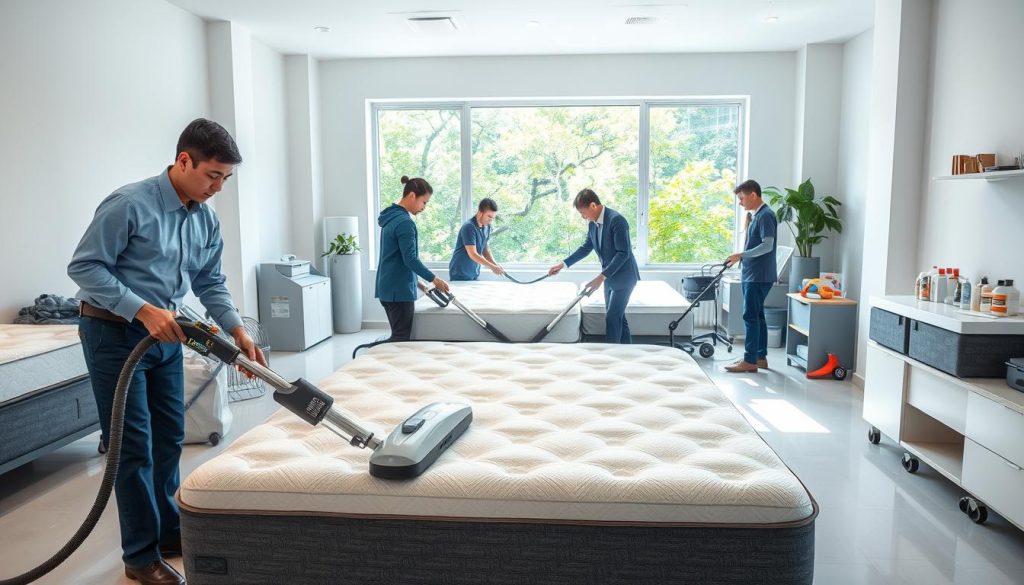
We offer a repeatable, low‑moisture, material‑safe method built for Singapore’s humid climate. Our approach reduces dust, allergens and odours while protecting the structure and comfort layers.
By effective, we mean visible marks fade, allergen counts drop and the sleeping surface stays comfortable. We use common supplies such as enzyme spray or dish soap, a vacuum with an upholstery tool, baking soda and clean white cloths.
At a glance, our high‑level process covers three stages: remove bedding, treat the surface and finish with drying and protection. These steps keep moisture low so we minimise mould risk in humid flats.
We set clear expectations. Some deep contamination may need heat or professional treatment later. For most busy households, pet owners and families, our routine preserves lifespan and supports a fresher sleep environment.
Why mattress hygiene matters in Singapore homes
Daily use deposits sweat, skin flakes and tiny particles into the top layers of a mattress. Over time this feeds visible dust and hidden debris in seams and fabric.
How sweat, dead skin and dust build up over time
We sleep about 6.5 hours each night on average in Singapore, so contact is constant. Sweat and skin transfer to the bed and become food for dust accumulation.
Dust mites, bacteria, mould and allergens in warm, humid conditions
Singapore’s warmth and humidity let dust mites and bacteria remain active, even with air-conditioning. That creates higher allergen counts and a greater mould risk if moisture is trapped.
When a dirty mattress can affect sleep and respiratory health
Dirty bedding may look fine but not be hygienic. We watch for symptoms such as irritated airways, allergy flare-ups, chest tightness and restless nights.
“With 6.5 hours of nightly contact, routine care matters more than occasional deep washes.”
| Risk | Common cause | Typical effect |
|---|---|---|
| Allergen build-up | Sweat, skin flakes and dust | Worse allergy symptoms and poor sleep |
| Mite and bacterial activity | Warmth and trapped moisture | Increased allergens and odour |
| Mould growth | Poor drying after wetting | Persistent smells and respiratory risk |
What we prepare before we start cleaning
Preparation matters. We set out a compact kit and run a brief safety check so work is efficient and low-moisture. This reduces drying time and protects foam cores and fabric layers.
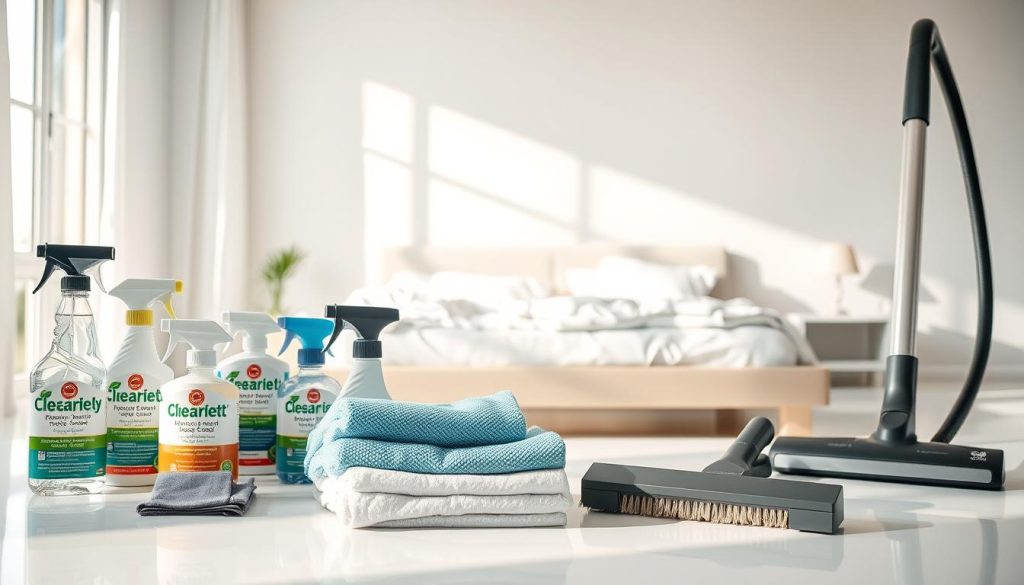
Our essential kit for safer, low‑moisture work
We pack only items that control dampness while treating spots. Key items include an enzyme cleaner or mild dish soap, cold water, baking soda and clean white cloths.
- Cleaner options: enzyme spray or mild dish soap mixed sparingly.
- Blotting tools: several white cloths for gentle, barely damp application.
- Prep: a clean surface to place bedding and spare cloths for blotting.
Choosing the right vacuum cleaner attachments and filtration
We favour a vacuum with adjustable suction, an upholstery head and a crevice tool to reach seams. A HEPA filter helps trap fine allergens and stops re‑circulation of dust.
| Attachment | Primary use | Why it matters |
|---|---|---|
| Upholstery tool | Surface passes | Wide coverage without abrasion |
| Crevice tool | Seams and edges | Removes trapped debris along stitching |
| Brush head | Loose fibres and dust | Gentle agitation for better extraction |
Safety checks: always spot‑test any cleaning solution and follow the manufacturer’s care guidance for the mattress type.
Home mattress cleaning step-by-step: our complete process
We work methodically so each stage—from stripping the bed to finishing with a protector—feeds the next.
Stripping and washing sheets
We begin by removing all bedding and laundering sheets per care labels. Where fabric allows, we wash at ≥60°C to reduce dust mite counts and improve hygiene.
Air the surface before we start
We let the mattress breathe for about 15–20 minutes to improve ventilation. This short time helps loosen dry debris and makes subsequent suction more effective.
Slow, thorough vacuuming
We vacuum the whole surface slowly with an upholstery attachment, then focus seams, edges and crevices where dirt and dust accumulate.
Spot-treat stains carefully
For marks we apply an enzyme cleaning solution to a white cloth and blot gently. We avoid soaking the area and use minimal cold water to protect internal layers.
Deodorise and final drying
We sprinkle baking soda evenly and leave it for at least 15 minutes — longer when time allows — to absorb odours and residual moisture. After vacuuming the powder off, we prop the bed upright in a ventilated spot until fully dry.
Finish with protection
Once the surface feels completely dry, we fit a breathable mattress protector to extend results and make routine upkeep easier. This simple step helps keep a clean mattress for longer.
How we tackle common mattress stains without damaging materials
We address visible marks with controlled blotting so we lift residues instead of pushing them deeper into the surface. Our priority is to use the smallest amount of product and moisture that still works.
Sweat and body oils
For sweat and oils we treat the fabric as a surface issue. We apply a small amount of enzyme cleaner to a white cloth and blot. Then we follow with a separate cloth dampened with minimal cold water to remove residue.
Urine and lingering odours
Urine can soak in, so we contain the area and blot in stages. We use an enzyme or low‑moisture deodorising solution, then absorb excess product quickly. This reduces odour without leaving the bed damp.
Blood and set‑in marks
Blood needs patient blotting. We work from the outside toward the mark with a controlled amount of cleaning solution on a cloth. Repeat until the stain fades, using minimal water to avoid spreading or colour setting.
Why we avoid harsh scrubbing and excess moisture
Harsh scrubbing can damage fibres, grind dirt deeper and distort the surface. Excessive water increases drying time and raises mildew risk in Singapore’s humid climate. We set realistic expectations: older stains often improve but may not vanish entirely.
For step‑by‑step tips on stubborn stains, see our practical guide: how to get mattress stains out.
Vacuum vs steam: which method gets a deeper clean?
Deciding between quick suction and high‑heat treatment depends on what you want to remove and how deep the problem goes.
What vacuuming removes and what it cannot reach
We use a vacuum for routine care. In 15–30 minutes it lifts surface dust, crumbs, pet hair, lint and loose skin flakes.
Vacuuming helps where debris sits on top and in seams, but it cannot extract contaminants deep inside the layers. That is why symptoms can persist despite frequent suction.
How high‑temperature steam targets dust mites, bacteria and viruses
Steam above 100°C sanitises by heat. It kills dust mites, mites’ eggs, bacteria and many viruses more effectively than dry methods.
Steam can remove up to 99% of surface pathogens when used correctly and safely.
Time and drying considerations for steam in humid weather
Steam is powerful, but it adds moisture. We plan for 2–4 hours total—treatment plus drying—so the fabric and internal layers dry fully in Singapore’s humidity.
When we combine extraction and heat for a more thorough result
For heavier soiling we pair steam with professional extraction. The extractor lifts loosened soil and reduces residual moisture.
“Vacuuming is essential between deeper treatments; steam is the stronger way to reset hygiene.”
For a practical comparison and expert guidance on whether to use suction or steam, see our review of vacuum or steam.
When we recommend professional steam cleaning for your mattress
Professional steam is the next step when routine upkeep fails to protect health or comfort. We suggest it for specific triggers where deeper sanitisation makes a measurable difference.

Allergies, asthma or eczema in the household
We advise steam when family members have respiratory issues or eczema. High heat reduces allergens and dust mites more effectively than suction alone. This can ease symptoms and improve nights for sensitive sleepers.
After illness, haze periods or prolonged high humidity
Post‑illness sanitisation prevents recontamination of a high‑contact surface. In Singapore, haze and months of elevated humidity increase biological activity and odours. A targeted steam session helps reset the bed and reduce bacteria and mites.
Visible stains, odours or signs of dust mite activity
We recommend pro service if you see stubborn stains, persistent smells, repeated itching or bite‑like reactions despite regular care. These signs mean surface treatment is not enough and a deeper approach is warranted.
- Timing: most households: every 3–6 months.
- Sensitivities present: every 2–3 months, or even 2 months.
- Professional advantage: controlled heat, extraction of loosened soil, and reduced residual moisture.
“A planned steam service is a preventive investment in comfort and the usable life of your bed.”
Keeping your mattress cleaner for longer between deep cleans
A short routine every fortnight prevents dust and oils from building up again. This saves us time and keeps the surface fresher for better sleep.
How often we suggest vacuuming and scheduling deep cleaning
Vacuum the top and sides every two weeks to stop debris from settling back in. We also vacuum the bed frame and any box spring to cut re‑deposition of dirt.
Wash sheets weekly at ≥60°C where suitable and air the surface for 15–20 minutes while laundering. Plan a deeper service based on household needs rather than a fixed clock.
Managing moisture with ventilation, dehumidifiers and cooler air‑conditioning
Moisture control is the single biggest factor in Singapore’s climate. Use cross‑ventilation or a dehumidifier and set air‑conditioning below 21°C where comfortable.
These steps reduce mite activity and speed drying after any spot treatment.
Rotating or flipping to reduce wear and trapped humidity
Rotate or flip the item regularly if the design allows. Moving positions evens wear and stops pockets of trapped moisture that cause odour.
- Treat small stains immediately to limit spread.
- Use baking soda occasionally to deodorise, then vacuum after 15–30 minutes.
- Fit a breathable protector or mattress protector to shield against spills and sweat.
“Small, regular actions make each deep cleaning quicker and more effective.”
Conclusion
A measured process—vacuum, treat, dry, protect—gives reliable results in our humid climate.
Keep water use minimal and dry fully to reduce mildew risk and protect foam and fabric. We recommend routine, low‑moisture care as the foundation of good mattress cleaning and long life.
Vacuum regularly, address marks quickly and schedule deeper services every few months when sensitivities or persistent odour occur. Check manufacturer guidance before any intensive treatment.
Finish with a breathable protector and consistent bedding habits. With the right routine, we can maintain a clean mattress, improve nightly comfort and support healthier sleep for the long term.

