
We provide a fast, evidence-led approach to pinpoint why your unit is not delivering the indoor quality you expect. Our work focuses on measurable improvements and clear outcomes for health, comfort and fewer complaints in homes and offices across Singapore.
Most people spend the bulk of their time indoors, so poor indoor air quality can hit wellbeing and productivity. We combine a walk-through inspection with targeted testing of thermal comfort and common contaminants, comparing results to Singapore NEA maximum threshold limits.
Many problems blamed on the machine stem from upstream sources: off-gassing formaldehyde after renovations, poor ventilation balance, wrong filters, or high humidity. We check equipment setup, operating modes, placement and duty cycles to confirm fit-for-purpose use.
Our deliverables are straightforward: on-site measurements, a clear report and a prioritised action plan that links every recommendation to observed test results and site conditions.
Why Indoor Air Quality Testing Matters for Health, Comfort and Compliance in Singapore
The root of discomfort often lies in building materials, occupancy and ventilation — not the device itself. Measuring conditions gives us clear evidence about pollutant levels, system performance and risks to wellbeing.
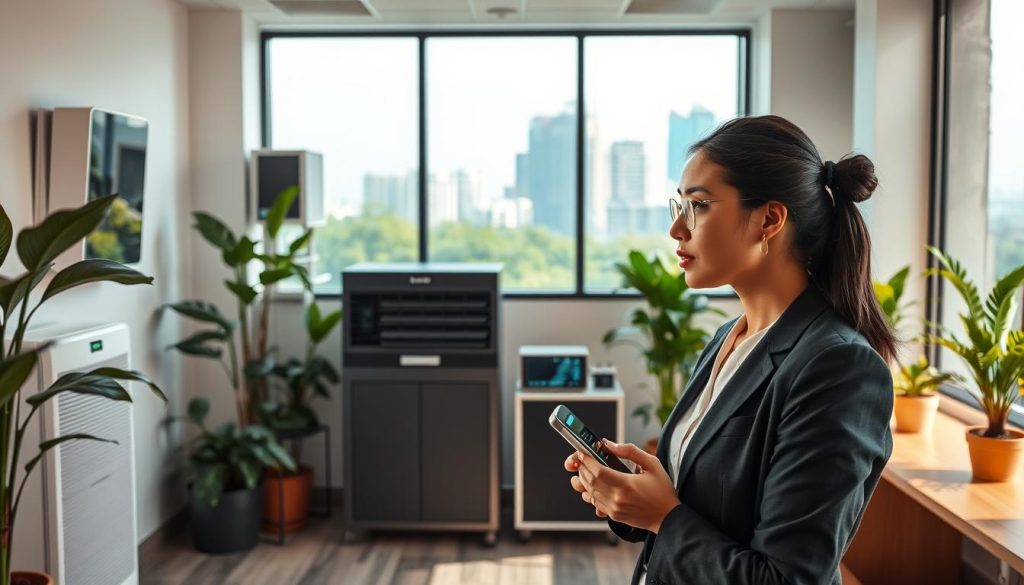
How poor conditions affect wellbeing, productivity and safety
Poor air quality causes headaches, sore eyes and persistent odours. These symptoms can lead to absenteeism and lost productivity, which many facilities managers now treat as an operational risk.
Certain gases and by-products can become a real safety hazard if left unchecked. We pay close attention to formaldehyde because it often comes from new furniture, cabinetry and renovation work, and it may be present even when smells are mild.
When to book an assessment for homes, offices, clinics and controlled environments
Testing is the fastest route to clarity: it identifies pollutants such as VOCs and formaldehyde, verifies ventilation and confirms whether controls are working.
- Homes: after renovations, moving in or when vulnerable family members are present.
- Offices and retail: recurring complaints, stale meeting rooms or occupancy changes.
- Clinics and controlled spaces: where duty of care, infection control and compliance require defensible data.
Our air purifier diagnostic service: What We Test, Measure and Verify On-Site
We begin every assessment by mapping likely pollutant sources and usage patterns across the space.
Walk-through inspection identifies recent renovations, storage of chemicals, occupancy trends and visible damp or mould. This step guides targeted testing and helps prioritise corrective actions.
We measure key contaminants on-site. These include VOCs and formaldehyde, CO2 for ventilation checks, plus CO and ozone where relevant. Results are compared against NEA levels to show risk and compliance.
Particulate and biological checks cover RSP and, when needed, PM2.5/PM10 along with bacterial and fungal counts. Thermal comfort tests capture temperature, relative humidity and air velocity to explain perceived quality issues.
Equipment performance is validated by reviewing CADR suitability, filter condition, sealing and placement relative to supply and return paths. We then interpret readings so you know which controls will deliver the fastest improvement.
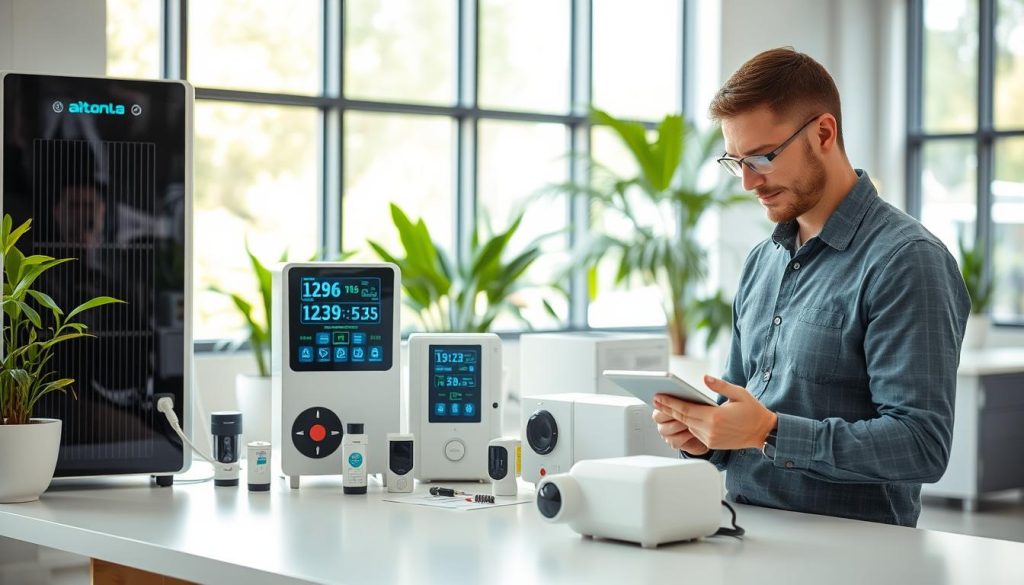
- Structured walk-through to locate likely sources.
- On-site testing of VOCs and formaldehyde with ventilation checks.
- Particulate, microbial and thermal checks plus equipment validation.
Standards, Reporting and Actionable Solutions We Provide
Our reports translate raw measurements into clear, actionable steps tied to national limits and site needs. We benchmark measured values against Singapore NEA threshold limits and your internal criteria so the results are meaningful for operations and compliance.
Benchmarking and clear reporting
We present findings in plain terms and highlight exceedances for VOCs and formaldehyde. Each result includes likely causes and a simple risk note so decision-makers can act quickly.
Corrective actions and tailored solutions
We recommend pragmatic fixes — from filter changes, resealing and placement adjustments to ventilation balancing and HVAC tuning that stabilise temperature and minimise pollutant build-up.
Support for controlled and manufacturing environments
For cleanrooms and GMP-aligned facilities, we align testing to NEBB procedural standards where required. Our approach covers particle and microbial counts, pressure, humidity and airflow so compliance is defensible.
Ongoing monitoring and what good looks like
We close the loop with target levels, trigger points and a monitoring cadence. For high-sensitivity environments we recommend quarterly or semi‑annual verification; for offices, a simple periodic check keeps indoor air quality stable and supports safety.
- Benchmarks against NEA and site requirements.
- Reports that explain pollutant levels, causes and risks.
- Action plans that translate results into practical solutions.
Conclusion
Measured data turns uncertainty into a clear action plan. We use on-site readings so teams can fix the right problem the first time, whether that means source control, ventilation correction or equipment configuration.
Our deliverables are straightforward: reliable findings, an easy-to-follow report and a prioritised list of actions that improve performance fast and sustainably.
These services suit homes, offices and higher‑demand spaces where documentation and repeatability matter. We help you keep confidence in your air quality management.
Ready to proceed? Book an on-site diagnostic, tell us your site type and concerns (odours, formaldehyde, comfort or compliance), and we will propose the appropriate scope. Immediate gains are common once root causes are addressed, and we can support longer‑term stability with monitoring and periodic re-checks. Learn about our air treatment options.

