

We introduce a professional-grade option built for fast, reliable service across work sites in Singapore.
Our machines handle wet, damp and dry contamination in one unit so teams can deal with day-to-day mess and sudden spills immediately.
We position these vacuum cleaners as versatile for dust, debris and liquids. They suit indoor and outdoor areas and cut the need for multiple devices.
Clients in Singapore focus on suction power, robust build and simple handling. We design for easy maintenance to meet heavy-duty requirements and frequent use.
The wet‑dry approach standardises cleaning routines across shifts and reduces stoppages. The outcome is time saved, safer floors and cleaner air for staff and visitors.
Later sections cover suction, filters, dust classes, safety for liquids, accessories and practical selection advice so teams get the right solution for each area.
Built for professional cleaning in Singapore
We build machines that switch from dust pickup to spill recovery without slowing a shift. Our solutions suit busy front-of-house and tough back-of-house areas where standards stay high across hotels, restaurants, trade and workshops.
Where our equipment fits:
- Trade and workshops handling residues and fine particles.
- Hospitality settings needing fast liquid recovery to protect guests and staff.
- Mixed surfaces such as tiles, concrete, vinyl, carparks and service corridors.
These wet dry units reduce downtime by letting teams tackle routine dust and sudden spills with the same kit. Robust housings, heavy‑duty castors and easy‑change parts make our machines reliable for daily use in Singapore’s demanding environment.
Operational benefits include fewer tool swaps, consistent cleaning standards across shifts and faster turnarounds for cleaning tasks. For specification help and accessories, explore our cleaning equipment range.
Commercial water vacuum cleaner for wet, damp and dry dirt
We build units that cope with fine dust, coarse dirt and sudden spillages so teams clear hazards fast.
From dust and debris to spilled liquids
Practical range: everyday dust, larger debris, damp residues and pooled liquids all fall within scope. This helps reduce labour time and lowers slip risk for staff and visitors.
Indoor and outdoor use across mixed floor areas
Our machines perform on workshop concrete, tiled corridors, entrance mats and loading bays. Indoor and sheltered outdoor use lets teams move from rooms to service yards without swapping equipment.
“A single versatile unit keeps routines consistent and reduces needless downtime.”
| Contamination | Typical floor | Key feature | Benefit |
|---|---|---|---|
| Fine dust | Carpets, mats | HEPA-capable filtration | Cleaner air, compliant handling |
| Coarse dirt | Concrete, tiled | Wide-head nozzle | Faster pickup, fewer passes |
| Pooled liquids | Loading bays | Tank capacity + float shut-off | Safe recovery, avoids overflow |
High suction power that saves time on heavy-duty cleaning
High suction power speeds large jobs by moving more debris in a single pass. We measure this not by a single figure but by how quickly the unit lifts contamination and keeps pickup steady across surfaces and tools.
What suction power means for efficiency and results
Strong suction reduces the number of passes needed. That cuts labour time and helps teams meet tight handover windows. Fewer passes also mean less strain on operators and faster turnover of work areas.
Handling coarse dirt, fine particles and construction dust
Coarse dirt and construction dust can choke weaker machines. We specify systems built to handle both large debris and fine particles without rapid loss of performance. Multi-motor options (up to three motors) keep suction consistent under heavy loads when used to manufacturer guidance.
Flowrate and motor performance for large-volume tasks
Flowrate (m³/h) shows air volume moved per hour and is a useful indicator of transport capability. Higher flowrate helps carry mess through hoses into containers and supports large-volume cleanup. Pairing strong suction with the right filters prevents performance drop and avoids dust re-circulation.
Wet dry vacuum performance for liquids and large fluid volumes
We design machines to recover large spills quickly so teams can maintain safe, usable spaces. Adequate container capacity and stable flow matter when a single incident releases substantial volumes.
Fast recovery for spill control and slip-risk reduction
Fast wet pickup reduces slip hazards in high-traffic zones such as lobbies, kitchens and service corridors. A robust wet dry system lets operators clear hazards without pausing to change kit.
Operationally, large fluid volumes mean longer run times before emptying. That makes steady suction and big tanks essential to avoid repeated stops and extended downtime.
How overflow protection works with float shut-off systems
Overflow protection prevents the motor from flooding. A mechanical float rises as the container fills and physically blocks the airflow or suction path. Some designs add an electronic cut-off that trips when conductive contacts detect the liquid level.
- These features protect motors and reduce unplanned maintenance.
- They increase operator confidence during urgent spill control.
- Teams must still monitor fill levels and follow safe disposal procedures.
Safety depends on combining fast recovery, reliable overflow controls and correct operator practice. Our focus on liquids performance helps keep floors dry and operations moving in Singapore sites where response speed matters.
Dry vacuum cleaners mode for fine dust and everyday debris
In dry mode we focus on capturing fine particles and everyday debris without sacrificing uptime on busy sites.
How dry transport works: a bypass blower directs dry dirt into the tank while separation and a flat or cartridge filter trap particles. As filters clog, suction falls and cleaning slows.
Keeping suction consistent means selecting the right filters, using compatible filter bags where required, and using integrated filter‑cleaning functions when available.
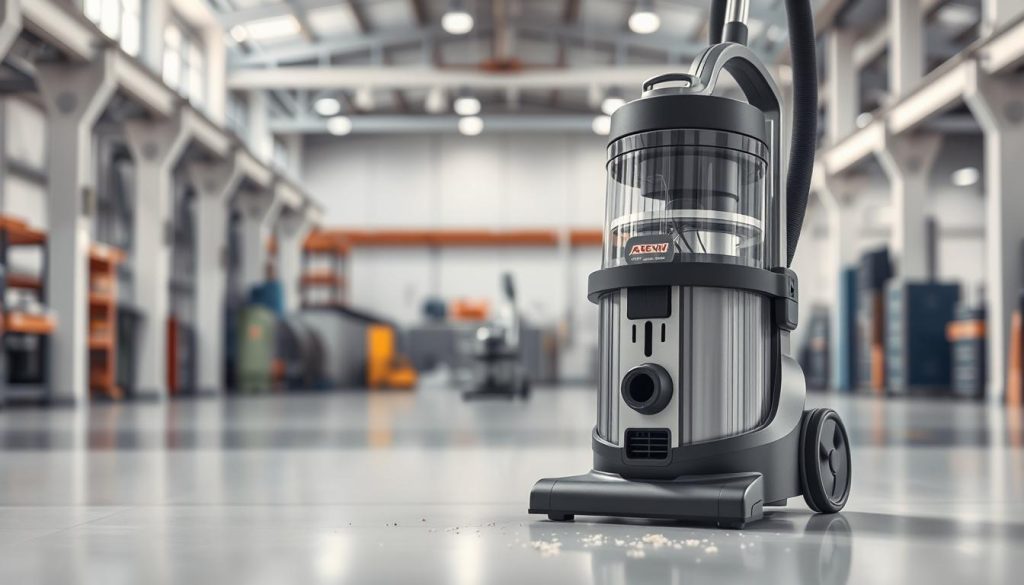
Choosing bagged or bagless use
Bagged workflows simplify disposal and lower exposure when emptying. Bagless systems let you use more of the container and cut recurring bag costs if a filter cleaning feature protects performance.
Matching mode to material
Choose the correct dry vacuum cleaner setup for fine dust, mixed debris or powders. The wrong configuration reduces suction and risks airborne dust at emptying.
“Correct filters and cleaning routines keep floors cleaner and operators safer.”
- Use HEPA or cartridge types for fine dust.
- Use bags for dusty environments to reduce contact.
- Run filter cleaning cycles to maintain steady suction.
Advanced filter cleaning for uninterrupted work
Consistent filter cleaning keeps machines running at peak performance throughout long shifts. In busy sites, clogged filters are the main cause of lost time and falling suction.
Automatic filter cleaning uses sensor-controlled blasts of air from the clean side to dislodge dust. Kärcher’s Tact (Triggered Air Cleaning Technology) illustrates this: short reversals clear particles without stopping the unit. The result is consistently high suction and fewer interruptions.
Automatic filter cleaning to maintain consistently high suction
Sensor triggers start cleaning cycles as needed. Operators do not remove filters, so contact with fine dust falls and safety improves. This keeps performance steady when cleaning at source or over large floor areas.
Semi-automatic filter cleaning for controlled intervals
Semi-automatic systems let teams initiate cleaning at planned points. This suits tasks with predictable dust loads or where supervisors prefer manual control. It reduces incorrect use and helps schedule maintenance.
Benefits: less downtime, reduced exposure and lower running costs
- Less downtime: fewer stops for manual cleaning.
- Lower exposure: no need to remove filters and disturb dust.
- Reduced cost: extended filter life and less reliance on disposable bags.
| Feature | How it works | Operational benefit |
|---|---|---|
| Sensor-controlled auto-clean | Brief air reversal blasts to dislodge dust | Consistent suction and fewer interruptions |
| Semi-automatic trigger | User-initiated cleaning intervals | Controlled maintenance and predictable schedules |
| No-filter-removal design | Cleaning without touching the filter | Lower operator exposure to dust |
Filters and filtration options for different materials
Filters act as the frontline defence: they protect motor life, keep suction steady and stop hazardous particles from re-entering the workplace.
Choosing the right filter depends on the material being collected and whether operators switch between wet and dry modes.
PTFE, PES and paper choices
PTFE filters are moisture- and rot-resistant and keep high suction. They are certified for M+L tasks and reach about 99.9% separation for common dust and debris.
PES filters suit frequent switching between wet dry use. They are durable, washable and maintain similar separation performance to PTFE.
Paper filters are cost-effective for dry-only jobs. If exposed to liquids they must be removed, dried or replaced to avoid damage and loss of capture efficiency.
HEPA-grade protection for hazardous particles
H-class/HEPA filters deliver very high separation (around 99.995%). We specify these where hazardous dust, respirable silica or fine particles create compliance or health concerns.
| Filter | Best for | Separation |
|---|---|---|
| PTFE | Moisture-prone M+L tasks | ~99.9% |
| PES | Frequent wet/dry switching | ~99.9% |
| Paper | Dry debris, low-cost use | ~99.9% (must dry after liquid exposure) |
| HEPA / H class | Hazardous or fine dust | ~99.995% |
- Match filtration to materials: abrasive or hygroscopic dust needs robust media.
- Protect power and motor life: correct filters reduce strain and keep suction consistent.
- Comply with safety: hazardous dust requires certified filters and safe disposal routines.
Dust classes and operator safety for health protection
Choosing the right dust class is the first line of defence for workforce health on busy sites. We explain practical class limits and how they affect selection, handling and disposal.
Why it matters: selecting the correct class protects people, meets site rules in Singapore and reduces long-term respiratory risk.
Understanding L, M and H dust classes
L: low-risk dust with permeation ≤1.0% (examples: chalk, plaster). It suits general maintenance where hazards are moderate.
M: medium-risk dust with permeation
H: high-risk dust with permeation
Safer handling of respirable dust and silica
Respirable crystalline silica comes from concrete, tiles, mortar and sandstone. These fine particles can reach deep lung tissue and cause serious illness.
We recommend vacuuming dust at source using tool ports and certified filters to stop re‑aerosolisation.
“Correct class selection and sealed disposal are non-negotiable when hazardous dust is present.”
- PPE: use respirators and eye protection appropriate to the dust class.
- Sealed disposal: bag and label H-class waste per local rules.
- Emptying: avoid shaking filters; use sealed systems to reduce exposure.
| Dust class | Permeation limit | Typical use | Operator action |
|---|---|---|---|
| L | ≤ 1.0% | Chalk, plaster, light maintenance | Basic PPE, routine filtration |
| M | Wood dust, concrete/brick on sites | Tool extraction, M-class filters, certified PPE | |
| H | Asbestos, lead, hazardous mould | H-class filtration, sealed disposal, strict PPE |
How we help: we match machine specification and filtration to your risk assessment so teams use the right class, protect health and meet site rules in Singapore.
Applications across industry and facilities
We match equipment to workplace duties so each application gets the right balance of capacity, filtration and duty cycle.
Below we map typical uses to help clients decide whether a wet‑dry unit suffices or if an industrial system is necessary. Our approach reflects brands such as Kärcher and Nilfisk and their real-world use cases in Singapore.
Construction and workshops
Challenge: fine dust, sawdust and material residues settle on floors and machines.
Needs: strong suction, robust filter cleaning and appropriate dust class for silica and masonry dust.
Automotive and manufacturing
Challenge: mixed debris, metal swarf and occasional fluid spills.
Needs: AP‑class solutions for the car industry, accessories for tool ports and steady duty cycles to match shifts.
Food processing and pharmaceuticals
Challenge: strict hygiene and cross‑contamination control.
Needs: high‑grade filtration, easy-to‑clean housings and disciplined cleaning routines to meet regulatory requirements.
Facilities management
Challenge: daily cleaning in offices, lobbies and retail backrooms requires fast deployment and easy handling.
Needs: compact units with quick‑change accessories, suitable filtration for general dust and debris, and predictable maintenance intervals.
“Application drives specification: container size, filtration grade, dust class, accessories and duty cycle must align to the work environment.”
| Application | Typical challenge | Recommended specification |
|---|---|---|
| Construction & workshops | Silica, fine dust, sawdust | High-flow suction, M/H filtration, auto filter-clean |
| Automotive & manufacturing | Mixed debris, occasional fluids | AP-class options, wet/dry capability, tool extraction ports |
| Food & pharmaceuticals | Cross-contamination, hygiene control | HEPA-grade filtration, washable housings, cleanable accessories |
| Facilities management | Daily light-duty cleaning | Compact units, easy handling, reliable basic filtration |
Capacity and separation for wet dry cleaning
We choose container design to keep teams working longer between stops. Larger tanks reduce emptying cycles and keep staff focused on cleaning tasks rather than routine interruptions. This is critical on long shifts or when teams cover large floor areas in Singapore facilities.
Large container volume for fewer emptying cycles
Big tanks let machines hold more dirt and liquid before they need attention. Kärcher’s bagless approach, for example, lets operators use the full container volume and cut how often they empty.
Result: fewer pauses, improved efficiency and lower labour time for routine runs.
Two-bucket separation of solids and liquids for safer disposal
Allinton’s two-bucket design keeps solids and liquids apart. This reduces mess, helps meet disposal rules and lowers the chance of blockages or odour build-up.
Separation simplifies maintenance. Operators can handle waste streams predictably and follow safe disposal routines that protect staff and hygiene in service areas.
“Keeping solids and liquids separate speeds disposal and reduces the risk of cross-contamination.”
| Feature | Benefit | When to choose |
|---|---|---|
| Large single tank (bagless) | Maximises usable volume, fewer empty cycles | Large open areas with low liquid incidence |
| Two-bucket separation | Safer disposal, less cross-contamination | Sites with mixed solids and liquids, frequent spill response |
| Capacity planning | Matches tank size to expected dirt & liquid volumes | High-traffic lobbies, production lines, workshops |
When we plan capacity, we consider floor area, typical dirt type and likely liquids generated by the site’s use. These choices directly affect efficiency and time saved during cleaning shifts.
For specification and compatible models that suit your operating needs, see our guide to professional options at Kärcher wet and dry vacuum cleaners.
Design built for durability, mobility and daily commercial use
Durable engineering keeps machines running reliably through back-to-back shifts and heavy handling on busy sites.
Robust construction for challenging environments
We use tough housings, reinforced bumpers and secure handholds so units tolerate knocks and frequent movement. Kärcher-style designs include heavy-duty rollers and protected cable outlets to reduce wear.
Easy handling features that support faster cleaning
Mobility matters on large sites. Large castors, ergonomic handles and neat storage for hoses and accessories let teams move quickly between zones.
These small design choices save time and cut operator fatigue. They also raise overall efficiency and lower total cost of ownership.
“Well-designed mobility and storage make routine cleaning faster and less disruptive.”
| Feature | Benefit | When to choose |
|---|---|---|
| Reinforced housing | Fewer repairs, longer service life | High-traffic lobbies and workshops |
| Large castors & ergonomic handles | Quicker movement, less operator strain | Multi-zone use and frequent relocation |
| Integrated accessory storage | Faster set-up and fewer misplaced tools | Shift-based cleaning schedules |
Accessories and attachments for floor and tool-adjacent cleaning
The right attachments let teams tailor suction, reach and coverage to each cleaning task. We fit machines with a selection of nozzles, hoses and tool ports so operators get the best match for each floor and area.
Floor nozzles for wet and dry performance
Wide floor nozzles with quick-change inserts speed mode swaps between wet and dry work. Quick-change inserts mean operators move from liquid pickup to dry debris without delay.
Choose nozzle width to suit room size: wider heads cut time in open areas. Narrow heads improve manoeuvrability near obstacles.
Crevice tools and hose options for hard-to-reach areas
Crevice nozzles store on-board for rapid access. Flexible hoses and articulating wands reach under equipment, along skirting and inside vehicle bays.
We recommend longer hoses for large, open zones and shorter, stiffer options where control matters.
Connecting to power tools to capture dust at source
Tool sleeves with airflow regulators let us link power tools directly to the machine. Capturing dust at source reduces airborne particles and eases end-of-day cleaning.
On construction sites, at-source extraction improves site cleanliness and lowers exposure for operators.
“Attach the right tool and you turn a general unit into a targeted cleaning system.”
| Accessory | Best for | Key benefit |
|---|---|---|
| Wide floor nozzle (quick-change) | Open floors, lobbies | Faster coverage; switch wet/dry modes |
| Crevice nozzle | Skirting, equipment gaps | Access narrow spaces; stored on-board |
| Long flexible hose | Large halls, vehicle bays | Extended reach with less repositioning |
| Tool sleeve with regulator | Power-tool dust capture | At-source extraction; fewer airborne particles |
Commercial vs industrial vacuum systems: choosing the right fit
When workflows run continuously, only purpose‑built machines provide the sustained power and filtration needed for safety and uptime.
We help clients decide whether a higher‑grade industrial system is necessary or if a robust commercial unit will suffice. Making the right choice prevents over‑spending and avoids under‑specifying for hazardous or non‑stop tasks.
When an industrial system is required for continuous‑duty workflows
Industrial systems are the right fit for non‑stop production, heavy debris streams or persistent hazardous dust exposure. Typical triggers include process waste, integrated extraction points and shifts that operate 24/7.
Key differences in filtration, durability and hazardous‑dust capability
Filtration: industrial units use HEPA or ULPA options and audit‑ready seals for regulated dust. In some sectors we recommend HEPA‑rated systems or higher to meet compliance.
Durability: materials and motor designs tolerate harsh environments and continuous cycles. Brands such as Nilfisk supply models rated for long, heavy use and for demanding industry settings.
Safety: ATEX certification and specialised containment features are vital where combustible dust or explosive atmospheres exist. These features come from site risk assessments, not as a default upgrade.
“Matching capability with compliance gives the best outcome: safe, efficient cleaning without unnecessary specification.”
| Need | Industrial systems | Commercial options |
|---|---|---|
| Continuous operation | 24/7 rated motors, heavy‑duty bearings | Intermittent duty; lower duty cycle |
| Hazardous dust | HEPA/ULPA, auditable seals, certified disposal | Standard filtration; may not meet H‑class needs |
| Combustible atmospheres | ATEX options and grounding | No ATEX; unsuitable for classified zones |
| Typical industries | Pharmaceuticals, cement, metalworking, aerospace | Facilities, hospitality, light industrial |
We advise matching requirements to solutions, choosing industrial systems only when duty, dust risk and compliance justify them.
Maintenance, upkeep and best-practice operation
Planned care and quick inspections ensure steady suction and safer handling of captured material. We provide a simple maintenance routine that keeps machines reliable in daily use across Singapore sites.
Filter care to protect suction power and service life
Inspect filters at the start and end of each shift. Clogged media reduce suction power and increase wear on motors.
Use the right cleaning method for your model: manual brushing for basic filters, semi‑auto cycles for scheduled cleaning and automatic blasts where available to avoid removing the filter.
Replace worn filters promptly and use safety filter sets and sealed disposal bags for hazardous dust to protect operator health.
Emptying, cleaning and safe handling of collected dirt and liquids
Empty tanks in a controlled area to minimise dust release. For fine dirt use sealed bags or vacuum‑compatible disposal to reduce exposure.
For liquids ensure overflow protection works and clean buckets after use to prevent residue and odour. Allinton’s two‑bucket separation and larger containers reduce handling and speed safe disposal.
Operator safety matters: wear site‑appropriate PPE when handling dust or contaminated material and follow disposal rules for hazardous loads.
| Task | Frequency | Key action |
|---|---|---|
| Filter inspection | Daily | Visual check; run auto-clean or brush if needed |
| Tank emptying | As required | Use sealed disposal; avoid shaking filters |
| Liquid handling | After each wet use | Check float shut-off; rinse and dry container |
Good upkeep cuts downtime, keeps cleaning effective and protects health and safety. Small routines save time over long shifts and extend service life of your vacuum fleet.
How we help you select the right wet dry vacuum for your requirements
We combine expert advice with practical checks so you get a machine that meets both operational needs and budget constraints.
Our approach starts with a brief site survey and a discussion about duty cycles, typical dirt and expected volume. This helps us recommend suitable filtration, capacity and mobility for Singapore sites.
Matching machine capability to dirt type, volume and site conditions
We assess dirt composition — coarse debris, fine dust or hazardous material — and whether the role needs frequent wet recovery or mode switching.
We factor in volume and access: narrow corridors, multi‑storey work, tool ports and cleaning during business hours affect hose length, tank size and mobility choices.
Kärcher guides selection by dirt viscosity and solids vs liquid mix, while Nilfisk flags material properties like toxicity or flammability. We use these principles when shortlisting models.
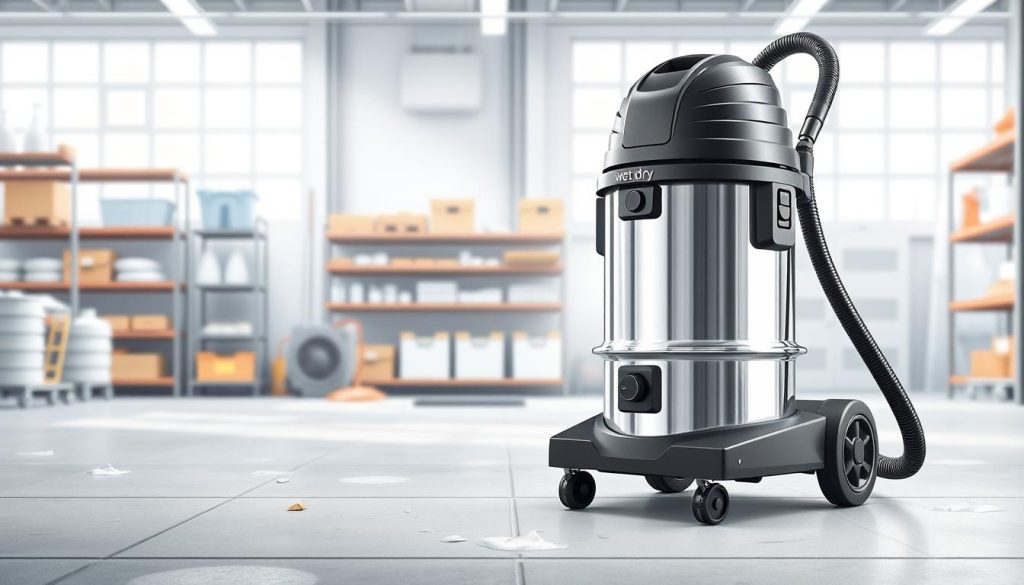
Balancing efficiency, safety and budget for the right solution
We balance efficiency and safety by selecting the correct dust class, filtration level and overflow protection for your risk profile.
Allinton offers consultative support to align specification with cleaning requirements and budget. We discuss total cost of ownership, including consumables, filter life and downtime risk.
To buy, we follow a clear pathway: catalogue review, shortlisting, site confirmation and final configuration with the right accessories for your team.
Conclusion</h2>
Selecting the right model reduces downtime and ensures cleaning stays fast and compliant across sites.
We favour versatile vacuum cleaners that handle dry, damp and liquid tasks so teams carry one reliable unit across hotels, workshops and service areas. Kärcher, Allinton and Nilfisk examples show how suction power and steady airflow drive productivity.
Key points: correct filtration must support suction to control dust and protect health. Wet dry vacuums speed spill response and cut slip risk in customer-facing zones. Dry vacuums perform long term only when filters and auto‑clean systems keep suction stable.
Where hazardous dust appears, choose the right dust class and HEPA‑grade options. Speak with us to confirm specification, accessories and an operating plan that fits your Singapore site and budget.

