
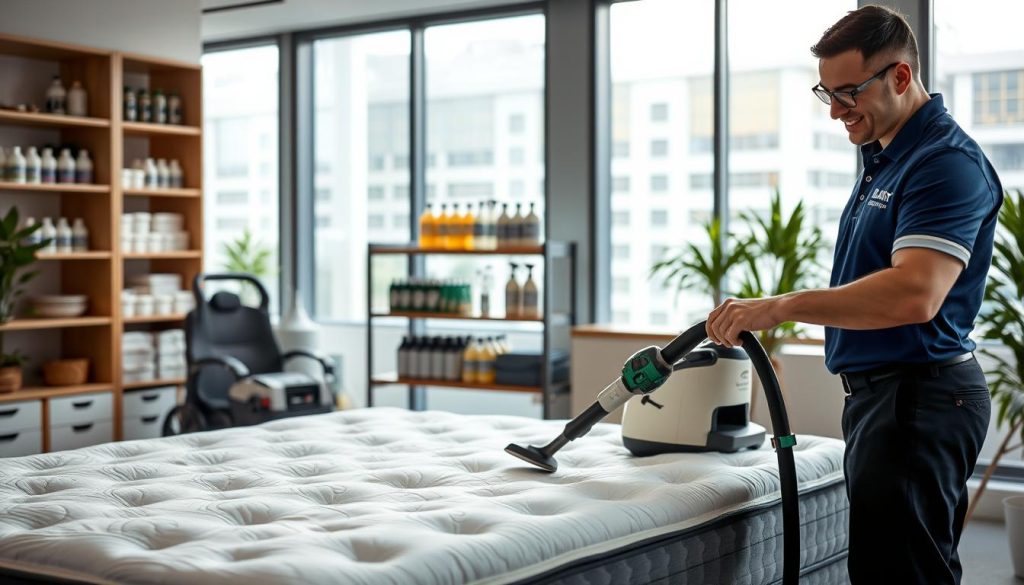
We introduce what “organic mattress cleaning” means in practice. It is about keeping a sleep surface fresh and hygienic while respecting natural fibres and avoiding harsh residues. This guide aims to be practical for homes in Singapore, where heat and humidity make moisture control vital.
We write for owners of organic cotton, wool and latex beds, families and allergy sufferers. Our goals are clear: control odours, remove stains and reduce allergens so you enjoy a clean mattress and better sleep.
At high level, we follow simple steps: prepare the room, vacuum thoroughly, spot-treat with gentle solutions, deodorise with baking soda and air dry fully. We stress ongoing care rather than yearly deep work to extend the life of your bedding.
Key cautions: avoid over-wetting, avoid heat-based drying and use a protector. For more detailed mattress care advice see mattress care advice.
Why we prioritise chemical-free mattress cleaning in Singapore homes
In Singapore, our homes face unique humidity risks that change how we care for sleep surfaces.
Humidity, moisture and the risk of mould and mildew
High humidity means trapped damp can quickly lead to mould and mildew. We avoid heavy wetting and favour quick airing to keep the interior dry.
Allergens in the bed: dust mites, dander and dead skin cells
Over time a mattress gathers dust mites, pet dander, pollen and dead skin. These particles increase allergens and reduce sleep quality.
Regular sheet washing, steady vacuuming and a protector all help reduce this build-up.
Why harsh cleaners can be a poor fit for sensitive skin and allergies
Chemical-free approaches matter for families with babies, asthma or sensitive skin. Many standard products contain VOCs or strong fragrances that can irritate the respiratory system.
Our definition of gentle cleaning is simple: minimal ingredients, low residue, controlled dampness and full drying. That keeps the sleep surface fresher without adding unnecessary dirt or residues.
- Focus: prevent trapped moisture, control allergens and limit chemical exposure.
- Routine: wash sheets often, vacuum weekly and use a barrier for best results.
What makes an organic or natural mattress different
Materials such as organic cotton, wool and natural latex offer breathability and a different feel to synthetic foam. They balance comfort and temperature control, but they also need careful handling when we do spot work or general upkeep.
Common natural materials: organic cotton, wool and natural latex
Organic cotton often forms the cover. Wool provides resilience and moisture wicking. A core of natural latex gives support and bounce.
Certifications to look for
GOTS verifies textile standards for cotton and wool. GOLS covers latex processing and purity. These marks help us confirm material claims.
Why heat and excess water harm fibres
Heat can break down wool and latex structure. Over-wetting leads to clumping, shrinkage or trapped moisture that shortens product life.
- Material-safe rules: use mild solutions, apply minimal water and blot, do not scrub.
- Drying: always let the item air dry fully and avoid heaters or hot hairdryers.
- Identify your type: check the label or manufacturer notes before you begin any cleaning.
What we need before we start cleaning
A quick supplies check keeps our session efficient and gentle on fibre. We gather every item so we finish in one calm session and avoid reaching for harsher products mid‑way.

Vacuum and attachments
Household vacuum with an upholstery attachment is essential. The attachment lifts dust from the surface gently and limits the risk of snagging or roughing the fabric.
Baking soda and moisture control
Baking soda works as a mild deodoriser and helps draw out dampness — useful in humid Singapore flats. We sprinkle lightly and remove fully by vacuuming.
Spray mixes and blotting
Use a spray bottle with water and white vinegar for freshening, or a very mild detergent mix for light grime. Always blot stains with a clean cloth or paper towels; rubbing pushes spills deeper and stresses fibres.
Finishing touches and what to avoid
Optional essential oil drops give a light scent, but we use them sparingly to avoid irritating sensitive sleepers. We avoid strong bleach, heavy solvent cleaners and anything that leaves residue or discolours natural fabrics.
| Supply | Purpose | Notes |
|---|---|---|
| Vacuum with upholstery tool | Lift dust from surface | Gentle suction; reduce fabric wear |
| Baking soda | Deodorise and absorb moisture | Sprinkle, wait, then vacuum thoroughly |
| Spray bottle (water + vinegar) | General freshening | Light mist; blot dry after use |
| Cloth / paper towels & optional oil drops | Blot stains; light scent | Blot, do not rub; use oils sparingly |
Prep the room and strip the bed for a proper clean
We always start by improving ventilation and removing clutter to speed drying and cut odour. Good airflow reduces the chance of trapped moisture and makes the whole process safer in a humid home.
Ventilation first: opening windows and circulating fresh air
Open windows and run a fan if you have one. Keep doors ajar so air moves through the room.
Removing bedding and washing sheets and protectors on a hot wash
Strip the bed completely: sheets, pillowcases, protectors and any encasements. If labels allow, wash sheets and the mattress protector on a hot wash to lower dust‑mite numbers and refresh bedding.
- Start the laundry first so it runs while we work on the mattress.
- Vacuum and spot treat the mattress next, then let it air fully before remaking the bed.
- Check for any damp spots; if present, pause and increase ventilation until dry.
| Step | What to do | Approx time |
|---|---|---|
| Ventilate | Open windows, run fan, declutter room | 5–10 minutes |
| Strip bedding | Remove sheets, protectors and pillowcases | 5 minutes |
| Wash items | Hot wash where permitted by care label | 60–90 minutes (machine cycle) |
| Dry check | Ensure mattress area is dry before remaking bed | Allow extra minutes if needed |
Quick note: plan your time so laundry and mattress work overlap. This keeps the task efficient and reduces the chance of transferring dust or damp back onto the sleep surface.
How we vacuum an organic mattress without damaging the surface
We treat vacuuming as a precise step, not a quick sweep, to protect the cover and fibres. Use a household vacuum with an upholstery attachment and keep suction moderate. Move slowly so the tool lifts dust and dirt rather than rubbing it into the fabric.
Upholstery attachment technique for an even, gentle pass
Run the upholstery tool in long, even strokes from head to foot. Keep the nozzle flat and avoid pressing hard. Repeat with side‑to‑side passes to catch fibres that lie at different angles.
Seams and crevices: where dust and allergens collect most
Pay special attention to seams, tufts and piping. These narrow areas trap dust, dead skin cells, dander and other allergens more than open panels. Use the crevice tool or a brush head to dislodge stubborn deposits.
Don’t forget the sides of the mattress and the bed frame
Vacuum the mattress edges and base — allergens migrate and settle where airflow is lower. Then clean slats, headboard joints and under the bed so dust does not fall back onto the surface.
Coverage pattern we use:
- Top: long head‑to‑foot passes.
- Sides: full perimeter strokes.
- Frame and slats: brush and suction last.
You’ll know you’re done when strokes look consistent, edges are clean and the fabric shows no fuzzing or abrasion. For more step‑by‑step tips see how we handle a deeper refresh.
organic mattress cleaning: spot-cleaning stains the natural way
When spills happen, a careful plan keeps fibres intact and odours at bay. First, we assess the mark: is it fresh or set-in, small or large, and is the cover sensitive to liquids? This quick check guides the gentlest method.
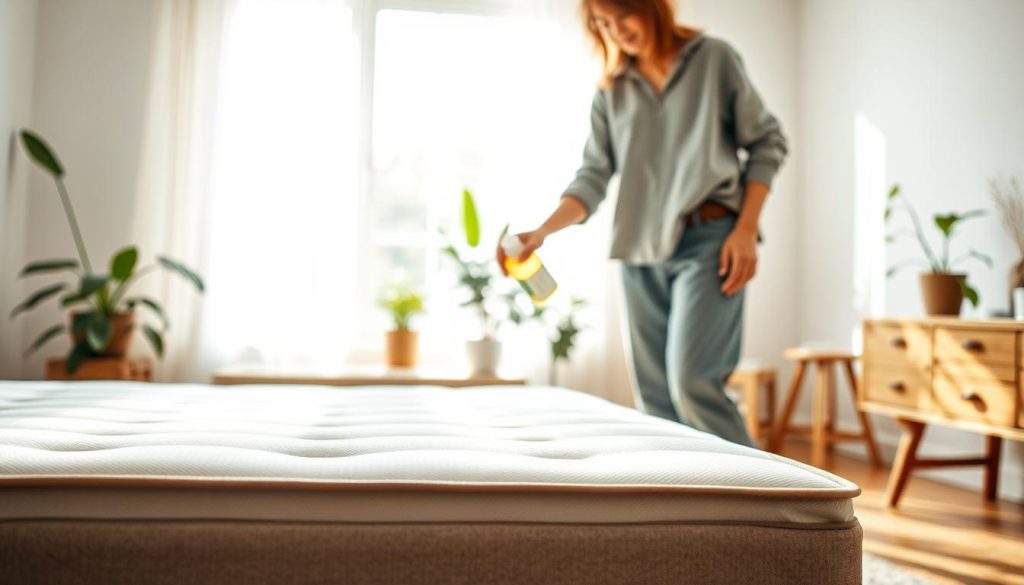
White vinegar and water spray for everyday spills
We mix 1 cup white vinegar with 1 cup water in a spray bottle. Lightly mist the stained area; avoid soaking the fabric. Then press a clean cloth to the spot and lift—do not rub.
Blotting technique to lift stains without damage
Press, lift and repeat with fresh sections of cloth. This moves the mark into the cloth rather than spreading it. Replace the cloth when it shows colour to avoid re-depositing residue.
Stronger treatment for sweat or blood
For organic stains such as sweat or blood, we test first in an inconspicuous area. Use hydrogen peroxide with a drop of mild dish soap. Apply sparingly, blot and rinse by dabbing with a water-wetted cloth.
Moisture control and drying
Avoid over-saturation. Too much liquid traps moisture, invites mildew and harms natural latex or other internal layers. We never use heat to speed drying.
Final step: let the treated area air dry fully with good airflow. If needed, run a fan for a few minutes to speed evaporation, then check again before remaking the bed.
| Step | Solution | Action |
|---|---|---|
| Assessment | — | Check fresh vs set-in, size and fabric sensitivity |
| Everyday spills | 1 cup vinegar + 1 cup water | Light spray, blot with clean cloth, repeat |
| Sweat / blood | Hydrogen peroxide + mild dish soap | Test area, apply sparingly, blot and rinse lightly |
| Drying | Air + fan | Air dry fully; avoid heaters or direct sun on natural latex |
Deodorise and refresh with baking soda
A simple dusting with a fine powder can make a big difference to how the bed smells and feels. We favour baking soda because it absorbs odours and draws out light moisture without harsh chemistry.
How to apply an even layer (and reduce clumping)
Use a flour sifter or fine sieve to spread a thin, even layer across the full surface. This reduces clumping and gives better contact with fibres.
How long we let it sit for best odour and moisture absorption
We let it sit for 4–6 hours as a baseline. When time allows, we leave it longer to deepen odour absorption and help pull out trapped moisture.
Re‑vacuuming in overlapping strips to remove all residue
Work slowly in overlapping strips so you lift powder rather than push it into the weave. Repeat until no visible residue remains.
Extra airing time after vacuuming for a fresher sleep surface
After vacuuming, open windows and let the room air for at least 20 minutes. A short blast of fresh air leaves the surface feeling neutral and ready to use.
“We test a small patch first and keep scent light.”
| Step | Timing | Check |
|---|---|---|
| Apply with sifter | Minutes | Even layer, no clumps |
| Let sit | 4–6 hours | No damp patches |
| Vacuum in strips | Minutes | No visible powder |
| Air | 20+ minutes | Neutral smell |
Optional: mix a few essential oil drops into the baking soda before sifting for a subtle scent. Keep oils light for allergy‑aware households.
For related stain advice see our step-by-step stain guidance.
Drying and protecting the mattress to prevent future issues
Dry well and protect the surface. We focus on drying first and then adding a barrier to stop future spills, sweat and allergens from reaching internal layers.
Air dry only: why we avoid heat and how we speed drying safely
Never use heaters, steam or hairdryers. Heat can break down latex and warp wool. It may also make some stains set and hold moisture inside.
To speed drying we open windows, run fans or use a dehumidifier. Leave the bed uncovered until the treated area feels warm and dry to the touch.
Using a mattress protector to guard against spills, sweat and allergens
A good mattress protector is a simple defence. It saves time after spills and limits sweat reaching layers where mould can start.
Choose a breathable, washable protector and wash sheets regularly to cut allergen build‑up. For children’s beds, a fitted protector is especially useful.
Sunlight and ventilation: when they help and when to be cautious
Brief sun and bright air help with freshness and speed evaporation. Avoid long periods of direct sun or high heat, especially over latex cores.
“Ensure the surface is fully dry by touch and smell before remaking the bed; when in doubt, give it more time.”
| Action | Why it helps | Check before remaking |
|---|---|---|
| Air dry with fan | Speeds evaporation without heat damage | Surface warm and dry; no cool dampness |
| Dehumidifier | Removes moisture from the room air | Humidity falls and treated spot dries faster |
| Wash protector & sheets | Reduces sweat and allergens | Fresh bedding and barrier in place |
| Short sunlight exposure | Freshens and reduces mild odour | Avoid prolonged direct sun on latex |
Conclusion
A clear repeatable routine is the best way to protect natural fibres in humid homes.
We keep a simple checklist: ventilate, strip bedding, vacuum with an upholstery tool, spot‑treat stains gently, sprinkle baking soda, then air dry fully. Act fast on fresh marks — blot, don’t rub — to improve outcomes.
Core kit: vacuum, a vinegar spray for light spots, and baking soda for odour control. For tougher sweat or blood stains test hydrogen peroxide mixed with mild soap and blot carefully.
Finally, use a breathable mattress protector, wash sheets often and run monthly light upkeep. For a practical how‑to guide see how to clean your mattress.

