

We cut through the noise to help Singapore homes pick the right tool for real messes. This guide shows what a combined model can replace in daily life, from quick tidies to deeper weekend jobs.
Expect straightforward advice: we test usability, performance and value at typical local price points. Each pick lists key specs—tank sizes, runtime and suction—and the trade-offs that matter most in flats and landed houses.
Our roundup is for anyone who wants fewer tools, less mess spread and faster end-to-end floor cleaning in one pass. We cover overall best, pet-hair focused models, hot-water options, compact and budget choices, plus higher-capacity units and Dyson alternatives.
For unusual uses and extra tips during maintenance, see our short guide on multifunction tasks at multifunction uses. Our aim is practical buying advice based on floor types, mess patterns and storage at home.
Why we’re recommending wet dry vacuums for Singapore homes right now
Singapore’s climate and lifestyle create unique floor challenges. Humidity, frequent rain and constant indoor‑outdoor traffic mean grit, food spills and tracked mud are daily realities. We favour solutions that remove debris and liquids quickly so floors are usable sooner.
Everyday spills, humid weather, and faster floor drying
Controlling water flow and suction helps floors dry faster in humid flats. A wet dry vacuum pulls up soiled water into a separate tank, reducing residue and odour. That faster turnaround matters when airing is limited.
Why they suit homes with children and pets
For families, quick response beats long chores. Sticky juice, sauce or muddy paws are simpler to tackle without swapping tools. We find one pass often replaces a mop, bucket and broom, saving both storage space and precious time.
How wet dry cleaning compares with a robot vacuum for busy households
“Robots handle daily dust well, but they struggle with sticky spills — the two often work best together.”
- Robot vacuum keeps dust down between sessions.
- Wet dry units remove sticky messes and dirty water reliably.
- Together they reduce full‑house cleaning time while covering different tasks.
What a wet and dry vacuum cleaner is and what it can (and can’t) do
We outline how a single machine handles solids, liquids and the trade-offs you should expect.
In practical terms, a wet dry unit is a multipurpose cleaning tool that lifts loose dust, larger debris and soiled water into separate tanks. This dual role saves time when a spill and crumbs happen at once.
Wet dry vs dry vacuum for dust, debris, and liquid messes
On fine dust and loose dirt, a standard dry vacuum often wins for noise and lightness. But a wet dry model pulls up sticky spills and soaked messes that a dry-only machine cannot handle.
Expect stronger motors and higher suction with combined units. The trade-offs are weight and sound; some models are bulkier to support tanks and pumps.
Where wet dry vacuums work best indoors and outdoors
These systems suit kitchens, entryways, balconies and utility areas. They perform well on tiles, vinyl, sealed wood and low‑pile rugs, though very thick rugs may not respond as well.
Tip: follow manufacturer guidance for delicate wood finishes and outdoor use to avoid damage or warranty issues.
What to look out for before buying a wet dry vacuum
Before you buy, focus on a few practical specs that shape day-to-day use.
Tank size and the clean/dirty split
Tank capacity defines how often you top up or empty. Choose a larger water tank if you tackle big spills or regular whole-floor mopping.
Look for a clear clean water tank and a separate dirty water reservoir. A good split reduces cross‑contamination and saves refill trips.
Suction power, noise and motor trade-offs
Suction power ratings tell part of the story. Higher power often means louder running and sometimes more weight. Balance performance with acceptable noise for flats.
Filter systems and HEPA
A sealed filter system with HEPA matters if allergies are a concern. It traps fine dust and haze particles more reliably than basic filters.
Corded versus cordless
Corded models give unlimited runtime; cordless rely on battery and battery life. Consider if a single charge covers your floor in minutes or if a spare battery helps.
Accessories, edge cleaning and handling
Useful accessories focus on corners, skirting lines and edge cleaning. Check crevice tools and brush heads before you buy.
Finally, test weight and manoeuvrability on hard floors and rugs, and think about stairs if you live in a landed home.
How we tested and shortlisted these dry and wet vacuum cleaners
We staged practical cleaning trials to find which units remove crumbs, stains and hair without leaving marks. Our goal was to mirror everyday Singapore messes and measure useful metrics that matter at home.
Our scoring criteria
Cleaning performance focused on how well a unit lifts dry messes, tackles sticky spills and captures hair on hard floors and low rugs. We noted streaks, missed debris and how brushes handled edges.
Battery and runtime were tested against manufacturer claims. We timed typical runs in minutes and measured drop‑off when switching between modes.
Tank capacity checks gauged how much area each model covers before a refill or empty. We recorded clean water and dirty water behaviour to spot cross‑contamination.
What we prioritised for flats versus landed homes
For Singapore flats we emphasised compact size, storage, noise and short charge cycles. For landed homes we valued larger tank capacity and longer runtime to cover bigger floors without interruptions.
Real‑world messes and tech that matters
We only credited technology when it improved results. Auto‑sensing dirt, traction aids and mode switching earned points if they translated into faster cleaning and less effort.
| Test category | What we measured | Why it matters | Scoring weight |
|---|---|---|---|
| Cleaning performance | Crumbs, sticky spills, hair removal | Real result on floors and edges | 40% |
| Battery & runtime | Minutes per run, mode drop‑off | Covers area without pause | 20% |
| Tank capacity | Clean/dirty litres, refill frequency | Practical coverage before emptying | 25% |
| Ease of use | Setup, manoeuvre, maintenance | Daily convenience and upkeep | 15% |
Overall best pick: Tineco Floor One Switch S7 Stretch
When one machine must replace several, we value smart sensing, tank size and easy handling. The Tineco Floor One Switch S7 Stretch delivers those traits in a tidy package for Singapore homes.
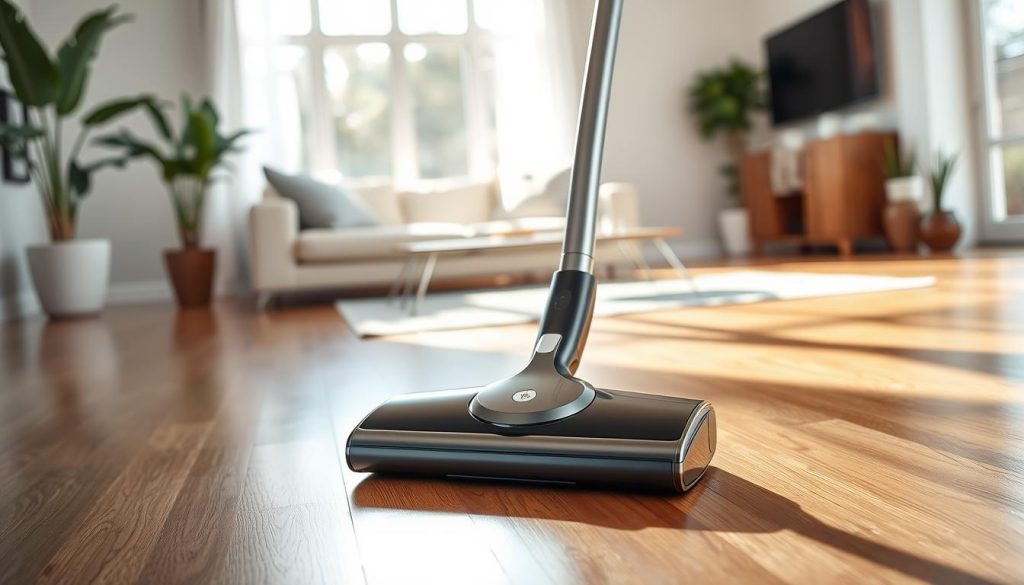
Smart iLoop sensor technology for wet and dry messes
iLoop sensing detects damp spots and dry debris, then adjusts suction and water flow automatically. This reduces over-wetting and gives steadier results across tile and sealed wood.
Dual-side brush roller for close-to-wall edge cleaning
The dual-side brush cleans within around 0.5cm of skirting and cabinet edges. That makes edge cleaning faster and leaves fewer missed streaks along kitchen runs.
Runtime and tank capacity: 1,000ml clean water, 720ml dirty water
The twin‑tank design separates clean water from dirty water, so refills are less frequent. With a 1,000ml clean tank most flats get a full quick clean without topping up.
Why it works well for hard floors and daily cleaning
With 22,000 Pa suction power, a 50‑minute wash runtime (70 minutes in vacuum mode) and a 4.7kg weight, this floor one model balances performance and handling. The LCD confirms when the floor is clear, helping us finish jobs confidently and fast.
Best for hot water stain-busting: Dreame H15 Pro Heat
Hot water mopping can turn a stubborn kitchen mess into a one-pass fix. The Dreame H15 Pro Heat uses water heated to 85°C to loosen grease and baked-on food fast. That makes a clear difference on oily splatters where normal cleaning struggles.
Performance and edge cleaning
Suction power sits at 22,000 Pa, paired with triple edge cleaning for tight skirting and cabinet gaps. Auto-traction wheels and a flat-folding design help us reach corners without fighting the head.
Tank and runtime trade-offs
The clean water tank is 800ml while the dirty tank holds 650ml. In normal mode the unit runs up to 70 minutes; in hot water mode runtime drops to around 25 minutes. Plan sessions by area — the hot mode is best for targeted stain work, not whole-house runs.
Handling and floor advice
At 6kg the unit is stable but can feel heavy for frequent carrying. We advise caution on wooden floors: heat plus moisture can risk finishes. Follow manufacturer guidance before use on delicate floors.
“Hot water mopping excels on oil and set-in stains; use it where heat aids removal, not as a default for every session.”
| Feature | Spec | Why it matters |
|---|---|---|
| Hot water temperature | 85°C | Improves removal of oil and baked-on residues |
| Suction power | 22,000 Pa | Strong pickup on hard floors and edges |
| Tank sizes | 800ml clean / 650ml dirty | Affects refill/empty frequency |
| Runtime (mode) | 70 minutes normal / 25 minutes hot water | Plan hot sessions for smaller areas |
| Weight | 6kg | Stable but may be heavy for some users |
Best for pet hair: Bissell CrossWave X7 Cordless Pet Pro
A pick aimed at pawrents who face daily pet hair, tracked dirt and the odd spill. We like this model for how it combines a Turbo Pet mode with a ready cleaning solution for stubborn spots.
Turbo Pet mode and when to use cleaning solution
Use Turbo Pet mode for thick hair tangles or sticky patches. Switch to standard mode to save battery life on light messes.
Apply cleaning solution for odours and set-in stains. Follow dilution guidance to avoid residue.
Hard floors and rugs: what it picks up in one pass
On hard floors it lifts fur, crumbs and tracked grit in one pass. On textured rugs expect better results after a second pass for embedded hair.
Tank capacity and cordless runtime expectations
The clean water tank holds 820ml while the dirty water is 420ml. That larger clean tank lets us start a session, but the smaller dirty tank may need earlier emptying.
| Spec | Value | Practical note |
|---|---|---|
| Suction power | Up to 20,000 Pa | Strong pickup on hard floors |
| Clean water tank / Dirty water | 820ml / 420ml | Good refill capacity; expect more empties |
| Weight | 4.8kg | Light to carry around pet zones |
| Battery life | Up to 30 minutes (charge 4 hours) | Plan sessions in 30 minutes for living room and corridor |
Most manoeuvrable: Narwal S20 Pro
Tight Singapore flats demand tools that turn on a sixpence and reach under low furniture with ease. The Narwal S20 Pro is built for narrow walkways and clustered rooms where turns are short and access is limited.
Lightweight build and flat-folding design for tight spaces
At 4.27kg the unit feels lighter than many in its class. The flat‑folding design helps us slide the head under sofas, beds and low cabinets without tilting furniture.
This handling matters in small homes where storage space is tight and quick stows are frequent.
AI Dirt Sense and five cleaning modes
AI Dirt Sense uses sensors to raise or lower intensity based on detected dirt. This practical technology avoids wasteful over‑cleaning on already tidy areas.
We found five distinct cleaning modes useful: a gentle mode for light dust, a standard setting for daily use, a boost for heavier debris, a spot mode for sticky stains and an eco mode for battery saving.
Triple-sided edge cleaning for skirting and corners
Triple-sided edge cleaning targets grime along skirting and into corners where many rollers miss. It lifts edge dirt without extra manual work, so perimeter runs need fewer touch‑ups.
| Spec | Value | Why it matters |
|---|---|---|
| Suction | 20,000 Pa | Strong pickup on hard floors |
| Clean water / Dirty water | 790ml / 720ml | Covers larger areas per session |
| Runtime | Up to 60 minutes | Good for full living areas |
| Weight | 4.27kg | Easy to carry and store |
Support for hot water modes adds stain‑busting options. With a 3.5‑hour charge time and sensible cleaning modes, the Narwal S20 Pro balances technology, reach and runtime for city homes that prize manoeuvrability.
“A nimble head and smart sensing turn tricky corners into quick wins.”
Best budget wet dry vacuum: Simplus Cordless Wet-Dry Vacuum Cleaner
Small flats benefit most from a fuss-free cordless machine built for quick pickups and tight spaces. The Simplus Cordless model is our budget pick for everyday dirt, crumbs and light spills without paying for premium sensors.
Strong suction power that works in daily life
21,000 Pa suction power gives noticeably better pickup for grit at entryways and common kitchen debris. In practice this means fewer passes to clear tracked dirt and loose debris on tile and vinyl floors.
Brush width and 180° lay‑flat reach
The 6.5cm brush head and a 180° lay‑flat feature help reach under low sofas and awkward corners. That compact brush design makes edge work faster in narrow corridors.
Battery life, charge time and tank expectations
Maximum runtime is 50 minutes, with a 4.5‑hour charge time. For most Singapore apartments that battery covers a full quick session; a single charge suits living rooms and hallways.
The clean water tank is 500ml and the dirty water tank 550ml. Expect more frequent emptying on heavier messes, but the modest tanks keep the unit light at 4.4kg — a real benefit for renters and first‑time buyers watching price.
“A practical, no‑frills choice for regular tidies and high‑traffic spots.”
Best value for compact cleaning: Shark HydroVac WD210SM
For compact homes seeking strong everyday value, the Shark HydroVac WD210SM packs sensible features without excess bulk. It is light, easy to store and aimed at short sessions where speed matters.
Antimicrobial rollers for odour control
The unit uses antimicrobial brush rollers to limit bacterial build-up in humid climates. That helps prevent smells from developing in stored components after use.
Cleaning modes for different surfaces
Several cleaning modes suit quick post-meal touch-ups and light upkeep across common floors such as tiles and sealed wood. We find the modes switch quickly and save battery on easy spots.
Tank sizes, suction and runtime expectations
The clean water tank is 500ml while the dirty water tank holds 360ml. With 2,700 Pa suction, the unit handles dust and small debris — not heavy outdoor muck.
At 3.9kg and up to 30 minutes runtime (charge about 4 hours), this model suits small flats and buyers who want a practical, compact cleaner rather than headline power.
Best for bigger tank capacity on a budget: Dibea H8
For buyers who prioritise longer runs and fewer interruptions, the Dibea H8 strikes a smart balance between tank size and price. It targets flats that need sensible coverage without a premium tag.
Tank sizes and why the split matters
The Dibea H8 uses a 500ml clean water tank and a 600ml dirty water tank. A larger dirty water tank reduces how often we stop to empty during heavier sessions.
This water tank split gives practical capacity for kitchens and living areas where spills meet tracked grit.
Self-cleaning system for low maintenance
The built-in self-cleaning system rinses rollers and pathways so owners do less manual scrubbing. That system cuts routine upkeep time and lowers odour risk between uses.
Cleaning modes and power for common floors
The unit offers multiple cleaning modes and power adjustments for tiles, marble and sealed wood. Use lower power on delicate floors to avoid over-wetting.
With 13,000 Pa suction, the H8 handles everyday household dirt well but will struggle with very heavy outdoor muck. Runtime sits at about 38 minutes in auto and 30 minutes on high power, with charging up to 4.5 hours.
In short: we position the Dibea H8 for shoppers who want bigger tank capacity on a budget and a low‑maintenance system that covers routine floor work without frequent stops.
Best for wet cleaning focus: Dibea HC26
Homes with frequent liquid spills need a machine built to recover water quickly and leave floors usable fast. The Dibea HC26 is aimed squarely at that task.
Large, balanced tanks: the HC26 carries a 700ml clean water tank and a 700ml dirty water tank. That matched 700/700ml split means fewer stops mid-clean and clearer separation between fresh solution and used water.
Reach and handling: a longer 568mm handle improves reach for taller users and helps us clean under cabinets without bending. At 3.85kg the unit feels light to carry between rooms.
Suction and real results: the listed suction power is 146,000 Pa, but we judge performance by pickup, streaking and water recovery on hard floors. Numbers help, yet on-floor recovery is the true test.
Runtime is about 38 minutes in auto mode with a charge time up to 4.5 hours. This makes the HC26 a good fit for larger flats, frequent moppers and households that want fewer breaks during a session.
“If you prioritise wet performance over mixed pickup, the HC26 reduces interruptions and speeds up post-meal tidies.”
- Who benefits: frequent moppers, larger households, busy kitchens and entryways.
- Key advantage: generous tank capacity for extended wet sessions.
- Quick tip: assess on-floor recovery, not just listed suction power.
Dyson wet and dry vacuum options in Singapore: what we’d buy and why
If handling, refined filtration and cordless engineering matter most, Dyson models are worth a close look for Singapore homes.
Why Dyson costs more: higher R&D, cyclonic suction engineering and advanced filtration raise the price. The result is consistent suction, a sealed filter system and lighter handling for quick daily use.
Dyson V12s Origin Submarine — lightweight everyday option
We like the Origin for its 2.2kg build, 130 Air Watts output and up to 60 minutes runtime on a single battery. The compact water tank split is 300ml clean water tank / 360ml dirty. It suits short sessions on hard floors and small flats.
Dyson V12s Detect Slim Submarine — HEPA and visibility
This variant adds a HEPA system and the Fluffy Optic head to show fine dust. At 3.1kg and similar minutes of runtime, it is for buyers who prioritise filtration and spot visibility despite the higher price.
Dyson Digital Slim Submarine — smallest carry for quick jobs
The Digital Slim targets compact homes with the lightest build and around 40 minutes runtime. It trades tank capacity for handling and speed.
“Pairing a robot vacuum for daily dust with a Dyson for targeted wet work gives practical coverage for busy households.”
Head-to-head: which model fits your home and messes best
We’ve matched key specs to common Singapore layouts so you can pick by floors, family habits and storage limits.
Best for hard floors and edge cleaning around walls
Tineco and Narwal lead here. Tineco’s close-to-wall rollers and Narwal’s triple-sided head give excellent edge cleaning on tiles and sealed wood.
Shark is a compact, lower-price option when you want antimicrobial rollers and straightforward results on hard floors.
Best for pet hair, long hair, and high-traffic areas
Bissell wins for hair pickup. Use Turbo mode for fur tangles; expect faster battery drain but fewer passes in busy zones.
Best for larger spills and bigger homes based on tank capacity
For fewer interruptions pick bigger tank capacity. Tineco (1,000/720ml) and the Dibea HC26 (700/700ml) reduce stops when cleaning large areas or major spills.
Best battery life and runtime for full-floor cleaning
Narwal offers the longest runtime at about 60 minutes. Tineco and Simplus give around 50 minutes, while Bissell and Shark sit near 30 minutes — plan sessions by these minutes.
Best pick if you want hot water cleaning
Dreame is the specialist; its 85°C water mode is ideal for oily kitchen stains. Avoid hot sessions on delicate wooden finishes.
Best pick if weight and handling matter most
For tight flats choose Narwal or Shark. Their low weight and flat-fold heads make manoeuvring and storage easier while keeping price reasonable for city homes.
Practical ownership tips to get better cleaning results
Good maintenance turns a versatile machine into a reliable daily ally for busy Singapore homes.
Two-minute post-clean habits keep parts fresh and performance steady. After each session we empty the dirty water tank, rinse it with tap water, and leave the lid off to air-dry. This prevents odour build-up and bacterial growth in humid conditions.
Dosing cleaning solution correctly avoids over-foaming and residue that reduce pickup. We use the maker’s dilution guide and never exceed the recommended dose. In auto modes excess foam can confuse sensors and impair suction power.
Brush and filter care
Remove wound hair from the brush after every few uses. Check end caps for trapped fibres and rinse rollers until clear.
Inspect the filter weekly. Wash washable filters and let them dry completely before refitting. Replace paper or damaged filters as advised to keep suction consistent.
Storage and drying for Singapore humidity
Store components in a ventilated spot. Leave tanks and heads open to air-dry; avoid sealed cupboards while parts are damp. Consider a quick wipe with a microfibre cloth to speed drying time.
| Task | Frequency | Why it matters |
|---|---|---|
| Empty dirty water tank | After every use | Prevents odour and cross‑contamination |
| Rinse brush and rollers | Every 2–3 uses | Removes hair and grime for steady pickup |
| Wash filter | Weekly (if washable) | Maintains suction power and airflow |
| Air-dry parts | After cleaning | Stops mildew in humid climates |
Where to buy in Singapore and how to spot a good deal
A good price is only the start — spare parts, support and real specs tell the rest of the story.
We shop listings on Lazada, Shopee and Amazon with a checklist. We verify seller reputation, local warranty coverage and whether the page clearly lists tank sizes and runtime. Confirm the plug type and voltage to avoid adapters or returns.
What to check on Lazada, Shopee and Amazon listings
- Seller rating and how long they’ve sold in Singapore.
- Explicit tank capacity, runtime minutes and included accessories.
- Customer photos and recent reviews for real-life performance.
- Whether replacements (filters, spare rollers) are listed nearby.
Warranty, replacement parts and after-sales support to prioritise
Prioritise full local warranty that covers battery, motor and water-handling parts prone to wear. Ask if spare parts are stocked locally — that reduces downtime and extra cost over time.
“A low headline price can cost more over years if parts or support are hard to get.”
| What to check | Why it matters | Action |
|---|---|---|
| Local warranty coverage | Protects battery, motor and seals | Confirm duration and claim process |
| Bundled accessories | Spare rollers/filters add value | Compare package contents, not just price |
| Replacement part availability | Reduces repair time and lifetime cost | Search local stores or authorised resellers |
| Seller support in Singapore | Faster service and fewer shipping delays | Prefer local authorised dealers |
Buying tips on timing and total cost: watch major sales periods, stack vouchers where possible and track price history before purchase. Compare total cost of ownership — consumables, cleaning solution and filters — rather than only the upfront price.
For Singapore buyers who want extra guidance, see our wider buying notes at best wet and dry models.
Conclusion
For Singapore homes that value speed and fewer gadgets, a single multipurpose unit often makes the biggest practical difference.
A wet dry option combines solid and liquid cleaning in one machine, saving time on common floor messes. Match a model to your tank needs, runtime and how much weight you will carry between rooms.
Quick pick: Tineco for all‑round daily use, Dreame for hot‑water stain work, Bissell for pet hair and Narwal for tight spaces. Expect trade‑offs: more power and versatility can mean bulk, noise and extra upkeep of tanks and rollers.
Shortlist two models, compare local price and warranty, then buy the one you will actually use consistently — that choice delivers the best everyday return.

