

We introduce what this tool is for and why prompt, correct extraction matters for Singapore homes. Standing water can lead to mould and lingering odours if left too long. Our aim is safe liquid extraction and a shorter drying time, not just making floors appear dry while moisture stays trapped.
Standard household machines are not made for liquid pick-up and can pose electrical and hygiene risks when rushed. We will show why wet/dry options are different and how proper cleaning limits clogs and internal mould growth.
Who is this for? Homeowners, tenants and facility teams handling small leaks or larger incidents. We outline assessment, selection of the right device and models, then step-by-step technique and aftercare.
Practical decision-making matters: we explain when to proceed safely and when to call professional restoration. For extra reading on safe extraction and wet use, see our link on vacuuming water.
Assessing water damage before we start vacuuming
Our first action is a visual check to separate large pools from damp patches and to spot hazards. This quick survey tells us whether to extract, mop or call professional restoration.
Identifying pools, damp zones and high-risk areas
We inspect edges, under furniture and along skirting where moisture hides. In Singapore’s humidity, slightly damp spots can breed mould fast, especially near soft furnishings and enclosed corners.
Deciding the right response
Extraction with a wet/dry approach suits standing pools and soaked carpets. Mopping and microfibre cloths are often faster and safer on hard floor and tile surfaces.
Surface checks and safety steps
Carpet can trap liquid in the underlay. Wood may warp if seams absorb moisture. Tiles can hide moisture in grout lines. We remove visible debris, pick up broken glass and collect small metal items by hand to prevent equipment faults and sparks.
Quick safety note: isolate electricity near affected sockets and keep pets and foot traffic away to limit spread of dirt, dust and particles.
Choosing the right water damage vacuum cleaner for safe liquid extraction
Not every household machine is built to pick up spills safely; using the wrong device risks electrical faults and motor failure. We never use upright, stick or robot units for standing liquid. These models lack sealed internals and can short circuit or incur irreversible faults.
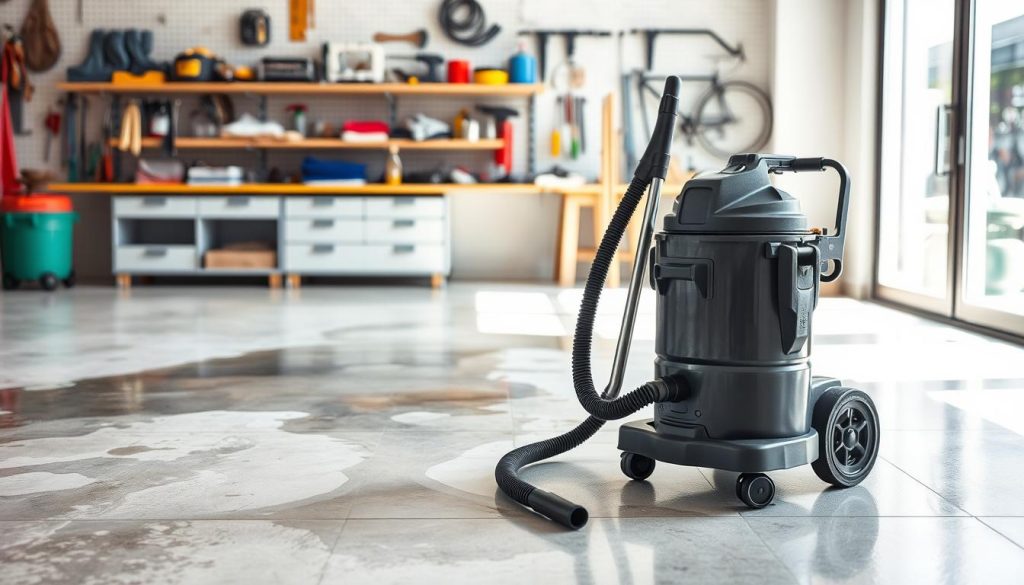
What makes a wet dry vacuum suitable
Wet dry models have sealed components and dedicated wet-use filters. That design keeps liquids in the tank and away from the motor and circuit boards. Always switch to the use wet setting and fit the correct filter before starting.
Choosing tank, hose and nozzle for faster suction
Match tank capacity to job size: small tanks suit spills, larger tanks reduce stops for room-scale extraction. A wide wet nozzle speeds floor work, while a long hose and crevice tool reach edges and under furniture.
Filters, bags and practical tips
Foam filters are for wet work; paper filters will collapse when soaked and cut performance. Wet work normally uses tanks rather than bags, so check the manual and the filter types to protect the motor and maintain long-term performance.
- Tip: Use a designed handle and steady strokes to keep suction consistent.
- Tip: Empty the tank before full to avoid clogs and loss of power.
How we use a water damage vacuum cleaner step by step
Before we touch any hose or nozzle, we secure the area and remove hazards that could harm the machine.
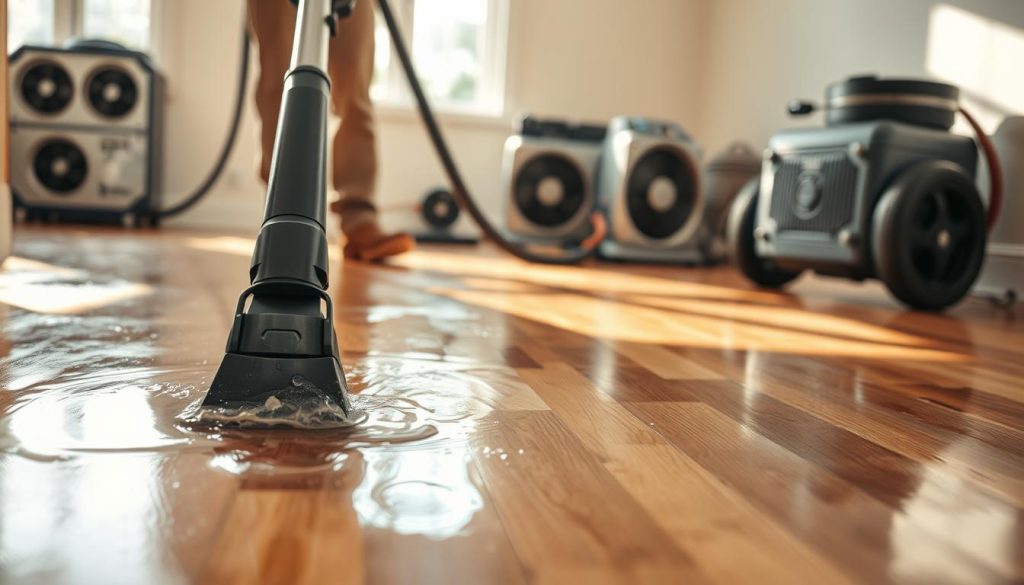
Preparing the area
We clear debris, sweep up larger glass pieces and pick out small metal items by hand.
We manage cords, keep people away and mark thresholds between tiled and carpeted zones to avoid spreading the mess.
Switching to wet mode
Power off first, then fit the wet-use filter and the correct nozzle or wide head for liquids and spills.
Use wet mode only when the manual confirms the model is wet dry rated.
Vacuuming technique and pacing
We work from edges toward the centre. This contains the spread and improves suction so we lift more liquids in fewer passes.
Move steadily, check the hose for blockages and alternate tools for thresholds.
When to stop and checks to run
Pause to empty the tank before it overfills; full tanks reduce suction and risk clogs or loss of power.
Listen for odd noises or a burning smell. If suction drops suddenly, switch off, unplug and inspect the inside vacuum areas and hose.
| Task | Recommended Tool | Why it matters |
|---|---|---|
| Large pools on tile | Wide wet nozzle, large tank | Speeds extraction and reduces stops |
| Edges and seams | Crevice tool, long hose | Reaches under skirting without spreading debris |
| Mixed surfaces | Switch attachments per area | Prevents cross‑contamination and extra cleaning |
Aftercare to prevent odours, mould and long-term vacuum damage
A simple rinse and thorough air-dry routine preserves performance and prevents internal mould growth.
Why aftercare matters: Moisture left in the tank or hose can breed mildew and cause unpleasant smells. This harms indoor air and reduces the unit’s performance.
Rinsing and drying the tank and hose
Empty wastewater safely and rinse the tank with clean water. Remove detachable hoses and run clear water through them.
Leave parts to air-dry fully in a well‑ventilated spot. In Singapore, choose a breezy area or use a fan to speed drying.
Protecting filters and internal parts
Remove wet-use filters after cleaning and inspect them. Replace or launder filters per the manufacturer to stop trapped dust and dirt from smelling or blocking airflow.
Never reuse paper elements meant for dry use after they get damp. Keep foam or washable filters ready for wet dry work.
Accessory and storage checks
Unwrap hair and fibres from brushes and nozzles. Wash washable parts and let them dry before reassembly.
Store the unit open, not sealed, so remaining moisture escapes and internal corrosion is avoided.
| Item | Post-use action | Why it helps |
|---|---|---|
| Tank | Rinse, air-dry | Prevents mildew and corrosion |
| Hose | Flush with clean water, hang to dry | Avoids trapped moisture and odours |
| Filters | Clean or replace per manual | Maintains airflow and performance |
| Brushes & accessories | Remove hair, wash if compatible | Stops hardened dirt and keeps suction steady |
| Storage | Store open in ventilated area | Prevents mould growth and smell |
Conclusion
A good outcome depends on three choices: a calm assessment, the correct models and steady technique.
We assess the scene, pick purpose-built wet dry vacuums or a mop for small hard-floor spills, and call professionals if risks or large incidents appear. We do not use standard vacuums on liquids; that rule protects people and equipment.
Our method uses the right attachments, work from edges to centre, empty tanks promptly and stop if warning signs appear. After the task we rinse parts and let everything air-dry to prevent odour and mould and to keep the device reliable.
Different models and types suit different surfaces. For tips and unusual wet-and-dry uses, see this short guide: unusual wet-and-dry uses.

