
We tested a range of models commonly sold in Singapore to build this practical list. Our aim was simple: show which product suits which home, what features matter, and which price points deliver the best value.
We explain what we tested, how we shortlisted items, and who each pick is for. We define “portable” for small flats as manageable weight, compact design and easy storage.
Expect categories such as overall best, hot-water pick, manoeuvrable pick, pet-hair pick, budget pick and notable alternatives. We also note the key trade-off: a wet dry vacuum can replace separate tools but may cost more and weigh more than a standard dry vacuum.
Throughout, we judge tanks, suction versus real-world cleaning on floors, battery runtime, edge reach and maintenance. Jump to the comparison table, then read our deep dives to match models to your cleaning habits.
Why a wet dry vacuum makes sense for Singapore homes
In cramped Singapore flats, a single machine that tackles spilled drinks, tracked-in mud and stubborn crumbs can change how we clean. Small spaces mean messes appear often, and we want to finish faster without storing a stack of tools.
Handling spills, debris, and everyday messes in one system
One unit collects liquids and loose debris in one pass. That saves time compared with using a separate dry vacuum then a mop.
Common messes include coffee spills, kitchen crumbs and muddy footprints at the door. A single system removes these without swapping tools.
Why homes with children and pet hair benefit most
Families and pet owners see the biggest gains. High-chair spills, craft paste and hair on hard floors are quicker to clear.
Solution-based cleaning also helps reduce lingering odour and sticky residues that ordinary dry machines struggle with.
“We found these units excel at fast daily touch-ups, especially in flats where a full mop session feels like too much effort.”
- Time savings: fewer steps from mess to clean.
- Versatility: works on tiles and sealed timber floors.
- Trade-offs: more powerful motors can make the unit heavier and louder than a standard dry vacuum.
We will evaluate tanks, suction, battery and noise in the next sections so you can decide when the trade-off is worth it. For a broader take on whether one device fits your routine, see our guide do you really need one.
What a wet dry vacuum cleaner actually does
This section explains the practical workings of a wet dry cleaning machine and where it helps most in a Singapore flat. We outline the parts you will interact with and set realistic expectations for floors and rugs.
How the cleaning process works
In plain terms, wet dry cleaning means the device lifts solids while also washing with water, then stores used liquid in a separate dirty water tank.
The basic system uses a clean water reservoir to wet a rotating brush or roller. Suction then pulls loosened dirt and debris into a separate tank so clean and dirty water never mix.
Where these machines perform best
They excel on hard floors for routine messes, quick spill recovery and removing fine grime that a mop may spread.
On low-pile rugs a unit can refresh fibres, but it will not replace a full carpet shampoo for deep embedded dirt.
- Limitations: some modes and brush heads suit sealed flooring only; avoid unsealed timber.
- Hygiene: emptying the dirty water tank after each use prevents odour and bacterial build-up.
- Debris behaviour: dust and hair need good suction and proper brush design to avoid tangles or smear.
“Match tank size, brush type and suction to your home so the unit does the job you expect.”
Portable wet and dry vacuum cleaner: what we look for before we recommend a model
We base every pick on a concise set of real-world criteria that matter in small homes. Our checks balance performance, hygiene and daily ease of use so you can judge any model against your routine.
Clean vs dirty water tank and capacity planning
Tank size affects how often you refill clean water and empty dirty water. Larger tanks reduce interruptions but add bulk and weight.
Tip: for a three-room flat we expect at least one refill or empty cycle per session with medium tanks.
Suction power and real-world pickup
We view suction power by how well a model lifts crumbs, hair and liquid in one pass. Numbers matter, yet brush contact and head design often decide results.
Edge cleaning, reach and manoeuvrability
Good edge cleaning needs a low-profile head and side rollers for skirting lines. Turning radius, lay-flat capability and overall design define how fast you finish corners.
| Feature | What we check | Expected benefit |
|---|---|---|
| Water tank (clean/dirty) | Capacity in litres, fill/empty ease | Fewer stops; cleaner handling |
| Suction power | Pa rating plus brush contact | Better pickup of crumbs, hair, spills |
| Battery life | Runtime in minutes and charge time | Ability to finish a full session |
| Filtration & noise | HEPA options; dB at use | Allergen control; quieter comfort |
Runtime, modes, maintenance and accessories
We check battery life in minutes and whether sensors adjust cleaning modes automatically. Self-clean cycles and easy brush removal lower long-term cost.
For a practical how-to on maintenance and tank care see our linked guide on effective cleaning with specialised equipment: cleaning and tank care.
Quick comparison of our top portable wet and dry vacuums
We present a clear spec snapshot so you can match each product to your home and routine at a glance.
Use this scannable table to shortlist by water tank capacity, suction, runtime in minutes and weight. We flag a concise “best for” line so you know which model to read about next.
| Model | Clean/Dirty tank (ml) | Suction (Pa) | Runtime / Weight |
|---|---|---|---|
| Tineco Floor One S7 Stretch | 1000 / 720 | 22,000 | 50–70 minutes; 4.7 kg — Best for: premium all-in-one |
| Dreame H15 Pro Heat | 800 / 650 | 22,000 | 70 min normal / 25 min hot mode; 6.0 kg — Best for: hot-water grease |
| Narwal S20 Pro | 790 / 720 | 20,000 | 60 minutes; 4.27 kg — Best for: manoeuvrability |
| Bissell CrossWave X7 | 820 / 420 | Up to 20,000 | 30 minutes; 4.8 kg — Best for: pet hair |
| Simplus Cordless | 500 / 550 | 21,000 | 50 minutes; 4.4 kg — Best for: budget |
| Shark HydroVac WD210SM | 500 / 360 | 2,700 | 30 minutes; 3.9 kg — Best for: hygiene / odour control |
Note on units: most brands quote Pa. Some use Air Watts — compare like for like to avoid misleading conclusions.
Quick tip: choose a larger water tank if you dislike stopping mid-clean. If you carry the product between rooms, weight matters more than a marginal gain in suction.
- What to scan first: tank sizes, runtime in minutes, and weight for flats in Singapore.
- Standout features: iLoop sensors, Turbo Pet mode, hot-water option and antimicrobial rollers explain price differences.
- Next step: jump to the detailed review that matches your priority — performance, hot-water cleaning, manoeuvrability, pet hair, budget or hygiene.
Overall best: Tineco Floor One Switch S7 Stretch
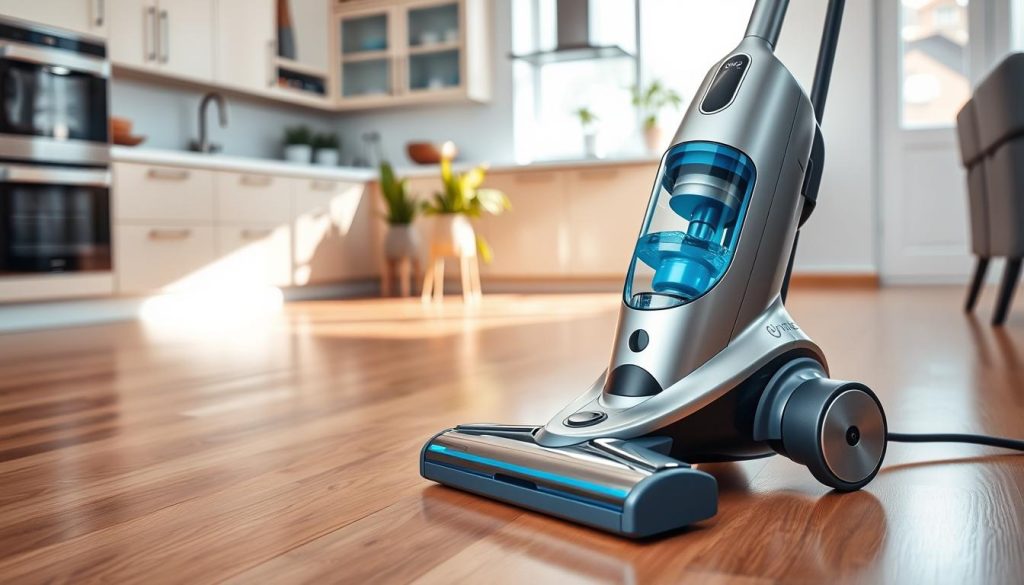
This Tineco model stood out for balancing strong performance with everyday convenience in Singapore flats.
Key specifications
Headline specs: 1,000ml clean water tank and 720ml dirty water tank, 22,000 Pa suction power, 4.7 kg weight.
Runtime is 50 minutes in floor-wash mode and 70 minutes in vacuum mode. Charge time is about 4.5 hours.
Why we like the iLoop approach
The unit uses iLoop sensor technology to detect wet and dry messes and auto-adjust water flow and suction. This saves battery and avoids over-wetting sealed surfaces.
The LCD cleanliness indicator gives clear feedback so we stop when the floor is actually clean.
Edge performance and real use
The dual-side brush reaches roughly 0.5 cm from skirtings. That makes edge cleaning effective for kitchens and hallways without extra tools.
Who should buy (and who should skip)
We recommend this for users wanting a premium all-in-one solution. The multi-function design and attachments replace several devices and speed up regular cleaning.
Skip it if you need the lightest possible stick or have a tight budget; weight and price are the trade-offs.
| Spec | Value | What it means for flats |
|---|---|---|
| Clean / dirty tank | 1,000 ml / 720 ml | One refill for mid-size sessions; hygienic separation |
| Suction | 22,000 Pa | Strong pickup of crumbs, hair and spills |
| Runtime / Charge | 50 / 70 minutes; 4.5 hr charge | Enough for most 2–3 room flats; charge overnight |
Best for hot water cleaning: Dreame H15 Pro Heat
An 85°C cleaning mode can make short work of congealed sauces and heavy cooking residues. We found heated water cuts through oil far faster than cold wipes, which matters in busy Singapore kitchens.
How hot water helps
Hot water loosens grease and sticky spills so suction and brush action remove more in one pass. This is ideal for oily pans, soy-based sauces and tracked-in grime after wet weather.
Key specifications at a glance
| Spec | Value | Why it matters |
|---|---|---|
| Suction | 22,000 Pa | Strong pick-up of debris and loosened grime |
| Water tank (clean/dirty) | 800 ml / 650 ml | Moderate session length before refill/empty |
| Runtime / charge | 70 min normal / 25 min hot mode; 4 hr charge | Plan hot-mode tasks in short bursts |
| Weight | 6.0 kg | Sturdy design; less ideal for frequent carrying |
Trade-offs and suitability
The hot mode reduces runtime to about 25 minutes. For routine upkeep we use normal mode to preserve battery life.
Flat-folding and auto-traction aid manoeuvrability, but the 6 kg weight makes lifting between levels tiring. We caution against using hot water on unsealed wooden floors; tiles, vinyl and sealed hard floors are where this unit shines.
“If hot water cleaning ranks high in your priorities and you accept the extra weight, this pro model delivers clear performance gains.”
Most manoeuvrable pick: Narwal S20 Pro
For flats with tight passageways, we favoured models that move with minimal effort and maximum reach. The Narwal S20 Pro earns our pick for manoeuvrability thanks to a light 4.27 kg design and a lay-flat folding head that slips under low furniture.
Lightweight design and flat-folding reach
The design reduces wrist strain and makes turns easier between chairs and tables. The flat-folding head reaches under sofas and beds with roughly 6–8 cm clearance.
Triple-sided edge cleaning for corners and skirtings
Triple-sided edge cleaning keeps skirting lines and corners tidy without extra tools. That feature prevents common misses that reveal weak designs.
AI Dirt Sense and flexible modes
AI Dirt Sense technology auto-adjusts intensity so we do not guess. Five cleaning modes cover quick crumbs, wet spills, and heavier dirt with sensible presets.
| Spec | Value | Note |
|---|---|---|
| Clean / dirty tank | 790 ml / 720 ml | One medium session before empty |
| Suction power | 20,000 Pa | Balanced pickup for flats |
| Runtime / charge | 60 minutes / 3.5 hours | Good for 2–3 room flats |
“For tight Singapore flats, the Narwal S20 Pro makes daily cleaning quicker and less tiring.”
Who should buy: busy households that prize ease of movement and smart modes. Who should not: those chasing the highest suction numbers for deep pile rugs.
Best for pet hair: Bissell CrossWave X7 Cordless Pet Pro
For homes with shedding dogs and indoor cats, we found a model that targets hair, stains and odour without fuss.
Turbo Pet mode, suction and solution-based cleaning: The CrossWave X7 offers a dedicated Turbo Pet mode that increases suction and brush action for stubborn hair and dried spots. Its suction reaches up to 20,000 Pa while the solution-based system helps lift grease, tracked-in grime and pet odours more effectively than plain water alone.
How it performs across hard floors and rugs
On sealed hard floors the unit consistently removes clumps of hair and sticky paw prints in one pass. Low-pile rugs benefit from the brush action and solution, which refresh fibres and remove surface dander.
We caution that deep-pile carpets will need repeat passes or a dedicated carpet shampoo for full extraction.
Battery runtime expectations for pet-heavy homes
Practical specs: 820ml clean water tank, 420ml dirty water tank, 4.8 kg weight and up to 30 minutes runtime with a 4-hour charge.
What that means: in multi-pet homes the smaller dirty water tank forces more frequent emptying. The 30-minute runtime is best used by cleaning the messiest rooms first so you finish high-priority areas before the battery runs down.
- Brush care: remove trapped hair regularly to avoid tangles and loss of suction.
- Maintenance tip: rinse the dirty water tank after each session to reduce odour.
- Who should buy: multi-pet households that prioritise pet-specific modes and strong cleaning over long runtime.
“Turbo Pet mode makes visible difference on fur and sticky spots, but plan for more frequent emptying and modest runtime.”
Best budget portable option: Simplus Cordless Wet-Dry Vacuum Cleaner
Our budget pick focuses on everyday value: solid cleaning where it counts, without premium extras.
Value highlights
Strong suction power: 21,000 Pa gives reliable pickup of crumbs, pet hair and light residue across sealed floors.
Battery life and runtime: the removable battery delivers up to 50 minutes of use and charges in about 4.5 hours. That covers short daily sessions in most Singapore flats.
Design and reach for tight spaces
The 180° flat-folding design helps reach under sofas and low cabinets. A narrow 6.5 cm brush head assists with skirting lines and narrow gaps.
| Spec | Value | Practical note |
|---|---|---|
| Clean / dirty tank | 500 ml / 550 ml | Best for frequent quick cleans; expect to refill or empty during longer sessions |
| Suction | 21,000 Pa | Strong for the price; good for hard floors and light rugs |
| Runtime / Weight | 50 minutes; 4.4 kg | Manageable to carry between rooms; one battery cycle handles daily upkeep |
Where it compromises: you won’t get sensor-led modes, premium materials or whisper-quiet operation.
Who this suits: first-time buyers, renters and anyone after a good price-to-performance ratio for everyday floor cleaning.
Best value hygienic roller concept: Shark HydroVac WD210SM
Hygiene is a strong buying point for households that clean often. Damp brush rollers and retained dirty water can breed odour and bacteria if not managed. The Shark HydroVac WD210SM focuses on that problem with a simple, practical design.

Antimicrobial brush roller approach and odour control
The antimicrobial roller is treated to limit bacterial build-up. That helps keep the head fresher between uses and reduces reliance on harsh chemicals.
In daily use we found fewer lingering smells when users emptied and rinsed tanks promptly. The roller also dries faster, which lowers the chance of musty air and trapped dust.
Tank sizes, runtime, and who it suits best
The unit packs a 500 ml water tank for clean solution and a 360 ml dirty water tank. At 30 minutes maximum runtime and 3.9 kg weight, this model suits quick, frequent sessions rather than long deep cleans.
Suction power is modest at 2,700 Pa, so it performs best on sealed hard floors and light residues. Multiple modes let users select gentler or stronger action without overcomplicating operation.
| Spec | Value | What to expect |
|---|---|---|
| Clean water tank | 500 ml | One short session for a small flat |
| Dirty water tank | 360 ml | Empty often during longer jobs |
| Suction power | 2,700 Pa | Good for spills, dust and light grime on hard floors |
| Runtime / Weight | 30 minutes; 3.9 kg | Suits frequent touch-ups; easy to carry between rooms |
Maintenance tips: empty dirty water promptly, rinse both tanks, and pat the roller dry after cleaning. These small steps preserve the anti-odour benefit and keep the unit ready for the next session.
“For households prioritising hygiene and low upkeep between cleans, this model offers clear value over higher-suction alternatives.”
Dyson wet and dry vacuum cleaners in Singapore: which Submarine model fits
For households that value engineering and refined ergonomics, Dyson’s Submarine range sits at the premium end of the market in Singapore.
Why Dyson costs more: heavy investment in R&D, Root Cyclone suction systems, advanced filtration for cleaner air and meticulous industrial design raise price tags. These factors deliver higher suction consistency and better dust capture in small flats.
V12s Origin Submarine — lightweight everyday cleaning
The Origin pairs 130 Air Watts with a 300 ml clean tank and 360 ml dirty water tank. At 2.2 kg and up to 60 minutes runtime, it suits daily light cleaning where handling and battery life matter.
V12s Detect Slim Submarine — HEPA and Fluffy Optic visibility
The Detect Slim boosts power to 140 Air Watts, adds a HEPA filter and a Fluffy Optic head that highlights fine dust on hard floors. It weighs 3.1 kg and keeps 60 minutes runtime — best for allergy-aware homes that need visible feedback.
Digital Slim Submarine — compact design vs reduced runtime
The Digital Slim favours smaller form and easier storage, but runtime falls to roughly 40 minutes. Choose it when compact design outweighs longer sessions.
“Dyson’s premium system rewards allergy control, consistent suction and refined design — but the price premium only pays off if those features match your cleaning needs.”
- Buy if: you want strong suction technology, HEPA filtration and smart design.
- Consider alternatives if: you need larger tanks or better value per dollar for long sessions.
Strong alternatives with generous tank capacity: Dibea H8 vs Dibea HC26
We reviewed two Dibea models that aim to give shoppers more runtime between refill stops while keeping operation simple. Both focus on capacity, sensible features and everyday cleaning performance for Singapore flats.
Dibea H8: self-cleaning system and surface-friendly modes
Key specs: 500ml clean tank, 600ml dirty water tank, 13,000 Pa suction, 3.7kg, runtime 38 minutes (auto) / 30 minutes (high power).
The built-in self-cleaning system reduces post-session work. It flushes brush paths so we spend less time rinsing parts. The H8 also offers surface-specific cleaning modes for wood, marble and ceramic floors, which helps avoid over-wetting sealed surfaces.
Dibea HC26: larger tanks and stronger suction focus
Key specs: 700ml clean / 700ml dirty tank, suction power listed as 146,000 Pa, 3.85kg, runtime 38 minutes, longer handle (568mm).
The HC26’s bigger capacity lowers refill and empty interruptions for larger flats or longer sessions. Its longer handle improves reach under furniture and reduces bending.
| Model | Clean / Dirty tank | Suction | Runtime / Weight |
|---|---|---|---|
| Dibea H8 | 500 / 600 ml | 13,000 Pa | 38 / 30 minutes; 3.7 kg |
| Dibea HC26 | 700 / 700 ml | 146,000 Pa | 38 minutes; 3.85 kg |
“Choose the H8 if you value low post-clean effort and surface-friendly modes. Choose the HC26 if fewer tank stops and extra reach matter most.”
For a broader local round-up that includes alternatives and buying context, see our curated guide best wet and dry picks.
Choosing the right specs for your floors, time, and cleaning habits
Start with your rooms and routine; specs follow naturally from that choice. We translate numbers into decisions so you buy for real use, not marketing claims.
Hard floors vs mixed surfaces: what to prioritise
For hard floors prioritise consistent water control, strong pickup and good edge reach. That helps avoid streaking and reduces repeat passes.
For mixed surfaces choose a model with multiple modes and adjustable power so you can switch between sealed tiles and low rugs without damage.
Small flats vs larger homes: runtime and tank capacity planning
Estimate runtime in minutes and match it to room count. If a session needs 40 minutes, pick a unit with at least that runtime to avoid mid-clean stops.
Tank capacity affects flow: larger tanks mean fewer interruptions but add weight and bulk for storage.
Low furniture and under-sofa cleaning: lay-flat and head height
Look for a low head height and lay-flat design to reach under sofas. Steering geometry matters for tight turns and skirting lines.
Quick daily cleans vs deep cleaning sessions: modes and power management
Use lower modes for light dirt to save battery life. Increase power for sticky messes or heavy soil; reserve high power for short bursts to conserve minutes.
Simple rule: match runtime, tank capacity and modes to how often you clean and what you clean. That narrows choices fast.
| Priority | Spec to check | Why it matters |
|---|---|---|
| Hard floors | Consistent water control, edge reach | Prevents streaks; cleans skirtings well |
| Mixed surfaces | Multiple modes, adjustable power | Protects rugs; improves overall pick-up |
| Large homes | Higher tank capacity, longer runtime (minutes) | Fewer stops; completes sessions |
| Low-clearance furniture | Lay-flat head, low profile design | Reaches under beds and sofas |
Buyer profiles: busy families should favour larger tanks and longer runtime; pet owners prioritise strong suction and pet modes; minimalists value light design and easy storage; value buyers seek balanced power and sensible capacity.
Maintenance and running costs we factor into long-term value
Maintenance habits shape the true cost of owning one of these systems. Regular care keeps suction steady, reduces odour and lowers long-term price of ownership. We judge models by how little fuss they need.
Emptying dirty water, rinsing tanks, and avoiding odours
Empty the dirty water same day to stop smells in Singapore’s humid climate. Rinse both tanks and leave parts to air dry to prevent mould and trapped dust.
Brush care, hair tangles, and self-clean cycles
Check the brush after every session if you have pets. Hair wraps quickly; manual removal takes a few minutes. Where available, use self-clean cycles to cut routine time and extend brush life.
Filter cleaning and replacement considerations
Wash pre-filters weekly and replace HEPA filters per manufacturer guidance. Clogged filters reduce air flow and suction, shortening the product’s effective life.
“The best model is the one you keep using because it stays fresh and simple to maintain.”
| Task | How often | Time per session | Typical replacement price (SGD) |
|---|---|---|---|
| Empty & rinse dirty water tank | After every use | 2–4 minutes | — |
| Brush removal & detangling | Every 1–3 uses | 3–6 minutes | Varies |
| Wash pre-filter / change HEPA | Weekly / 6–12 months | 5–10 minutes | Varies |
| Deep clean & storage (dry) | Monthly | 10–20 minutes | — |
Bottom line: factor running costs and minutes of upkeep into the purchase price. A model with modest replacement costs and sensible features often delivers the best life‑time value for Singapore homes.
Conclusion
Our conclusion highlights the top choice for everyday use and the quick checklist to buy with confidence. For most Singapore homes the Tineco Floor One S7 Stretch balances suction, water handling and runtime to handle spills, debris and daily dirt with minimal fuss.
Match your floors first, then pick runtime and tank capacity to suit your flat size. Check edge reach, brush design and modes for mixed surfaces, and factor in noise, weight and price as trade-offs to convenience.
Pet owners and families: choose stronger suction and easy-to-empty tanks, and keep a short maintenance routine to avoid odour. Use our comparison list to shortlist two or three models, test comfort and storage, then decide on long-term running cost.
With the right specs, a wet dry vacuum system can cut cleaning time and keep floors consistently fresh.

