
We offer a clear, measurable on-site process that goes beyond simple freshening. Our professional air purifying services were designed for Singapore homes and workplaces that needed verifiable results. We explained expected steps and outcomes up front.
We serve families moving into renovated flats, businesses improving office spaces, and sites with persistent odours or chemical fumes. Each service began with an assessment so we could tailor treatment to the problem.
Clients wanted fresher indoor air and lower formaldehyde and VOC readings. We used meters to verify reductions and to report on indoor air quality and overall air quality. Common contaminants we addressed included formaldehyde, VOCs, smoke, dust, allergens and mould.
Our tone prioritised safety, child- and pet-friendly methods where possible, care for furnishings and transparent follow-up. Contact us to book an assessment and discuss treatment options and ongoing support for lasting clean air.
Cleaner indoor air for Singapore homes and offices
We often see occupants report irritation and lingering smells after renovations or new fittings. In many cases, this pattern points to trapped chemicals and poor indoor air quality rather than a harmless scent.
Why indoor air quality matters for health, comfort, and productivity
Poor air quality can reduce comfort, disturb sleep, and lower concentration at work or at home.
Clients told us about itchy, watery eyes, sneezing and hives after exposure to newly renovated rooms. Such exposure can worsen asthma and other sensitivities, so early action protects vulnerable people.
When to engage us after renovation, new furniture, or persistent odours
Book an assessment when odours persist despite ventilation, after installing new cabinets or wardrobes, or immediately following a refit.
“New home smell” in bedrooms or nurseries is a red flag for trapped chemicals and should trigger testing rather than delay.
- Test early if symptoms appear within days of change.
- Treat promptly when smells do not fade after 48–72 hours.
- Follow-up readings confirm improvement and protect daily life for sensitive occupants.
| Trigger | Typical symptoms | Recommended action | Setting |
|---|---|---|---|
| Post-renovation | Itchy eyes, sneezing, poor sleep | Test and treat; ventilate while waiting | Home / Office |
| New furniture or built-ins | Persistent odours, throat irritation | Isolate cabinets; consider targeted treatment | Bedrooms, nurseries |
| Lingering cabinet odours | Hives, watery eyes | Measure VOCs; apply containment measures | Storage and kitchen areas |
| Shared office spaces | Low focus, headaches | Assess ventilation and common areas | Meeting rooms, open-plan office |
What our professional air purifying services are designed to remove
We focus on the compounds and particles that cause irritation and persistent odours in enclosed rooms. Below we define the main targets and explain why they appear after fits, renovations and new furniture.
Formaldehyde from carpentry and fittings
Formaldehyde is a simple gas released by new carpentry, adhesives, flooring and built-in storage. It often causes throat irritation and watery eyes. We test for formaldehyde levels and plan treatments to lower readings and reduce symptoms.
VOCs and volatile organic compounds
VOCs — volatile organic compounds — are gases from paints, carpets and some insulating materials. TVOC readings give a practical view of overall organic compounds in a room. We target VOCs to reduce paint odours and long-tail smells.
Smoke, chemical fumes and non-chemical contaminants
Smoke and chemical fumes irritate eyes and airways in poorly ventilated spaces. Dust, allergens and mould interact with humidity and ventilation patterns common in Singapore. We reduce these contaminants but will still recommend source removal or repairs when needed.
| Contaminant | Common source | Typical effect | Our aim |
|---|---|---|---|
| Formaldehyde | Carpentry, adhesives, flooring | Throat/eye irritation | Lower readings; symptom relief |
| VOCs / organic compounds | Paints, carpets, insulation | Lingering odours, headaches | Reduce TVOC; improve comfort |
| Dust, allergens, mould | Poor ventilation, humidity | Allergic reactions, asthma triggers | Remove particles; control humidity |
Common indoor air problems we solve in Singapore properties
Lingering smells from new cabinets, drawers and fitted joinery often signal trapped emissions rather than a harmless scent. We assess air quality and plan targeted treatment rather than use a one-size-fits-all approach.
Renovation “new home smell” and lingering paint odours
New home smell usually comes from adhesives, lacquered surfaces and carpentry interiors. Odors can stay in enclosed cabinetry and in crevices long after coats have dried.
Paint odours may affect one room more than others depending on airflow and how recently surfaces were coated. We identify the source and use targeted cleaning and treatment to speed recovery.
Allergen exposure linked to asthma and irritated eyes
Hidden dust reservoirs, fibres and settled allergens caused many occupants to report sneezing and itchy, watery eyes after visiting renovated rooms.
Allergen exposure can trigger asthma flare-ups for sensitive people. Our work combines thorough cleaning with measures to remove reservoirs and reduce future exposure.
Mould and damp-related air quality issues in enclosed rooms
Mould and damp are common in storerooms, bathrooms and poorly ventilated bedrooms. Enclosed rooms trap moisture and create conditions for growth.
We start with an assessment, then apply targeted remediation. Progress is tracked over time and we offer optional follow-up readings where the situation warrants it.
- Assessment first: locate sources in carpentry, paint or damp areas.
- Targeted cleaning: focus on drawers, cabinetry interiors and hidden gaps.
- Verified progress: optional follow-up readings record measurable improvement over time.
Who we help: residential, office, and commercial environments
From bedrooms to factory floors, we adapt treatments to the space, the source and the people who use it.
Home treatment for bedrooms, living spaces, and nurseries
We focus on bedrooms, living areas and nurseries because occupants spend most time there. We assess sources such as furniture, paint and cabinetry before recommending a tailored approach.
Minor interventions may include targeted cleaning and short on-site treatment. Larger problems may need an installed system for ongoing protection.
Office air quality solutions for meeting rooms and open-plan areas
In offices we consider occupancy, recirculation and timing to reduce disruption. Meeting rooms with frequent use can need fast treatments between bookings.
Open-plan areas often benefit from combined measures: local treatment plus a central solution integrated into ventilation where feasible.
Specialised systems for kitchens, industrial sites, and high-odour spaces
Kitchens and industrial sites demand systems that control grease, smoke and strong odors. We select equipment based on whether the issue is chemical off‑gassing, biological contamination or grease/smoke odours.
We set clear expectations on planning, site access and source identification so improvements last. Some clients choose one-off on-site treatments; others prefer a long-term installed system.
Our on-site air quality assessment and baseline readings
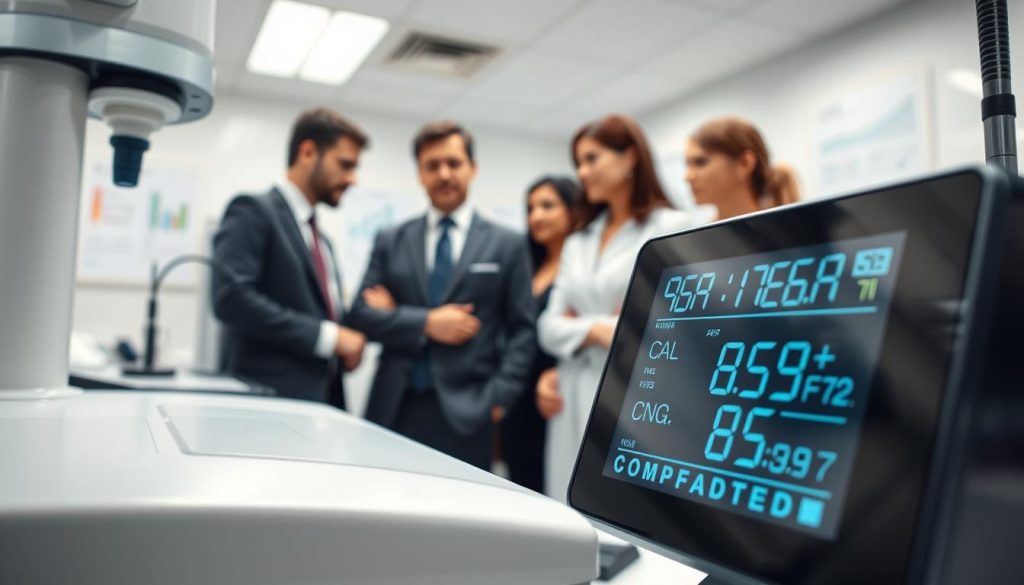
An on-site assessment gives us the facts needed to target sources and set expectations. We begin with measured baseline readings before any treatment so results are transparent and verifiable.
Identifying likely sources
We inspect visible and hidden emitters such as furniture, paints, flooring, adhesives, carpets and insulating materials. Notes are taken on finish types and installation dates to judge emission risk.
Using a meter to measure formaldehyde and VOCs
We use calibrated equipment to log formaldehyde and VOCs across the room. Baseline readings explain current exposure and provide a factual starting point for the process.
Clear recommendations based on room size and risk
Recommendations consider room size, usage (sleeping, cooking, work) and occupant risk factors such as children or sensitivities. Readings are translated into a prioritised plan that shows where to focus treatment and what intensity is appropriate.
Measured outcomes begin with precise measurement and documented starting points. Our team records results and explains practical next steps so clients understand the scope of the service and expected gains in quality.
Pre-treatment preparation to protect your space and improve coverage
A careful pre-treatment routine helps ensure the product reaches hidden emitters and that valuables remain unharmed. This step makes the rest of the process safer and more effective.
Covering electrical appliances and safeguarding valuables and collections
We cover televisions, refrigerators and other appliances to prevent any contact with treatment products. We also protect art pieces, antiques and collectibles with breathable covers to reduce risk.
Our team handles fragile items with care, using soft coverings and stable supports. We label protected items so nothing is moved unnecessarily during the visit.
Accessing VOC-prone areas: drawers, cabinets, and carpentry interiors
Off‑gassing often gathers inside drawers, cabinets and built-in joinery. We open and clear these compartments so treatment reaches the true sources rather than staying in open space.
Clients are asked to remove small loose items and to grant access permissions on the day to speed the process.
- Why prepare: to protect fixtures and improve coverage to hidden surfaces.
- What we cover: electricals, art, antiques, and exposed electronics.
- Client help: clear small items, advise on special handling requests, and confirm access.
- Care for furniture: floor protection and orderly set-up for occupied homes.
| Preparation task | Purpose | Client role |
|---|---|---|
| Cover electronics | Prevent contact with products; protect circuitry | Unplug loose cables; clear nearby items |
| Protect valuables | Safeguard art, antiques and collections | Flag delicate items; advise handling preferences |
| Open drawers & cabinets | Expose VOC-prone compartments and surfaces | Remove fragile contents; unlock built-ins if needed |
| Protect floors & furniture | Maintain orderly set-up in occupied properties | Designate high-traffic routes; clear small obstacles |
Formaldehyde and VOC removal process using ULV misting
Ultra-low volume (ULV) misting forms a core step in our treatment process. We apply ultra-fine droplets that float into cracks, cabinet interiors and behind skirtings to reach surfaces normal sprays can’t touch.
How ultra-low volume misting reaches surfaces, cracks, and crevices
ULV produces microscopic droplets that follow air paths and settle on hidden surfaces. This ensures treatment contacts adhesive joints, drawer backs and other crevices where formaldehyde and volatile organic compounds collect.
Non-toxic, non-corrosive, non-abrasive chemistry
We select products that are non-toxic, non-corrosive and non-abrasive. These choices help protect finishes and make the treatment suitable for homes with children and pets when used as directed.
Multiple layers of treatment to reduce compounds to safer levels
Typically we apply two to three light passes. Each layer lowers formaldehyde and VOCs incrementally, bringing compound readings toward safer levels while avoiding over-wetting.
Careful handling of fixtures and furniture during application
We protect floors and cover sensitive furniture before misting. Valuables remain shielded and we adjust nozzle direction to treat cabinetry interiors, not just open air.
“Clients often notice a reduction in smell right away; chemical levels and comfort usually improve further after ventilation and a short settling period.”
What to expect: an immediate change in odour for many rooms, followed by continued improvement as treated compounds dissipate. For details or to learn more about our approach, contact us for an assessment.
Post-treatment assessment, reporting, and peace of mind
Clients receive a recorded comparison of baseline and post-treatment readings to confirm results. We log measurements on site so you can check what changed at a glance.
Recording pre- and post-treatment readings for transparency
We record formaldehyde and VOCs levels before any work and again after treatment. The readings are timestamped and saved in a concise report.
Practical guidance to maintain clean air after the visit
Reports include notes on areas treated and simple routines to keep results. Use regular ventilation, delay placing new furniture in treated rooms where possible, and follow our suggested airing schedule.
Optional follow-up readings when extra confidence is needed
We recommend a return check when continued off‑gassing is likely or when occupants are especially sensitive. Reviews show clients value the extra time we take to verify improvements and to help them decide when to move back in.
| Item | What we record | Why it matters |
|---|---|---|
| Baseline | Formaldehyde, vocs | Shows initial exposure |
| Post-treatment | Formaldehyde | Verifies reduction |
| Recommendations | Areas treated; next steps | Helps maintain quality and clean air |
“The recorded readings gave us the confidence to move back in a week later.”
Verification is part of our standard approach, not an add‑on. That way you make an informed choice about timing and protect daily life.
Air disinfection options for healthier indoor environments
Tackling mould, bacteria and persistent microbial residues requires systems designed for germicidal action, not only odour control.
We distinguish disinfection from chemical off‑gas removal. Disinfection targets biological contaminants on surfaces and in the air. Chemical treatments address VOCs and formaldehyde; they do not reliably remove microbes.
Reducing biological contaminants on surfaces and in the air
UVC/UVGI approaches use germicidal UVC to inactivate mould, bacteria and airborne pathogens. Properly designed systems reduce viable counts and support overall health in homes and workplaces.
Solutions suited to occupied versus unoccupied spaces
Unoccupied option: the Environmental Surface Disinfection System (ESDS) runs full‑room disinfection when people are absent.
Occupied option: the Aire‑foil upper‑air system provides continuous germicidal action safely above head height during normal use.
“UVC is an established tool for microbial control when specified and installed to meet safety and performance requirements.”
| Mode | Example system | Best use | Maintenance |
|---|---|---|---|
| Unoccupied whole‑room | ESDS (Fresh‑Aire UV) | Deep surface disinfection | Periodic bulb checks; safety interlocks |
| Occupied upper‑air | Aire‑foil upper‑air | Continuous air disinfection in rooms | Routine cleaning; lamp replacement schedule |
| Combined approach | UVC + filtration | Mould and VOC control when both risks exist | Co‑ordinated maintenance; performance checks |
- Our recommendation depends on the assessed problem profile — chemical odours versus microbial risk — and may combine methods for complete control.
- Implementation note: we specify install location, upkeep routines and measurable success criteria such as reduced microbial counts or fewer symptomatic reports.
Technology and equipment we use for air purification and control
We combine decades-old electrostatic designs with modern UVC/UVGI and catalytic filtration to tackle complex contaminants. Our choices favour long life, measured performance and low running cost.
Electrostatic air cleaner systems
Electrostatic systems deliver durable, cost-effective filtration where frequent HEPA replacement is impractical. We select equipment that reduces particles and supports routine cleaning of collector plates.
UVC and UVGI for microbial control
UVC/UVGI products target mould, bacteria and airborne pathogens, especially inside AHUs and FCUs where biofilm can form. Fresh‑Aire UV units have been in our product range since 2013 to work within ventilation systems and improve microbial control.
Activated carbon and zeolite catalytic filters
Activated carbon and zeolite nano catalytic filter cabinets are used for odour and chemical vapour control. These products help remove formaldehyde and other VOCs that linger in cabinetry and fittings.
System integration for offices and larger buildings
We design integration to suit existing AHUs/FCUs, checking airflow compatibility, access for maintenance and operational schedules. Our track record dates back to 1989, giving us practical knowledge to match system size to space and use.
Targeted solutions for smoke and odour control in kitchens and industrial settings
When grease loading and combustion particulates are present, general filters often fail and we specify combined approaches to resolve these problems.
Grease, smoke, and odour management with UV ozone lamp-enabled systems
We pair kitchen exhaust electrostatic cleaners with UV ozone lamps to tackle grease and smoke while reducing stable odours. The electrostatic filter captures particulates and grease; UV/ozone targets volatile compounds and helps keep collector plates cleaner.
Duct and hood UV ozone options for heavier odour problems
Duct-insert models and hood/cabinet UVC + ozone configurations suit heavier discharge control. Duct inserts work where access is limited; hood units treat emissions at source and reduce down‑stream deposition.
- Activated carbon cabinets add adsorption for chemical vapours when TVOCs persist.
- Maintenance includes plate cleaning, lamp checks and periodic filter replacement for reliable performance.
- Specification must match airflow volumes so the system performs and complies with local expectations.
| Option | Best for | Key products | Maintenance |
|---|---|---|---|
| Electrostatic + UV | Grease & smoke | Electrostatic collector, UV ozone lamp | Weekly plate clean; lamp check |
| Duct-insert UVC | Heavier odour discharge | Duct UVC module | Access & lamp replacement |
| Carbon/catalytic cabinets | Chemical odours | Activated carbon / catalytic units | Replace cartridges as rated |
We view these components as scalable parts of a wider control programme, selected to suit each site and industry need.
What you can expect on service day
Our crew follows a clear plan from arrival to departure so you always know what to expect.
Prompt arrival, protective coverings and careful set-up
We arrive on time and give a brief on the job and safety steps. We lay protective floor coverings and shield valuables to prevent accidental marks.
Thorough application across surfaces and hard-to-reach areas
We open drawers and move light furniture where needed to reach cabinetry interiors. The team works methodically so treatment reaches hidden crevices and key surfaces.
Client reviews note careful handling of carpentry and tidy working methods. We balance speed with care to protect finishes while doing thorough cleaning.
- We walk you through logistics so timings are clear.
- We explain ventilation needs and how long the room should remain closed after treatment.
- We confirm estimated time on-site and next steps before departure.
| Stage | What we do | Client note |
|---|---|---|
| Arrival | Punctual briefing; protective covers | We notify occupants and secure valuables |
| Application | Targeted treatment to surfaces and cabinetry | Allow access; remove small items from furniture |
| Aftercare | Ventilation advice; tidy-up; report | Follow airing schedule; optional follow-up readings |
Practical note: if you have delicate upholstery or sofas, consider our sofa cleaning guidance before we move items. We aim to leave your space orderly and deliver measurable improvements in indoor air quality.
Results we aim for: fresher air, reduced odours, and lower VOC readings
Measured reductions in volatile compounds usually match what occupants describe as fresher living spaces.
Noticeable reduction in chemical odour after treatment
We aim for clear sensory change: paint smells or cabinetry off‑gassing should fall and, in many cases, disappear from the room.
Clients report that odours become faint or vanish and that enclosed cupboards lose trapped smells.
Improved comfort for sensitive occupants, including those prone to asthma
Lower formaldehyde and TVOC readings back up what people feel. Reduced exposure helps ease symptoms such as itchy eyes, sneezing and, in one case, hives in a child after renovation.
Expected indicators:
- Lower formaldehyde readings post treatment.
- Recorded drop in vocs and TVOC values from baseline.
- Improved daily comfort and better sleep or concentration in affected rooms.
“The living room felt fresher and the child’s symptoms settled after follow-up checks.”
Results depend on source strength, ventilation and whether new materials keep off‑gassing. We offer a practical, measurement-led solution so families and businesses can decide when it’s safe to return and resume normal life.
Why clients choose us: professionalism, care, and measurable outcomes
What sets us apart is clarity from first contact and a process that produces verifiable results.
Clients repeatedly praised Freddie and the team for clear explanations, prompt arrival and careful handling of the job. This practical approach reduces uncertainty and makes decisions easier for households and offices in Singapore.
Praised for clear explanations, punctuality, and thoroughness
We explain the treatment and what each reading means, so clients know the purpose of every step and the expected outcome.
On the day, we arrive on time, protect valuables and apply methodical treatment to cabinetry and crevices. Reviews note the team’s steady, tidy work and respectful care for interiors.
Trusted for follow-through with post-treatment verification
Measured outcomes matter: we record formaldehyde and TVOC levels before and after treatment so you see real change.
Where clients want extra assurance, we return for an additional reading a few days later and update the report with timestamps and practical next steps.
“Freddie explained everything clearly, arrived punctually and came back for a follow-up reading — we felt confident to move back in.”
| Quality clients value | Why it matters | What we do | Client takeaway |
|---|---|---|---|
| Clear explanation | Reduces uncertainty about the process | Briefing, baseline readings, plain-language report | Confident decisions on timing and reoccupation |
| Punctuality & care | Protects home and minimizes disruption | Protective coverings, careful handling, tidy finish | Minimal interruption to daily life |
| Measurable results | Shows change in air quality and formaldehyde levels | Pre/post readings; documented report; optional return visit | Objective proof of improvement and peace of mind |
Experience, track record, and industry confidence
Our history began in 1989 and spans decades of system development and field use. We focus on long-term capability rather than slogans, showing practical results across sectors.

Decades of air-cleaning expertise and system development
In 1991 we co-developed an electrostatic system for SBS Transit air‑conditioned buses — a first-in-world application that proved durable in daily service.
Since 2013 we have been the sole Singapore distributor for Fresh‑Aire UV USA products, supplying UVC units for AHUs and FCUs and supporting reliable system integration.
Proven performance across transport, offices, laboratories, and healthcare environments
Letters of appreciation cite improved perceived air quality at an NUS laboratory, fewer illness-related lost man‑hours at a major bank, and long-term renewals from media and corporate tenants.
“The work reduced downtime and cut maintenance on filters, delivering measurable benefits to operational life.”
Our record matters: years of deployments in transport, laboratory and office settings give clients confidence in our products and approach. For perspectives on facility resilience and indoor quality see facility resilience and indoor quality.
Conclusion
Ultimately, our goal is simple: reduce measured contaminants such as formaldehyde and VOCs, address odours, dust and mould, and return rooms to comfortable use.
We begin with baseline readings, apply targeted cleaning and ULV treatment when appropriate, and finish with post‑treatment measurements so changes are verifiable. Solutions range from one‑off on‑site work to an installed system or disinfection option depending on risk and space.
What to do next: book an on‑site assessment, clear cabinets and carpentry for access, and plan ventilation and an optional follow‑up reading. Contact us to arrange a visit and receive a concise report that explains results and recommended next steps.

