
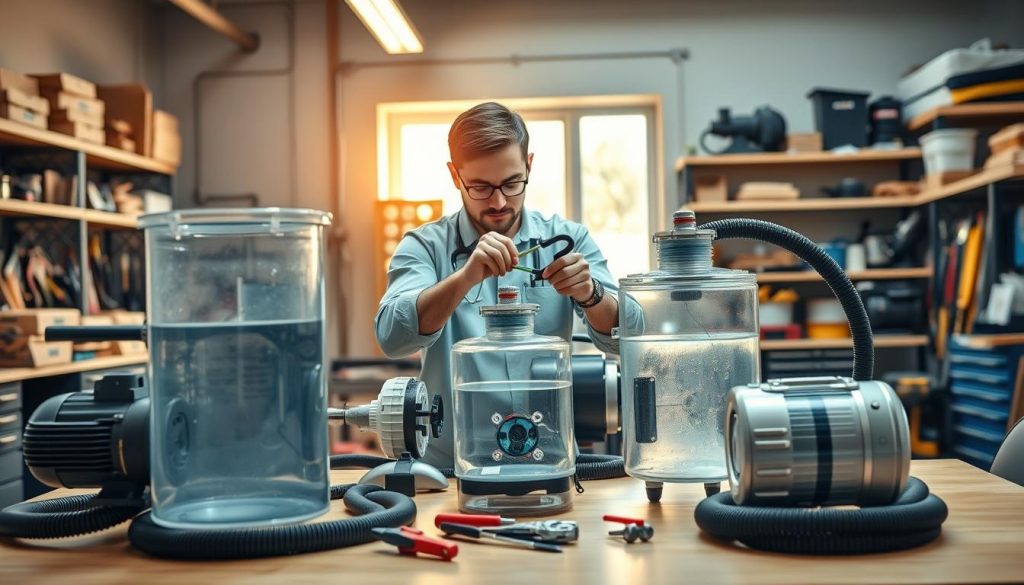
We introduce our wet and dry heavy duty vacuum cleaner as a practical, single‑machine answer for mixed messes in Singapore offices and homes.
For teams and households that clear frequent spills and fine dust, we offer dependable vacuum cleaners built to keep suction under load.
We set clear expectations: headline power is only part of the story. A capable unit must hold suction when full, protect filters during liquid pick‑up and speed up real jobs.
Readers can self‑qualify quickly. Some prefer drum machines for volume. Others choose cordless wet dry formats for daily floor care. We explain both paths below.
Our value promise is simple: reduce downtime, cut tool swaps and finish more with one reliable system. For tips on unusual uses, see our guide here.
Built for tough clean-ups in Singapore workplaces and homes
In busy Singapore sites, equipment must deliver repeatable results under pressure. We design our units for continuous use so teams can finish tasks without long pauses.
Why we focus on high-performance cleaning for fast-paced environments
Consistent output saves time. When jobs run back-to-back, a reliable machine reduces repeated passes and avoids frequent stops to clear clogs.
“Robust machines support hygiene and reduce downtime across indoor and industrial spaces.”
Where our cleaner fits: workshops, construction sites, garages and indoor spaces
We map practical use across workshops, construction sites, garages, storerooms and indoor areas. Mess can change from coarse debris to fine dust within hours.
- Scheduled cleaning and rapid response for spills and grit.
- Mixed contamination examples: sawdust with liquid drips; renovation debris plus post-mop water.
- Choose format by intensity of work — drum for long runs, cordless for quick runs and tight spots.
| Site | Typical mess | Recommended format |
|---|---|---|
| Workshops | Sawdust, oil drips, metal shavings | Drum format with robust filtration |
| Construction sites | Renovation dust, debris, post-mop water | High-capacity drum for long runs |
| Garages & storerooms | Coarse dirt, fine dust, occasional fluid | Cordless or portable unit for fast response |
What a wet dry vacuum is and what it replaces
Combining liquid pick‑up and particle collection in one tool simplifies daily upkeep. We mean a dual‑mode unit that handles spills, grit and pet hair so teams need fewer items in storage.
Wet vacuuming vs dry vacuuming: what each mode is designed to handle
Dry vacuuming focuses on dust, sanding residue, grit and hair. It uses fine filters and steady airflow to keep suction while trapping particles.
Wet pick‑up collects liquid spills, post‑mop water and slurry. It relies on protection systems to stop liquids reaching the motor.
Why one machine beats separate dry vacuum cleaners for mixed messes
One dual‑mode unit replaces a separate dry vacuum cleaner plus ad‑hoc tools for liquid work. That cuts storage, lowers costs and speeds turnarounds.
- Switch modes instead of swapping tools mid‑job.
- Select the right filter for dry vacuuming; engage liquid protection for spills.
- Fewer consumables and less risk of using the wrong device on the wrong mess.
| Problem | Traditional setup | Dual‑mode solution |
|---|---|---|
| Dust then spill | Dry unit + mop | Single wet dry vacuum, change filter, start liquid pick‑up |
| Carpet hair & water | Brush plus separate pump | One machine for hair and puddles |
| Post‑mop water | Manual squeegee | Efficient water pick‑up with overfill protection |
Wet and dry heavy duty vacuum cleaner: what makes it “heavy duty”
We judge robustness by how long a machine holds its performance under continuous strain.
Heavy duty means sustained suction across large volumes of dust, dirt and occasional water without constant stoppages.
High suction power and reliable motor power give fewer passes, faster clean-up and better pick-up on both smooth floors and rough work surfaces.
Durable construction for daily use
Durability is a system promise: robust housing, sturdy rollers, dependable hoses and reinforced power cables that tolerate repeated use.
User-friendly handling
We design for stable movement that resists tipping, simple tank emptying and organised storage for accessories.
“Commercial units are a cut above typical domestic machines for the type and amount of contamination.”
Many of our models designed for trade work also include filtration and wet pick-up protection, which we explain next.
Typical jobs we handle, from dry dust to liquid spills
Jobs on-site range from fine particle control after sanding to rapid response for spills and large fragments after renovation. We see three recurring mess profiles that guide machine choice and setup.
Fine dust from sanding, cutting and drilling
Fine dust is the hardest to control. Construction tasks such as cutting concrete, brick or tile generate respirable crystalline silica. Wood and MDF sanding adds another fine dust load.
Fine dust clogs filters fast and floats in air when disturbed. Fast capture at source and an M‑class filtration choice limit exposure and keep suction steady.
Liquid spills, leaks and post-mop water pick-up
We handle sudden liquid spills, leaks and post-mop water so floors reopen quickly and safely. Picking up water reduces slip hazards and speeds return-to-work time.
Coarse debris in garages, workshops and renovation work
Sand, grit, metal chips and fragments turn up in workshops and garages. These require larger nozzles, robust tanks and a system that tolerates volume without clogging.
Buying tip: match tank capacity, nozzle choice and filter class to what you vacuum day to day to avoid repeated tool swaps and downtime.
Choosing the right format for your work: drum vs cordless stick
Picking the right format starts with your routine — big, occasional clear-ups need different tools to regular floor maintenance.
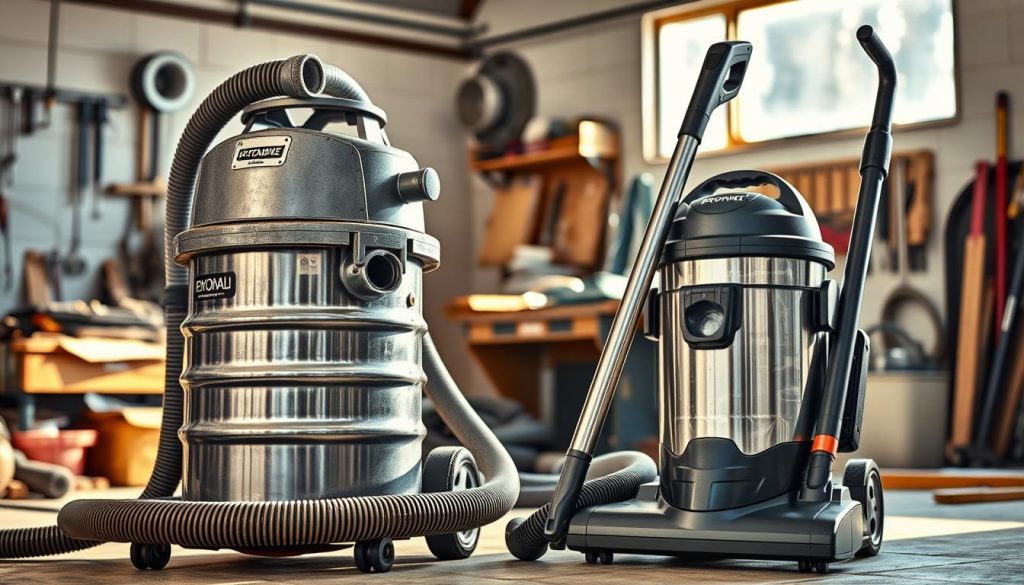
Drum models for large clear-ups and renovations
For garages, workshops and renovation sites we recommend drum wet dry vacuums. These models offer larger tanks and corded stability for long shifts.
They suit long runs where capacity and robust handling outweigh compact storage.
Stick models for everyday floor care
For frequent corridor or lobby upkeep, cordless stick options work well. Many are 3‑in‑1 units that vacuum and mop in one pass.
Smart nozzles, such as TriAction types, and dirt detection help speed daily use without extra steps.
Mobility and design trade-offs
Corded drum units give steady performance for extended jobs. Cordless sticks increase manoeuvrability for quick passes across rooms.
Accessories and nozzle choice influence results. Edge cleaning, hard-floor pick-up and accessory storage should match your space, debris mix and cleaning frequency.
“Match the format to the task and you cut downtime while improving on-site performance.”
Suction power and performance that stays consistent
Maintaining steady lifting power during long jobs defines on-site reliability.
Why suction drops: filter loading and airflow restriction
Suction power falls when fine particles cake on the filter. Airflow tightens and the motor works harder to move the same volume.
This happens fast with sanding dust or concrete grinding. Small dust packs into fibres and reduces pick-up strength within minutes.
Filter cleaning systems that keep performance high during long jobs
Our choice of filters and cleaning systems decides whether we stop every hour or keep going.
Semi‑automatic cleaning gives planned bursts to clear build-up. Fully automatic systems react to the filter condition so we continue work with fewer interruptions.
- Practical benefit: consistent performance means fewer stoppages and lower labour cost.
- Tact concept: sensor-controlled airflow reversal sends short air blasts to free fine dust from the filter and restore suction power.
- Result: less manual cleaning, reduced consumable use and longer runs on large dust loads.
“Automatic filter cleaning is the difference between a tool that pauses and one that keeps pace on site.”
Filtration and filters: capturing dust, fine dust and allergens
Filtration is the unsung hero that keeps dust out of the air and your site breathing easy.
Microfilter technology and multi-stage capture
Microfilters trap fine particles that ordinary elements miss. Multi-stage systems layer coarse pre-filters with fine media so larger debris falls away first.
This staged approach improves air quality and reduces re‑deposition after vacuuming. Brands such as Electrolux cite microfilter tech for better allergen control.
Filter materials and durability for wet-to-dry switching
Materials like PES or PTFE tolerate moisture and keep structure when you move between liquid pick-up and dry work. Kärcher highlights these options for mixed use.
Choose materials that resist degradation so the filter stays effective and lasts longer during frequent cleaning cycles.
When to change, dry or clean filters
Check elements after heavy dust loads. Clean reusable filters regularly and replace disposables on schedule.
If you pick up liquids, rinse and fully dry the correct components before next use to protect performance and safety.
- Why filtration is essential: it reduces airborne particles, improves comfort and lowers exposure during jobs.
- Practical tip: keep spare filters and a simple drying routine to avoid downtime.
“Good filtration is the line of defence between contamination and clean air.”
Safety and hazardous dust: selecting the right dust class
Choosing the correct containment standard starts with knowing exactly what dust you generate on site. We must treat dust as a health hazard when work produces fine, respirable particles. Identifying the source guides our equipment and procedural choices.
Understanding dust classes L, M and H for professional use
L covers moderate risk particles. M is for medium-risk dusts such as hardwood, paint, ceramics and concrete/brick — and is often the legal minimum for construction sites. H applies to hazardous or carcinogenic material like asbestos, lead and some moulds.
Why construction sites often require at least M class control
Construction work commonly creates silica and similar respirable dusts. For that reason, we recommend machines and filtration rated M or above to meet site rules and to limit airborne spread.
Health risks from respirable dusts and why containment matters
Silica and asbestos can cause long‑term illness. Containment inside the unit prevents reintroduction of particles into the breathing zone.
- Check the dust class before selecting equipment.
- Avoid standard domestic units for hazardous fine dusts; filters may not contain contaminants.
- If unsure, choose higher protection and seek professional advice or testing.
For orders or to compare models suited to construction work, see our quick ordering page: order Lura unit today.
Wet pick-up protection: how overfill shut-off works
A reliable shut-off system turns a risky spill into a routine task for on-site teams. Liquid and motors do not mix, so a purpose-built design must stop rising water before critical parts see contact.
Float systems that block the suction channel
Simple mechanical floats rise with the liquid level. As the float lifts, it seals the airflow path and halts intake to protect the motor and preserve power.
Electronic cut-off for automated protection
Alternatively, conductive contacts detect when the tank reaches a set height. The machine then cuts power automatically to avoid flooding the blower. Kärcher describes both methods as effective for preventing damage.
Practical use and safety
We advise monitoring tank levels, emptying promptly and keeping the unit set to wet dry mode correctly. This reduces the risk of sudden failure and keeps suction consistent during long jobs.
- Why it matters: overfill shut-off prevents costly motor repairs and improves operational safety.
- Tip: treat overfill features as part of routine checks before use.
Attachments, nozzles and tools for multi-surface cleaning
Attachments define how a single machine becomes fit for multiple surfaces and mess types. We view heads and tools as core parts of the system, not optional extras. The right accessory saves time and reduces rework.
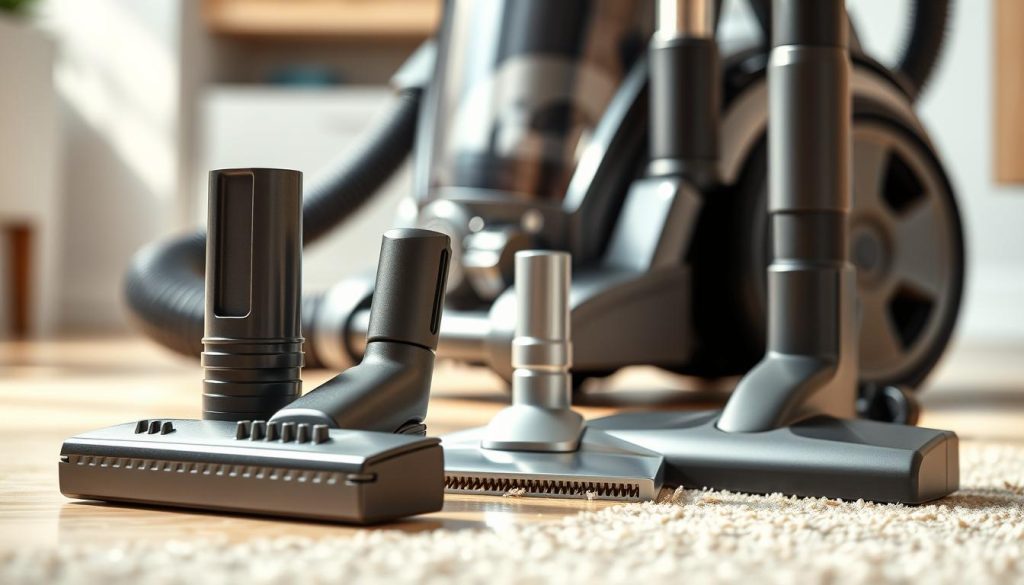
Floor nozzles for wet and dry applications
Wide floor nozzles with quick-change inserts suit shifts between debris and water pick-up. Kärcher notes these designs speed swapping while keeping seal and suction strong.
Crevice tools and sleeves for tight spaces and machine clean-down
Crevice tools reach edges, vents and vehicle interiors. Soft sleeves protect delicate trims and let us clean machine inlets without damage.
Specialist heads such as vacuum-and-mop nozzles for hard floors
Electrolux highlights TriAction-style heads that combine vacuuming with mop action on hard floors. This cuts steps and gives a consistent finish on tiled and vinyl surfaces.
Onboard accessory storage and tool organisation for faster jobs
Onboard storage keeps nozzles, brushes and tools with the unit. That reduces lost parts, speeds changeovers and increases the chance the right product gets regular use.
- Attachments adapt the vacuum cleaner to each task.
- Right nozzle choice improves edge capture and limits splash.
- Organised storage raises efficiency and safety on site.
Applications by industry in Singapore
Different sectors need tailored solutions to control dust and speed post-job clearance.
Building and construction: dust control and post-work clean-up
Construction sites generate large volumes of fine dust from cutting, drilling and sanding.
We prioritise M-class filtration, high tank capacity and quick filter-access for fast servicing.
Automotive and workshops: mixed debris, sand, and wet contamination
Workshops see grit, metal chips and occasional fluid spills during bay turnarounds.
Robust filtration, accessory nozzles and overfill protection reduce tool swaps and speed vehicle handover.
Hospitality and facilities: rapid spill response and floor safety
Hotels and restaurants need quick reclaim of liquids to reopen areas safely.
We recommend compact formats with fast emptying and strong edge pick-up to cut slip risk.
Industrial and trade environments: continuous operation expectations
Manufacturing and trade floors demand machines that run long shifts with minimal downtime.
Choose systems with automatic filter cleaning, reinforced hoses and easy service access.
- Selection criteria: tank capacity, filtration class, accessory set, overfill protection.
- Benefit: reduced interruptions, faster area recovery and better on-site safety.
- For an industry overview and specifications, see our summary on LinkedIn: industrial applications in Singapore.
| Industry | Primary challenge | Key selection points |
|---|---|---|
| Construction | Fine dust, post-work residue | M-class filters, large tank, automatic cleaning |
| Automotive & workshops | Grit, chips, fluids | Robust nozzles, quick-empty tank, overfill shut-off |
| Hospitality & facilities | Frequent spills, slip hazards | Compact units, fast emptying, strong floor heads |
| Industrial & trade | Continuous cycles, heavy contamination | Durable build, long-run motors, serviceable filters |
Recommended models and what each is best for
To simplify choice, we recommend three products that span budget, portability and hygiene. Each model suits a clear outcome so you match purchase to use, not specs alone.
Value-focused drum model
Electrolux Flexio Power Z823 is our budget workhorse. It is a 3-in-1 unit with blower function and a 1600W motor. Onboard accessory storage and 360° manoeuvrability make it ideal for garages and renovation clear-ups.
Best for: renovation volume and workshops where robust suction and simple handling matter. Check official stores for current promotional pricing.
Premium cordless option
Electrolux 800 EFW81713 targets convenience and advanced features. The inverter motor, detachable hand unit and TriAction nozzle deliver 99% debris pick-up. Self-cleaning and smart dirt detection reduce upkeep.
Best for: everyday hard-floor care and quick turnarounds in lobbies and homes. Check official stores for current promotional pricing.
Hygiene-led multi-function
Electrolux UltimateHome 700 EFW71711 focuses on bacterial control with antibacterial water tanks that eliminate 99.9% of bacteria. The self-cleaning nozzle and quick floor drying suit hygiene-first sites.
Best for: healthcare, hospitality and kitchens where cleanliness is critical. Check official stores for current promotional pricing.
| Model | Primary benefit | Recommended use |
|---|---|---|
| Flexio Power Z823 | Powerful 1600W, blower, storage | Renovation, workshop |
| Electrolux 800 EFW81713 | Cordless, smart dirt detection, self-clean | Everyday hard-floor care, quick jobs |
| UltimateHome 700 EFW71711 | Antibacterial tanks, quick dry | Hygiene-led environments |
How to choose: pick the model that matches your mess type, frequency and space constraints. The right product is the one that solves your tasks, not the most expensive option.
Price range, promotions and total cost of ownership
A sensible price frame helps buyers choose a product that pays back in time saved and fewer replacements.
In Singapore our models span entry-level drum units up to premium cordless options with advanced features and promotions. Pricing depends on the specific model and current offers.
Typical pricing in Singapore and what affects it
Price moves with format, motor size, suction power, tank design and filtration complexity. Cordless products tend to cost more for battery tech. Automated filter systems and self-cleaning heads add to the upfront spend.
How features like filter cleaning reduce downtime and consumable costs
Automatic filter cleaning preserves suction power during long runs. That reduces stoppages, lowers manual maintenance and stretches the life of each filter.
Practical benefit: fewer filter changes, no contact with dirt, and better use of tank capacity—this shrinks total ownership costs over time.
What to look for in deals
Official promotions often include discounts up to 47%, free delivery, 0% instalment plans and bundled gifts. Prioritise extras that support daily cleaning use, like spare filters or accessory kits.
- Compare offers by long‑term cost, not only discount percent.
- Check warranty, filter availability and service options in Singapore.
- Look for bundles that include useful accessories rather than cosmetic gifts.
| Factor | Impact on price | Tip |
|---|---|---|
| Format | Drum vs cordless | Match to daily use |
| Filtration | Advanced filters add cost | Choose longer‑life media |
| Automation | Auto filter cleaning raises value | Reduces downtime and parts spend |
How we help you choose: a quick matching guide by mess type
Choosing the right unit starts with a clear view of what you pick up most often on site.
We give a fast, practical guide so buyers can match the correct type of machine to common mess profiles. Below we compare three frequent scenarios and the features that matter most.
Large liquid volumes vs medium-fine dust vs heavy fine dust
Large volumes — flooded areas or repeated liquid spills need high tank capacity and reliable shut-off to protect motors and speed emptying.
Medium-fine dust — renovation residue requires steady airflow and semi‑automatic filter cleaning to avoid rapid suction loss.
Heavy fine dust — intense sanding or cutting calls for M‑class containment, frequent filter swaps and robust inlet heads to manage abrasive dust.
When safety-rated filtration becomes essential
If the dust is respirable, persistent or potentially hazardous, safety is non-negotiable. Choose safety-rated filtration and certified containment before any cost or convenience trade-off.
Decision checkpoint: if work generates silica, lead or similar particles, step up to a higher class and document the hazard for compliance.
- Avoid under-specifying: a low-capacity unit clogs, increases filter costs and interrupts work.
- Avoid over-specifying: don’t pay for features you will rarely use; match capacity and filtration to actual use.
- Document the mess profile: note frequency, dust heaviness and wet-to-dry switching to pick the right type for long-term performance.
| Scenario | Primary need | Key features |
|---|---|---|
| Large liquid volumes | Fast pick-up, safe shut-off | Big tank, overfill cut-off, easy empty |
| Medium-fine dust | Sustained suction | Good airflow, filter cleaning, durable heads |
| Heavy fine dust | Containment and safety | M‑class filters, sealed system, serviceable elements |
We guide you to the right pick so your chosen product performs in real use, not just on spec sheets. For Singapore sites, this practical approach saves time and supports ongoing safety.
Maintenance and best practices for longer service life
Simple daily routines protect parts, preserve airflow and save money over time. We focus on small, repeatable tasks that maintain suction and prolong the tool’s working life.
After wet vacuuming: tank emptying, rinsing and drying routines
After any water pick-up, empty the tank immediately. Rinse out residues to stop smells and corrosion.
Remove removable seals and let components air dry fully before next use. Kärcher notes some filters must be dried after liquid pick-up to avoid damage.
After dry vacuuming: filter care to prevent suction loss
Check filters after heavy dust loads. Tap or use the machine’s recommended cleaning cycle to remove built-up dust.
If suction falls, address filters early rather than pushing on. Electrolux highlights designs that make emptying and filter access straightforward for users.
Storage tips for hoses, power cables and accessories
Coil cables without sharp bends. Store hoses on integrated hooks where possible to prevent kinks.
Keep nozzles and brushes together so set-up time is minimal. Proper storage preserves performance and reduces wear.
- Why this matters: routine cleaning and correct drying protect filters and maintain suction power.
- Simple habit: empty, rinse, dry, check filters, store neatly.
- Business benefit: fewer interruptions, lower parts spend, longer intervals between replacements.
| Task | When | Benefit |
|---|---|---|
| Tank empty & rinse | After liquid pick-up | Prevents odour and corrosion |
| Filter cleaning | After heavy dust work | Restores suction and extends filter life |
| Neat storage | At end of shift | Reduces wear, speeds next use |
Why buy from us in Singapore
A local purchase links product choice to real on‑site conditions and faster technical support.
Local support for selecting the right machine for your work
We act as your selection partner. Our team helps match products to mess type, frequency of use and safety limits on site.
Winston Engineering encourages customers to contact our Singapore team for tailored advice on vacuum cleaners and filtration class.
Delivery, instalment options and ongoing care for professional users
Electrolux Singapore lists benefits such as free delivery, 0% instalment plans and exclusive promotions for official‑site purchases.
Convenience matters: we curate a range of vacuum cleaners from robust drum formats to compact units for daily use.
- Faster local support and clear guidance on performance and safety.
- Flexible delivery and payment options to get machines into work quickly.
- After‑sales care: filter advice, accessories and best‑practice cleaning to preserve performance.
“Contact our Singapore team to confirm suitability and arrange delivery for quick deployment.”
| Service | Benefit | How to proceed |
|---|---|---|
| Selection support | Match product to use | Contact our team for a consultation |
| Delivery & payment | Fast deployment | Choose delivery and instalment at checkout |
| Ongoing care | Maintain performance & safety | Book maintenance or request guidance |
Conclusion
Choose equipment that cuts tool swaps and keeps teams working without pause.
When you face mixed debris and spill response, a single wet dry solution often replaces multiple dry vacuum cleaners. This reduces storage, speeds tasks and lowers operational friction on Singapore sites.
Key performance matters: consistent suction, correct filtration for harmful dust, and a reliable shut-off for liquid pick-up decide real-world results.
Match the machine to the environment — construction and workshops need rugged capacity and filtration; routine hard-floor care benefits from cordless, quick vacuum-and-mop formats.
Next step: tell us what you vacuum, how often you use vacuum equipment, and whether safety-rated filtration is required. We will match you to the best-fit option and support fast, safer cleaning across your site.

