

Accidents happen, and glue spills on carpets are no exception. Whether it’s super glue, wood glue, or hot glue, these adhesives can quickly turn into a messy problem. If not addressed promptly, they can leave permanent stains or damage the fibers of your carpet.
Acting fast is key to preventing long-term issues. This guide provides practical tips to tackle different types of adhesives effectively. From household remedies to professional solutions, we’ve got you covered.
For Singaporean households, the humid climate can make the removal process more challenging. That’s why our methods are tailored to suit local conditions. If DIY efforts don’t work, services like Luce Carpet Cleaning are available to help restore your carpet’s look.
Key Takeaways
- Quick action prevents permanent carpet damage.
- Different adhesives require specific removal techniques.
- Household items can effectively tackle glue spills.
- Singapore’s humidity adds unique challenges to the process.
- Professional services are a reliable last-resort option.
Introduction to Cleaning Glue from Carpets
Dealing with adhesive spills on carpets can be tricky, especially in humid climates. Unlike hard surfaces, carpets absorb glue, making it harder to remove glue effectively. Acting quickly is crucial to prevent the adhesive from setting into the fibers.
For wet spills, immediate absorption with a paper towel is essential. Blot gently to avoid pushing the glue deeper. If the adhesive has dried, use a plastic tool to scrape off excess material without damaging the carpet.
When using solvents like acetone or vinegar, always test them on a small, hidden area first. This prevents discoloration or damage. In Singapore’s humid environment, drying times are longer, so patience is key.
Here are some universal steps to follow:
- Blot wet spills with a cloth or paper towel.
- Scrape dried glue carefully with a plastic tool.
- Test solvents on a small area before full application.
- Use warm water to rinse the area after treatment.
Safety is important when handling chemicals. Work in a well-ventilated area and wear gloves to protect your skin. With these tips, you can tackle adhesive spills effectively and keep your carpets looking fresh.
How to Clean Super Glue from Carpet
Super glue spills on carpets can be a nightmare if not handled properly. This adhesive bonds quickly, making it tricky to remove super glue without damaging the fibers. With the right approach, you can restore your carpet to its original state.

Step 1: Scrape Off Excess Glue
Start by gently scraping away any dried glue using a plastic knife or spatula. Avoid metal tools, as they can tear the carpet fibers. Work slowly to lift the adhesive without spreading it further.
Step 2: Apply Acetone or Nail Polish Remover
Next, use acetone or nail polish remover to break down the cyanoacrylate bonds in the super glue. Apply a small amount to a light-colored cloth and dab the affected area. Test the solvent on a hidden spot first to ensure it doesn’t discolor the carpet.
“Acetone is highly effective for dissolving super glue, but use it sparingly to avoid damaging the carpet fibers.”
Step 3: Clean and Dry the Area
Once the glue is dissolved, blot the area with a damp cloth to remove any residue. Avoid rubbing, as this can push the adhesive deeper into the fibers. Allow the carpet to air dry completely. For best results, vacuum the area afterward to restore its texture.
| Step | Action | Tips |
|---|---|---|
| 1 | Scrape off excess glue | Use a plastic tool to protect fibers. |
| 2 | Apply acetone or nail polish remover | Test on a hidden spot first. |
| 3 | Clean and dry the area | Blot gently and avoid rubbing. |
By following these steps, you can effectively tackle super glue spills and keep your carpets looking fresh. Remember, patience and care are key to preserving your carpet’s quality.
Removing Wood Glue from Your Carpet
Wood glue spills on carpets can be stubborn, but they’re not impossible to tackle. Unlike other adhesives, wood glue has a thicker viscosity, which makes it harder to remove once it sets. However, with the right approach, you can restore your carpet’s appearance.
Heat and acidity are your allies in this process. A steaming iron and vinegar work together to break down the adhesive properties of wood glue. Here’s how to get started.
Step 1: Apply Distilled Vinegar
Start by soaking a fabric cloth in distilled vinegar. Place it over the affected area and let it sit for 10-15 minutes. The acidity of the vinegar helps soften the glue, making it easier to remove.
“Vinegar is a natural and effective solution for breaking down adhesives without harsh chemicals.”
Step 2: Use a Steaming Iron
Set your steaming iron to a low or medium heat setting. Place a clean cloth over the glue and gently press the iron on top. The heat will transfer the glue from the carpet to the cloth. Be careful not to overheat, as this can damage synthetic fibers.
Step 3: Clean with Soap and Water
Once the glue is lifted, mix a small amount of mild soap with warm water. Use a clean cloth to gently scrub the area, removing any remaining residue. Rinse with water and blot dry with a towel.
For added freshness, consider adding a few drops of essential oils to the vinegar solution. After treatment, vacuum the area to remove any loosened particles. With these steps, your carpet will look as good as new.
How to Get Hot Glue Out of Your Carpet
Hot glue spills on carpets can be tricky, but they’re manageable with the right approach. Heat is your best ally in this process, as it reactivates the adhesive, making it easier to remove. With a few simple steps, you can restore your carpet’s appearance without causing damage.
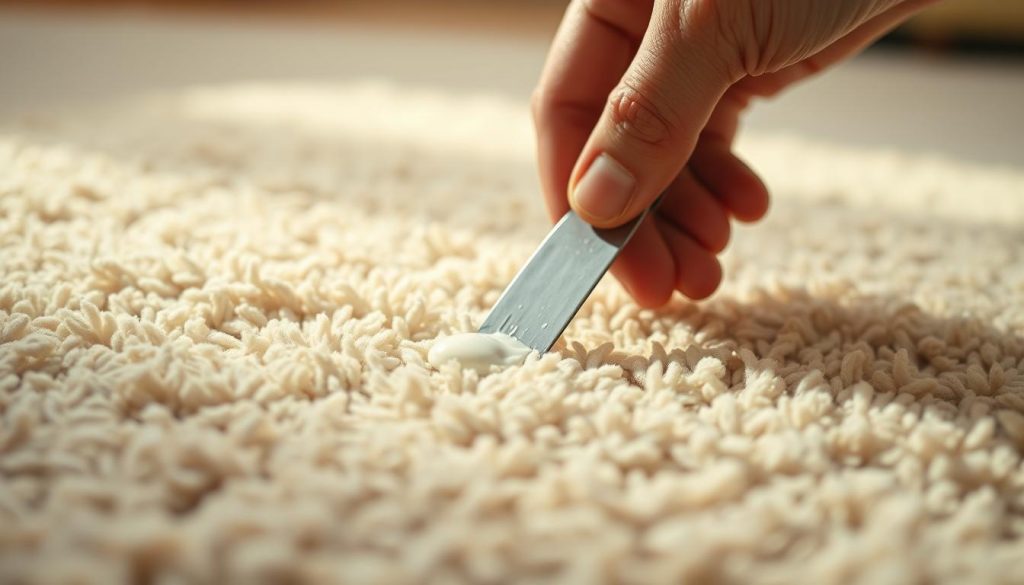
Step 1: Press Fabric Over the Glue
Start by placing a piece of cotton fabric over the affected area. This acts as a barrier and helps transfer the glue when heat is applied. For fresh spills, avoid wiping, as this can push the adhesive deeper into the fibers. Instead, let it cool slightly before proceeding.
Step 2: Use an Iron to Transfer the Glue
Set your iron to a low or medium heat setting, depending on your carpet type. Place the fabric over the glue and gently press the iron on top for about 30 seconds. The heat will reactivate the adhesive, transferring it to the fabric. Always use a fabric barrier to prevent direct contact between the iron and the carpet.
“Using heat is an effective way to lift hot glue from carpets without damaging the fibers.”
Step 3: Clean the Area
Once the glue is lifted, use a clean cloth dampened with warm water to wipe the area. This removes any residue and ensures the surface is spotless. For added freshness, consider using a mild detergent mixed with water. Allow the carpet to air dry completely.
| Step | Action | Tips |
|---|---|---|
| 1 | Press fabric over the glue | Use cotton fabric for optimal results. |
| 2 | Use an iron to transfer the glue | Set the iron to a low or medium heat setting. |
| 3 | Clean the area | Use a damp cloth to remove residue. |
For households without an iron, a hair dryer can be a suitable alternative. Hold it a few inches above the glue and use a fabric strip to lift the adhesive. In Singapore’s humid climate, ensure the carpet dries thoroughly to prevent mold or mildew.
Cleaning Hair Glue and PVC Glue from Carpets
Removing hair glue and PVC glue from carpets requires specific techniques tailored to the adhesive type. Cosmetic adhesives like hair glue differ from construction-grade glues like PVC, so the removal process varies. Here’s how to tackle each type effectively.
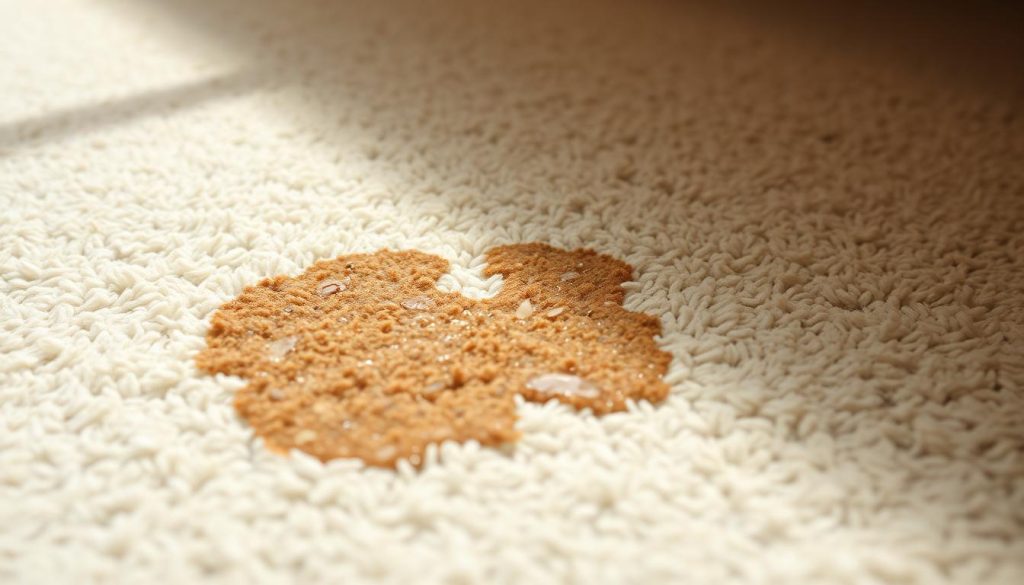
For Water-Based Glues
Water-based adhesives, such as certain hair glues, are easier to remove. Start by mixing white distilled vinegar with warm water in a 1:3 ratio. Apply the solution to the affected area using a clean cloth. Gently blot the stain to lift the adhesive without spreading it further.
For stubborn residues, consider using a mild dish soap mixed with warm water. Rinse the area thoroughly and allow it to air dry. This method is safe for most carpet types and prevents discoloration.
For Non-Water-Based Glues
Non-water-based adhesives, including some hair glues, require stronger solutions. Acetone or nail polish remover can break down these adhesives effectively. Apply a small amount to a cloth and dab the stain gently. Always test the solution on a hidden spot first to avoid damage.
“Acetone is highly effective for synthetic adhesives but should be used sparingly to protect carpet fibers.”
After treatment, rinse the area with warm water and blot dry. For added safety, wear gloves and ensure proper ventilation when using chemical solvents.
For PVC Glue
PVC glue is one of the toughest adhesives to remove due to its slow drying time. Begin by scraping off excess glue with a plastic knife. Avoid metal tools to prevent fiber damage. Next, apply a vinegar solution or a mix of dish soap and warm water to soften the adhesive.
Repeat the process if necessary, as PVC glue may require multiple applications. For synthetic adhesives, an ammonia solution can be effective. However, use it cautiously and ensure the room is well-ventilated. After removal, rinse the area and let it dry completely.
For persistent stains, consider using professional carpet cleaning services to restore your carpet’s appearance. Enzymatic cleaners are also a great option for protein-based adhesives like hair glue.
Conclusion
Handling adhesive spills on carpets can be challenging, but quick action and the right techniques make a difference. While DIY methods work for minor spills, persistent stains often require professional cleaning to restore your carpet’s appearance. In Singapore’s humid climate, early intervention is key to preventing long-term damage.
For those tougher cases, Luce offers affordable and specialized services tailored to local carpet types like wool blends and synthetics. Their expertise ensures effective removal without compromising your carpet’s quality. Plus, they provide a free quote, making it easy to plan your next steps.
To maintain your carpet’s freshness, bookmark this guide for future spills. Remember, addressing issues promptly saves time and money compared to full replacements. For reliable results, trust professionals like Luce to keep your carpets looking their best.

