

We introduce a practical, clear approach to spray extraction for upholstery in Singapore homes. Spray extraction works by spraying water with detergent into fabric fibres and extracting the soiled solution in one pass. This method is generally more thorough than hand methods and often cuts drying time.
We set realistic expectations about what a sofa cleaning machine can and cannot do. Everyday maintenance still needs vacuuming and spot care, while a dedicated device helps with deeper, periodic upkeep.
Frequent use, pets and humid conditions make moisture control essential in Singapore. We outline our end-to-end process: select the right cleaner, prepare the couch, perform spray extraction safely, and finish for lasting results.
We also show when to call professionals — for delicate textiles, stubborn odours or heavy staining — and list the tools we reference so readers can replicate our steps with confidence at home.
Why we deep clean sofas regularly in Singapore homes
A planned deep clean removes the hidden grime that everyday use leaves behind. Regular attention loosens stubborn dirt and lifts stains before they set. That keeps our living room feeling fresher and more inviting.
Removing stubborn dirt, dust, pet hair and mites for a fresher living room
Everyday life—snacks, drinks, play and pets—quickly embeds debris into upholstery fibres. Surface vacuuming helps, but deeper soiling and pet hair need periodic extraction to remove dust and mites that worsen allergies.
Keeping upholstery looking good for longer with routine care
Routine care preserves fabric and form. Regular maintenance stops fibres from dulling and helps furniture hold its shape, delaying replacement.
- Frequent vacuuming removes surface debris; periodic deep work lifts what stays trapped.
- Consistent care makes fresh stains easier to treat than old, set-in marks.
- Fewer odours and a more welcoming living room are immediate benefits.
For practical guidance on a home approach, see our short guide to clean your couch with a carpet which explains timing and steps for busy households.
Choosing the right sofa cleaning machine for upholstery cleaning
Selecting the correct equipment helps us tackle both surface dirt and deep-set grime. We compare three core tools and the spot products that make routine care practical for Singapore homes.

Spray extraction cleaners for deep fibre work
Spray extraction sprays water with a low-suds detergent into fabric fibres under pressure and extracts it along with dissolved dirt. This dual action removes grease, dirt and odours and suits allergy sufferers and households with pets.
Steam support for targeted marks
A steam cleaner can help with small stains on fabric sofas when used carefully. Use a detail nozzle at an angle and a microfibre cloth to catch loosened deposits. Always test a hidden patch first for heat sensitivity.
Vacuum and useful accessories for surface care
A strong vacuum cleaner with turbo upholstery accessories removes crumbs, pet hair and mites from the surface. Choose models with air-powered turbo nozzles and quick-fit accessories for tight joins and cushions.
What to look for in a spot cleaner
- Powerful suction with a spray-and-soak option (example: TOYOMI VC 7336WD features spray & soak, 1L clean tank).
- Removable dirty-water tank with auto-stop to avoid overflow.
- Lightweight design, easy accessory changes and clear tank access for hygiene.
When to call a service: if the fabric is delicate, colour-fastness is unclear, or stains and odours are widespread, we recommend professional extraction and drying control.
What we prepare before using a sofa cleaning machine
Before we begin extraction, we perform a short fabric test and set up the area. This saves time and prevents dye transfer, over-wetting or blocked suction.
Check water resistance and colour-fastness
We test an inconspicuous spot with a damp white cloth. If the dye runs or the material stains, we stop and seek specialist help.
Pre-vacuum to lift loose dirt and dust
We use the turbo upholstery nozzle on our vacuum to remove crumbs, dust and hair before any liquid touches the fabric. This improves final extraction and speeds drying.
Set up detergent and tanks correctly
We fill the clean-water tank, dose a low-suds detergent as instructed and fit the empty dirty-water tank. Machines with an auto-stop on the dirty tank help avoid overflow.
Protect surrounding furniture and manage moisture
We move or cover nearby furniture and lay towels where needed. We open windows and position a fan to control humidity and reduce drying time in a humid room.
“A small test and tidy prep prevent most problems during extraction.”
| Check | Action | Why it matters |
|---|---|---|
| Colour-fastness | Test hidden patch | Prevents dye transfer |
| Surface soil | Vacuum with turbo nozzle | Improves removal and suction |
| Detergent & tanks | Measure low-suds dose; fit tanks | Reduces residue and overflow |
| Room prep | Cover furniture; ventilate | Aids drying; protects furniture |
For a quick reference on fabric-safe techniques see our guide on how to clean with a carpet extractor at a simple guide or manufacturer tips from equipment makers.
How we use a sofa cleaning machine for spray extraction cleaning
Our method balances solution contact and suction to free embedded grime efficiently.
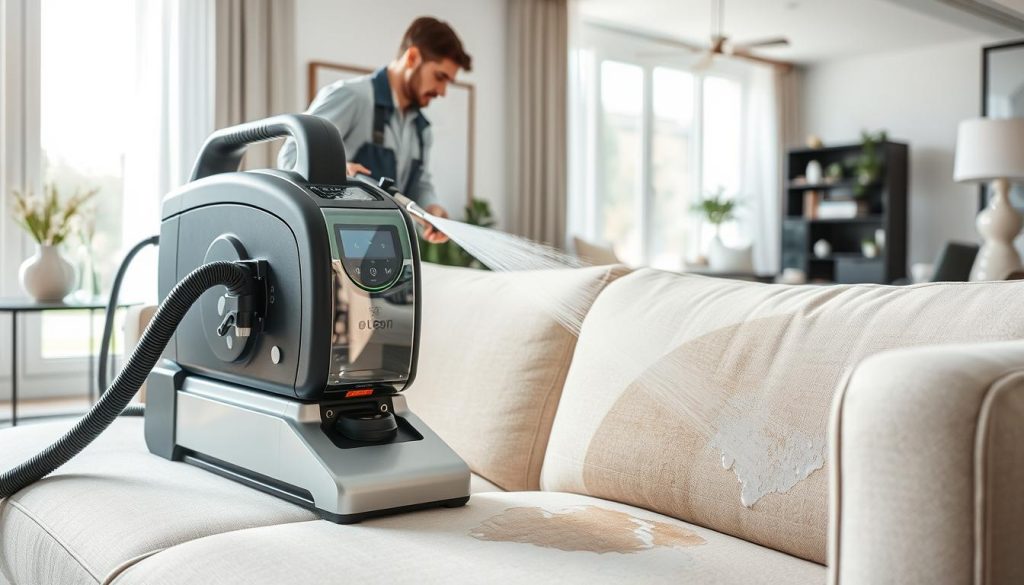
Step 1: We pre-vacuum to lift loose dust. Then we fill the clean tank with lukewarm water and add the upholstery detergent exactly per dosing instructions. We check seals and parts to avoid leaks.
Step 2: Hold the spray head about 10 cm from the fabric and apply the solution evenly. A short dwell of a few minutes helps the soap loosen dirt without soaking the cushions.
Step 3: Place the nozzle and extract using slow, steady strokes. We move across connected parts—seat, front panel and arm—so the wetting is uniform and water marks are avoided.
Step 4: Repeat passes until the extracted water runs clear and no more foam appears. If suds persist or fabric feels stiff, we rinse once or twice with clear water.
Step 5: We ventilate the room and allow ample drying time. Fans or air-conditioning speed drying in humid Singapore conditions. Once fully dry, we vacuum again the next day and, where suitable, finish with a textile impregnator to extend protection.
| Step | Action | Why it matters |
|---|---|---|
| Tank fill | Water + measured detergent | Correct dosing prevents residue |
| Spray | 10 cm distance; even coverage | Loosens dirt without over-wetting |
| Extract | Slow, steady strokes | Lifts grime; limits soak time |
| Rinse & finish | Clear-water rinse if needed; dry and vacuum | Removes detergent; restores fibre loft |
Spot and material care: stains, steam and leather sofas
Quick, targeted action at the first sign of a spill keeps marks removable and limits long‑term damage.
Act fast: blot, don’t rub
For wet stains we always blot with a clean, dry cloth. Never rub; rubbing pushes liquid deeper into the fabric and can widen the mark.
Test water‑soluble marks
About 90% of stains are water‑soluble. We test with a white cloth and lukewarm water. If colour transfers, remove with gentle top‑to‑bottom motions to protect fabric texture.
Stain remover, steam and household remedies
We apply a universal stain remover to a colour‑fast cloth, dab carefully, then rinse residues using spray extraction to avoid stickiness.
For small marks we use an angled detail nozzle with a microfibre cloth beside it. Always patch‑test for heat sensitivity first.
“Act quickly and preserve the fabric — short tests save costly repairs.”
| Issue | Immediate step | Follow up |
|---|---|---|
| Red wine | Mineral water + salt, or cornflour | Extract and vacuum |
| Blood | Cold water blotting | Salt + lemon paste for dried marks |
| Grease | Warm water + mild soap from edges | Rinse residue; extraction if needed |
Leather care
We remove dust, wipe with a damp cloth and use neutral soap in lukewarm distilled water. Keep leather only slightly damp and avoid harsh degreasers.
If heavy soiling or cracking appears, seek a specialist service.
Conclusion
A simple, repeatable process yields professional-looking upholstery results at home. We recommend frequent vacuuming and periodic deep upholstery cleaning to reduce mites and improve hygiene. Use spot treatment for marks and follow material-appropriate methods to protect your furniture.
Do less, but do it properly: dose detergents correctly, control moisture, extract with slow passes and allow ample drying time. Call a professional service when sofas are large, fabrics are delicate, odours persist or drying conditions are poor.
Quick checklist before your next session: test colour-fastness, pre-vacuum, extract evenly, rinse if needed, ventilate and only sit once fully dry. Our team may reference cookies, our policy and privacy pages when you enquire about booking a service.

