
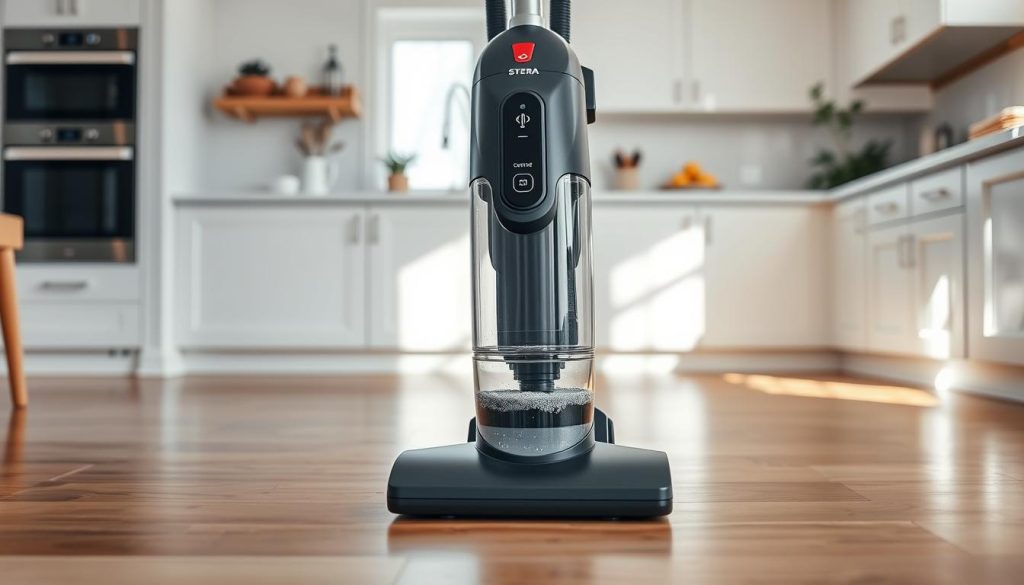
We introduce what “top rated” means for Singapore homes: practical performance on tiled floors, reliable filtration and ease of use in HDB flats and condos.
Our aim is to set realistic expectations. A single machine should handle routine dust and the odd spill, but not replace specialised deep-clean tools for carpets or large floods.
Core promise: one system that copes with everyday dust, lifts hair and tackles small liquid messes without changing tools mid-clean.
We also flag air quality as crucial in compact homes. That is why HEPA-rated options feature in our roundup, alongside cordless leaders, premium deep-clean upgrades, Dyson-style machines and HEPA-only alternatives for buyers who rarely need liquid pick-up.
Why a wet dry vacuum makes sense for homes in Singapore
Living in compact flats, we face spills, tracked-in grime and constant dust in the same zones. A wet dry vacuum handles liquid accidents and dry mess in one pass. That saves us time and reduces lingering moisture on tiled floors.
Handling spills, humidity, pet mess and everyday dust
We find this all-in-one unit valuable where rain, damp shoes and pet accidents overlap with daily dust. It cuts the risk of trapped water that causes stains and odour.
“One machine that picks up both liquids and solids is often the most practical choice for busy households.”
Where these units outperform dry-only machines
Fresh spills, mixed debris and damp dirt are where a combined system beats dry-only models. A single pass prevents clogging and stops odour from developing in collection tanks.
| Scenario | All-in-one unit | Dry-only unit |
|---|---|---|
| Entrance after rain | Quick pick-up, moisture removed | May leave water, risk of stain |
| Pet accident | Handles liquid plus hair | Needs separate mop or risk clogs |
| Daily dust | Works well on hard floors | Good for routine dust |
We accept trade-offs: bulk, storage and higher noise. For many homes, the convenience offsets these drawbacks. For a practical cleaning plan, see our professional house-cleaning checklist.
What a wet and dry vacuum cleaner is and how it differs from a standard vacuum cleaner
These machines are built to cope with both liquid messes and daily dust without harming the motor.
Definition: A wet dry vacuum is a single appliance designed to pick up solids and liquids while protecting the airflow path and motor. It uses separate tanks or separators so water does not reach sensitive parts.
Where it fits best at home: kitchens, dining areas, entranceways and mixed rooms where crumbs meet spills. It works well on sealed floors and handles occasional rug passes if paired with suitable heads.
How performance and function differ from a standard dry unit
Compared with a dry vacuum cleaner, this design has redirected airflow and more robust seals. That allows liquid tolerance while still collecting household dust.
Suction behaves differently on rugs versus smooth floor surfaces. On piles, brushes and head choice matter more to lift hair and trapped dust.
Trade-offs to expect
Expect a heavier build, louder operation and a larger storage footprint. These trade-offs are common because extra components are needed for wet pick-up and safe containment.
| Aspect | Combined unit | Standard dry unit |
|---|---|---|
| Surface suitability | Hard floors, occasional rugs | Mostly carpets and hard floors |
| Weight & design | Heavier, rugged design | Lightweight, compact |
| Noise | Higher during wet operations | Generally quieter |
| Maintenance | Separate tanks, more care | Simpler filter care |
“A single unit that safely handles liquids and solids cuts cleaning time, but buyers should accept added bulk.”
wet and dry vacuum cleaner with hepa filter: what we prioritise in our top-rated picks
Performance in real homes — not lab numbers — decides which models we recommend.
HEPA filtration is top of our list because fine particles and allergens are common in Singapore flats. A sealed path plus a certified hepa filter helps trap dust and tiny particles that ordinary kits miss.
Steady suction that lasts
We judge suction by how it performs across an entire clean. Peak specs matter less than steady suction when tanks fill or screens load with dust. Machines that keep consistent suction power earn higher marks.
Dual-tank hygiene
Dual-tank design keeps clean water separate from dirty water. That reduces smells and keeps flow steady during mopping passes.
Practicality for small flats
We score manoeuvrability, runtime and storage highly. A powerful unit that is bulky or hard to stow will see less use in HDB and condo living.
“We favour models that balance strong suction, reliable filtration and compact design for everyday cleaning.”
HEPA filter basics: what “HEPA” captures and why it matters for air quality
Good filtration changes how a home feels, especially in air-conditioned Singapore apartments. We focus on what a HEPA-grade element actually does in everyday rooms, not just marketing lines.
Fine dust, allergens and particles: what the grade is designed to trap
HEPA targets very small particles that ordinary screens miss. It captures pollen, pet dander and many combustion particles that make indoor air feel dusty.
This matters when windows stay closed. Trapped particles recirculate and reduce comfort. A real HEPA reduces those loads and helps allergy-prone household members.
Whole-machine filtration versus filter-only claims
There is a big difference between a listed part and a sealed system. A certified element does little if air leaks around seals or through poor routing.
Check for sealed airflow paths, stated HEPA grade, and easy replacement parts. Also note whether the component is washable or intended to be replaced.
- Look for: grade (H13/H14 stated), replacement availability, and clear maintenance advice.
- Remember: even top-grade media cannot fix odour or damp unless tanks and rollers are kept hygienic.
Dust classes L, M and H: understanding filtration standards for fine dust
Not all dust is equal — some types need heavier protection than household screens offer.
Dust classes describe how likely particles are to pass through protection. They help us match kit to the task and avoid over‑specifying for routine jobs.
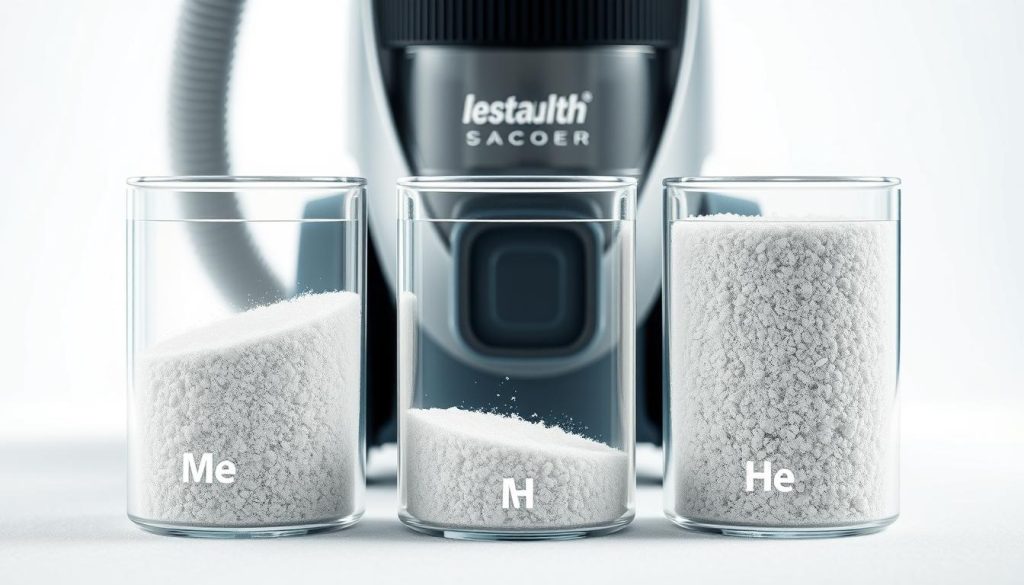
L class for moderate-risk dusts
L class covers common renovation debris such as chalk and plaster. Permeation is ≤ 1.0%, so this grade is suitable for light DIY and small plaster repairs.
M class for tougher construction dust
M class steps up for concrete, brick, paint dust and hardwood. Permeation is
H class for hazardous dusts
H class is for asbestos, lead, cadmium and similar carcinogenic particles. Permeation is
“Match the protection to the mess — higher classes protect more, but rarely suit everyday household use.”
- For routine cleaning after small jobs, L class protection is often enough.
- Choose M class when sanding or cutting dense materials indoors.
- Call professionals for suspected H class hazards; do not attempt to handle them using regular home gear.
Filter cleaning technology: keeping suction power high during long cleaning sessions
Keeping suction steady means the system must clear its own breathing passages.
Fine dust loads the media over time and reduces suction. In real homes this happens during larger jobs or when many hard-to-capture particles circulate.
Automatic cleaning (Triggered Air Cleaning / “Tact”) uses short, powerful air blasts to shake dust free. Kärcher’s Tact is a good example: the unit pulses reverse airflow so suction stays consistent during long runs.
Semi-automatic cleaning (Ap class)
Semi-automatic systems let users trigger cleaning intervals manually. A few presses or a set sequence clears the screen. This suits medium tasks where we want control over timing.
Why integrated cleaning matters
Built-in cleaning cuts downtime and reduces hands-on contact with dirt and dust. It can lower consumable costs and make better use of container volume.
“Systems that clear their own media keep suction higher for longer and cut interruption during a job.”
| Feature | Automatic (Tact) | Semi-automatic (Ap) |
|---|---|---|
| Operation | Auto air blasts | User-triggered intervals |
| Best for | Long sessions, heavy fine dust | Small-to-medium tasks |
| Hands-on contact | Minimal | Low, occasional |
| Effect on suction | Keeps suction steady | Restores suction when used |
How wet pick-up works: safety shut-off and overflow protection
A safe water pick-up system prevents motor damage and limits post-clean smells in small homes.
When a wet dry vacuum handles spills on tiled floors, liquids travel from the nozzle into a tank. If the tank rises above its design point, protection must stop water reaching the fan and motor. That avoids permanent damage and potential electrical hazards.
Mechanical float that blocks the suction channel
How it works: rising water lifts a float. At a set level the float seats into the suction path and physically blocks airflow. The machine keeps running but cannot draw more liquid into the motor area.
Electronic automatic cut-off to protect the motor
How it works: conductive contacts inside the tank sense rising water. When they close, the unit cuts power automatically and stops suction. This is a fast way to prevent overflow in busy cleaning tasks.
“Clear overflow protection is a non-negotiable feature for homes that handle frequent liquid mess.”
| Feature | Mechanical float | Electronic cut-off | Dual protection |
|---|---|---|---|
| Trigger | Physical float rise | Conductive contacts | Both methods combined |
| Response | Blocks suction channel | Shuts motor off | Blocks flow and powers down |
| Reliability | Simple, low failure | Fast, needs wiring | Best safety for regular use |
| Maintenance | Clean float seat | Keep contacts free of deposits | Maintain both parts |
Buying tip: we prioritise clear overflow protection for frequent water tasks. For daily wet cleaning near entrances, a dual system adds peace of mind. In use, avoid overfilling, empty tanks promptly and rinse after collecting dirty water to cut odour and prolong life.
How dry pick-up works: cyclone-style separation and preventing filter clogging
Dry dirt follows airflow into the collection bin, where clever engineering stops most coarse debris before it reaches the media.
We find that effective separation keeps suction steady over a full clean. In many wet dry systems, dirt travels down the hose and hits a chamber where rotational airflow spins the airstream. Heavier particles fall out early and collect on the container floor.
Rotational airflow principles that settle heavier particles
Think of air spinning like a tiny cyclone. The centrifugal motion pushes larger grit outwards, so it drops into the tank instead of lodging on the cartridge. This reduces immediate loading of the cartridge and extends time between maintenance.
Why fine dust reduces suction without cleaning or the right filter
Fine dust behaves differently. It sticks to the media and forms a cake layer that blocks airflow. As resistance rises, apparent suction falls and cleaning feels less effective.
What to look for: easy filter access, replaceable cartridge elements, and models that pair cyclone pre-separation with a manageable maintenance routine.
| Feature | How it helps | Practical tip |
|---|---|---|
| Cyclone-style chamber | Settles coarse debris before the media | Choose units stating multi-stage separation |
| Flat or cartridge media | Final capture of fine dust | Inspect and clean regularly to keep suction |
| Tool-free access | Faster maintenance and less mess | Prefer latch systems for frequent use |
Our bottom line: raw power ratings matter less than sustained performance. A well-designed cyclone system that eases load on the media will keep suction high in typical Singapore homes. For step-by-step guidance on keeping media clear, see our short how-to guide on filter care at cleaning a vacuum filter.
Buying criteria that matter most in Singapore (what to look out for)
We recommend a shortlist of features that actually change daily life in small flats.
Choosing a model for a HDB or condo means thinking beyond specs. Usable runtime, storage footprint and sustained suction often decide whether a machine gets used weekly or stays in a closet.
Suction performance for mixed mess
Stable suction matters more than a high peak number. Look for motors and sealed airflow paths that keep pulling when dust and water enter the tank.
Tank capacity: coverage versus weight
Large tanks cut refill frequency but add bulk. For narrow corridors and small utility spaces, we favour moderate capacity that keeps weight manageable.
Noise and reduction features
Noise affects neighbours in high-rise living. Choose models with quieter modes, selectable power settings or insulated housings for early or late cleaning.
Cordless or corded?
Cordless offers reach and convenience; corded gives uninterrupted power. Match your typical cleaning area to runtime figures and recharge time before deciding.
Accessories that matter
Prioritise an edge head, a long crevice tool, anti‑tangle rollers and a brush set that suits tiles and rugs. Practical attachments save time and improve results.
“We favour machines that balance sustained suction, sensible capacity and practical tools for everyday Singapore homes.”
- Checklist: steady suction, moderate tank size, low-noise options, chosen power source, and the right heads and rollers for pet hair and edges.
Top rated cordless wet and dry vacuum cleaners in Singapore right now
For many Singapore homes, a cordless option offers reach and convenience that keeps routine cleaning happening more often.
Tineco Floor One Switch S7 Stretch
Why we like it: iLoop smart sensing adjusts suction and water flow automatically. That reduces over-wetting while lifting dust and light grime efficiently.
Specs: 1,000ml clean / 720ml dirty, 22,000 Pa, 50 mins floor-washer runtime, 70 mins vacuum runtime and ~4.5h charge. Dual-side brush improves edge coverage.
Bissell CrossWave X7 Cordless Pet Pro
Why we like it: Turbo Pet mode targets hair and sticky spots. It delivers strong suction power for its size and practical pet-focused features.
Specs: 820ml clean / 420ml dirty, up to 20,000 Pa, ~30 mins runtime and ~4h charge. Shorter runtime suits small-to-medium flats or quick spot cleaning.
Narwal S20 Pro
Why we like it: Lightweight handling and AI Dirt Sense balance cleaning power and battery life. Triple-sided edge heads help cover skirting and corners.
Specs: 790ml clean / 720ml dirty, 20,000 Pa, up to 60 mins runtime and ~3.5h charge.
Simplus Cordless Wet-Dry Vacuum Cleaner
Why we like it: Budget-friendly option that still offers solid suction and a practical design. The 180° flat-folding head improves reach under furniture.
Specs: 500ml clean / 550ml dirty, 21,000 Pa, ~50 mins runtime and ~4.5h charge.
“We position these as our best all-round cordless choices for typical Singapore households—practical runtimes, sensible tank sizes and heads that handle edges.”
| Model | Run time | Clean / Dirty (ml) | Peak (Pa) |
|---|---|---|---|
| Tineco S7 Stretch | 50 / 70 mins | 1,000 / 720 | 22,000 |
| Bissell X7 Pet Pro | 30 mins | 820 / 420 | 20,000 |
| Narwal S20 Pro | 60 mins | 790 / 720 | 20,000 |
| Simplus Cordless | 50 mins | 500 / 550 | 21,000 |
Buyer-fit notes: Tank sizes affect refill frequency. Charge times influence real weekly schedules. Heads and rollers change edge cleaning performance and how easy the unit is to store. Match price and features to your flat size and typical dirt load.
Premium picks for deep cleaning and stubborn mess
When routine passes fail, specialty models that add heat or steam make a noticeable difference on stubborn residues.
Dreame H15 Pro Heat: hot water mopping for grease and kitchen spills
Why it stands out: the H15 Pro Heat channels water at around 85°C to the brush. Heat breaks down oils faster than cold water, so we often need fewer passes.
Specs: 800ml clean / 650ml dirty, 22,000 Pa suction, ~6kg, up to 70 min (normal) and 25 min at hot-water mode. Trade-offs include heavier weight and care on delicate wooden floors.
Tineco Floor One S9 Artist Steam: steam-assisted cleaning for sticky stains
Why it stands out: steam loosens tacky residues that standard passes struggle with. The unit pairs steam action with strong suction to lift softened grime.
Some retail listings note a self-clean and dry base that cuts maintenance time for busy households.
“Heat and steam reduce repeat work — ideal for homes that cook often or face frequent sticky spills.”
| Feature | Dreame H15 Pro Heat | Tineco S9 Artist Steam |
|---|---|---|
| Heat / Steam | Hot water at 85°C to brush | Steam-assisted head |
| Suction | 22,000 Pa steady suction | Strong suction paired with steam |
| Run time | 70 min normal / 25 min hot mode | Typical cordless run (~varies by mode) |
| Best for | Greasy kitchen spills; fewer passes | Sticky residues and high-hygiene needs |
Buyer guidance: choose premium products when cooking is frequent, children create sticky messes or you prefer fewer chemicals. These picks add cleaning power and save time, but expect higher weight and a higher initial outlay.
Dyson wet and dry options: when the premium price makes sense
We find Dyson earns its higher price by focusing on handling, refined airflow and whole‑machine particle control. That combination suits owners who prioritise fast, confident cleaning over the lowest cost.
Dyson V12s Detect Slim Submarine
Why it stands out: built-in HEPA filtration and an illuminated head improve dust visibility on hard floors. The design helps us see missed spots and capture fine particles more reliably.
Dyson V12s Origin Submarine
Why it stands out: its light weight makes whole‑home passes feel effortless. For frequent short cleans in flats, this model trades raw runtime for usability and fast turnaround.
Dyson Digital Slim Submarine
Why it stands out: compact design for tight storage. Expect shorter runtime, which is fine for quick touch-ups but less suited to extended sessions.
“Dyson’s R&D spends show in suction retention, cyclonic separation and refined user flow — the extra price buys handling and perceived build quality.”
Buyer guidance: choose Dyson when handling, superior filtration and neat design matter more than accessories per dollar. If you want long runtime or the best value, other products may offer more for the price.
Value and alternative picks for HEPA-equipped models (when you don’t need liquid pick-up)
When spills are rare, a purpose-built dry option often makes smarter sense. These products skip tank hardware, cut maintenance and usually cost less, while still giving sealed particle control for allergy-prone flats.
Airbot Supersonics Pro
Why we recommend it: multi-stage cyclone separation plus an E13-grade element captures up to 99.97% of fine dust. A washable cup and reusable elements keep running costs low, and Eco mode offers about 45 minutes of runtime for routine cleaning.
Kärcher VC 5
Why we like it: compact design and a space-saving telescopic tube suit small apartments. It offers sealed particle control in a tidy package, so frequent short sessions are painless and storage is minimal.
Morries 2‑in‑1 Cordless Stick
Why it’s a budget option: multi-level filtration with a HEPA-grade stage at an accessible price. Expect good day-to-day dust pickup and cordless convenience, though build and long-term durability are more modest than premium rivals.
“Choose a dry HEPA model when your main tasks are dust, pet hair and quick spot cleans—skip the extra weight and upkeep that wet systems bring.”
Our quick guidance: pick a dedicated dry unit if you rarely mop, need compact storage or mainly battle dust and pet hair. For a broader comparison of top models and buying criteria, see our external testing roundup at best vacuum cleaner.
Matching the right cleaner to your home: quick recommendations by scenario
A short use-case check quickly narrows models that suit tight storage, pets, kitchens or allergy needs.
Small flats and tight storage
Choose slim, lighter designs. They fit narrow corridors and cupboards. Storage space is a daily constraint in HDB flats, so compact units see more real use.
Homes with pets
Pick models with anti-tangle rollers and turbo modes. Stronger suction settings help lift hair and trapped dirt. Expect more frequent roller cleaning and a realistic maintenance plan.
Kitchens and dining areas
Prefer hot water or steam functions for oil and sticky residues on tiled floors. Heat-assisted heads reduce repeat passes and speed up stubborn stain removal.
Allergy-sensitive households
Prioritise sealed systems and certified media that trap fine dust and airborne particles. This lowers recirculated dust and improves indoor air for sensitive occupants.
“Match the cleaner to the task and the space – the best unit is the one you actually use every week.”
| Scenario | Key feature to prioritise | Practical note |
|---|---|---|
| Small flats | Slim design, light weight | Easy to store; better weekly use rate |
| Pets | Anti-tangle rollers, turbo mode | Clean rollers weekly; expect more hair build-up |
| Kitchens | Hot water / steam head | Fewer passes on oil; avoid delicate wooden floors |
| Allergies | Sealed airflow, certified media | Reduces airborne dust; check replacement costs |
Maintenance and running costs: filters, rollers, tanks and hygiene
Small routines keep performance steady and prevent costly repairs.
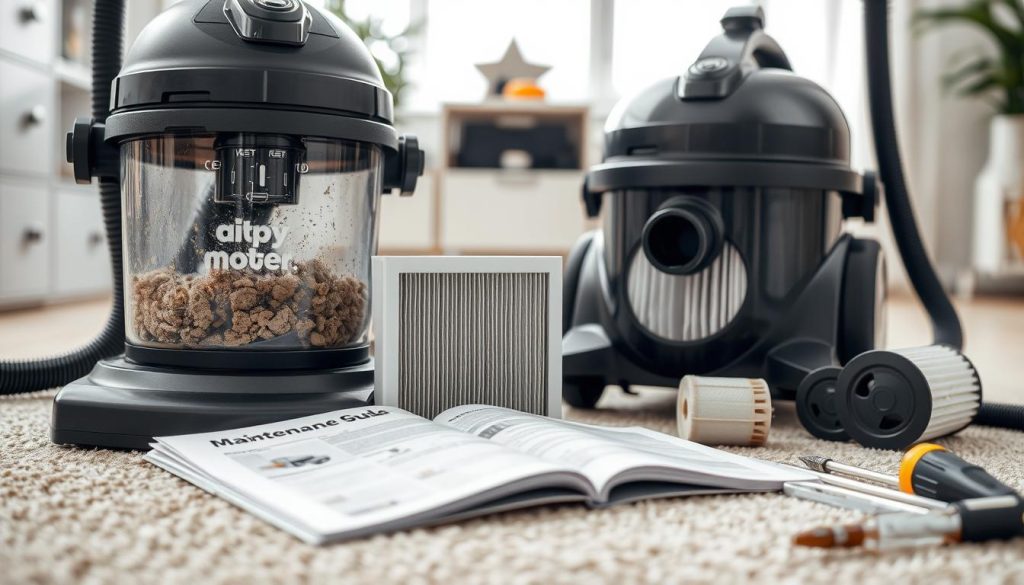
We consider more than the purchase price. Replacement parts, cartridge changes, roller servicing and tank rinsing add to annual ownership costs.
Filter care and when to use self-cleaning and drying bases
Clean or replace media regularly. A clogged filter cuts suction and strains the motor. Where available, a self-cleaning base that rinses and dries saves hands-on time and limits odour.
Keeping rollers odour-free and reducing bacterial build-up
After each session, we rinse brushes and empty tanks. Remove trapped hair and let parts air-dry to reduce bacterial growth and smells. For sticky spills, follow hot-rinse instructions if the design allows.
Bagless operation: when filter cleaning helps you avoid consumables
Bagless units lower consumable costs but need routine washing of cartridges and seals. Integrated cleaning cycles help maintain suction power and extend the machine’s life.
| Task | Frequency | Approx annual cost (SGD) |
|---|---|---|
| Cartridge cleaning / replacement | Monthly clean; replace yearly | Varies |
| Roller cleaning & inspection | After heavy use / weekly for pets | Varies (consumables) |
| Tank rinse & dry | After every wet pick-up | None |
| Replacement seals / brushes | 12–24 months | Varies |
“Routine care protects suction and keeps running costs predictable.”
Conclusion
Our view: choose the combined unit only if mixed spills and solid mess happen often; otherwise a strong dry vacuum cleaner with sealed media is the smarter, simpler option for many Singapore flats.
Key priorities are clear: certified filtration, steady suction and sensible tank or bin size, plus a compact design that suits storage limits. Consider noise, weight and routine upkeep before you buy.
If air quality matters, prioritise a sealed HEPA system and a regular maintenance routine. Then shortlist by scenario, compare the top models we covered, and pick the option that fits your space, budget and cleaning time.

