
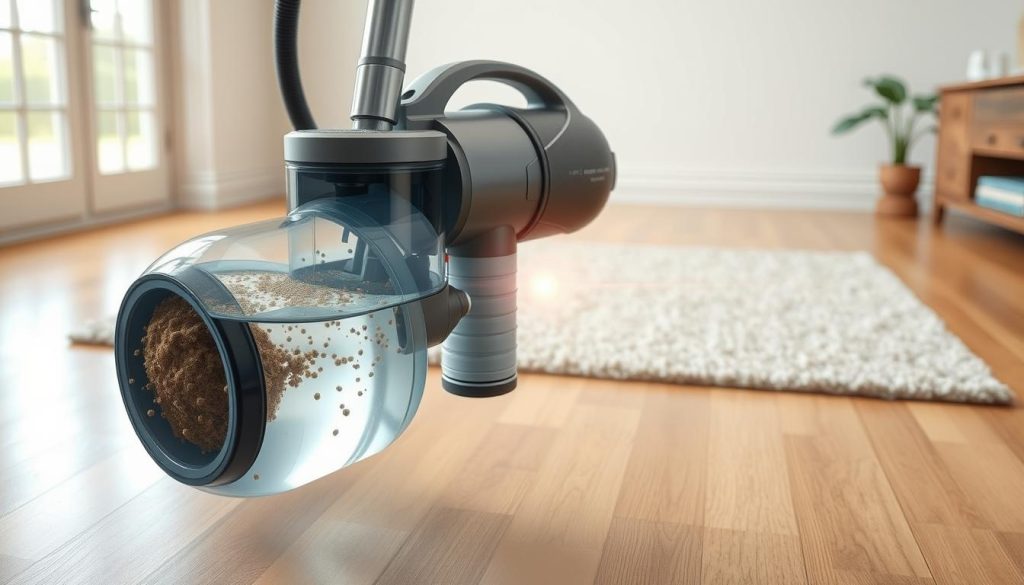
We begin by explaining what a water filter vacuum is and why understanding the process helps households in Singapore pick the right model. In simple terms, the suction and airflow are familiar, but the main change comes from using liquid as the primary trap for dust.
This section previews what we will cover: the airflow path through the machine, the action inside the tank, and why many designs keep a secondary HEPA stage for added protection. We will use real examples such as Rainbow, Sirena and the Vacumi VC3 to clarify points.
Practically, you will learn what improves in air quality and cleaning results, what stays the same as with other vacuum cleaners, and which maintenance tasks are non-negotiable. Empty dirty water promptly to avoid odours and bacterial growth. This guide is informational and brand-neutral, focused on everyday use and safety.
Why water filtration vacuums matter for Singapore homes
Indoor air quality is a practical concern in high-rise living. Closed windows and constant air-conditioning keep fine dust moving around our flats.
Indoor air in high-rise living: dust, humidity and recirculation
Many units recirculate the same air for hours. That increases exposure to tiny dust particles, lint and skin flakes that collect on surfaces.
Humidity plays a role too. Moisture can make debris cling to fabric, but damp components risk musty smells and mould if we do not dry parts after use.
Allergies and dust mites: targets in our rooms
Allergies in the home often come from dust and dust mites living in bedding, sofas and carpets. Symptoms can flare during or after cleaning if fine particles escape.
Water filtration traps contaminants in liquid rather than leaving them loose in a dust cup. That can reduce re-entrainment and lower immediate exposure.
We must be realistic: no single device solves allergies alone. A well-sealed system, regular maintenance and correct use of vacuum cleaners and vacuums make the biggest difference to air quality.
water filter vacuum cleaner how it works: the simple airflow explanation
Suction draws dirty air into a sealed chamber where the main separation happens. We pull air, the motor creates suction and attachments agitate floors and soft furnishings as usual.
Suction and airflow: what stays the same as traditional vacuum cleaners
The basic mechanics mirror other machines: the motor produces suction and the hose guides debris into the unit. Brushes still loosen dust and particles from carpets and upholstery.
Using water as the primary filter: making dust wet, heavy, and trapped
Using liquid as the first capture stage forces dust to meet water so particles get wet and heavier. That change makes matter far more likely to drop out of the stream and remain in the tank rather than float back into the air.
What exits the machine: cleaner exhaust air when filtration is working properly
When seals are good and secondary HEPA stages are present, the exhaust can be noticeably cleaner. If the tank level is wrong or seals are loose, the same airflow may carry fine dust back into the room.
“A sealed system plus staged filtration reduces re-entrainment and improves indoor air for busy Singapore homes.”
Next, we look inside the tank: separators and wet-capable HEPA play the supporting role.
Inside the filtration system: water tank, separators, and wet-safe HEPA filters
A well-built basin and separators control droplets and keep most particulates from returning to the room. We look at the parts you can inspect and why they matter for performance and air quality in Singapore homes.
Water tank basics
The water tank acts as the first capture stage. Larger particles and everyday dirt dust meet the liquid, become heavier and sink to the basin.
That simple change reduces bounce-back and lowers the load on later stages of the system.
Why HEPA stays in the design
Even after the basin, fine dust and aerosols can travel on droplets. Most models keep a HEPA filter to catch what the tank misses.
Wet-capable HEPA tolerates moisture so the final stages remain effective without degrading in humid conditions.
Foam and secondary protection
- Internal separators calm turbulence and limit carryover.
- Foam layers stabilise flow and shield the motor from residue.
- Seals and correct assembly ensure the multi-stage filtration system performs as intended.

“A sealed, staged setup gives more reliable exhaust air than a single-stage design.”
Suction power, the motor, and what affects performance
Suction power is the practical force that pulls dust and hair from surfaces. We notice it as the machine’s grip on fabric, curtains and carpet. A clear sense of suction helps us choose the right setting for each task.
How suction drops and what to check
Suction falls when hoses clog, nozzles block or when filters are overloaded. A very full collection basin can also change airflow and reduce cleaning power.
When performance dips, we inspect the hose, confirm seals, and wash or replace filters as recommended. The motor works harder with blocked airflow and will lose efficiency if we ignore maintenance.
Adjusting power for delicate items
Some models include suction adjusters so we can lower the pull for curtains and soft upholstery. For mattresses and sofa seams we use stronger suction and the right attachments to lift embedded dirt and particles.
“Strong suction is useful only when the system is sealed and filtration stages are clean.”
Benefits we can expect: cleaning results and air quality improvements
A visible pool of captured debris offers clear proof that particles left the room and entered the basin. This sight reassures us that fine dust and other matter did not resettle on surfaces.
Allergies sufferers gain a practical benefit because many allergens are trapped in liquid rather than blown back into the air.
No dusty-bag smells is another plus. With no dry bag storing odour between uses, the end result can feel fresher — provided we empty and rinse the tank straight away.
Wet dry capability adds real convenience for Singapore homes. We can pick up spills after rain, damp entryway debris, and routine dirt in one session.
Seeing cloudy waste also gives psychological confidence in deep cleaning. Yet results still depend on technique, the right attachments and staged protection such as a wet-safe HEPA.
“Visible residue confirms removal, but correct use and upkeep deliver lasting benefits.”
How to use a water filter vacuum cleaner effectively in daily cleaning
Small setup steps make the unit far more effective in everyday use. Begin by topping the tank to the marked Min–Max range so the inlet sits below the surface. This ensures proper capture and reduces splash during operation.
Filling the tank correctly: staying between Min and Max
We fill to the recommended level and never overfill. Overfilling risks splashes that can reach stages and reduce performance.
Securing the lid and seals: avoiding leaks while you vacuum
Click the lid fully into place and check seals before switching on. A poor seal allows unfiltered air to bypass the system and lowers suction.
Choosing attachments for floors, upholstery, and tight gaps
Use the floor head for tiles and vinyl, the crevice tool for skirting boards and window tracks, and the upholstery tool for sofas and mattresses. Select lower suction when working with delicate curtains.
Room-by-room routine for HDB flats and condos: reducing airborne dust
We start with bedrooms (mattresses and soft furnishings), move to living areas, then finish at entry zones to catch tracked debris. Take slow, overlapping strokes and pause at corners so suction can lift trapped dust.
For detailed maintenance tips and a guide to cleaning secondary stages, see our recommended reads: odkurzacze z filtrem wodnym and clean a vacuum filter.
“Correct setup and slow, consistent passes deliver the best results in our homes.”
Cleaning and maintenance after every use
After each session we keep maintenance quick and disciplined. This protects air quality and stops stagnant, odorous liquid from becoming a biohazard.
Empty immediately
Empty the basin straight away to prevent odours and bacterial growth. Letting dirty water sit invites microbes and creates a persistent smell.
Rinse the tub and dusty parts
Rinse the basin, separators and any parts that held dust. Residue left behind reduces filtration performance and can lower quality over time.
Wash foam and check HEPA condition
Wash foam pads under running water so airflow stays stable. Inspect the HEPA filter for damage or poor seating; replace if the material looks compromised.
Dry thoroughly in Singapore humidity
Air-dry components fully before reassembly. High humidity speeds mould growth, so allow parts to dry in a shaded, ventilated spot.
Where to clean and safety reminder
- Clean outdoors where possible — balcony, drain or hose point — to avoid re-contaminating indoor surfaces.
- Avoid spraying water into the motor housing; wipe the top unit with a damp cloth instead.
“Empty, rinse, dry — a short routine after each use keeps performance high and rooms fresher.”
Water filter vacuums vs other vacuum cleaners: what we’d choose and why
Different machines suit different homes. We weigh containment, upkeep and daily use so you can pick the best option for Singapore living.
Vs bag vacuums: containment and maintenance
Bag systems capture debris in a sealed sack. That reduces exposure during use but can release dust when you change the bag if seals are poor.
Trade-off: tidy containment versus ongoing bag cost and occasional particle escape during replacement.
Vs cyclonic bagless vacuums
Cyclones use centrifugal force to separate larger debris before final stages. Multi-stage designs hold suction longer for extended cleaning.
Vs stick vacuums
Sticks are light and fast for quick touch-ups. They lack the sustained suction and capacity we prefer for deep cleaning mattresses and heavy upholstery.
Vs HEPA-only designs
Combining liquid capture with a HEPA stage can trap bulk dirt and then stop fine particles. That duo suits allergy-aware households.
Vs vacuum-and-mop hybrids
Some hybrids scrub floors while collecting debris. Decide if you need scrubbing plus pick-up or a dedicated system for large spills and carpets.
Our choice framework: pick based on allergies, mess type, storage and willingness to do post-use care. For allergy control we favour combined systems; for quick tidies, a stick wins.
“Match the tool to your home — the right choice makes cleaning easier and air healthier.”
Choosing the right water filter vacuum for purchase in Singapore
Choosing the right model for Singapore living means balancing containment, size and daily upkeep.
We prioritise sealed systems, wet-safe HEPA compatibility and steady power for deep cleaning mattresses and upholstery.
What to prioritise
- Sealed system to reduce leaks and re-entrainment of dust.
- Wet-safe HEPA or equivalent stage to stop allergens from escaping.
- Consistent power for stubborn dirt in fabric and crevices.

Capacity, weight and storage
Consider basin size versus portability. A larger reservoir means fewer refills but adds mass and needs more storage space.
Expect some models to weigh near 40 lbs and hold up to about 3.5 litres. That matters in HDBs and condos where lifting and compact cupboards are common.
Running costs and upkeep
Factor in replacement parts, optional detergents and the time to empty and rinse after each session.
“A model that is easy to dismantle and rinse saves time and keeps performance high.”
| Feature | Why it matters | Expectation |
|---|---|---|
| Sealed design | Reduces leaks, protects air quality | Good seals, clear latches |
| Reservoir size | Refill frequency and weight | 1–3.5 L typical; larger = heavier |
| Service & spares | Long-term value and repairs | Easy parts, local warranty |
- If allergy control is priority → choose certified models with wet-safe HEPA and a sealed system.
- If wet/dry use is key → pick larger capacity but check weight and storage fit.
- If low maintenance is needed → favour simpler designs with widely available spares and good warranties.
Conclusion
, In our view, combining a wet capture stage with a sealed final filter gives visible proof of removal and better allergen control. The system uses suction, a water basin and a HEPA-like stage to trap particles and stop much of the dust from returning to the room.
Households in Singapore that worry about allergies, mattress and upholstery care or want clear evidence of what was removed benefit most. We gain real reassurance when debris settles in the basin instead of floating back into living areas.
Three non-negotiables protect results: keep tank levels correct, ensure seals are intact, and clean all stages after each use. The trade-off is obvious — carrying liquid adds bulk and maintenance time, but that effort pays off in deeper cleaning.
Practical takeaway: choose a sealed design with wet-safe filtration and follow a strict rinse-and-dry routine, and the vacuum cleaner becomes a strong upgrade for tougher dirt and allergies.

