

Affiliate disclosure: this post contains affiliate links; we may earn a commission at no extra cost to you. Our opinions are our own and we recommend only products we believe add value.
Who is this for? We open this water filter vacuum cleaner review with a clear summary for Singapore families facing dust, allergies and persistent indoor air concerns.
In testing the Vacumi VC3 we focused on real outcomes rather than marketing claims. We assessed suction, filtration, maintenance effort and day-to-day usability in a typical home.
Our honest opinion means we report hands-on results. We note the trade-off: a more involved cleaning routine in exchange for better containment of allergens and fine dust.
Readers choosing between a water system and other vacuums will find this page helps shortlist confidently. By the end you will have a clear verdict, a pros and cons breakdown and comparison guidance against stick and bag systems.
Why we tested water filter vacuum cleaners for Singapore homes
A child’s sudden dust-mite allergy shifted our household priorities from surface tidiness to real allergen reduction. In a humid, air‑conditioned Singapore flat, soft furnishings and frequent indoor living can amplify dust and mites. We needed to know if a different approach would improve perceived indoor air quality.
Dust mites, allergens and indoor air quality in everyday cleaning
For us, allergen control means reducing what gets stirred into the air and leaving rooms that feel noticeably cleaner after each session. That meant prioritising fine particles and invisible triggers, not only visible debris.
Our baseline vacuum cleaner comparison point
We began from a common expectation set by a Dyson V7 stick vacuum: easy, portable and good for quick tidy-ups. However, convenience does not always equal containment of allergens.
- Singapore factors: humidity, fabrics and AC use increase mite discomfort.
- Allergen aim: trap and keep fine particles out of the breathing zone.
- Practical question: does a water filter vacuum genuinely improve air quality and allergy control, or is it just another bulky option?
To see how deep cleaning compares to quick clears, we tested mattress, curtain and upholstery performance against our stick vacuum baseline and noted the differences in airborne dust and symptom relief.
How water filter vacuum cleaners work
We start by explaining the basic mechanics so readers can see how containment happens in real homes.
Water tank filtration explained: trapping dust and dirt in water
The core idea is simple. Airflow pulls debris into a central tank where dust and dirt meet liquid and bind. Larger particles sink and remain trapped rather than collecting in a dry bin.
During use the debris-laden air enters the tank and heavier bits drop out. Finer material stays in the liquid or travels on to secondary media for further capture.
What “clean air” means in practice for allergy and mite control
Clean air here is practical, not absolute. It means fewer particles recirculated while we clean beds, sofas and rugs, which reduces immediate triggers for sensitive people.
- Real outcome: less lingering dust smell and fewer airborne allergens after a session.
- Design note: a tank-based approach is often paired with a secondary HEPA-style stage to catch the finest particles.
- What we will test: not only visible pickup but how the system affects airborne irritants during and after use.
What we look for in an allergy-friendly vacuum cleaner
When choosing a machine for allergy sufferers we set clear, measurable criteria focused on containment and consistent performance. Our checklist balances particle capture, airflow control and day-to-day practicality for Singapore flats.
HEPA performance and containment
HEPA filter capability is non-negotiable. We check that a true hepa filter seats securely and is rated to trap common household allergens. A reliable HEPA stage reduces the chance of particles escaping during emptying.
Suction without re‑entrainment
Strong suction is essential, but raw power alone can blow dust back into the air. We value controlled suction power and well‑placed exhausts so the airflow does not disturb settled debris.
Filtration design and multi-stage systems
Multi-stage filtration matters. Combining a primary capture stage with a HEPA layer improves confidence for allergy-sensitive homes and helps keep allergens inside the system from pickup to disposal.
Ease of use and ownership time
Easy use means quick assembly, manageable parts and short maintenance time after each use. Manoeuvrability, compact storage and simple rinsing steps make a machine realistic for weekday routines.
Water filter vacuum cleaner review: our hands-on test of the Vacumi VC3
We put the Vacumi VC3 through everyday tasks to see where it adds real value in Singapore homes.
Suction and power: how it handled floors, soft furnishings and embedded dust
Impression: the unit packs a punch compared with our Dyson V7 baseline. Suction pulled embedded dust from rugs and lifted debris from upholstery with steady results.
At full power it feels close to a high speed motor for short bursts. The adjuster matters: we dialled down power for curtains and delicate upholstery and still removed trapped dust without damage.
Triple filtration: water, HEPA and foam working together
System note: the three-stage design pairs the initial wet capture stage with a HEPA secondary and a foam layer.
This combination reduces airborne allergens while we clean and gives extra confidence when emptying the tank and washing parts.
Water tank handling: filling, fit and leak prevention
Fill between the Min and Max markers and keep the inlet submerged. The lid must click firmly; a loose seal can cause leaks during use.
Cleaning is easiest outdoors — lift the blue cylinder drum and empty immediately after each session to avoid smells and blockages.
Tools, hose and attachments: what we used (and what we didn’t)
The hose length was useful for stairs and sofas. We relied on the upholstery tool and crevice tool most.
Some accessories felt redundant for routine home tasks and stayed unused, which affects perceived value.
Wet pickup and liquid messes: where it genuinely helps
Small spills and damp areas were handled well. It saves time compared with switching tools for a mop, though larger puddles still suit a mop better.
Blower mode via the exhaust port: useful or gimmick?
Blower mode works for corner dust and light outdoor sweeping. It is handy but not essential for most households.
- Value call: strong suction and multi-stage HEPA capture justify the price for allergy-conscious buyers.
- Note: expect a bit more maintenance time compared with a bag system.
How we use a water filter vacuum day to day
A consistent routine turns a capable machine into an easy-use tool for busy Singapore homes. We follow a short checklist before each session to avoid spills and interruptions.
Set-up steps: fill, seal, connect and start
Step 1: fill to the Min/Max markers and keep the inlet under the liquid. This prevents air gaps and loss of containment.
Step 2: click the lid securely and confirm the drum is seated. A quick pre-check saves time mid-clean.
Step 3: connect the hose and selected tool, then switch on and begin room by room. We start with bedrooms and soft furnishings first, then finish on hard floors.
Suction adjuster tips for delicate surfaces
Lower the suction for curtains and fragile upholstery to avoid damage. Use medium power for mattresses and higher settings for carpets or heavy debris.
“Simple pre-checks and sensible suction control make daily cleaning reliable and effective.”
- Avoid pulling the unit by the hose to keep seals intact.
- Follow the order and the unit becomes straightforward to use and maintain.
Cleaning and maintenance after each use
After each session we treat post-clean maintenance as a quick ritual, not an optional chore. Regular care keeps performance steady and reduces the risk of odours and mould in Singapore’s humid climate.
Emptying the tank straight away
Empty immediately. We lift out the blue plastic cylinder that holds two filters and pour the liquid away carefully to avoid splashes.
Leaving used water sitting invites bacteria and allergens. Quick emptying is essential.
Rinsing messy parts outside
We rinse the tub and dusty parts outdoors with a garden hose until no dirt or residue remains. Rinsing outside keeps the home cleaner and cuts airborne dust during emptying.
Foam filter washing and motor care
Wash the foam filter under running water to remove build-up and keep suction consistent. Do not spray water into the motor area—wipe the motor housing with a damp cloth instead.
Drying and storage
Dry all parts thoroughly in sunlight where possible before reassembly. In humid weather allow extra time; this prevents musty smells and protects the system long term.
“A five‑minute post‑clean routine protects performance and keeps the exhaust air noticeably fresher.”
| Task | What to do | Approx. time |
|---|---|---|
| Empty tank | Lift cylinder, pour out liquid carefully | 1–2 minutes |
| Rinse tub & parts | Flush outdoors until clear | 3–5 minutes |
| Wash foam filter | Rinse under tap, squeeze gently, air dry | 2–3 minutes (plus drying) |
| Motor care & storage | Wipe motor, dry parts fully, store in dry spot | 5–10 minutes |
What we liked and what we didn’t
Our assessment focused on practical trade-offs between performance and day-to-day upkeep.
Strong points we appreciated
Powerful suction lifted embedded dust from mattresses and rugs reliably. The allergen-focused filtration stage reduced airborne particles while we cleaned soft furnishings.
Where it fell short
The unit is noticeably bulkier than stick models and needs more storage space. Emptying the blue drum can be messier than a sealed bag system and demands immediate attention.
Practical tips from our testing
Prevent leaks: always double-check the lid clicks and ensure the drum is seated before switching on. Keep the unit level when moving between rooms.
Extend hose life: move the tub or body rather than dragging by the hose. This prevents wear that can create escape points for dust.
“The machine rewards discipline: regular care keeps performance high and stops odours in Singapore’s humid climate.”
For step-by-step maintenance guidance, see our short guide on how to clean a vacuum filter. Ultimately, the added upkeep may be worth it for households prioritising allergen control and strong cleaning power.
Water filter vacuum cleaner vs stick vacuum in real homes
We compared machines across everyday tasks to see which better suits Singapore flats and family routines. The aim was to match what we do every week to the strengths of each design.
Deep cleaning and allergen removal vs portability and quick clean-ups
Deep cleaning: the Vacumi VC3 excels on mattresses, sofas and heavy-soil carpets. Its stronger suction and multi-stage capture make a clear difference for reducing airborne allergens after a session.
Portability: stick models win for speed. They are light, cordless and easy to grab for crumbs, stairs and high shelves.
Cable management, plugging in and room-to-room usability
The VC3’s 10m cable gives range but needs occasional replugging when we change rooms. This is a small logistical trade-off compared with cordless sticks that can run out of charge mid-task.
Hose handling matters too. Moving the tub rather than tugging the hose prevents wear and keeps seals intact.
“Use a stick for daily touch‑ups and schedule the water‑based option for weekly deep cleaning if allergies are a concern.”
- Quick tip: choose a stick vacuum for speedy daily clears and high places.
- Weekly routine: reserve the bulkier machine for mattress passes and deep fabric cleaning.
- Two‑tool approach: many households benefit from owning both types to balance convenience and containment.
Water filter vacuum vs bag vacuum vs HEPA-only vacuums
Each cleaning system brings trade-offs in upkeep, containment and daily convenience for Singapore homes.
Quick summary: a wet-capture approach traps debris in liquid, bag-based machines rely on sealed disposals, and HEPA-only designs focus on fine particle capture. Understanding how each works helps you choose the right option for allergies and routine effort.
Containment and particle escape risk
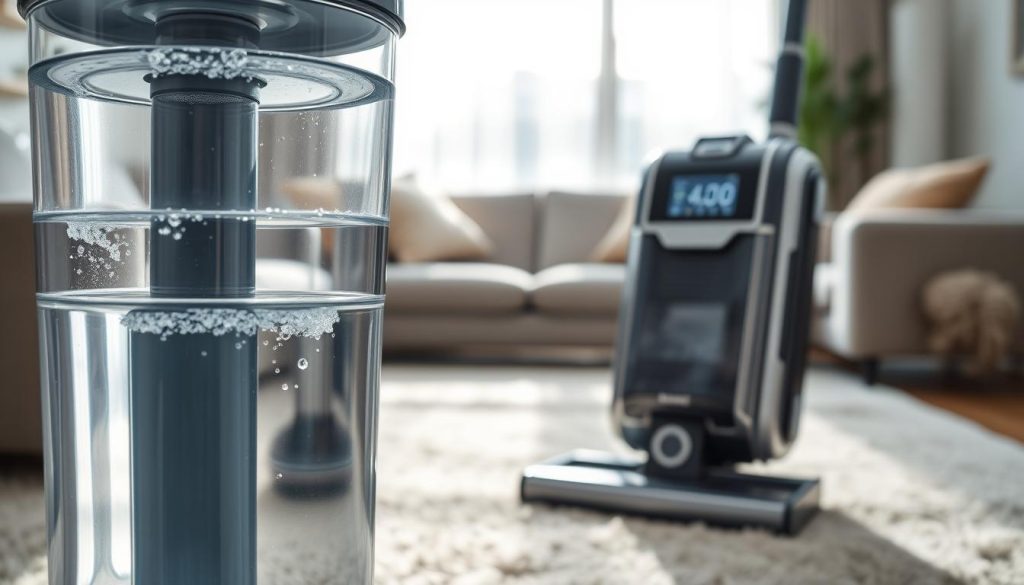
Wet-capture systems hold debris in liquid, reducing re‑release during use and emptying. This lowers airborne exposure when we clean soft furnishings.
Bag machines are lighter and tidy to empty, but their performance depends on bag quality and seals. Poor seals or bag replacement habits can allow fine particles to escape into the air.
HEPA-only units trap 99.97% of particles down to 0.3 microns when the whole system is well designed. However, capture efficiency falls if the bin, seals or emptying steps are weak.
Why combine wet capture with HEPA
Pairing a wet capture stage with a HEPA stage gives multiple barriers against allergens. The liquid removes bulk and larger fragments, while the HEPA layer secures the finest particles before exhaust.
This multi‑stage approach is particularly valuable for households with allergy sensitivity because it reduces exposure during both cleaning and disposal.
Who should choose each system
We recommend bag machines for busy households that value quick, low‑mess disposals. They suit users who prefer minimal post‑use rituals.
Choose a combined wet + HEPA system if allergies concern you and you can manage short rinsing and drying tasks. For a technical primer, see our guide on how do water-based vacuums work.
Minimalists who want simplicity and strong particulate capture may prefer a well‑designed HEPA-only new vacuum that makes emptying straightforward.
“For allergy-focused homes, multi-stage containment reduces the chance of re‑exposure during cleaning and disposal.”
| System | Containment method | Ongoing effort | Best for |
|---|---|---|---|
| Wet-capture + HEPA | Liquid tank + HEPA stage | Empty & rinse after use | Allergy-sensitive households |
| Bag | Sealed disposable bag | Replace bag periodically | Busy homes preferring low mess |
| HEPA-only | Dry bin with HEPA exhaust | Empty bin carefully; wash parts if designed | Minimalists wanting fine particle capture |
| Key trade-off | Multi-barrier vs convenience | Maintenance vs tidy disposal | Containment vs speed |
Conclusion
Our final take: the Vacumi-style system earns its place for households that prioritise allergy control and containment. It pairs strong suction with a triple-stage capture — water, HEPA and foam — to reduce airborne allergens during cleaning.
Who should buy: families with sensitivity to dust and those willing to accept a bulkier unit and short post-use rituals. Who should skip: users needing grab-and-go convenience or minimal storage space.
Key compromise: immediate emptying and rinsing after each session are essential to keep performance and hygiene high. The 10m cable and wet pickup add flexibility, while leak prevention depends on a secure lid click and careful handling.
Final buying note: weigh the improved capture and perceived air quality against upkeep time and the asking price. Choose the machine that matches your routine, budget and expectations for long-term quality.

