

We start by defining what ‘deep cleaning’ means in a Singapore home: lifting embedded dirt, reducing odours and treating stains, while avoiding excess moisture that leads to mould.
Many beds absorb sweat, skin cells and allergens, so a careful approach matters. A carpet cleaner can improve visible marks and freshness when we limit liquid, extract immediately and dry fully.
This guide suits typical households with spills, pet accidents or sweat marks. We advise caution for memory foam, those with asthma or an already musty mattress.
We outline the full process: check the care label, vacuum first, pre-treat stains, use a mattress-safe cleaning solution, make multiple suction passes and wait until the surface is fully dry before remaking the bed.
Quick safety note: always patch test a hidden area and follow manufacturer guidance before a full treatment.
Why mattresses in Singapore need deeper cleaning than we think
Hidden layers in beds trap allergens and damp faster than many homeowners realise. Our tropical environment accelerates this process, so routine maintenance matters more here than in dryer climates.
Nightly contact leaves traces of sweat and dead skin on the surface and within fabric and padding. Over weeks, dust and tiny dirt particles migrate into foam and stitching, where they are harder to remove.
This build-up affects comfort and health. A mattress can appear clean while holding allergens that disturb sleep. Sensitive sleepers often notice poor air quality first.
- Foam mattress and padded cores trap moisture and dust more than flat textiles.
- Poor ventilation lengthens drying time and raises mould risk in humid flats.
- Regular vacuuming and low‑moisture freshening reduce how much intensive cleaning we need later.
We must plan for drying and airflow before using wet methods. Good technique lowers risk and improves results when we carry out full cleaning.
Can we use a carpet cleaner on a mattress safely?
We can use a carpet cleaner on a sleeping surface, but only when we manage moisture and extraction strictly. Controlled use prevents trapped damp, odour and long‑term damage.
How these machines work: they inject a cleaning solution and water, agitate with brushes, then use strong suction to extract dirty liquid. That trio—solution, agitation and suction—can lift deep stains when used with restraint.
Mattresses differ from rugs: they contain thicker fabric layers, foam and padding that hold water and dry slowly. Memory foam is especially absorbent and risks mildew if extraction is weak.
- Use the upholstery tool and limit water use.
- Perform immediate suction passes, then repeat dry passes to pull out moisture.
- Choose non‑irritating solutions and only remake the bed when fully dry.
| Step | Reason | Risk if skipped |
|---|---|---|
| Minimal solution | Reduces soak into foam | Mould and odour |
| Strong suction | Removes embedded moisture | Lingering damp |
| Multiple dry passes | Improves drying speed | Hidden wet pockets |
For mattresses with heavy staining or fragile foam, we may prefer professional help. For equipment options and a wet‑dry vacuum suited to beds, see our recommended unit at Lura wet‑dry vacuum.
When a carpet cleaner is the right choice for mattress stains and odours
Some spills and pet accidents respond well when we act quickly and use the right machine settings. For fresh stains, sweat marks and recent urine or food spills that have soaked into fibres, a measured machine pass can lift visible dirt and reduce odours.
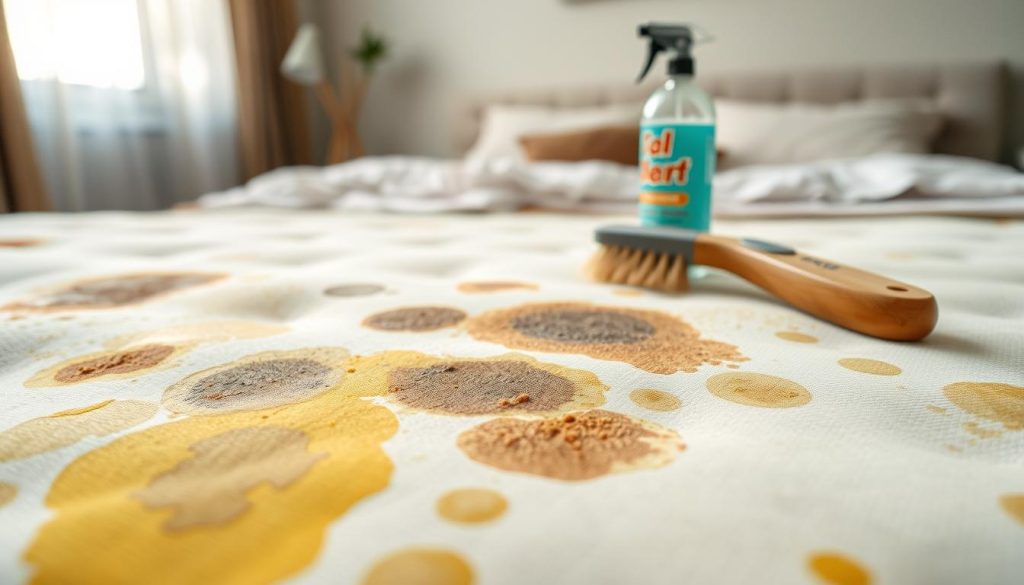
Timing matters. The sooner we treat a mark, the less solution and suction are needed. Fast action cuts the chance of a permanent stain and limits excess moisture in the layers.
When should we avoid DIY? If the item stays damp after cleaning, smells musty, or the stain reappears by wicking, we stop and call professionals. Memory foam and heavily soiled cores risk lasting damage if soaked.
- Best-case use: semi-fresh spills, sweat marks and pet accidents that have moved below the surface.
- Call a pro when: persistent musty odours, deep stains that do not lift, or drying cannot be guaranteed because of humidity or poor ventilation.
Set realistic expectations: a machine can improve appearance and reduce odours, but it is not a full sanitisation method unless paired with strict extraction, drying and correct methods. Professional services offer better moisture control and specialised equipment for maximum extraction and less risk of internal damage.
How to deep clean a mattress with carpet cleaner step by step
Preparation sets outcomes. We clear bedding, wash and fully dry sheets and pillow covers so we do not return dust or sweat to the surface.
Prop the bed against a wall or place it upright for safe access. This helps us reach corners, edges and sides and improves airflow during drying.
-
Vacuum the surface
Use a vacuum cleaner with an upholstery attachment. Remove dust, hair and loose dirt before any moisture is added.
-
Pre-treat stains
Spot test a mattress-safe stain remover on a hidden area. Blot gently rather than rub to avoid damage to fabric.
-
Apply solution and extract
Fit the upholstery tool to the carpet cleaner mattress unit. Apply the cleaning solution sparingly in small sections. Run suction immediately, then repeat several dry passes to pull out water and limit excess moisture.
-
Finish edges and seams
Give the sides and seams controlled passes; these areas collect dust and dirt and often need extra attention.
| Step | Action | Why it matters |
|---|---|---|
| Strip linens | Wash and dry fully | Prevents re‑contamination |
| Vacuum | Use upholstery tool | Stops dry dirt turning muddy |
| Wet pass | Minimal solution, brief contact | Reduces water reaching foam |
| Extraction | Immediate suction, multiple dry passes | Reduces excess moisture and odour |
Practical checkpoint: if the surface feels damp after extraction we repeat suction-only passes and wait until the core is completely dry before remaking the bed.
Choosing the best cleaning solution for a sleeping surface
Not every household solution is safe for an item we rest against every night. We pick products that balance performance with low residue and gentle chemistry.
What we look for
- Upholstery-safe wording and explicit mattress or upholstery guidance.
- Clear dilution and machine instructions so water and residue stay minimal.
- Low‑residue, non‑toxic and hypoallergenic labels where skin contact is likely.
What we avoid
Harsh carpet shampoos, heavy fragrances and caustic ingredients. These may irritate skin and trigger allergies if traces remain.
Remember: the strongest product is not always best. Correct pre‑treatment, controlled moisture and thorough suction often win over aggressive chemistry.
| Feature | Choose | Avoid |
|---|---|---|
| Label | Upholstery/mattress safe | Rug or heavy‑duty carpet only |
| Residue | Low or no residue | Sticky or perfumed finish |
| Instructions | Clear dilution and extraction notes | Vague mixing or no machine guidance |
| Health | Hypoallergenic, non‑toxic | Caustic chemicals, strong fragrances |
Practical rule: if we would not accept residue on a pillowcase, we should not use that product on the sleeping surface. Always patch test a hidden area before full application.
Memory foam, hybrid and innerspring mattresses: what changes for each type
Different constructions demand different care; what we do for foam will not suit a spring core.
Why memory foam holds water like a sponge and dries slowly
Memory foam soaks liquid and traps it deep inside. That behaviour raises the risk of mould and structure damage in our humid Singapore climate.
We must avoid soaking. Minimal solution and immediate extraction reduce the chance of internal damage.
How hybrids and innerspring mattresses tolerate limited moisture with good airflow
Hybrids and innerspring beds offer internal air gaps that speed drying. They cope better when we limit moisture and increase air movement.
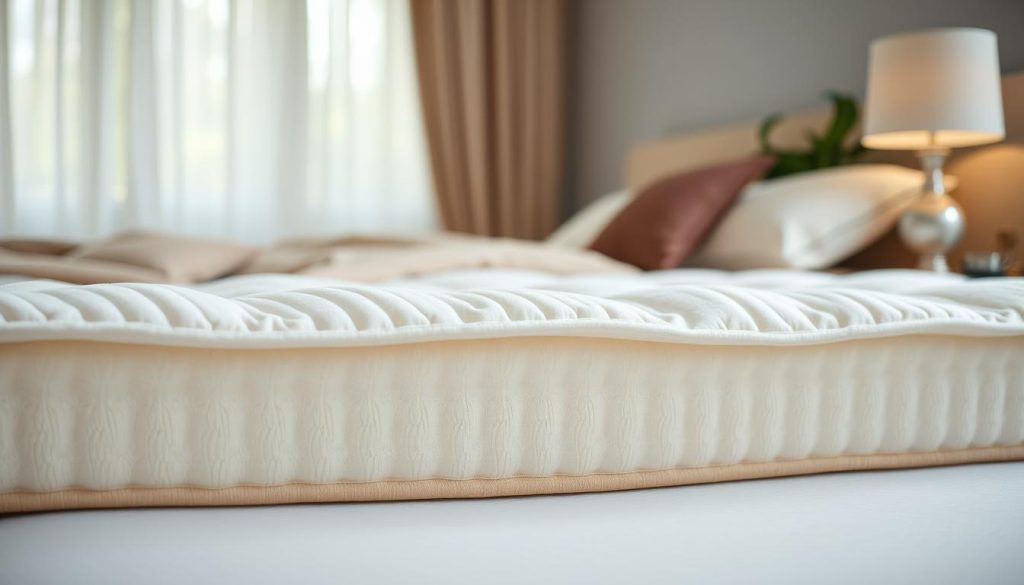
Practical adjustments: fewer wet passes, more suction-only passes and smaller treated sections when foam layers are present.
- Identify your type: press the surface—slow sink indicates memory; clear bounce suggests springs.
- Expect drying time of roughly 6–24 hours depending on ventilation and humidity.
- When foam is dominant, choose low‑moisture methods or professional extraction to reduce risk of long‑term damage.
Drying is the most critical step to prevent mould and mildew
The final stage—drying—determines whether treatment succeeds or creates new issues. Even a well‑lifted stain will become a source of musty odour if moisture remains trapped in the layers. Drying protects the mattress and preserves our investment.
How long drying can take and why we should wait before making the bed
Expect roughly 6–24 hours of drying time depending on water used, mattress type and airflow. Memory foam zones often need the longest period. We must not remake the bed until the surface and core feel completely dry; sheets trap humidity and slow evaporation.
Speeding up drying in humid conditions
We increase air movement with fans across the surface and run a dehumidifier to remove room moisture. Open windows only when outside humidity is lower than indoors.
Why propping the mattress helps airflow on both sides
Propping the mattress upright exposes both faces and seams. This reduces excess moisture pockets and shortens drying time. Practical checks: feel for cool dampness, perform a sniff test for mustiness, and allow extra time in foam‑heavy areas.
Common mistakes that can damage a mattress during deep cleaning
A few common mistakes can turn a restorative session into a lasting problem for your bed.
Over‑wetting is the number‑one error. Pushing too much liquid into the layers forces moisture deep into foam and seams. That trapped moisture can cause odour, mildew and structure damage.
Weak extraction and skipped suction passes follow closely. If suction is too low or we stop after one pass, the surface may feel dry while inner layers stay damp. Repeat dry passes and firm suction are essential.
Ignoring care labels and skipping patch tests
Some fabrics and finishes restrict which cleaner and methods we may use. Ignoring the care label risks discolouration or fabric harm.
Patch testing a hidden area helps spot reactions before they spread. Even gentle products can leave tide marks or change texture if not checked first.
- Why these mistakes matter: trapped moisture breeds mould and odour; fabric can stain or degrade.
- Practical prevention: use less solution than feels right, do more suction than you think, and plan drying before starting.
- Tools: a good vacuum and the right cleaner make the process safer.
Carpet cleaner vs steam cleaner: which method suits our goal?
Which tool we pick hinges on the balance between moisture introduced and the drying time we can allow.
Carpet cleaner units inject solution and water, so they are better for lifting embedded dirt and stubborn stains. They demand strong extraction and a solid drying plan in our humid Singapore climate.
Steam cleaner machines use vapour and heat. They offer quicker surface sanitisation and less residual moisture, so drying finishes faster.
Deep stain removal versus surface sanitisation and drying time
Which outcome matters most? If embedded marks and odour extraction are the priority, we lean towards a carpet cleaner paired with immediate suction. If fast refresh and reduced drying are critical, steam cleaner may suit best.
| Feature | Carpet cleaner | Steam cleaner |
|---|---|---|
| Primary goal | Lift stains and deep dirt | Surface sanitisation and deodorise |
| Moisture introduced | Higher; needs strong extraction | Lower; mainly vapour |
| Typical drying time | Longer; plan for many hours | Shorter; often ready within hours |
| Suitability for foam-heavy items | Risky unless extraction is excellent | Safer if used sparingly and on short cycles |
Neither method replaces good technique. Wrong settings or rushing drying will cause lingering odour regardless of the machine chosen.
Decision guide: prioritise a carpet cleaner for stubborn stains and odour, and choose a steam cleaner when low moisture and shorter drying time are essential.
For practical notes on using a carpet cleaner on a sleeping surface, see using a carpet cleaner on a. For steam‑based guidance, read steam clean mattress at home.
Between deep cleans: low-moisture ways we keep a mattress fresh
Light maintenance preserves comfort and reduces the need for wet procedures in humid Singapore. Small habits stop dirt and odours settling deep into fibres. These steps protect foam layers and shorten future drying times.
Vacuuming regularly
Vacuum the surface and seams when we change sheets. A quick pass with an upholstery tool removes dust, hair and loose dirt before it embeds.
We aim for weekly or fortnightly vacuuming in high‑use bedrooms. Regular attention means less aggressive action later and fewer allergens in the bed.
Using baking soda for odours and minor moisture
Sprinkle a light, even layer of baking soda and let it sit for several hours or overnight. The powder absorbs odours and minor moisture without adding liquid.
After resting time, vacuum thoroughly so no residue remains. This leaves the surface fresher and ready for normal use.
Spot‑cleaning new stains quickly
If a spill occurs we blot immediately, using minimal liquid and gentle pressure. Prompt action prevents stains setting and reduces the need to use a wet machine later.
Practical rule: treat spots fast, use little solution, then allow the area to dry fully before remaking the bed.
- Why this matters: low‑moisture care is safer for foam‑heavy mattresses.
- Routine benefit: the cleaner the surface, the less often we must use a use carpet cleaner for heavy work.
Conclusion
To finish, favour restraint and strong extraction. We say this because careful action is the surest way to protect your mattress and indoor air.
In practice, vacuum first, pre‑treat stains, then apply minimal solution with the upholstery tool. Run immediate suction and follow with several dry passes. This workflow reduces moisture and speeds drying time.
Remember: memory foam needs extra caution; hybrids and innerspring units dry faster. In humid Singapore, add fans and a dehumidifier and allow 6–24 hours before remaking the bed.
Regular vacuuming, light baking soda treatment and prompt spot treatment cut how often we need full cleaning. If odours or stains persist, call a professional cleaner to protect your sleep surface and health.

