

We introduce what this machine is and why the phrase water filter vacuum cleaner how it works is a common question for those raising cleaning standards at home.
Our aim is to set clear expectations. The unit still depends on airflow and suction to lift debris, but the liquid changes how dust is captured inside the unit.
This guide is for families in HDB flats and condos, pet owners and anyone who values indoor comfort in Singapore. We will explain the mechanism, compare styles, outline practical steps and note what to check before buying.
We care about keeping dirt contained and supporting cleaner air, not just making floors look tidy. Early maintenance tips are simple: empty promptly and dry parts to stay hygienic. For deeper context see our water filtration guide.
Why we’re choosing a water filter vacuum cleaner in Singapore homes
For city dwellers, managing indoor air quality is a practical part of home care. In Singapore we often keep windows closed for air-conditioning, so fine air pollutants and dust can build up fast in bedrooms and living rooms.
Where dust and allergens hide in everyday household areas
Soft furnishings and bedding host many allergens and by-products from dust mites. These spots increase exposure over long periods and can worsen symptoms.
- Mattresses and pillows
- Sofas and curtains
- Rugs and underbeds
- Skirting boards and corners
Why some standard vacuum designs may re-release fine particles
Depending on sealing and filtration, a standard vacuum cleaner can leak or let fine particles pass through. Emptying a dust bin can also stir dust back into the room air.
Wet capture reduces the chance of dust floating back during use because particles become heavier and stay entrained. Still, overall filtration performance is a system result: sealing, filter condition and emptying habits determine what returns to our indoor air.
Water filter vacuum cleaner how it works: the water filtration system explained
We follow air and particles through each stage to explain the practical effect on room air.
What stays the same: the motor generates suction power and airflow that draws debris from the floor into the machine. Nozzle design and seals still matter for overall performance.
What changes: instead of a dry bag or bin, the system uses a liquid bath so dust and larger dirt meet a wet surface and lose momentum.
- Dirty air is drawn in by the motor, then passes through a separation stage where heavy particles drop into the tank.
- Particles contact the liquid, become heavier and stay entrained in the tank rather than staying airborne.
- A final HEPA or similar hepa filter offers a last barrier to catch any remaining fine matter before air leaves the machine.
Clean air on exit means less dusty smell during use, fewer triggers for allergy sufferers and better indoor air quality overall. Because the design exposes parts to moisture, seals, washable elements and routine drying are essential to maintain performance.
How water filtration compares with bag, bagless, and cyclonic vacuums
Choosing the right capture system starts with knowing how each handles dust and particles. We compare three mainstream setups so we focus on performance and maintenance rather than marketing claims.
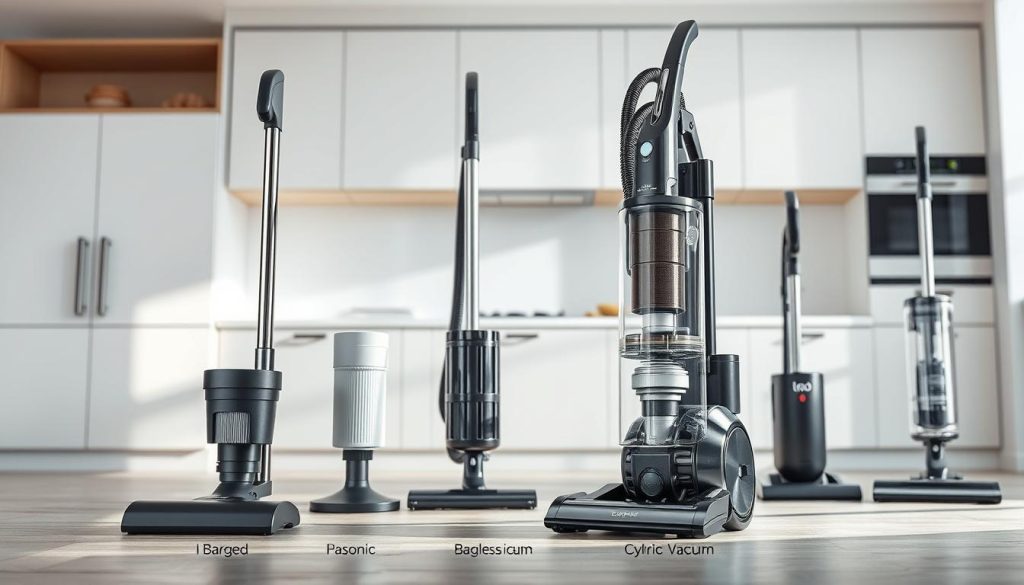
Bag systems
Bag units collect larger debris in sealed bags while finer dust relies on final filters. Good sealing keeps exhaust air cleaner and reduces escapes during emptying.
Replacement bag costs and correct disposal matter for long‑term upkeep in a compact home.
Bagless cyclone systems
Cyclonic models use centrifugal force to fling particles into a cup. Multi‑stage cyclones reduce suction loss, but bins and shrouds still clog over time.
Emptying a dry dust cup can release particles back into our rooms unless done carefully outdoors or over a bin.
Where water capture fits
Water‑based units make dirt visible in the tank and change how particles behave—many become entrained and stay in liquid instead of the exhaust stream.
The trade‑off is handling a tank and storage considerations for Singapore flats. If our priority is less dry dust handling and cleaner exhaust air, this behaviour can be compelling.
| System | Primary capture | Maintenance note | Best for |
|---|---|---|---|
| Bag | Debris in replaceable bags | Replace bags; check seals | Low mess disposal |
| Bagless / Cyclone | Centrifugal separation to a cup | Empty cup; wash filters; potential suction drop | Long run times; visible dust cup |
| Water capture | Particles entrained in tank liquid | Handle tank; rinse and dry parts | Reduce dry dust escape; visible results |
Advantages we can expect from a water filter vacuum
We enjoy clear, practical benefits when a capture tank takes on the mess instead of a bag. Daily life becomes simpler because we skip disposable bags and see the results in the unit.
No consumables and less lingering odour. With no bags to buy, dirt and pet hair do not sit dry in fabric for weeks. That reduces stale smells and makes storage neater for small Singapore flats.
Steady suction and reliable power. As long as airflow stays clear and the tank is not overloaded, suction feels strong until emptying is needed. Many models keep performance stable with simple tune-up steps.
Better control of allergens. Trapping dust and mite debris in liquid lowers the chance of re-aerosolising during use or when we empty the tank. Pairing this with a hepa filter gives an added barrier for cleaner air.
Wet-and-dry capability for small spills. Some units pick up spills and damp messes, which helps with kitchen accidents or rainy-season mishaps. Expect a heavier unit than a stick model, but gain containment and deeper cleaning.
How we use a water filter vacuum cleaner effectively at home
A small routine before we start makes every session more effective and less messy.
Filling the tank correctly
Always fill between the Min and Max marks. We use water to the recommended level so the inlet stays submerged and the dirty airstream meets liquid consistently.
Keeping the inlet under water helps trap dust and dirt rather than letting particles bypass the capture zone.
Seating the lid and avoiding leaks
Click the lid firmly until it seats. A secure lid prevents leaks and keeps suction steady as we move between rooms in a compact HDB flat.
Adjusting suction for surfaces
Lower suction for curtains and delicate upholstery. Raise power for hard floors and rug edges.
This simple adjustment protects fabrics and preserves performance.
Covering high-allergen areas
Follow a high-allergen route: bedrooms first (mattresses and seams), then sofas and pet zones, finally entryways with grit.
“Start where allergens build up most — you remove the biggest load early and protect indoor air.”
Handling and care during use
Move the canister by its body, not by the hose. This reduces wear and prevents air leaks that could undermine capture.
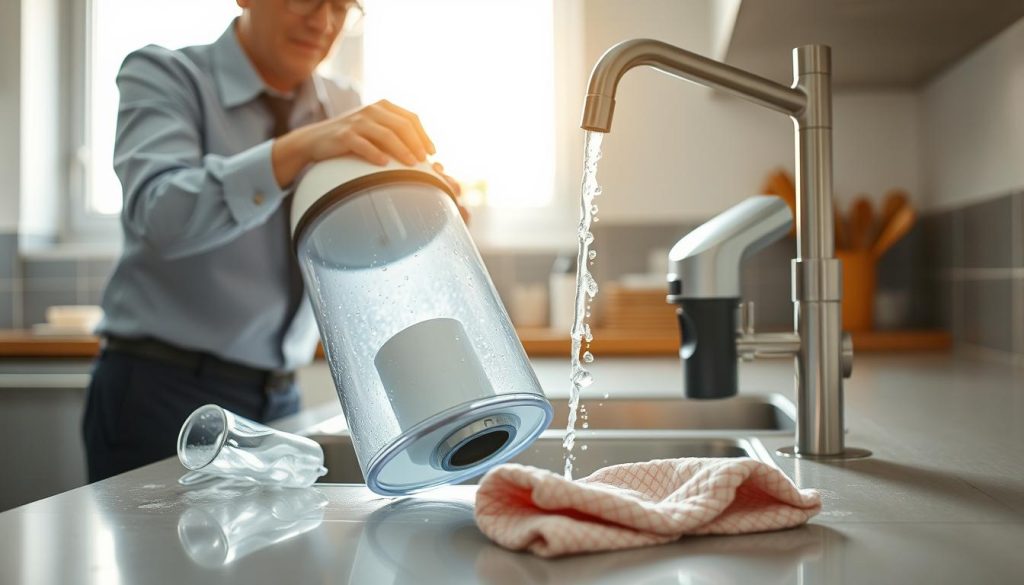
After-clean routine: how we empty, clean, and dry the tank to protect air quality
A quick after-clean ritual stops smells and protects performance in our humid Singapore homes.
Why we empty the dirty water straight away
Stagnant liquid with trapped dirt can smell fast and become unhygienic in warm, humid conditions.
We empty the tank immediately to avoid odours and microbial growth. This step keeps our room air fresher and reduces the chance of mould forming.
Rinsing the tub and washable parts
We rinse the tub thoroughly and run washable foam or mesh components under a tap. Gentle rubbing removes trapped hair and fine dirt.
Washing these parts keeps suction steady and helps the whole filtration chain perform as designed. For a step‑by‑step guide, see clean a filter.
Drying completely to avoid mould and smells
After rinsing, we air‑dry parts fully in a ventilated spot. Leaving components damp invites bacteria and odours.
Only reassemble when everything is bone dry. This keeps airflow strong and preserves the quality of the air we breathe at home.
- Empty outdoors if possible to reduce indoor mess.
- Wipe near the motor—avoid soaking electrical areas.
- Store components to dry, for example by a window or service yard.
| Step | Risk if skipped | Benefit |
|---|---|---|
| Immediate emptying | Odour, bacteria growth | Fresher air, less health risk |
| Rinse washable parts | Clogs, reduced suction | Stable performance, longer life |
| Thorough drying | Mould, stale smells | Clean storage, preserved quality |
Water filter vacuum vs HEPA-only vacuum: what matters for allergies
What matters most for allergies is containment from nozzle to exhaust, not just headline specs.
HEPA performance is vital as the final defence. A true HEPA stage traps very fine particles that escape earlier separation. Performance depends on a sealed airflow path and a correct fit of the HEPA filter.
Pairing a liquid capture stage with a HEPA adds protection. The liquid grabs a large share of hair and coarse dust, while the HEPA catches fine particles and droplets that might remain in the stream.
Practical points for allergy control
- Keep the airflow sealed so trapped particles do not bypass the HEPA.
- Empty and maintain the tank promptly to reduce exposure when handling waste.
- Choose a model with triple stages where possible: liquid + foam + HEPA.
“A sealed path and routine care often matter more than filter brand alone.”
| Feature | HEPA-only | Liquid + HEPA |
|---|---|---|
| Fine particle capture | Excellent if sealed | Excellent — final safeguard |
| Exposure during emptying | Higher risk if cup dusty | Lower risk; debris wet |
| Maintenance | Replace and wash filters | Rinse tank; dry parts; HEPA care |
Takeaway: For Singapore homes managing allergies, prioritise a well‑sealed system, a certified HEPA stage and maintenance you will keep up weekly.
What to look for before we buy: the right water filter vacuum cleaner for our needs
A practical purchase starts with matching a machine’s size and features to our flat.
Tank size and weight matter for HDB corridors and multi-room routes. Larger tanks cut refills but add heft; Sirena‑style reservoirs can weigh much more when full, while lighter models such as Kalorik examples are easier to carry between floors.
Sealed system design is non‑negotiable. Check latches, gaskets and joints so air follows the intended path and particles reach the final stage rather than leaking past seals.
Moisture-ready components keep parts lasting in Singapore’s humidity. Ensure washable internal parts and any exposed filters are rated for damp conditions and will not degrade after rinsing.
Attachments and tools make a real difference: crevice nozzles for skirting boards, upholstery heads for mattresses and dedicated pet-hair tools for sofas.
- Consider noise for evening use and a long cable (for example 10m) to reduce plug changes.
- Assess storage footprint so the unit fits a service yard or cupboard.
- Balance power and manoeuvrability for daily satisfaction.
“Our buying checklist: what fits our layout, how often we clean and whether pets or allergies demand stronger containment.”
Conclusion
In conclusion, the core process is a straightforward chain from intake to final safeguard.
We draw debris in by suction, the liquid stage captures and weighs down particles, and a final HEPA stage gives cleaner exhaust air.
This sequence reduces re‑aerosolisation and helps households in Singapore that manage allergies or keep windows closed most of the day.
Trade‑offs are honest: these units can be heavier and demand prompt emptying, rinsing and thorough drying to avoid smells and mould.
Our best results come from matching a machine to our floors, habits and storage space rather than chasing a single perfect design.
Next step: use our buying checklist — tank size, sealed design, attachments and storage — and read a clear note on how a filter works to shortlist models that fit your routine.

