

We define the wet and dry vacuum cleaner meaning in plain terms so readers can decide with confidence.
Since about 2016, wet dry systems have moved into many homes as a practical way to handle crumbs and spills without swapping tools. We explain what a wet dry vacuum is built to do in daily Singapore cleaning.
In this buyer’s guide we set clear expectations. We will assess cleaning performance, hygiene, ease of use and running costs rather than only listing specs.
Who benefits most? Families, pet owners and anyone wanting faster floor care without hauling out multiple devices.
We will also preview trade-offs—price, storage space and upkeep—so you can pick a model that fits your home and routine.
Wet and dry vacuum cleaner meaning: what it is and why it exists
Many households now choose a two‑in‑one floor washer to cut the routine of switching between tools. We define a wet dry unit as a device that vacuums debris while lifting light liquid spills in one pass.
A practical definition: a vacuum + mop in one pass for wet and dry messes
Put simply, it combines suction with a rinsing roller so we pick up crumbs, dirt and small spills without stopping to fetch a mop and bucket. This saves us precious time after meals or rainy walks home.
Why it became popular in homes
Owners appreciate the convenience in compact Singapore homes. Instead of a separate dry vacuum cleaner then a mop, one route handles mixed messes quickly and with fewer storage demands.
What it replaces (and what it doesn’t)
- Replaces: a separate dry vacuum plus manual mopping for regular hard‑floor upkeep.
- Doesn’t replace: specialist carpet extractors or deep steam cleaning for heavy soiling.
We stress realistic expectations: this is a different cleaning system optimised for hard floors, not merely a more powerful suction unit.
How a wet dry vacuum works inside: the simple anatomy
The mechanism is straightforward: measured water meets a scrubbing roller, then strong suction pulls the mix into a separate container. This sequence lets us tackle sticky spills and loose debris in one pass.
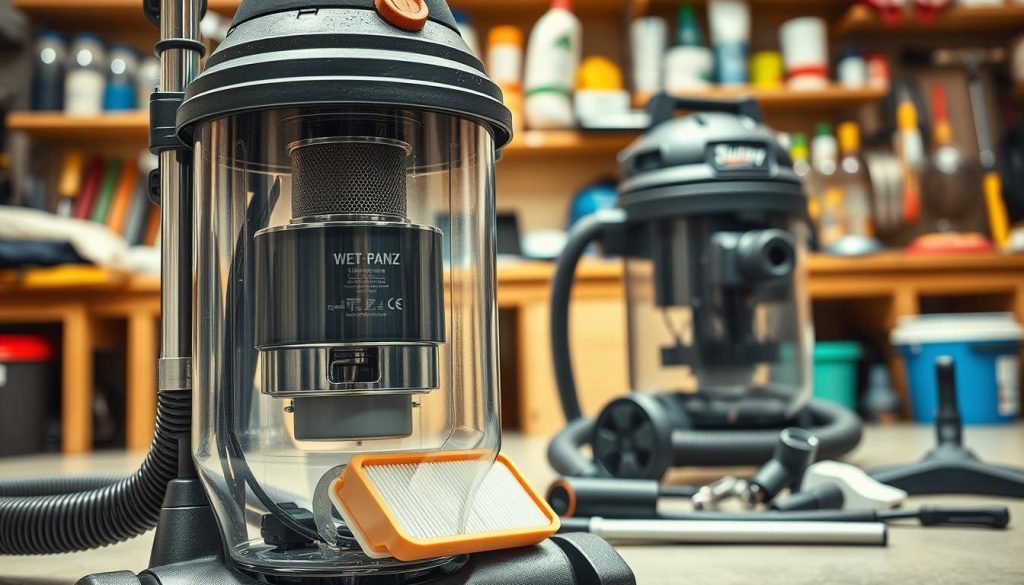
Dual-tank design for hygiene
Most models use two tanks so clean water never mixes with dirty water. We pour fresh solution into the clean water tank while the extracted liquid collects in the dirty water tank. This prevents grime from being re-applied to floors.
Spray, scrub, extract workflow
A jet sprays a small amount of water on the floor. A soft roller scrubs to lift greasy marks and trapped debris. Suction then evacuates the loosened mess into the dirty water tank.
Airflow path and filtration
Air moves through a sealed path to protect the motor from moisture. Filters such as HEPA or foam trap fine dust before air reaches the motor. Good filtration keeps performance steady and prolongs life.
Self-clean cycles and hot-air drying
Many units run a rinse cycle that flushes the roller and channels. Some add hot-air drying to cut odour and mould risk in humid Singapore conditions. These features reduce the “eww” factor and simplify maintenance.
“Controlled water delivery, separated tanks and sealed airflow explain why this washer cleans differently from a dry unit.”
For ideas beyond floors, see our guide to unusual uses for practical tips on getting more from your device.
Where wet dry vacuums shine in real homes
In everyday homes we notice the biggest gains when a single tool removes crumbs while lifting spills in one pass.
Mixed messes after meals
After breakfast or supper we often face food debris plus a small spill. One pass that scrubs then extracts saves us time and keeps floors ready for bare feet.
Pet and family clean-ups
Pets track in mud and sometimes have accidents. Fur, grit and damp patches are easier to manage when a unit collects solids and water at the same time.
Kitchens and bathrooms
Grease, splashes and sticky residue build quickly on hard floors. A device that scrubs and removes used water stops residue spreading the way a mop can.
Local factors matter: frequent rain and high humidity in Singapore mean floors can feel grimy faster. Quick, frequent cleaning without swapping tools suits compact homes.
“One-pass pickup reduces repeated work and lowers the chance of spreading dirty water across the floor.”
| Real-life scenario | Typical mess | Key benefit | Why it matters in Singapore |
|---|---|---|---|
| After meals | Crumbs + small spills | One-pass pick-up saves time | Small flats need fast turnaround |
| Pets and children | Muddy prints, accidents, fur | Collects debris and water together | High traffic areas require hygiene |
| Kitchens & bathrooms | Grease, splashes, sticky residue | Scrubs then extracts to avoid streaks | Humidity speeds grime build-up |
Floor and surface compatibility: what we can clean safely
Not every surface welcomes moisture or an aggressive scrub; knowing where to use a wet dry unit saves time and prevents damage.
Best-suited surfaces:
- Tile, sealed hardwood, laminate and vinyl — ideal for most one-pass cleaning on hard floors.
- Sealed hardwood floors tolerate a soft roller and controlled water. Sealed means a protective finish that keeps water out of the timber fibres.
When to be cautious:
- Unsealed hardwood and untreated stone are porous. Excess water can stain, swell or trap residue.
- Carpets need a specific carpet mode; otherwise use a dry vacuum or a dedicated extractor.
Water delivery and the right mode protect delicate surfaces. Test a hidden patch first and follow the manufacturer’s guidance for each floor type.
Buying note: if most rooms are carpeted, a dry vacuum should remain the primary tool, with a wet dry unit as a secondary option for hallways and tiled areas.
“Match the tool to the floor and err on the side of caution with porous materials.”
What to look for when buying a wet and dry vacuum cleaner in Singapore
Choosing the right model means balancing size, runtime and everyday handling to match life in a typical Singapore flat.
Tank capacity vs weight
For most apartments a 500–700 ml tank suits quick jobs without frequent refills. Larger tanks cut trips, but add weight that makes short cleans less likely.
Suction and pickup consistency
Strong, steady suction matters more than peak figures. We want reliable pickup of liquids, fine dust and larger debris without leaving streaks.
Roller and brush design
Choose soft rollers for sealed hardwood and rollers with edge reach to handle skirting and corners. Good design reduces hand-wiping after each run.
Runtime, manoeuvrability and modes
Expect about 20–30 minutes cordless run time for flats; landed homes may need longer. Look for swivel steering, low push resistance and adjustable water flow or cleaning modes for different floors.
Noise, hygiene and guidance
Quieter motors suit family life. Washable filters and clear tank indicators simplify maintenance and help keep power steady over time.
“Match tank size to your space and pick features you will actually use daily.”
Wet dry vacuum vs dry vacuum cleaner vs mop: what we gain and what we trade off
For many Singapore flats, the practical question is whether a two‑in‑one machine replaces a mop and a separate dry unit or simply complements them.
Time saved
One pass saves us time. Using a wet dry unit that scrubs then extracts avoids switching between a dry vacuum cleaner and a mop. That means we can finish a full room in one run instead of repeating tasks.
Hygiene benefits
No recycling of dirty water. Traditional mopping often reuses water from a bucket, which spreads soil back across the floor. Wet dry systems collect dirty water separately so we leave floors fresher after each pass.
Drying time and safety
Many models leave floors nearly dry within minutes. Faster drying reduces slip risk in kitchens and bathrooms and lets us return a room to use quickly.
Cost and storage realities
We must admit the trade‑offs: a wet dry vacuum usually costs more than a mop and bucket. It also needs more storage space because of tanks and parts.
When a dry vacuum cleaner still wins: carpet‑heavy homes or high dust needs call for a dedicated dry vacuum. For tiled flats that face frequent spills, a wet dry machine often becomes the daily driver.
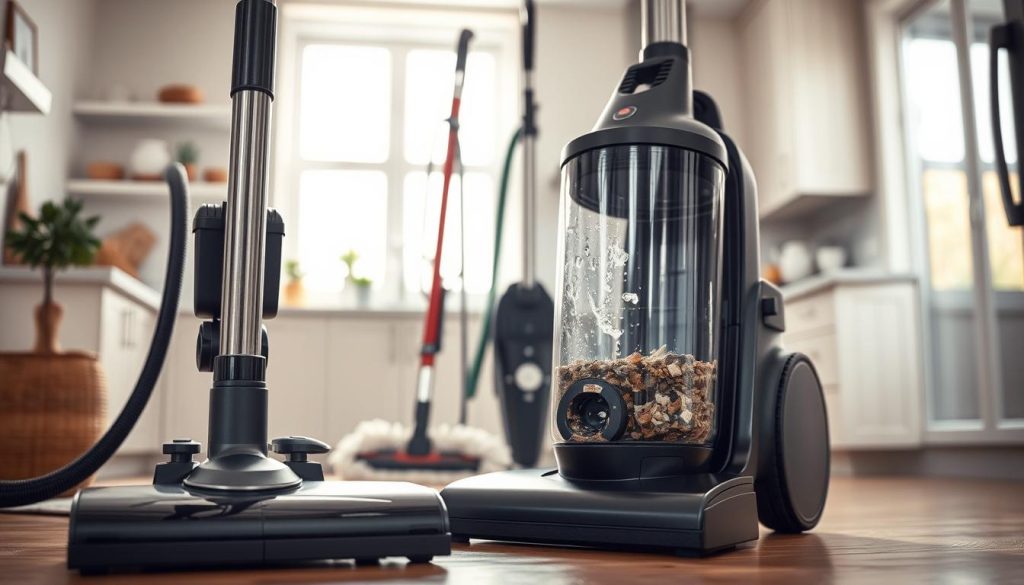
“Pick the tools that match your rooms and routine, not the latest gadget.”
Maintenance and running costs: keeping the system fresh
A straightforward maintenance routine pays off in steady suction and fresher floors.
After-clean routine: emptying, rinsing and drying
Empty the dirty water tank immediately after use to stop smells and mould. Rinse the tank and roller by hand with clean water, then leave both to air-dry in a shaded spot.
Drying is crucial in Singapore’s humidity. Proper air-dry prevents odour and protects filters from lingering dust.
Self-clean cycles: when to run them
Run the built-in self-clean cycle after heavier jobs. The cycle flushes the roller and internal channels, which helps maintain suction and reduces blockages.
Consumables to budget for
Plan for replacement rollers, foam and HEPA filters, plus occasional cleaning solution. These items determine annual running costs more than power use.
| Item | Life (typ.) | Notes |
|---|---|---|
| Roller | 6–12 months | Replace if frayed for best pick-up |
| Filter | 3–12 months | Washable vs replaceable affects cost |
| Cleaning solution | varies | Use manufacturer guidance for safe use |
“A few minutes of care after each run keeps performance high and long-term costs low.”
For a practical demo on handling internal rinses, see our guide to clean air purifier with Lura.
Conclusion
A tool that removes debris while extracting used water turns quick clean-ups into a single, reliable pass.
For homes with tiled halls, sealed hardwood floors or frequent pet messes, a wet dry vacuum often delivers the fastest results. Check your surfaces first, then prioritise steady suction, a hygienic tank and cordless runtime that suits each room.
Expect trade-offs: higher cost and more storage space versus fewer tool swaps than a mop or a dry vacuum cleaner. The strongest gains are better dirty water handling, faster floor drying and less time juggling tools.
Our next step is simple: list the floors in your home, note common messes and match those needs to the right features — suction, tank size, cordless run and brush type.
The best vacuum cleaners are those we use regularly; pick a system that fits daily life and upkeep so cleaning stays quick, not complicated.

