
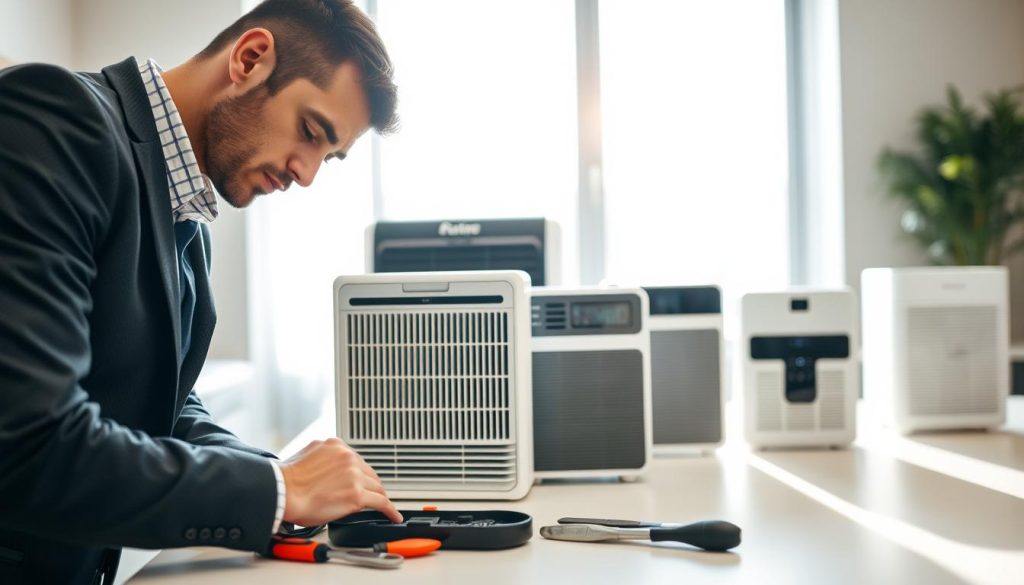
We introduce a practical take on a 2-in-1 floor washer that handles solids plus spills in a single pass. This machine pairs separate clean and dirty tanks with a brush or roller that lifts grime. It keeps airflow sealed to cope with moisture.
In this guide we set clear expectations for everyday Singapore cleaning. We explain core scenarios where a wet dry vacuum saves time. We also note limits for carpets and larger workshop machines.
Our aim is fast resets, hygienic floors and less rework. We outline how the device works, compare it with a regular vacuum, and list buying criteria plus maintenance tips.
We will help readers match household stick appliances to heavier shop vac types and answer common buyer questions on suction, tanks and day-to-day ease.
Why wet and dry cleaning matters in Singapore homes and offices today
Long workweeks and compact flats push us toward cleaning kit that saves minutes, not hours. In Singapore, many households can reset a whole home in 5–10 minutes when tools match daily life. That speed matters after meals, before guests or between shifts at shared offices.
Busy schedules and faster resets
We value fewer steps. One machine that handles crumbs plus spills cuts tool swaps and repeat passes. This reduces overall time spent and helps us maintain neat spaces between activities.
Humidity, compact layouts and grime
High humidity and frequent rainy-day foot traffic mean hard floors pick up visible dirt quickly. Compact flats leave little storage room, so a single versatile unit replaces several bulky items.
Office realities and hygiene
In shared pantries and entryways, quick, repeatable cleaning keeps spaces presentable. Separation of clean water and used water gives a fresher finish underfoot and reduces odour risk.
“We prefer appliances that return spaces to useable condition fast and hygienically.”
- Handles mixed messes without swapping tools.
- Saves minutes during daily resets.
- Fits small storage spaces common in flats and offices.
What is the use of wet and dry vacuum cleaner in everyday cleaning?
Everyday spills and crumbs demand a quick tool that restores floors in one pass. We favour a cordless, two-in-one unit for fast kitchen resets after meals.

One-pass promise: pick up dry debris and liquid spills together so we stop vacuum-then-mop routines. This saves time and avoids smearing residue across tiles.
Where it helps most
High-traffic zones yield the biggest gains: kitchens, dining areas, entryways and pet corners. Think cereal with milk, sauce-strewn crumbs, muddy paw prints and water-bowl splashes.
When a regular dry unit suffices
For loose dust, carpet fibres and above-floor detailing, a lightweight dry machine often works better. It’s simpler, lighter to carry and usually has finer filters for dust control.
Our approach pairs both tools: use the two-in-one for hard-floor resets and the dry unit for carpets and upholstery. Quick daily passes keep upkeep small; reserve deeper cleans for weekly sessions.
“A single pass that handles solids plus spills changes how quickly a flat returns to use.”
| Zone | Typical mess | Recommended tool |
|---|---|---|
| Kitchens | Crumbs + sauce, coffee rings | Two-in-one unit |
| Entryways | Rain grit, muddy prints | Two-in-one unit |
| Pet corners | Pet hair, water splashes | Two-in-one unit |
| Carpets & sofas | Dust, fibres, hair | Dry machine |
Read more about practical benefits at why a wet-and-dry unit helps at.
How a wet dry vacuum works: from clean water to dirty water tank
C is a four-step loop that happens under the head: dispense, scrub, suction, separate. This sequence explains why a single pass often suffices for spills plus debris.
Dispense, scrub, suction, separate: the dual-tank cleaning loop
First, the unit meters clean water or a mild solution onto the floor ahead of the brush. The roller then agitates to loosen dried food, film and fine grit.
Next, high suction lifts the resulting slurry into a separate dirty water tank. That separation keeps the clean water tank untouched for fresh rinses.
Brush roller agitation and sealed airflow designed for moisture
The brush roller breaks bonds between grime and floor. Its action reduces scrubbing time and lowers streaking on tiled surfaces.
Sealed airflow routes moist air safely to collection tanks. Wet-capable machines use moisture-rated seals and channels, unlike dry-only models.
Self-cleaning cycles that rinse rollers and internal channels
Many units offer a one-button rinse that flushes the roller, channels and base tray into the dirty water tank. This prevents odours and keeps suction steady over time.
Use only manufacturer-approved solution in the clean water tank. That protects seals and performance.
| Stage | Action | Outcome |
|---|---|---|
| Dispense | Metered clean water or solution | Loosens surface soil |
| Scrub | Brush roller agitation | Breaks stuck-on grime |
| Suction | Airflow extracts slurry | Dry, passable floor |
| Separate | Dirty water into its tank | Hygienic rinse cycle preserved |
“Our aim is fewer passes, less streaking and faster floor dry-down compared with mop-and-bucket routines.”
Wet dry vacuum vs dry vacuum cleaner: choosing the right tool
Choosing between a two-in-one unit and a classic dry unit depends on the mess we face most often.
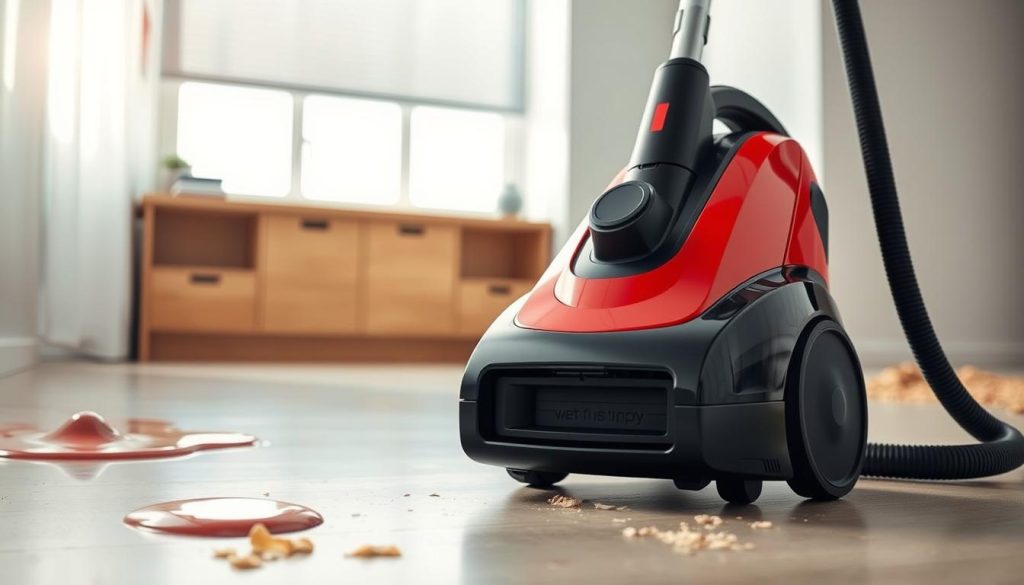
Dry debris performance: dust, hair, crumbs, filters
A dry vacuum excels at loose dust, fine dirt and hair. Many models use HEPA-style filtration that traps allergens during carpet and upholstery cleaning.
For soft surfaces, a dry unit plus dedicated attachments gives cleaner results and better dust control than a hybrid machine.
Liquid handling: spills, muddy paw prints, dirty water pickup
Hybrid units pick up liquids, muddy prints and sticky spills safely into a sealed tank. Moisture-safe pathways protect motors and avoid damage.
We value separate clean and dirty tanks when rinsing rollers and preventing odour build-up after messy jobs.
Cleaning power and suction power: what actually makes a difference
Marketing watts mean little without stable suction at the floorhead. Real cleaning depends on steady airflow, good roller agitation and firm brush contact with the floor.
Strong suction at the head, edge performance and tangle-resistant rollers beat headline power figures for everyday use.
“We favour tools that match the mess, not machines that claim to do everything badly.”
Decision rules: if spills and sticky residues appear often on hard floors, keep a hybrid unit. If dust, fibres and allergens dominate, a dry vacuum cleaner with HEPA filtration is usually the better fit.
- Hard floors with liquids: choose a two-in-one unit.
- Carpets and soft furnishings: choose a dry vacuum with good filters.
- Mixed needs: plan a two-tool setup to keep each surface treated correctly.
Read about clever alternate uses and setup tips in our short guide for hybrid machines.
What to look for when buying the best wet dry vacuum in Singapore
When shopping in Singapore, we focus on features that make daily resets fast and fuss-free.
Tank capacity matters. For city flats a 500–700 ml water tank gives a good balance: fewer refills yet light enough to carry. Larger tanks cut top-ups but add weight during quick cleans.
Runtime and battery should cover one full apartment. Aim for 20–30 minutes with a reliable docking station for neat storage.
Key performance checks
- Edge cleaning — head design must reach skirting and tight corners.
- Adjustable flow — control water output for tiles or delicate flooring.
- Noise and hygiene — washable filters, dual tanks and self-clean modes reduce odour and fuss.
- Maintenance costs — verify local availability of replacement rollers and filters.
| Feature | Practical target | Example notes |
|---|---|---|
| Tank size | 500–700 ml | NNIO: 600/450 ml balance |
| Runtime | 20–30 minutes | Roborock F25 ACE offers longer runs |
| Suction & edge | Good floor contact, strong suction | Dreame K10 Pro: close edge clearance |
“We prefer a compact dock, washable parts and easy access to spare rollers when buying.”
How we use a wet and dry vacuum cleaner for best results
Good outcomes start with simple prep: know surface type, clear loose bits, pick an appropriate mode. We confirm sealed floors like tile or sealed hardwood before adding any moisture.
Pre-checks: floor type, loose debris, and selecting a mode
First, remove large crumbs and grit. If heavy sand or dirt is present, we run a quick dry pass to protect rollers.
Next, set flow to low on laminate to limit moisture. For tile, we choose a higher setting for better slurry pickup.
Technique: steady passes, edge approach, avoiding over-wetting
We move in slow, steady strokes so suction pulls dirty water completely. A deliberate edge approach cleans skirting lines without extra passes.
Tip: avoid back-and-forth flooding. One controlled pass often gives the best results.
Safe use with liquids: avoid hot liquids and protect surfaces
We never pick up hot liquids. Lukewarm or cool water only. This protects seals and motor parts.
Wipe corrosive spills first and use only manufacturer-approved solution. Store a cordless unit nearby to enable quick 5–10 minute resets after meals.
- Pre-check: confirm sealed surface, remove big debris.
- Technique: slow passes, edge-first, low flow on laminate.
- Safety: no hot liquids; approved solutions only.
For further guidance on safe liquid handling, see our safe liquid handling guide.
Care and maintenance we recommend to keep suction and hygiene high
We follow a few quick steps after each clean to keep performance steady and odour at bay.
Empty and rinse the dirty water tank promptly
Empty the dirty water tank as soon as a session ends. Leftover slurry smells fast in Singapore’s heat.
Rinse the tank and filter area with clean water until runoff looks clear. Let parts air-dry before reassembly.
Run self-clean and dry the roller
Use a one-button self-clean where available to flush channels and the roller. After that, remove the roller and leave it to dry in a ventilated spot.
Drying prevents bacterial growth and keeps suction steady.
Use correct clean water and solution; manage hair and battery care
Only add manufacturer-approved solution to the clean water tank. Avoid foaming agents or harsh chemicals that harm seals.
Remove wrapped hair early to stop roller drag. For cordless units, keep battery charged regularly and store at moderate charge to prolong life.
| Action | Frequency | Benefit |
|---|---|---|
| Empty dirty water tank | After every use | Prevents odour; keeps suction |
| Run self-clean cycle | After heavy jobs | Clears channels and roller |
| Air-dry parts | After rinsing | Reduces bacterial growth |
| Check seals & replace filters | Every 3–6 months | Maintains suction and hygiene |
“A short, consistent routine keeps machines ready for daily resets and keeps floors hygienic.”
Conclusion
Picking a machine that suits common messes brings calm to daily chores.
We summarise simply: a wet dry unit cuts tool swaps, lowers passes and leaves floors feeling cleaner after real-life crumbs and spills. For flats with mixed messes and busy pantries, that regular gain saves time.
For dust, fibres and sofa care, a dry vacuum cleaner still wins. Our rule: wet dry for hard floors; a dry vacuum for soft surfaces and fine dust control.
Buy with care: seek dual tanks, reliable self-clean cycles, strong edge contact and battery life that matches your home. Keep to a short after-use routine so suction and hygiene stay high.

