

We spend on average 6.5 hours a night in bed in Singapore, so bedding hygiene matters more than ever.
In our humid climate, sweat, dust and allergens gather quickly. Dust mites and bacteria do well even in air‑conditioned rooms, so a plain freshen-up rarely solves the problem.
We set clear expectations about what a deep steam cleaner for mattress can and cannot achieve. Our aim is practical: show what steam cleaning can do in real Singapore homes, and what it cannot replace.
We prefer a methodical, step‑by‑step way rather than quick hacks. This keeps hygiene consistent and repeatable, whether you have pets, children or allergy concerns.
We outline the tools we combine—a steam cleaner with a good vacuum, clean cloths and strong airflow—and explain why the order matters: prep, vacuum, steam clean, then dry and air thoroughly.
Why mattress steam cleaning matters in Singapore’s climate
Even with air conditioning, our tropical climate encourages rapid buildup of dust, microbes and odours in bedding. Humidity plus nightly perspiration creates a warm, sheltered place where organic material collects quickly.
How sweat, humidity and dust build up faster than we expect
We notice stains and smells first, but microscopic debris arrives sooner. Skin flakes, sweat salts and house dust settle into fibres and layers.
High humidity speeds growth of bacteria and mould spores. Dust settles more readily and stays damp longer, which encourages further buildup.
What may be hiding in the mattress layers
Mattresses commonly harbour dust mites, mite eggs, bacteria and mould spores. These agents live in fibres and seams where simple surface cleaning cannot reach.
Regular cleaning reduces the load, but some contamination hides deep in the structure and benefits from targeted heat and cleaning passes.
Health considerations for families
Because we spend hours in close contact with bedding, the allergen load can trigger wheezing, stuffy noses and itchy skin for those with asthma or eczema.
Our goal with mattress steam work is realistic: lower contaminant burden and remove odours rather than promise permanent sterilisation. A steady routine—vacuuming plus periodic mattress steam sessions—usually outperforms rare, intensive attempts.
For more on timing and professional options, see mattress steam cleaning services.
Vacuuming vs steam cleaning: what each method actually removes
A quick vacuum pass clears visible debris, but the deeper layers tell a different story. We explain what each method removes, and why both belong in a practical home routine.
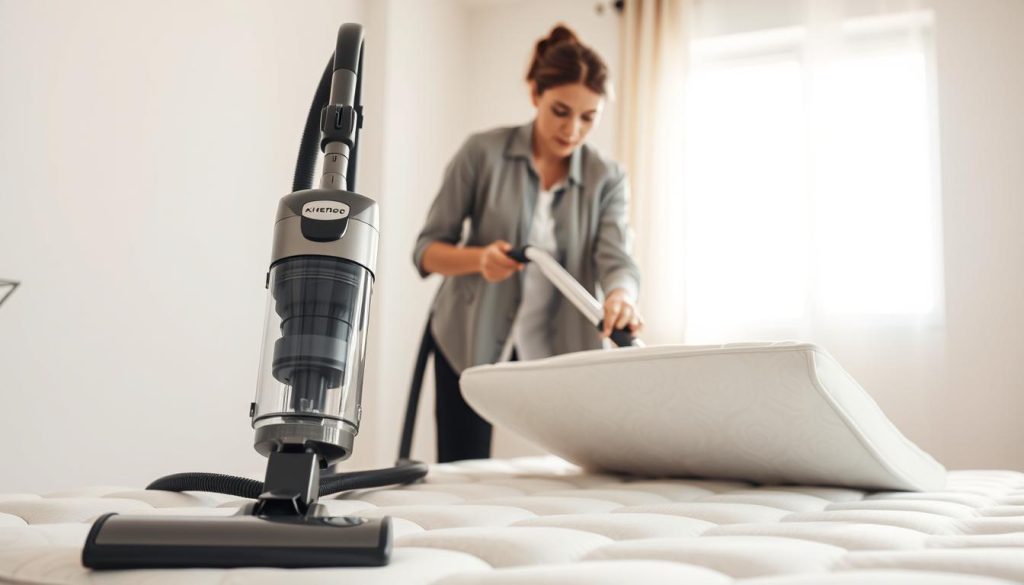
What vacuuming does well on the surface
Vacuuming lifts loose dust, crumbs, dead skin, pet hair and lint from the surface. It also removes some mites near the top layer.
However, it cannot reach the inner foam and deep seams where most dust, bacteria and allergens hide.
How high-temperature steam targets deeper problems
High-temperature steam penetrates fabric and can neutralise dust mites and bacteria by heat contact. This process also helps reduce odours that cling to fibres.
Time, cost and frequency expectations
Realistic planning matters in Singapore: vacuum sessions take about 15–30 minutes. A full steam session needs 2–4 hours including drying and airflow management.
- Vacuum: weekly or fortnightly; low ongoing cost.
- Steam: every 3–6 months or after illness; higher initial cost or occasional service fee.
Choosing a deep steam cleaner for mattress: features that make a difference
We prioritise tools that give powerful, consistent heat rather than flashy extras. That focus helps us pick a model that cleans effectively without soaking fabrics. Chemical-free cleaning with mains water works well when heat and output are reliable.
High-temperature output and steady flow
High-temperature steam and consistent steam generation are non-negotiable. We guide the nozzle slowly, keeping it within about 5 cm to ensure proper heat contact and penetration.
Attachments and reach
Look for narrow nozzles, brush heads and upholstery tools. These attachments target seams, tufts and piping where debris hides. Extensive accessories increase versatility across different fabric types.
Practical ownership: heat-up time and handling
Short heat-up time, adequate tank size and manageable weight encourage regular use in compact Singapore flats. Cord length and manoeuvrability matter more than brand claims.
| Feature | Why it matters | What we look for |
|---|---|---|
| Temperature & output | Determines kill rate and odour reduction | High temp, steady pressure |
| Attachments | Access to seams, tufts, edges | Narrow nozzle, brush, upholstery tool |
| Heat-up time & tank | Practicality for frequent use | < 5 min heat-up, decent tank size |
| Portability | Ease of handling in flats | Lightweight or handheld options |
When a HEPA-filter vacuum still matters: we always vacuum first to remove loose dust, and again after the mattress has dried to collect dislodged particles. Models with HEPA and UVC light exist as complementary tools; Kärcher-style steam systems remain a common reference for robust heat generation.
Preparation before we steam clean a mattress
A brief pre-check and airing step sets the stage for effective cleaning with minimal moisture risk. We strip all bedding and let mattress breath to reduce trapped humidity.
Strip and air: We remove protector, sheets and covers and let mattress breathe for about 15–20 minutes. This simple pause helps evaporation and makes the later passes more effective.
Inspect the surface: While airing, we look for stains, damp spots or damaged seams that need special care. We avoid direct heat on adhesives or delicate fabrics.
Vacuum slowly and methodically
We use a strong vacuum with an upholstery attachment and move slowly in long, overlapping passes. This lifts loose dust, skin cells and lint so cleaning works without turning particles into a paste.
Pay extra attention to seams, edges and the head area where build-up is highest. We then do a spot-check to identify any heat-sensitive materials and mark them to avoid direct steam later.
- Air the mattress for 15–20 minutes.
- Vacuum slowly, focus on seams and head area.
- Spot-check materials; avoid heat-sensitive spots.
- Open a window or run a fan to help drying afterwards.
For full step-by-step advice on how to steam clean mattress safely, see our steam clean mattress guide. These prep steps help us keep mattress clean and extend the life of bedding.
How to deep steam clean a mattress step by step
We start every session by setting up the machine and using mains water only. Chemical-free steam cleaning cuts residue risk and suits sleep surfaces in Singapore flats.
Fill and prepare
Fill the tank with clean water and select the lowest effective setting. Let the unit heat fully before you begin.
Work top to bottom, section by section
We divide the bed into manageable zones and work from head to toe. This avoids missed areas and repeated passes.
Technique and nozzle control
Move slowly to allow heat contact, especially on seams and edges. Keep the nozzle close (about 5 cm) and use short bursts rather than holding the tool in one spot.
Stains, odours and moisture control
Tackle stains with targeted passes and immediate blotting using a clean cloth. Avoid over-wetting and introduce any cleaning solution only after a patch test.
Finish smart: pause between sections to let heat and moisture dissipate. Stop if the fabric feels damp and allow full drying before remaking the bed. For a clear step-by-step checklist, see our cleaning guide.
Drying, airing and preventing moisture problems after steam cleaning
After a cleaning session, drying is the stage that decides whether the job helps or harms our bedding.
Expect the whole process to take about 2–4 hours in Singapore, though high humidity will extend this. Airflow is the deciding factor for successful drying.
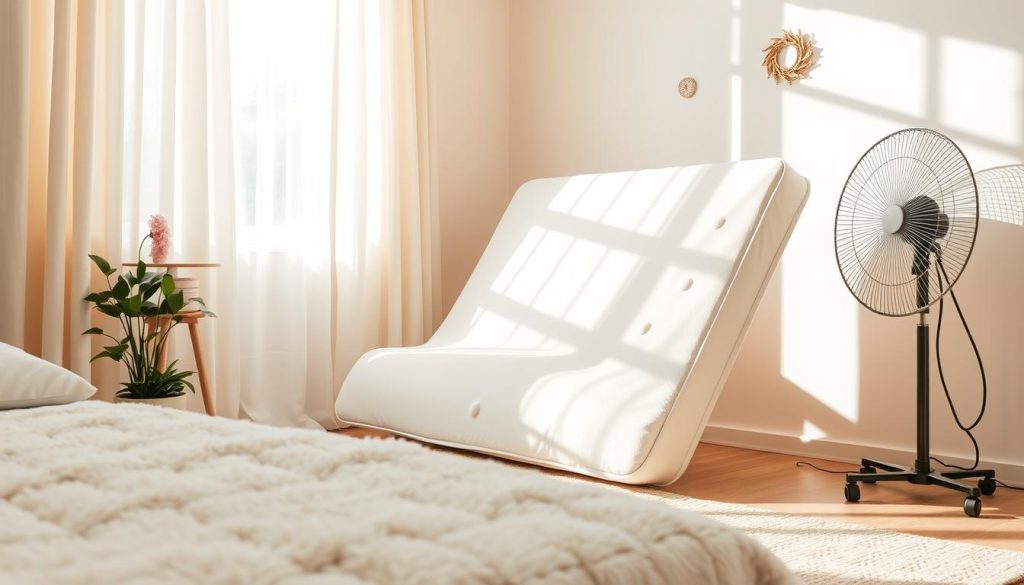
How long drying can take and how to speed it up safely
We speed up drying with a strong fan across the surface and a dehumidifier when available. Open windows help if outside humidity is lower than indoors.
Professional extraction tools shorten times by removing extra water after steaming. If you rent a service, ask about extraction to cut drying times safely.
What to do if the mattress feels damp and why over-wetting is risky
If the mattress feels cool or damp, pause and increase airflow. Gently blot visible wet spots with a clean cloth and avoid laying sheets until all zones are dry.
“Trapped moisture invites mould and musty odours that undo the benefit of good cleaning.”
| Check | Action | When to remake bed |
|---|---|---|
| Surface press test | Press several zones; feel for coolness | Only when fully dry to touch |
| Edges and seams | Inspect corners and piping carefully | No cool or damp spots remain |
| Persistent damp | Use dehumidifier and wait; consider professional extraction | After repeat checks are all dry |
Practical check: press in three or four places, especially seams. If any feel cool, allow more airing. This way we protect hygiene and avoid future mould problems.
How often we should steam clean (and when to call professional cleaners)
A simple schedule keeps bedding hygiene manageable across Singapore flats. Regular maintenance reduces workload and helps us keep mattress surfaces fresh between major sessions.
Routine timing
Vacuum every two weeks as ongoing upkeep. We recommend steam cleaning seasonally, or at least twice a year, to keep hygiene consistent.
Households with allergies
If asthma or eczema is present, increase frequency to about once every two months. This reduces dust mites and allergen load in the short term.
When to book professionals
Call cleaners after sickness, for set stains, stubborn odours or clear signs of mite activity. Professionals bring stronger equipment, better moisture control and more even coverage across the whole mattress.
Timing tips for Singapore
Schedule a session after prolonged high humidity, during haze when indoor dust rises, or before long trips so the bed is fresh on return. Consider booking when the AC is serviced as a practical way to save time.
“Treat steam cleaning as part of a wider bedroom plan: wash sheets hot, air the bed and stick to a routine.”
Conclusion
The right balance of preparation, heat and drying is what makes cleaning truly effective.
We recommend a simple routine: air the bed, vacuum slowly, work in controlled sections with steam, then dry thoroughly with good airflow. This approach helps limit dust, reduces bacteria and leaves the surface feeling fresher.
What good looks like: faded odours, fewer irritants and a mattress that is dry to the touch before you remake the bed.
Choose steam cleaners and settings that prioritise steady heat and moisture control to keep the process safe. Make it a regular habit and call a professional cleaner when stains, sickness or persistent issues make DIY impractical.

