
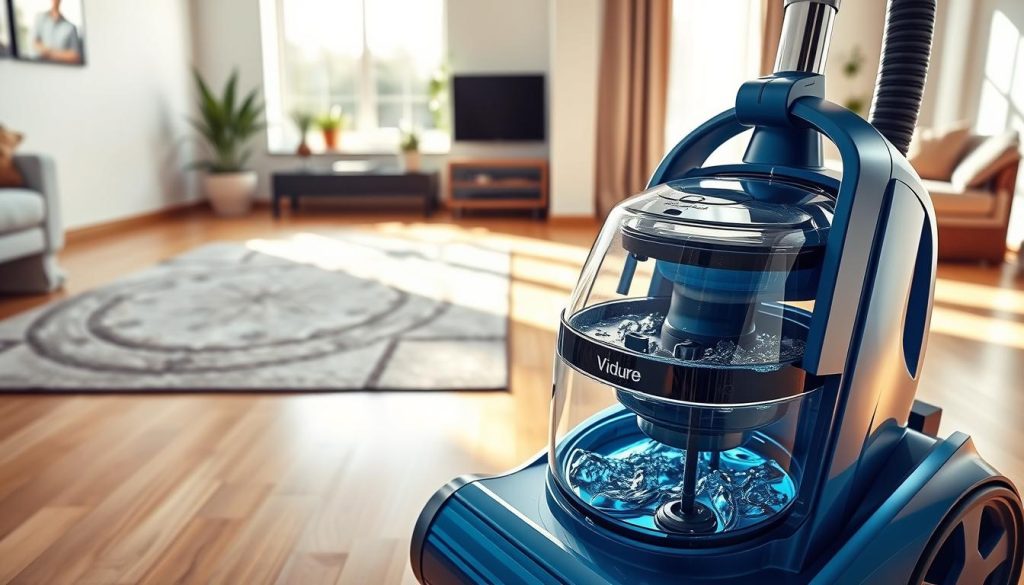
We test tools meant to tackle mattresses, sofas, pet beds and car seats in Singapore flats. Our focus is practical: how well a product picks up crumbs, hair and skin cells, and how it traps allergens for a cleaner home.
Daily use of a bed vacuum cleaner has been shown in studies to reduce surface allergens and bacteria, so we assess real pickup rather than marketing claims. Comfort, noise and manoeuvrability matter in compact living spaces.
Our roundup gives quick picks by need and budget, followed by in-depth breakdowns, a Singapore buying guide and upkeep tips. We judge each handheld vacuum on debris pickup, filtration and useful tools for seams and upholstery.
We do not treat any device as medical equipment. Instead, we highlight features such as HEPA filtration, UV-C and specialised brushes that may help allergy-conscious households.
Why handheld vacuums matter for dust mites and allergens in Singapore homes
In Singapore flats, small-format cleaners play a vital role in targeting mattresses and sofas where allergens build up. We focus on practical pickup: what a compact vacuum can remove and what needs repeat attention.
Humidity, soft furnishings and mattress build-up
High humidity plus frequent air-conditioning makes mattresses and upholstered headboards act like collectors for dust and skin flakes.
Soft fibrous surfaces trap pet hair and loose hair, and they hold fine debris even when floors look clean.
What suction, filtration and tools can realistically do
We can lift surface particles and near-surface fibres with slow, multiple passes. A single sweep rarely reaches deep layers.
Filters and good seals reduce what returns to the air, which matters in small flats concerned about allergens.
“Multiple passes and the right attachments make the difference between ‘looks clean’ and actually picked up dust.”
- Target seams, tufting and edges with a motorised brush or upholstery head.
- Use a crevice tool for piping and under-cushion gaps.
- Expect routine cleaning rather than a one-off sterilisation; consider a dedicated vacuum cleaner for mattresses.
We recommend treating mattress work as part of regular home cleaning to keep allergen levels manageable.
How we assessed each handheld vacuum cleaner for mattress and upholstery cleaning
We ran repeat trials on mattresses, sofas and cushions to mirror typical Singapore homes. Our focus was simple: does the tool lift debris and keep it sealed during emptying.
Suction power and real-world pickup
Manufacturers quote kPa figures, but we compare those claims with actual pickup on a debris-covered mattress. We prioritise measured removal over a single headline number.
Suction consistency matters: a unit with steady suction outperforms one with higher peak kPa that drops under load.
Filtration standards that matter
We check whether a hepa filter is genuine and whether seals stop leaks. True HEPA often traps 99.97% of airborne particles; vague labels do not.
Replaceable filters and accessible filter paths score higher for long-term performance.
Portability, build and noise
Ergonomics — grip angle, weight and head shape — affect how easily we reach under frames and into seams. A poor design forces repeat passes.
We note construction quality and latch durability against price. Noise is measured in real home settings to judge night-time suitability.
| Test area | Key metric | Why it matters |
|---|---|---|
| Mattress pickup | Debris removed (%) | Shows real-world suction performance |
| Filtration | HEPA authenticity & seals | Determines allergen containment |
| Usability | Weight, head design, attachments | Affects time and repeat passes |
Maintenance and long-term performance
We assess how easy it is to empty bins, wash or replace filters, and clear clogs. A blocked pathway reduces suction over time regardless of motor rating.
Quick recommendations for different needs and budgets
We cut through specs to give concise choices for mattress care, car cleaning and upholstery in typical Singapore flats.
Mattresses and allergy-focused cleaning
Jimmy BX5 Pro is our mattress-first product for routine bed care. It pairs HEPA filtration with a tapping brush that helps lift fibres. It suits households that prioritise sealed containment and repeated use, though the cord length matters for storage.
Affordable occasional deep cleans
JIGOO J300 gives solid features at a lower price. It works well for guest rooms and periodic deep work. Expect simpler attachments and trade-offs in long-term durability.
Cordless option for car, sofa and crevices
Dyson Car + Boat wins for portability. Its strong motor and crevice tool make short fast jobs easy. You sacrifice UV or heating functions that some mattress-focused models include.
Multi-use corded choice for pet beds and furniture
UZK Bed Vacuum Cleaner bridges mattress tech and general upholstery cleaning. It is ideal for pet areas but needs a planned approach to cord range.
Premium alternative for whole-home pickup and low noise
Tineco Pure One Station offers near whole-home performance and low noise at a premium price. It scores for debris pickup and handling, though corner cleaning can lag.
- Quick tip: choose a mattress-first unit for regular bed work, or pick a cordless model if mobility for the car and sofa is your priority.
- For a buying primer on allergen-aware cleaners, see our guide to selecting a suitable vacuum for allergies and whether to treat mattresses as a separate cleaning task in this mattress cleaning overview.
Best mattress vacuum overall: Jimmy BX5 Pro with UV-C and HEPA filtration
We value tools that agitate fibres and then trap what they lift. The Jimmy BX5 Pro combines a high-frequency tapping brush with a multi-stage hepa filter stack to focus on real mattress cleaning, not just surface polish.
Why we like the tapping brush and suction pairing
The rapid tapping action loosens embedded lint and skin flakes while steady suction pulls debris into the bin. This brush + suction combo helps where a single sweep often fails.
UV‑C and the “99.9% allergen elimination” claim
UV‑C is a useful supporting feature but not a standalone fix. We treat the 99.9% claim cautiously: consistent passes, good hepa containment and proper emptying are what remove pollutants and limit airborne allergens.
Portability, cord length and storage notes
The 5‑metre cord gives reach in typical Singapore flats and reduces the need for extension leads. The cord is non‑retractable, so plan storage space accordingly.
Who should consider this model
It suits households that perform regular mattress cleaning, those with allergy concerns and anyone wanting a dedicated bed tool instead of general-purpose machines. The cited price sits at a modest level, with a 30‑day return policy.
“For mattresses, agitation plus sealed filtration beats a single high-power pass every time.”
| Feature | Why it matters | Practical note |
|---|---|---|
| High‑frequency tapping brush | Loosens fibres for deeper pickup | Needs extra passes in deep seams |
| Multi‑stage filtration | Limits re‑release of particles | Includes replaceable HEPA filter |
| 5‑metre cord | Good reach for bedrooms | Non‑retractable — plan storage |
Best multi-use mattress vacuum: UZK Bed Vacuum Cleaner for furniture and pet areas
We tested the UZK as a flexible tool that bridges mattress work and everyday upholstery refreshes. It is lightweight and compact, aimed at homes that need one machine for beds, sofas and pet zones.
Key features and what they do
16kPa suction provides steady airflow for surface pickup. The unit also uses a UV‑C light and hot air to support surface-level refreshes.
HEPA filtration and a replaceable hepa filter help contain fine particles during emptying. The package includes aromatherapy tablets as a minor extra.
Where the UZK performs well
It is most useful on sofas, pet beds and general upholstery for routine cleaning and quick refreshes. For households with pet hair, the tool handles light shedding and surface fibres effectively.
Limitations to plan for
In our trials suction consistency varied; larger crumbs needed slower, overlapping passes. Expect to repeat strokes on seams and tufting to reach the same pickup as a higher-end model.
The unit is corded and the cable is non‑retractable, so plan outlet placement or use a quality extension for coverage around Singapore flats. Returns are available via Amazon within 30 days.
| Feature | Benefit | Practical note |
|---|---|---|
| 16kPa suction | Surface debris removal | Multiple passes often required |
| UV‑C & hot air | Surface refresh and moisture reduction | Not a replacement for deep cleaning |
| HEPA filtration | Improved containment | Replace filter per manual |
Who should consider it: budget-to-midrange shoppers wanting a dedicated bed and furniture tool, especially for pet areas, without paying premium cordless prices.
Best affordable mattress vacuum: JIGOO J300 with UV, HEPA, and hot air
Value buyers often need the essentials: agitation, filtration and simple controls — the JIGOO J300 aims at that gap. Sitting in the budget tier, it brings multi-stage hepa filtration, LED UV and hot air into a compact, corded vacuum cleaner that suits occasional bed work and guest rooms.
Cleaning modes explained
The unit offers sterilise, pat, dry and an ultrasonic-style setting. In practice, we use sterilise for a single pass and pat for fibre lifting.
Dry and ultrasonic-style modes aid moisture removal and surface loosening. With minimal indicators, stick to one or two modes you trust rather than toggling between all four.
Practical trade-offs
The wide edge design covers panels quickly but can miss tight seams and headboard gaps. The sparse attachments mean careful angling and repeated passes are often needed for crevices.
“If you want a cost-conscious mattress tool, focus on steady suction, a real HEPA filter and a routine of repeat passes.”
| Aspect | What to expect | Practical note |
|---|---|---|
| Price | varies | Good entry-level value for Singapore buyers |
| Filtration | Multi-stage with HEPA | Replace per manual for best performance |
| Design | Compact, corded, wide edge | Quick panel coverage; limited crevice access |
Best cordless handheld vacuum: Dyson Car + Boat for strong suction and versatility
In car interiors and sofa seams, agility plus strong airflow defines usefulness more than extra features. The Dyson Car + Boat targets that need with a high‑speed motor and solid ergonomics.
Performance is signalled by the advertised 110,000 rpm motor. In practice, this translates to quick lifting of grit, fibres and crumbs from fabric and seams.
Attachments and real-world use
It ships with a compact brush head and a practical crevice tool. The crevice tool excels at seat piping, bed-frame corners and sofa gaps.
What you won’t get
There is no UV‑C, no hot‑air drying and no mattress tapping modes. You buy flexibility and raw suction rather than specialist sterilise features.
Battery and suitability
The cordless run-time suits quick runs across a flat or a car clean. For whole‑home sessions you must manage the battery and recharging routine.
“For cars and tight corners, a portable unit with focused suction and the right crevice tool saves time and does the job cleanly.”
- Typical price: varies by retailer, with a two‑year warranty.
- Who we recommend it for: drivers, pet owners and anyone who wants one premium cordless handheld vacuum for mixed car and home use.
Tineco Pure One Station cordless vacuum cleaner as a premium alternative
For households that want premium day-to-day cleaning, the Tineco Pure One Station aims to combine strong pickup with low fuss. We view it as a cordless vacuum that suits frequent, fast sessions across sofas, beds and floors.
Allergy-friendly results and real pickup
In our tests it removed 99.8% of debris in one minute, a practical indicator for busy Singapore homes that need repeatable cleaning. That rate suggests it handles common allergens well during quick passes.
Low noise, light handling and convenience extras
The unit is pleasantly low in noise; conversation in another room was possible. It feels very lightweight and the front light helps spot fibres in dim corners.
Charging, controls and smart features
Assembly was easy and the freestanding charging station removes the need to drill. Trigger control gives controlled bursts and the battery supports short, frequent cleans. Wi‑Fi and AI voice add telemetry; we find them useful for some users but non‑essential for others.
Known drawbacks and price positioning
Corner cleaning and very small particles (for example, orzo) proved challenging. At this price point, you prioritise convenience and quiet performance over perfect edge pickup.
“A refined cordless tool for daily upkeep — fast debris pickup and low fuss, with a few corner limits to note.”
best dust mites vacuum handheld buying guide for Singapore shoppers
A clear buying framework helps shoppers cut through specs and pick a unit that suits Singapore living spaces.
We focus on practical trade-offs: steady pickup, reliable filters and easy handling for beds and sofas.
Choosing corded vs cordless: power, range, and run‑time
Corded models keep constant power for long mattress sessions. They suit longer jobs but need an outlet and planning.
Cordless models add reach and speed. They rely on the battery cycle and can be ideal for quick car or sofa work.
Suction power benchmarks
Ignore headline kPa alone. Look for steady suction under load, consistent airflow as the bin fills, and a head that seals to fabric.
Filtration and seals
True hepa and tight seals reduce re‑release of particles. Beware vague “HEPA‑style” claims; check replaceable hepa filter availability and service notes.
Brush design and tapping mechanisms
Tapping heads loosen fibres; motorised brush heads are better for pet hair on upholstery. Match the head to your mattress and sofa fabrics.
UV‑C and hot air: realistic value
These features can refresh surfaces, but suction, agitation and good filters drive the main results.
Attachments checklist
- Upholstery tool for panels and cushions.
- Motorised brush for fibres and pet hair.
- Crevice tool for seams and piping.
Weight, grip and manoeuvrability
Choose a light, well‑balanced handheld with a comfortable grip to reach platform beds, high frames and narrow bedside spaces.
“Prioritise steady pickup, true HEPA containment and the right attachments for regular mattress and upholstery care.”
Handheld vacuum vs stick vacuum for dust, debris, and pet hair
A compact tool or a stick model can be the difference between quick spot work and a whole-room clean. We compare the two formats so readers avoid buying the wrong tool for common Singapore tasks.
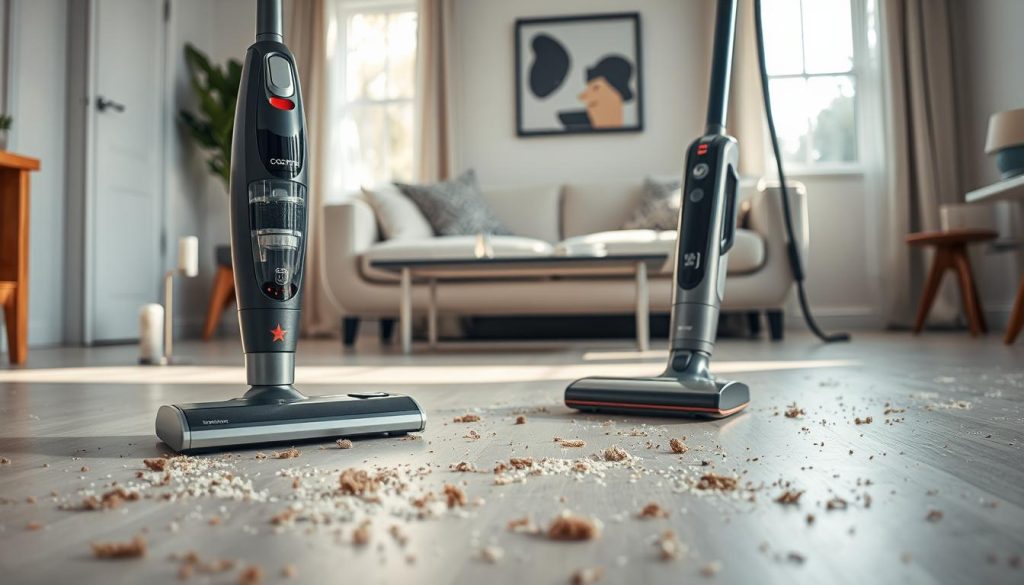
When a handheld wins: mattresses, upholstery and car seats
We favour a small unit for beds, sofas and car interiors. The lighter head and narrow nozzles reach seams and piping with precision.
For mattress work and upholstery, control matters more than wide coverage. The tool fits vertical surfaces and tight footwells without awkward manoeuvring.
When a cordless stick is better: floors and whole-home cleaning
A cordless stick offers speed across tiles and laminate. Its wide head and longer runtime handle larger debris fields and quick whole-room passes.
Use a stick model when you want fast service on common floor types and hair trails across living spaces.
Our ideal set-up: pairing a handheld with a main cleaner
We recommend a dedicated small unit for beds and a main stick vacuum for floors. This combo balances precision and coverage for most flats.
- Hand tool: spot work on upholstery and car seats.
- Stick: one-pass cleaning for floors and high-traffic zones.
- Decide by storage, cleaning frequency, and whether you prefer one multi-purpose device or two specialised tools.
“A paired approach saves time and gives better results than asking one device to do everything.”
Mattress and upholstery cleaning results to expect in real homes
A measured approach — slow passes and attention to edges — defines effective upholstery care. In practice, deep cleaning takes more than one fast sweep. We focus on technique as well as unit specs to show realistic outcomes in Singapore flats with soft furnishings and pets.
What “deep cleaning” looks like: multiple passes and edge work
Deep cleaning usually means slow movement, overlapping strokes and deliberate edge work along seams and piping.
We recommend multiple passes because textured fabrics trap fibres and fine debris. A single, quick run will often miss material hidden in tufting.
Allow extra time for perimeter and seam work; these areas need angled strokes and steady pressure to release embedded particles.
Handling small particles and corners, where some models struggle
Some cordless designs perform well overall but struggle with tiny particles (for example, orzo) and tight corners. Wide heads can bridge crevices, leaving lines of missed material.
Compensate by using a narrow crevice approach on seams, changing head angle and choosing the right tool for the job.
- Realistic before/after: expect more fine dust and debris in the bin than you might think from a quick visual check.
- Routine: short, frequent sessions for upkeep; plan longer monthly sessions for a full deep clean.
- Interpret results: steady suction over time matters more than a single strong pass.
For a deeper look at mattress cleaner performance and what to expect from specialised units, see our companion mattress cleaner review.
Where each device fits best: beds, sofas, carpets, and car interiors
We map device strengths to real surfaces so buyers pick tools that suit Singapore homes. This short guide links product types to common use-cases rather than marketing claims.
Upholstery and pet hair: choosing the right brush and suction profile
For upholstery, a motorised brush often lifts fibres and pet hair more effectively than a flat head. We favour heads that balance gentle agitation with steady suction so fabrics are treated without damage.
Tip: match brush speed to fabric — low for delicate, higher for dense weaves.
Crevices and seams: tools and ergonomics that make the difference
Seams and piping hide most debris. A narrow crevice tool or specialised tool reaches joins, bed-frame edges and car seat rails where crumbs collect.
Ergonomics matter: an angled handle and a light head let us keep steady pressure and follow seams without awkward wrist strain.
Floors and quick pick-ups: when a light cordless vacuum helps
For quick crumbs on floors, a light cordless vacuum is the fastest option. It handles tiles and small rug patches well and frees us from trailing cords.
We recommend a dedicated bed device for routine mattress care, a versatile handheld vacuum cleaner for upholstery and a broader stick or cordless model for whole-room work.
- Use-case mapping: match head type to surface — motorised brush for upholstery, crevice tool for seams, wide head for floors.
- Decide by storage and routine: single multipurpose units save space; specialised devices give better results on beds and sofas.
Maintenance that keeps suction power strong over time
A simple maintenance routine prevents loss of airflow and keeps cleaning cycles short and effective.
Empty and clean the bin to prevent airflow loss
Empty the bin after each session. Tap out compacted debris and rinse the container if it gets grimy.
Dry fully before reassembly to avoid odours and filter clogging.
Wash or replace filters as often as the manual recommends
Filters are the biggest safeguard for continued performance. Follow the manual.
In humid climates we wash or replace the filter frequently — sometimes after every other use.
Check for clogs in the nozzle and internal pathways
Nozzle throats and internal bends hide lint and larger crumbs. Remove blockages to restore steady suction.
Clean attachments to reduce battery drain and improve performance
Brush heads clogged with hair force the motor and battery to work harder. Remove hair and wash heads where possible.
Troubleshooting charging issues: contacts, adapters, and battery health
Wipe charging contacts, check the adapter and confirm the dock connection. If run-time drops sharply, the battery may be ageing.
“A quick post-clean checklist keeps the unit working like new and saves time in the long run.”
| Task | Frequency | Why it matters |
|---|---|---|
| Empty bin | After each use | Prevents airflow loss and keeps suction steady |
| Wash/replace filter | Per manual; often | Maintains filtration and overall performance |
| Clear clogs | Weekly or when suction drops | Restores airflow and prevents motor strain |
| Clean attachments | After heavy use | Reduces battery draw and improves run-time |
| Check charging | Monthly or if run-time falls | Ensures reliable power and highlights battery ageing |
Price, warranties, and returns: getting the best value in Singapore
A realistic budget view clarifies which product features are actually worth paying for in the long run. We discuss typical price tiers, what merits a higher spend and the warranty and returns we expect before recommending a purchase for Singapore homes.
Typical price tiers: budget mattress cleaners vs premium models
Expect budget mattress units such as the JIGOO J300, midrange corded tools like the Jimmy BX5 Pro, and premium cordless options such as the Dyson Car + Boat and Tineco Pure One Station at the higher end of the scale.
What justifies paying more: durability, accessories and steady suction
We value consistent real-world performance over flashy extras. A more expensive product can be worth the extra money when it is more durable, includes useful attachments and keeps steady suction during prolonged use.
Look for: spare filters, extra tools, clear service parts and a design that is easy to clean — these add genuine value and save time later.
Returns and warranty expectations: what we check before buying
Premium models often include longer warranty cover; for example, the Dyson offers a two‑year warranty. Marketplace listings commonly include 30‑day return windows on Amazon for some units.
We check for local support, straightforward return timelines and whether the vendor will handle bulky exchanges. These factors matter as much as the listed price when judging true value.
| Tier | What to expect |
|---|---|
| Budget | Basic filtration, fewer tools, suitable for occasional use |
| Midrange | Better build, spare filters, steady performance |
| Premium | Longer warranty, richer accessory pack, more durable |
“Match spend to frequency: frequent cleaners gain more from reliability and service than occasional users do.”
Who should consider a dedicated mattress vacuum cleaner
We define clear profiles for buyers so you can decide if a bed-focused tool is right for your flat in Singapore.

Allergy sufferers and households with pets
We advise allergy-conscious homes and anyone living with a pet to consider a mattress-focused unit. These devices target embedded fibres and remove dead skin cells that feed dust mites and other allergens.
Pet hair and dander concentrate on beds and sofas. A dedicated tool with sealed filtration and repeated passes helps limit re‑release during emptying.
People who eat in bed or deal with fine dust and lint build-up
Eating in bed raises crumbs, oils and lint. Regular use of a mattress cleaner reduces visible debris and keeps sheets fresher between washes.
For fine particles and quick surface refreshes, a routine of short sessions yields better results than occasional deep work.
When a general handheld vacuum is enough
If you mainly need spot-cleaning and already own a strong unit with an upholstery head and crevice tool, a handheld vacuum or a handheld vacuum cleaner may suffice.
Choose based on frequency of use, sensitivity to allergens and whether your problem is mattress-specific or whole-home cleaning. The best device is the one you will actually use consistently.
“Dedicated mattress tools support a cleaner sleep environment, but they work best alongside regular bedding washing and protectors.”
Conclusion
Wrapping up, focus on steady performance and simple upkeep when choosing a unit for beds and sofas. Prioritise consistent suction, a genuine HEPA filter and a design that feels easy to handle and store in Singapore flats.
Our quick recap: the top mattress option suits regular bed work, a multi‑use corded product bridges furniture needs, an affordable model gives solid value, a cordless choice helps cars and sofas, and a premium cleaner offers low noise for daily upkeep.
Features such as UV‑C and hot air are helpful extras but should not distract from core pickup and routine maintenance. Pick a product that matches your surfaces, set a realistic cleaning schedule, and keep filters and bins maintained.
Spend more only if you will use the unit often across multiple spaces; otherwise a modest price model can still improve daily upkeep. The goal is a cleaner, easier‑to‑maintain bed and sofa setup over time.

