

We review the most useful options for busy Singapore households and explain why a sofa cleaner machine can be a practical buy. Flats here see daily wear from snacks, children and pets, so quick turnaround and compact storage matter.
Our testing uses real upholstery messes — red wine, chocolate, grease and tracked-in dirt — and checks usability factors like attachments for crevices, portability and rinsing tanks and hoses. We compare portable spot models and spray-extraction products that spray, agitate lightly and extract dirty water.
We write for HDB and condo households, pet owners, families with spill emergencies and drivers who want one tool for car seats. When we say “best”, we mean strong suction, controllable spray, sensible tank design and easy handling in tight spaces.
On this page you can jump to categories like best overall, best for quick spot cleaning, best value and best for cars. We also spotlight the Singapore pick, TOYOMI VC 7336WD, and cover fabric safety, drying strategy and when to choose other approaches to protect your furniture.
Why a dedicated machine beats hand-cleaning for upholstery in Singapore homes
We find that routine mechanical care gives faster, deeper results than repeated hand-scrubbing. Regular upholstery attention loosens embedded grime, lifts stains and keeps fabrics lasting longer in high-traffic flats and HDB living rooms.
Regular care protects fabric and removes hidden soil
Routine upholstery cleaning is not just cosmetic. We use controlled wash-and-extract cycles that pull out trapped dirt, pet hair and harmful mites without aggressive rubbing.
What extraction reaches that a vacuum cannot
A standard vacuum is excellent for dry crumbs, but it leaves sticky residues and dissolved grime behind. Spray-extraction rinses fibres and then removes the dirty water, reducing the detergent left in the cloth.
Big wins for pet owners and busy households
In our testing, the clearest benefits are pet hair removal, mite reduction, quick recovery from drink spills and clearing everyday dirt from cushions.
- Dry first: always vacuum before wet cleaning.
- Spot baseline: soap and a damp cloth can help, but extraction removes more dirty water.
- Ventilation: good air flow or a fan speeds drying and prevents water marks.
How a spray-extraction sofa cleaner machine works
Spray-extraction systems use a short wash-and-suck cycle to remove embedded grime quickly. We spray a controlled mix of water and detergent into the fibres, allow a brief dwell, then use suction to pull the resulting dirty water into the recovery tank.
Why tank design matters. A removable water tank makes refills simple and accurate. A separate dirty water tank keeps used liquid isolated, cuts odours and makes disposal hygienic.
Look for clear fill lines, easy pop-in/out parts and a dirty water tank that rinses clean so residue does not cause smells or blockages. These features save time and keep performance steady.
Drying and preventing tide marks. In humid Singapore, ventilate and run a fan. If panels are connected, wet and extract them evenly so drying edges do not leave visible water marks.
Hot water can help loosen stuck-on food or aid tool rinsing, but always match temperature to fabric guidance and test on a hidden spot. Success looks like dirty water lifting into the tank and fabric feeling damp, not soaked, after a few passes.
Our testing approach and what matters most for real-life stains
Our testing targets everyday spills and wear so results match life in Singapore flats. We prioritise realistic scenarios over perfect swatches. That helps readers see how a product performs in real use and tight spaces.
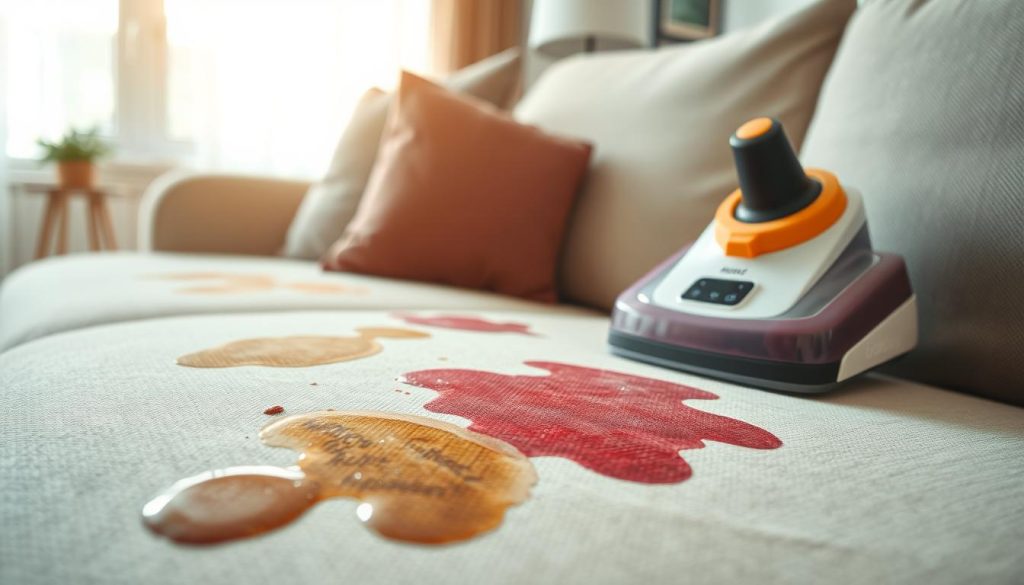
Fresh stains versus set-in marks
Acting fast matters. Fresh stains are far easier to lift; we record how quickly a unit removes a fresh mark and how much it improves older, set-in stains.
Which stains we prioritise
We test redness and tannin from red wine, sticky chocolate smears, greasy food and tracked-in dirt. Each stain needs a different dwell time and rinse approach.
Tight spaces, portability and upkeep
Tools and nozzle shape decide success in seams, stairs and cushion tufts. Consistent suction at odd angles is vital.
Portability matters in HDB flats: weight, a solid handle and tidy cord/hose storage make daily use easier. For maintenance, removable tanks and hose-rinse features reduce mould and smells.
| Criterion | Why it matters | What we check |
|---|---|---|
| Fresh stain removal | Quick fixes save time and prevent set-in marks | Red wine, chocolate, grease passes and suction power |
| Tight-space usability | Most home damage appears in seams and stairs | Nozzle shape, tool reach, suction at angles |
| Maintenance | Easy care keeps performance steady | Removable tanks, hose rinse, accessible parts |
Our top picks for the best sofa cleaner machines you can buy now
Our shortlist groups reliable powerhouses and compact models so you can match a unit to your flat and family habits.
Best overall for tough stains and strong suction
Shark StainStriker stands out for raw suction and steady spray control. It handles deep, set marks and wide cushion faces without constant repositioning.
Best for quick spot cleaning and small flats
Bissell Little Green wins for portability and fast setup. Its targeted head treats a spill without soaking an entire panel and fits tight storage spaces.
Best value portable cleaner for everyday messes
Value picks prioritise ease of filling and dumping. The best value units are the ones we actually use weekly because they are simple to rinse and maintain.
Best for car seats and family spill emergencies
For cars, we look for compact products with long hoses, splash control and good reach into crevices. This keeps child- and pet-related stains under control.
| Category | Key trait | Typical brand | Why it matters |
|---|---|---|---|
| Power-first | High suction, consistent spray | Shark StainStriker | Removes tough stains and lifts deep soil |
| Compact | Small footprint, fast setup | Bissell Little Green | Ideal for small flats and quick spots |
| Value | Easy fill/dump, low fuss | Various portable models | Encourages regular use and upkeep |
| Car & family | Portability, hose reach, splash control | Portable spot cleaners | Keeps car seats fresh after spills |
Next up: we spotlight a Singapore-relevant pick with specs and storage details to help local shoppers compare options.
Spotlight pick in Singapore: TOYOMI Spot and Stain Deep Cleaner VC 7336WD
For busy flats, the choice comes down to manageable refills, steady suction and tidy parts storage.
Key specs: 400W power with 10.5 kPa suction and a 1L removable water tank. The water tank is easy to lift for quick refills and simple rinsing after use.
The unit has a removable dirty water tank with an automatic suction stop when full. That prevents overflow and makes longer sessions less stressful.
Accessories and storage
Push-to-release parts speed up swaps between cushion faces and seams. Built-in hooks and a holder keep brush and suction heads together in small flats.
Best-use scenarios
We find it handy for upholstery refreshes, soft toys, car seats and rapid playtime clean-ups. At 3.4 kg with a carrying handle, it moves easily between living room and car.
Operating note: use a low-suds detergent to protect suction performance and ease dirty water disposal.
| Feature | Spec / Benefit | Why it matters |
|---|---|---|
| Power & suction | 400W, 10.5 kPa | Good balance for spot stain lift without heavy weight |
| Clean water tank | 1L removable water tank | Manageable refills and easy rinsing |
| Dirty water tank | Removable with auto-stop | Prevents overflow and reduces mess |
| Accessories & storage | Push-to-release parts, hooks & holder | Quick head swaps and neat storage in small homes |
Buying guide: choosing the right sofa cleaner machine for your needs
A small change in tank size or head design can halve the number of refill stops mid-clean. We focus on features that matter in compact Singapore flats: capacity, reach, noise and handling. Below we break down what to check so you match a unit to your routine.
Water tank capacity and refill frequency for whole-cushion cleaning
Choose a larger water tank if you plan full-cushion extraction sessions. Bigger tanks reduce interruptions but add weight. For spot work, a smaller tank and lighter unit win for storage and carrying.
Suction performance and brush design for lifting stains from fibres
Stronger suction removes more damp and speeds drying. A rotating or stiff brush helps agitate textured fabrics so stains lift before suction pulls out dirty water.
Attachments to prioritise
Prioritise a crevice tool for seams, a tough-stain head for concentrated scrubbing and a pet-focused nozzle if you have animals. These heads change how effective a pass will be.
Spray control and splash management
Look for adjustable spray and a narrow jet. Work methodically to avoid over-wetting nearby floors and walls.
Detergent compatibility and dilution tips
Use low-suds detergent. For greasy marks, a small amount of liquid soap in warm water helps, but always test on a hidden patch first.
Noise, storage footprint and carrying comfort
We recommend quieter models where shared walls matter, compact footprints for service yards and a comfortable handle for moving between rooms and the carpark.
| Feature | Practical effect | What to prioritise |
|---|---|---|
| Water capacity | Refill frequency and session length | Large tank for whole cushions; small for spot work |
| Suction & brush | Stain lift and drying speed | High suction + agitating brush for textured fabrics |
| Attachments | Reach into seams and pet hair removal | Crevice, tough-stain and pet heads |
| Noise & size | Neighbour impact and storage | Low dB models, compact design, good handle |
How we recommend using a sofa cleaner machine for best results
Simple preparation and steady passes are the single biggest factors in getting fabrics truly clean and fast to dry. We apply a short, repeatable routine so each cleaning session is effective and predictable.
Pre-clean prep
First, vacuum thoroughly to remove dust and loose grit. Pick up any food or solid debris so the tool does not have to liquefy chunks.
Step-by-step method
- Fill the clean tank with warm water and add detergent per the dosing instructions.
- Hold the nozzle about 10 cm from the fabric and spray evenly across a small area.
- Allow a short dwell time so the solution loosens grime, then suction slowly and steadily to lift dirty water.
Rinse passes and residue control
If detergent remains in the fibres, perform one or two rinse passes with plain water. Leftover detergent attracts dirt and dulls the surface.
“Wet connected panels fully to avoid hard drying edges; treat the whole connected area rather than a single patch.”
Drying and aftercare
Maximise air flow by separating cushions and pointing a fan across the upholstery. In humid Singapore, give ample drying time and avoid sitting until the fabric is dry.
When fully dry—ideally the next day—we vacuum again to lift fibres and remove any loosened residue. This final pass leaves the fabric looking and feeling refreshed.
Stain playbook: what we do for red wine, grease and other common spills
Spills happen fast; our stain playbook gives clear, step-by-step actions to limit damage and lift marks. We start with a simple, universal rule and then explain specific approaches for wine, grease and tricky non-water marks.
Red wine and fruit-coloured stains
Do this first: blot immediately with a clean white cloth — never rub.
We then use mineral water sparingly to dilute pigment, blot again, and sprinkle salt or cornflour to draw out liquid. After the absorbent works, we follow with a gentle extraction pass so residue does not set back into the fabric.
Grease, butter and oily marks
Grease is the hardest category. It clings to fibres and often resists a single water pass.
Success comes from the right chemistry, repeated agitation and thorough extraction. We apply a small amount of liquid soap or a low-suds product, agitate gently with a soft brush, then extract slowly until the fabric feels only slightly damp.
Water-soluble vs non-water-soluble stains
Most stains are water-soluble. We test with a white cloth and lukewarm water — if colour transfers, continue with water-based methods.
If the mark does not lift, we use a suitable stain remover on a colour-fast cloth, dab gently and then rinse with extraction to remove any detergent residue.
When to use a stain remover or steam cleaner
Pick a stain remover for stubborn non-water marks. Apply to a cloth first, not directly to the fabric.
For very small, set stains a steam cleaner detail nozzle can help. We test heat sensitivity on an inconspicuous spot before using steam.
Fabric safety checks and leather care
Always test an unseen patch and check upholstery cleaning codes (W, S, W-S, X) to avoid colour loss or texture change.
For leather, wipe with a damp cloth and use neutral soap if needed. We avoid strong grease-cutting detergents and prefer distilled or boiled water to reduce lime spotting.
“Blot first; test quickly; escalate only when a simple water pass fails.”
- Quick rule: blot immediately, never rub.
- Red wine: blot, mineral water, absorbent (salt), then extraction.
- Grease: liquid soap, gentle agitation, repeated extraction.
- Test: white cloth + lukewarm water → guides next steps.
Conclusion
To finish, focus on routine care and the features that reduce fuss and speed drying in small homes.
Choose the cleaner that fits your home habit — a compact unit for spot jobs, a larger extractor for whole-cushion refreshes, or a portable model for the car and quick trips between rooms.
Use the performance chain: controlled spray, a short dwell, slow suction passes and an optional rinse. This method lifts stains effectively and cuts detergent residue.
Make sure tanks and heads are easy to remove, with clear fill marks and crevice tools that reach seams and tufts.
Finally, empty and rinse tanks and wash tools after every use. We find this upkeep prevents smells and keeps suction strong. For step-by-step care, see our upholstery cleaning guide.
Note: product availability and accessories can change; consult our privacy policy and vendor listings for current details.

