

We set expectations up front: in Singapore homes we judge a great upholstery device by suction, HEPA filtration and everyday convenience.
Our top pick is the NNIO Mini Wonder Helper — it pairs HEPA filtration with 13 kPa suction, up to 20 minutes runtime and about 80 dB noise. We also flag the Airbot Supersonics Pro as the value option and the Samsung Bespoke Jet AI Ultra as the premium choice.
Why this matters: stitched seams, foam cores and lint-prone fabrics need different handling than floors. We weigh battery runtime, compact storage, apartment noise tolerance and overall price to performance for real routines.
This guide previews handhelds for spot work, cordless sticks for whole-home use, mattress specialists for allergens, and wet/dry machines for spills so you can shortlist quickly and check the right features before checkout.
Why a dedicated sofa and mattress vacuum matters in Singapore homes
In urban Singapore, soft furnishings hide a surprising amount of debris that routine floor work can miss. Fabrics, seams and tufted tops trap dust, pet hair and skin cells that reduce air quality and raise allergen levels in small living spaces.
Dust, allergens and air quality: what we’re targeting
Our testing notes that daily bed-vac use can lower allergens and bacteria, especially where thick curtains and fabric headboards are common. We focus on dust mite by-products, fine particles and crumbs that affect sensitive sleepers.
“Targeted cleaning of seams and tufts removes the particles that generic heads usually leave behind.”
Space-saving cleaning for flats, condos and HDB bedrooms
In compact homes we need tools that fit tight spaces and fast routines. A dedicated upholstery tool gives better contact and airflow on soft surfaces, so we make fewer passes and see more consistent results across sofas, beds and car seats.
- Why it helps: focused heads reach seams and edges better than wider floor attachments.
- Practical gains: less rework, quicker touch-ups and easier maintenance.
- Realistic note: technique (slow passes, seam-by-seam) and filter care remain essential.
For mattress care tips and allergy-focused routines, see our ultimate mattress cleaning guide.
How we shortlisted and compared vacuums for upholstery and beds
We paired spec sheets with hands‑on trials to see which numbers matter in real use. Technical ratings like kPa or Pa are a start, but the head design, seal on fabric and airflow path decide real results.
How we read suction power
Manufacturers list kPa or Pa (NNIO 13 kPa, Airbot 25,000 Pa, Dreame 22,000 Pa, Xiaomi 25 kPa). We treat these figures as a guide to motor power, not a final verdict.
Real‑world pick‑up means lifting embedded lint from weaves and clearing seam channels without scattering debris.
Filtration that matters
We prioritise HEPA or high‑grade multi‑stage filtration so fine dust is trapped, not blown back. A good filter access and clear replacement guidance make long‑term use easier.
Ease of use and tools
Weight, balance and wrist angle shape comfort when working above floor. Attachments decide outcomes: a motorised mini brush for fabric, a crevice nozzle for piping, and anti‑tangle heads for hair‑heavy homes.
- What we checked: bin emptying, filter access, durability and whether the design encourages routine maintenance.
- Why attachments matter: correct nozzles turn power into actual dirt and debris removal.
Our quick recommendations: best overall, best value and best premium
For fast buying decisions, we summarise three machines that cover everyday needs, value and premium convenience. Each pick includes who it suits and a brief note on what to watch when using it in Singapore flats and condos.
NNIO Mini Wonder Helper — great all-round match
Why we like it: 13 kPa suction, HEPA filtration and compact handling make this a sensible mid-priced choice. It runs up to 20 minutes and stays near 80 dB in use.
Who it suits: small homes that need a lightweight handheld for frequent touch-ups.
What to watch: limited runtime under boost modes.
Airbot Supersonics Pro — value with strong specs
Why we like it: Up to 25,000 Pa suction power, laser dust detection and E13 HEPA (99.97%). The 0.8 L washable cup and 1.2 kg handheld form help frequent cleaning feel less annoying.
Who it suits: buyers wanting high suction and reusable filtration on a sensible price point.
What to watch: boost modes will shorten time between charges; charge time is ~4 hours.
Samsung Bespoke Jet AI Ultra — premium convenience
Why we like it: AI Cleaning Mode 2.0, up to 400 W power, dual batteries for up to 160 minutes and an All‑in‑One Clean Station with sealed bags and 99.99% multi-layer filtration.
Who it suits: households that prioritise hands-off storage, hygienic emptying and long sessions.
What to watch: higher purchase price and dock footprint in tight storage spaces.
“We give buy-now clarity so you can match a model to your cleaning routine without overthinking specs.”
Best vacuum cleaner for sofa and mattress: top picks by cleaning style
We group picks by how people actually use them at home: quick touch-ups, deep weekly cleans, spill recovery and allergy-focused routines.
Fast spot-cleaning: compact handheld models
Why choose handheld: they are grab-and-go, store easily in tight flats and give precise control over seams and cushions.
Examples we tested include NNIO and Airbot handhelds. These models shine at quick crumb removal and pet hair touch-ups.
Deep weekly resets: cordless stick machines
Why sticks work: longer runtime, stronger suction power and versatile attachments let you switch from floors to upholstery.
Brands such as Xiaomi, Samsung and Dyson offer stick options that balance suction, runtime and accessory fit for apartment routines.
Homes that need vacuum-and-wash: wet/dry options
Wet/dry units like Dreame H15 Pro Heat, Philips AquaTrio and Tineco add washing capability for spills near seating areas.
Note: most are optimised for hard floors first; use them on fabric cautiously and follow manufacturer guidance.
Allergy-first routines: sealed systems and advanced filtration
What allergy-first means: sealed airflow, HEPA-grade filtration and hygienic emptying (bags or auto-empty docks).
Good Housekeeping and our tests show sealed systems reduce dust re‑release and help control allergens and dander.
- Space: choose compact handhelds if storage is tight.
- Runtime: cordless options suit longer weekly sessions.
- Filtration: pick sealed HEPA systems for allergy control.
- Attachments: motorised mini heads and crevice nozzles matter for seams and pet hair.
“Match the tool to your routine — daily grabs, weekly resets, spills or allergy control — and you’ll clean smarter, not harder.”
Best handheld vacuum picks for sofa cushions, seams and car seats
Handheld models excel where large heads struggle: tight seams, button tufts and car crevices demand precision and the right tools. We list compact picks that balance weight, run time and useful attachments.
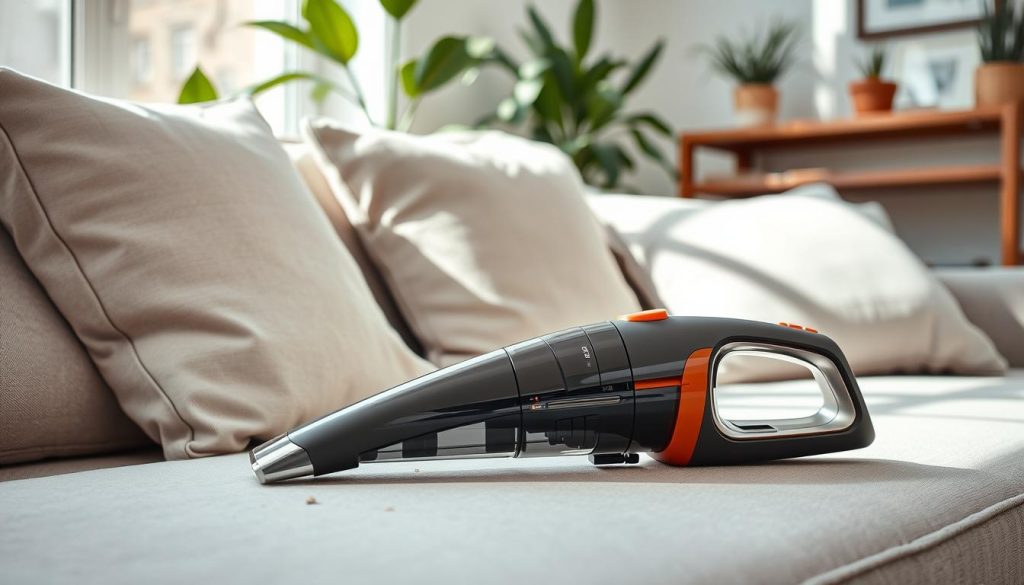
Shark WandVac System WS632
3-in-1 design: wand, handheld and mini head modes give versatile above-floor use. The format suits cushions, shelves and quick spill recovery.
Eufy Clean HomeVac H20
Car-friendly crossover: ~0.65 kg weight, 40 AW and up to 30 minutes runtime make this a good pick for quick sessions. Multiple attachments support crevices and light upholstery work.
Black+Decker 16V MAX Dustbuster
Practical bin size: a 600 ml cup handles everyday crumbs, dust and small debris without constant emptying. Simple design keeps use straightforward.
Bosch GAS 18V-1
Battery-ecosystem value: robust build and rotational airflow suit heavy-duty jobs. Consider this only if you already own compatible batteries to reduce total cost and charging fuss.
Buying guidance: choose a soft brush for delicate fabric, a crevice nozzle for seams and a mini motorised head for hair pickup to improve cleaning results.
Best cordless stick vacuums for upholstery plus whole-home performance
In small Singapore homes, a cordless stick often replaces multiple machines. It handles floors, then converts to a hand tool for cushions and edges. This saves storage and speeds routine cleaning.
Xiaomi Vacuum Cleaner G20: 25 kPa suction, up to 60 minutes runtime and a 600 ml bin. Multiple attachments make furniture work simple and efficient.
Morries 2-in-1 Cordless Stick: a filtration-forward mid-range model with 5-level filtration and HEPA. Good for dust control and allergy-aware households.
Dyson V12s Detect Slim Submarine: laser dust detection, anti-tangle brush and whole-machine filtration to 0.3 microns at 99.99%. The technology helps spot fine dust and reduce hair wrap.
Samsung Bespoke Jet AI Ultra: AI sensing plus a Clean Station for auto-emptying. Dual batteries extend total time to suit longer sessions without interrupting performance.
“A good stick must convert comfortably to handheld use, have a trigger that suits repeated passes and a head that articulates for tight furniture angles.”
- Usability lens: trigger comfort, handheld balance and head articulation decide whether repeated sofa sessions feel realistic.
- Practical tip: check filter access, bin emptying and dock storage before buying to ensure long-term value.
Best vacuums for pet hair on sofas, throws and mattresses
Pet hair clings to upholstery in ways that demand specific heads and clear airflow paths. We explain practical steps that reduce wrap and lift embedded fur without overworking fabric.
Anti‑tangle brushrolls and pet tools
What helps: comb-style strips, blade de‑tanglers and wider bristle spacing reduce hair wrap. Dyson’s anti‑tangle approach and Good Housekeeping’s notes on self‑cleaning rolls prove the point.
Strong pick‑up on fabric
Embedded fur needs slow, overlapping passes with a mini motorised head. Surface fluff often responds to a fast sweep plus moderate suction.
Containing dander and allergens
Sealed systems with HEPA filters trap dander during emptying. Samsung warns of occasional wrap; routine filter care and hygienic bin emptying cut dust clouds.
- Tip: prioritise the right brush, then airflow and bin capacity.
- Expect: manual clearing during heavy shedding seasons.
| Issue | Tool/Feature | Expected Result |
|---|---|---|
| Embedded fur | Mini motorised head + slow passes | Deeper pickup, less scattering |
| Long hair wrap | Anti‑tangle brushroll / blade de‑tangler | Reduced manual clearing |
| Dander and fine dust | HEPA + sealed airflow | Lower allergens on emptying |
“Even the most capable machines need regular brush clearing during peak shedding.”
Mattress-focused vacuums for allergens, dust mites and deeper extraction
Mattress care targets a different set of particles than sofa spot work. We test tools that lift embedded dust and mite debris from quilting and seams while keeping fabrics safe.
Jimmy BX5 Pro
What it does: a high‑frequency tapping brush, UV‑C and multi‑stage filtration with HEPA (≥99.97%).
It has a 5 m cord and two modes, which helps reach around bed frames. The wider base gives deep coverage, though narrow crevices need extra passes.
JIGOO J300
What it does: budget-minded UV + HEPA + hot-air combo. It is an affordable pick with strong lint and dust pickup.
Modes can feel indistinct in practice, but it is a sensible option at a lower price for basic allergen reduction.
Dyson Car + Boat Handheld
What it does: cordless, very powerful suction and ergonomic access to tight channels and edges.
It has no UV or heating features, but its handheld strength makes it ideal for perimeter seams and deep crevice work.
UZK Bed Vacuum
What it does: claims 16 kPa, UV‑C, HEPA and hot air plus aromatherapy tablets for multi‑use cleaning of beds and furniture.
Portability is good, but testers report inconsistent suction performance compared with peers.
- Technique: strip bedding, vacuum slowly in overlapping lines.
- Then follow perimeter seams and tuft lines where dust and allergens collect.
| Model | Key features | Strength | Caveat |
|---|---|---|---|
| Jimmy BX5 Pro | HF tapping brush, UV‑C, HEPA, 5 m cord | Deep extraction; strong filtration | Wide base needs multiple passes at edges |
| JIGOO J300 | UV, HEPA, hot air | Affordable; good lint pickup | Modes hard to distinguish |
| Dyson Car + Boat | Cordless handheld, high suction | Excellent crevice control | No UV/heating functions |
| UZK Bed Vacuum | 16 kPa, UV‑C, HEPA, hot air | Portable; multi‑use | Variable performance reported |
“Slow, overlapping passes and focused seam work reduce allergen load far more than quick sweeps.”
Wet and dry vacuum options for homes that want vacuuming plus washing
Wet/dry machines merge suction and water cleaning to handle spills near seating and dining areas. They cut the step of using separate mop and vacuum tools, which saves time and storage in compact flats.
Dreame H15 Pro Heat suits heavy messes. It offers ~22,000 Pa suction power, hot‑water cleaning up to ~85°C and a self‑clean base that reaches 100°C. The 180° lie‑flat head and 0 mm edge coverage help reach close to skirting lines.
Philips AquaTrio XW9465/11
This 3‑in‑1 system uses 4,000 rpm brushes, LED lights and an auto‑clean dock. It weighs 4.2 kg and runs up to 45–90 minutes with optional battery, covering large areas efficiently.
Tineco Floor One S9 Artist Steam
Tineco pairs high‑temperature steam (boiler 140°C; ≥99°C to floor) with 22 kPa suction. Its anti‑tangle design and self‑drying air at 85°C suit hair‑prone homes that want sanitising performance.
Dibea HC26
Dibea is the more accessible option. It uses electrolysed water (claims 99.9% bacteria reduction), has dual 700 ml tanks and runs about 42 minutes in auto mode. The light weight makes storage simple.
Our take: these models excel on hard floors and spill control. If upholstery cleaning is a primary need, treat wet/dry machines as a secondary tool rather than a dedicated upholstery solution.
| Model | Key features | Runtime | Notes |
|---|---|---|---|
| Dreame H15 Pro Heat | 22,000 Pa, hot‑water ~85°C, self‑clean base | Up to 70 mins | Edge coverage, heavy‑mess focus |
| Philips AquaTrio XW9465/11 | 3‑in‑1, 4,000 rpm brushes, LED, auto‑dock | 45–90 mins (with battery option) | Versatile; large area cleaning |
| Tineco Floor One S9 Artist Steam | Steam ≥99°C, 22 kPa, anti‑tangle | Up to 75 mins | Sanitising steam + hair‑friendly design |
| Dibea HC26 | 16 kPa, electrolysed water, dual tanks | Approx. 42 mins | Lightweight; budget hygiene option |
“Use wet/dry models when spill control and floor sanitising are priority; treat upholstery work as a secondary task.”
Key features we prioritise for cleaning fabric, foam and stitched seams
Cleaning upholstery well comes down to how a machine moves air, handles fibres and manages captured dust.
We start with suction power and motor stability. Sustained suction and steady airflow lift debris from quilting and seams without repeated passes. In practice, that means a motor that holds power under load rather than short bursts of peak performance.
Sensible brush and nozzle choices
We favour soft dusting brushes for delicate textiles, motorised mini heads for embedded hair and narrow crevice tools for edge channels. Proper brush design reduces fibre damage while improving lift.
Filtration and filter handling
Filtration matters. HEPA or multi‑stage systems trap fine particles and cut re‑release. Washable filters like Airbot’s ease upkeep while sealed bag docks such as Samsung’s reduce exposure at emptying. Dyson-style whole‑machine filtration to 0.3 microns helps allergy-aware households.
Dustbin capacity, emptying and noise
Bin size affects how often we stop to empty during a deep clean. For allergy control we often prefer sealed-bag docks despite running costs. Noise and comfort are key in flats; NNIO’s ~80 dB is a useful reference when late‑night use is likely.
“Sustained airflow, gentle agitation and hygienic emptying together deliver reliable cleaning without harming fabric.”
| Feature | Why it matters | Practical note |
|---|---|---|
| Sustained suction | Lifts deep debris from seams | Look for stable kPa/Pa ratings under load |
| Brush/nozzle design | Protects fibres; improves pickup | Choose soft brush + mini motor head |
| Filtration | Reduces re‑release of fine dust | HEPA or multi‑stage; washable vs replaceable |
| Emptying method | Controls dust exposure | Sealed bags or one‑touch docks suit allergy use |
For tips on refreshing upholstery without replacement, see our short guide at restore a sofa’s appearance.
Performance on different surfaces: sofa types and mattress constructions
Different upholstery and mattress builds demand tailored cleaning approaches. We map how material, weave and structure change the way power and heads perform. That prevents trial‑and‑error and helps preserve fabric while improving pickup.
Fabric sofas: lint, crumbs and pet hair on textured upholstery
Textured fabrics trap lint, crumbs and hair in the weave. Use a motorised mini brush and take slow, overlapping passes to lift embedded hair and debris.
Tip: run moderate suction and repeat seam lines rather than rushing across large panels.
Leather and faux leather: gentle brushing and controlled suction
Coated surfaces respond poorly to aggressive rollers. We favour soft dusting brushes and lower suction to avoid scuffing.
Gentle strokes and a light hand keep surfaces smooth while removing dust and dirt.
Mattress tops: quilting, tufting and edge channels
Quilting and tufts create channels that hold dust and fine debris. Wider heads may need multiple passes over edges and seams to reach deep crevices.
Ergonomic handhelds such as Dyson models make seam work easier. Choose the right head and switch power levels as you move between flat areas and tight channels.
“Matching head design and power to the surface matters as much as the machine itself.”
- Practical rule: lower power to avoid sticking; increase it for seams.
- Buying cue: pick machines with multiple heads and variable modes to suit different types of furniture and mattress areas.
Corded vs cordless for sofa and mattress cleaning
The right choice between mains and battery tools depends on how we actually use them across rooms and beds.
When corded makes sense: continuous power and longer sessions
Why choose mains: corded models give steady power for slow, thorough passes that extract dust from quilting and seams. Continuous power removes battery anxiety mid-clean, which helps during long mattress or deep upholstery sessions.
Practical note: the Jimmy BX5 Pro uses a 5 m cord but lacks a retractable reel, so outlet placement and cord management matter in tighter Singapore bedrooms.
When cordless wins: quick touch-ups, stairs and tight storage
Why choose battery: cordless units are ideal for fast post-meal cleaning, stairs and moving between rooms. They store compactly and save time when we need a quick surface pass.
Runtime expectations: NNIO ≈20 mins, Airbot ≈45 mins (Eco), Samsung with dual batteries ≈160 mins total. Use Boost for targeted spots and Eco/Auto for longer sessions.
“If storage and speed matter most, go cordless; if deep routine cleaning is the priority, consider corded or a hybrid approach.”
What to expect at different price points in Singapore
At different price bands you get markedly different levels of convenience, filtration and tooling.
We give a Singapore-first pricing framework so you can match price to real benefits. Entry models deliver practical suction, a basic crevice attachment and acceptable dust handling for routine cleaning.
Budget picks: practical suction and essential attachments
What you get: workable suction, one mini motor head or crevice nozzle, and a simple washable filter. These models suit quick touch‑ups and crumbs.
Mid-range upgrades: better filtration, longer runtime and smarter tools
What improves: steadier suction power, HEPA or multi-stage filtration, longer runtime and more useful attachments for upholstery work. Expect higher-tier models to hit this sweet spot.
Premium features: AI modes, self-empty docks and advanced sensors
What premium buys: AI power adjustment, sealed auto‑empty docks and sensors such as laser dust detection. These features reduce friction and can increase cleaning frequency if you need the convenience.
“Pay premium only if features cut friction in daily life — auto‑empty and long runtime must translate into more frequent use.”
| Tier | Typical features | Local model examples |
|---|---|---|
| Entry | Basic suction, crevice tool, washable filter | NNIO Mini, Airbot handheld |
| Mid-range | Stronger suction, HEPA filter, longer runtime, more attachments | Dyson V12s, Dreame H15 Pro Heat, Philips AquaTrio |
| Premium | AI modes, self‑empty docks, dual batteries, sealed bags | Samsung Bespoke Jet AI Ultra |
Maintenance, storage and longevity: keeping suction power consistent
Simple daily habits protect suction power and reduce the chance of clogs or motor strain. Regular upkeep keeps the equipment running well and extends its useful life.
Filter care: cleaning schedules and when to replace
Tap out disposable dust, wash washable filters like Airbot’s cups, and follow manufacturer drying times before reuse.
Replace non‑washable filters on the schedule suggested by the maker to keep airflow steady and avoid lost suction.
Brush upkeep: clearing hair and preventing clogs
Cut and remove hair from motorised mini heads frequently. A blunt pair of scissors and steady pulls prevent damage to the brush shaft.
Check mini heads after heavy jobs; designs reduce tangles but do not remove the need to clear debris by hand.
Battery and charging habits for cordless models
We advise moderate charging: avoid deep discharges when possible and do not leave batteries at full charge for prolonged periods.
Use boost sparingly for short bursts; plan sessions around rated run time to protect battery health and overall performance.
Small‑home storage: telescopic tubes, docks and compact footprints
Measure a dock or freestanding unit before purchase to ensure it fits behind a door or in a cupboard. Telescopic tubes reduce storage footprint.
For allergy control, consider sealed‑bag systems such as Samsung Clean Station and self‑cleaning bases from Dreame/Philips/Tineco that lower dust exposure at emptying.
| Task | Frequency | Practical tip |
|---|---|---|
| Empty bin | After heavy sessions | Empty outdoors or near a bin chute |
| Wash filter | Monthly (washable) / replace per schedule | Dry fully before reuse |
| Clear brush head | Weekly or after pet hair sessions | Use scissors, remove tangles gently |
| Battery care | After every few uses | Top up charge; avoid constant boost mode |
“Routine care is the single easiest way to keep suction and cleaning performance consistent over time.”
For mattress cleaning routines and a practical guide to wet‑dry use, see our note on how to clean a used mattress.
Where to buy in Singapore and what we check before checkout
Buying locally means balancing price with after‑sales support, parts availability and trustworthy listings. We advise a quick verification routine before placing an order so you protect your purchase and avoid surprises when testing on sofas, mattresses or a car interior.

Official stores vs marketplaces: Samsung, Dyson, Philips and authorised retailers
We recommend official channels for premium models. Samsung, Dyson and Philips sell via brand stores and authorised retailers in Singapore, which makes warranty claims, dock support and battery issues simpler to resolve.
Lazada/Shopee listings: verifying model numbers, warranty and bundled attachments
Marketplaces can offer attractive price points, but always confirm the exact model number and what attachments are included. Check that mini motorised heads, crevice tools and spare filters are listed in the product details.
Return windows and warranty coverage: reducing buyer risk
Prioritise sellers with clear return windows and written warranty terms. Keep original packaging until you’ve tested performance at home. Our quick checkout sanity check: voltage/plug compatibility, spare filter availability and whether replacement parts ship to Singapore fast.
“The best deal still protects people if a unit underperforms in their home.”
Conclusion
Our final note: prioritise tools that make regular upkeep painless rather than chasing peak numbers. Choose a handheld for quick touch-ups, a cordless stick for whole‑home flexibility, and a mattress‑focused unit when allergens drive your routine.
We recommend the NNIO Mini Wonder Helper (13 kPa, HEPA, ~20 mins) for nimble daily use, the Airbot Supersonics Pro (25,000 Pa, laser, E13 HEPA) when stronger suction and detection matter, and the Samsung Bespoke Jet AI Ultra when sealed emptying, AI modes and long runtime are priorities.
Key drivers: the right attachment, steady suction and reliable filtration remove fine dust and particles while protecting fabrics. Pet owners should favour anti‑tangle heads, strong pickup on fabric and regular brush care to avoid hair choking airflow.
Next steps: measure storage, set a cleaning cadence, then shortlist models that match your real needs and daily routine rather than specs alone.

