

We introduce practical steps for mattress stain removal that protect comfort, hygiene and the life of your bed. Accidents happen at home, so fast, low-moisture action matters.
Our guide sets clear expectations: a mattress is not machine-washable, so we use targeted spot cleaning and careful air-drying. This process avoids soaking inner layers and reduces the risk of damp smells in humid Singapore.
We explain what to do immediately, the safety rules and the at‑home toolkit. Then we show the best way to treat common marks — from blood to urine, sweat yellowing and vomit — using simple ingredients like baking soda, vinegar and dilute hydrogen peroxide.
We treat cleaning as both stain control and odour control, so your sleep surface feels genuinely fresh again. If damage or repeated soiling persists, we note when mattresses should be replaced to keep your bed safe and comfortable.
What to do immediately when stains happen on a mattress
When an accident soaks into the sleep surface, our first move is quick and calm. We focus on limiting spread, reducing moisture and setting up a safe follow-up clean. Acting fast saves effort and lowers the chance of long‑term damage.
Blot, don’t rub
Use a dry, undyed cloth and press gently. We blot repeatedly; we never scrub. Rubbing pushes liquids deeper into fibres and foam.
Work from the outside in
Start at the edge of the affected area and move toward the centre. This contains the spill and prevents a larger ring on light fabrics.
Skip heat at every stage
Avoid hot water, hairdryers on warm and heated bedding. Heat sets many marks, especially blood, and makes later treatment harder.
Act fast and triage the bed
Check how far the spill has travelled and whether seams or piping are wet. Strip bedding, place clean towels beneath your hands and keep changing to dry sections to absorb liquid.
| Immediate step | Why it matters | Quick tip |
|---|---|---|
| Blot with dry cloth | Removes excess liquid without pushing it deeper | Replace cloth as it soaks |
| Edge-to-centre action | Contains spread and protects the surrounding surface | Work patiently from outside in |
| Avoid heat | Prevents setting of proteins and dyes | Air-dry or use cool fan if needed |
Safety and fabric-care rules before we start mattress cleaning
We start with clear fabric-care rules to protect fibres and health. Keep mattress cleaning practical: avoid over-wetting and act with simple, safe steps in mind. Small choices now prevent bigger problems later.
Never soak the mattress. Trapped moisture encourages mould and mildew, and can hide bacteria deep in foam. Work slowly and aim for damp, not wet.
Use undyed cloths and clear, gentle solutions to avoid colour transfer. Apply cleaners to the cloth or mist lightly, then dab. Do not unzip or remove covers that are not designed to come off; you may void warranties or damage structure.
For urine, blood or vomit wear rubber gloves and consider a face mask. Bag and discard disposables, then wash hands. Avoid bleach and strong solvents — they damage fibres and can leave harmful residues.
Keep ventilation running while you work to speed drying and reduce the risk of bacterial growth in Singapore’s humid climate.
Our at-home mattress stain removal toolkit
A simple, well-chosen toolkit makes tackling spills at home realistic and safe. Below we list the essentials we keep ready so we can act fast without specialist gear.
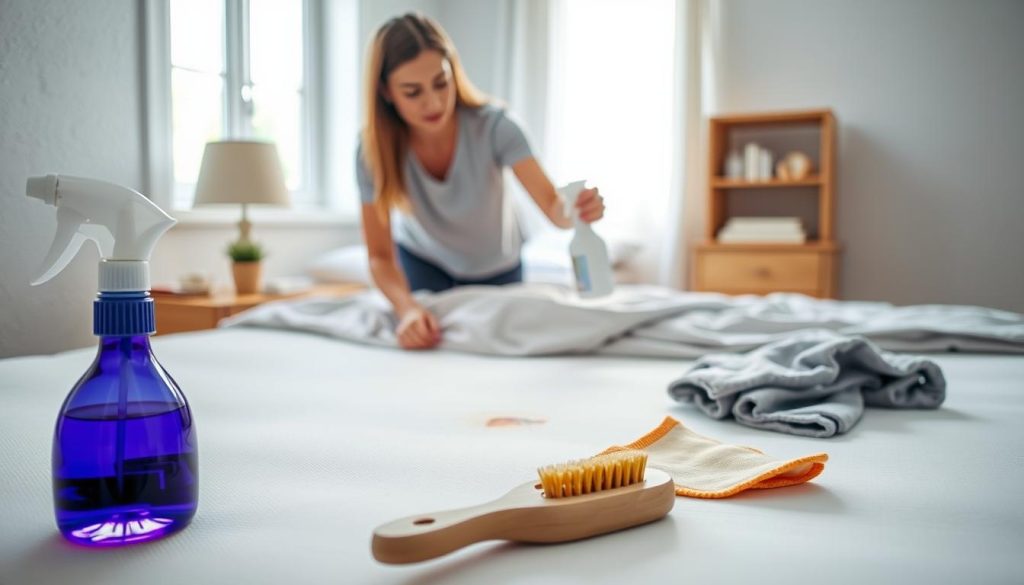
- Baking soda — odour and moisture absorption; a light deodorising finisher after blotting.
- Distilled white vinegar — mix 50/50 with cool water for urine; lifts marks and reduces smells.
- 3% hydrogen peroxide — antibacterial and bleaching; only spot-treat and patch-test first.
- Clear liquid dish detergent — tiny amount to break up grease, dirt and oily residue.
- Salt — absorbs moisture and acts as a mild abrasive for set-in grime.
- Clean, undyed cloths and a vacuum with an upholstery attachment.
We use baking soda to draw out odour and dampness on the surface. After we blot, we sprinkle and leave it for several minutes before vacuuming. This helps lift loosened residue and dust without soaking the core.
For fresh urine marks we apply the vinegar solution sparingly from a spray bottle, blot, then follow with baking soda once mostly damp. For stubborn protein or coloured marks we test hydrogen peroxide on a hidden patch; remember it can bleach coloured fabrics.
Important mixing rule: never mix hydrogen peroxide with vinegar. We make small batches of any cleaning solution so it remains effective and controlled. For detailed step-by-step guidance, see our practical how-to here: home toolkit guide.
Mattress stain removal method we use for most spills and accidents
We follow a single, repeatable process that works for most everyday accidents on the bed. It gives us a safe baseline before we use specialised techniques for specific marks.
Prep the bed: strip bedding and check the surface
Strip all bedding and inspect the sleep surface in good light. Identify whether the mark is localised or spread over a wider area.
How we apply a cleaning solution
We blot first, then dab a mild solution lightly onto the affected spot. We never soak the area; excess moisture risks trapped damp and lingering odour.
Keep the core damp, not wet. Work from the edge towards the centre to contain spread and protect surrounding fabric.
Deodorise with baking soda, then vacuum once fully dry
When the mark starts to lift, we cover the area with baking soda to draw out residual moisture and neutralise smells. Leave the powder for several hours or overnight.
| Step | Why it matters | When to do it |
|---|---|---|
| Strip bedding and inspect | Find spread and avoid treating the wrong area | Immediately, in daylight if possible |
| Dab with solution, keep damp | Removes residue without soaking the core | After blotting excess liquid |
| Baking soda + air-dry | Absorbs moisture and odour before vacuuming | Several hours or overnight; vacuum only when dry |
Air-dry properly before making the bed
We keep windows open where possible and run a fan to speed drying. In Singapore’s humidity, give the area extra time and only remake the bed once the surface is completely dry to the touch.
Same-day plan: If an accident happens at night, we prioritise quick blotting and ventilation, then complete deodorising and vacuuming the next day to ensure a clean mattress.
How we remove blood stains using cold water and low-moisture techniques
When blood reaches the fabric, quick, low‑moisture action keeps it from becoming permanent. Blood is protein‑based and binds to fibres as it dries, so our first step is to slow that process.
Why cold water matters
Cold water prevents proteins in blood from coagulating and setting. We dampen a clean, undyed cloth with cold water and blot gently. Change to a fresh section of cloth often until transfer reduces markedly.
Hydrogen peroxide for deeper marks
If the mark remains, we test a small hidden area first. We use 3% hydrogen peroxide sparingly on a cloth and dab the spot. Allow a short dwell of 10–30 minutes in some methods, then blot and air‑dry.
Avoid any form of heat — hot water or warm air will set blood and make the mark stubborn. Monitor colour change closely; peroxide can bleach coloured ticking and is safest on white fabric.
| Action | Why | Timing |
|---|---|---|
| Cold‑water blotting | Stops proteins binding and lifts fresh blood | Immediate, repeat until transfer slows |
| Peroxide spot test | Breaks down deeper residue but may bleach | Apply small amount, wait 10–30 minutes, then blot |
| Air‑dry fully | Prevents trapped damp and odour | Only remake bed when completely dry |
If a faint mark persists, we repeat controlled spot treatments rather than soaking the area in one go. This keeps drying time short and protects the core from damage.
How we clean urine stains from a mattress (kids, adults and pets)
Time changes how deep a spill goes, so our cleaning changes with it to protect fabric and comfort. We separate fresh incidents from set-in marks because the treatment, and the time needed, differs.
Fresh urine: vinegar, cold water and baking soda
First, we blot repeatedly to remove excess liquid. Next we dab a 50/50 mix of vinegar and cold water in small amounts, working from the outside in.
Once dampness reduces, we cover the area with baking soda for 8–10 hours or overnight. Vacuum only when fully dry to lift residue and neutralise odour.
Set-in urine: a peroxide-based solution
For older, persistent patches we prepare a fresh mix: 8 fl oz 3% hydrogen peroxide + 3 tbsp baking soda + 2 drops clear dish detergent. Use immediately, dab gently and air-dry.
Pets and enzyme cleaners
Pet accidents often need an enzyme cleaner because biological compounds can remain after simple vinegar treatments. We choose enzyme formulas made for pets to fully neutralise smells.
Prevent repeat problems
To protect your bed long-term we recommend a breathable waterproof protector. It saves time and keeps the surface hygienic for families with children or pets.
How we tackle sweat and yellow mattress stains without soaking the fibres
Yellowing on sleep surfaces often grows slowly, fed by nightly sweat and body oils rather than a single incident. We treat these marks as an accumulation problem and use low‑moisture maintenance to keep the top layer fresh.
Baking soda dwell time and gentle vacuuming
We sprinkle a fine layer of baking soda across the affected area and leave it for several hours or a full day in a well‑ventilated room. The powder absorbs odours, draws out residual moisture and loosens surface dust.
When dry, we vacuum with a soft brush attachment. This lifts the powder and surface debris without rough abrasion. For memory foam or similar cores, we avoid heavy brushing that compresses the foam.
Sunlight and airflow: brightening and freshening
Where practical, we expose the top side to indirect sunlight and strong airflow for a few hours. Natural UV and ventilation subtly brighten fibres and reduce lingering smell.
When to avoid liquid cleaners on older yellow marks
We do not apply liquid cleaners to established yellowing. For older patches, forcing moisture in can trap damp and encourage mould in Singapore’s humid climate.
Foam models hold heat and sweat longer, so regular dry freshening works better than aggressive wet treatments. For ongoing care, small, periodic freshening keeps the surface comfortable and reduces the need for stronger interventions.
For an effective DIY option we recommend this concentrated guide: effective DIY cleaner.
How we clean vomit from a mattress safely and thoroughly
For vomit on the bed we follow a calm, step-by-step routine that keeps the surface hygienic and limits moisture.
Personal safety first. We wear gloves (and a mask if needed) because vomit can carry bacteria. Waste and used cloths go into a sealed bag for hygienic disposal.
Remove solids, then blot liquid
Use a paper plate or dustpan to lift solids gently. Next, blot excess liquid with an undyed cloth so we do not push particles deeper into the area.
Baking soda and vinegar fizz to lift residue
We sprinkle a thin layer of baking soda over the affected area to absorb moisture and odour. Then we spray a light mist of vinegar to create a fizzing action that helps loosen residue.
Decontaminate and dry fully before sleep
Leave the mix for several hours or overnight only if the item will dry completely afterwards. Vacuum the powder away once fully dry and ventilate aggressively. Clean nearby surfaces and the bed frame to stop smells spreading.
| Step | Why it matters | Timing |
|---|---|---|
| Remove solids | Prevents grinding matter into the fibres | Immediate |
| Blot liquid | Limits spread and moisture penetration | First few minutes |
| Apply baking soda + vinegar | Absorbs moisture, lifts residue and neutralises odour | Leave for hours or overnight if drying is possible |
| Vacuum & decontaminate | Removes residue and sanitises the area | Only after fully dry; before night use |
Drying and deodorising: preventing bacteria, damp smells and repeat stains
“A timed deodorising routine stops smells from settling and reduces the chance of microbes taking hold.”
We finish every clean with patient drying and a planned deodorise. This protects the core from trapped moisture and helps keep the bed ready for good sleep.
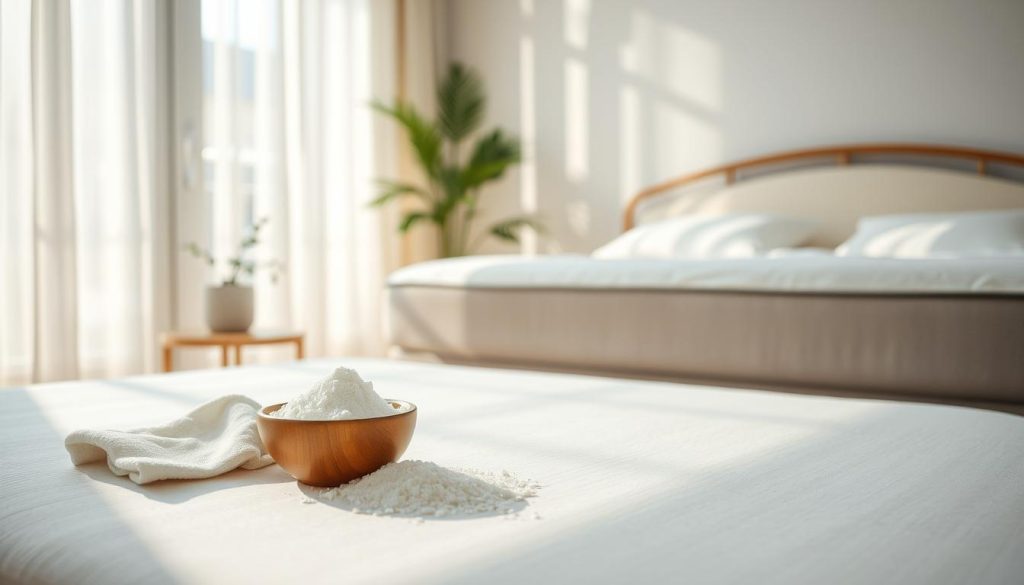
How long to leave baking soda on for best results
For light freshening we leave baking soda for several hours. For stronger urine odours we allow 8–10 hours or more, ideally over a full day.
Never follow with wet steps that reintroduce moisture. Let the powder absorb, then check it is completely dry before proceeding.
Vacuuming tips to remove loosened dirt and residue
Use slow passes with an upholstery or soft-brush attachment. Focus on seams where dust and dirt collect after treatment.
Run the vacuum only when the powder is dry to avoid clumping and to lift residue effectively.
Why a fully dry surface matters in Singapore’s humidity
Being “dry to the touch” can be misleading here. Humid air traps hidden moisture, which lets bacteria and damp smells return.
We recommend open windows, a fan and keeping bedding off until the area is fully dry to protect long-term comfort and reduce future stains.
When stain removal isn’t enough: signs it’s time to replace the mattress
There comes a point where further treatments only hide deeper problems. We aim to spot that line early so we protect health and sleep quality in humid Singapore.
Mould or mildew: why it’s often unsafe to keep cleaning
If mould or mildew is visible or the surface smells musty despite drying, cleaning is unlikely to fully help. Deep growth can remain inside and release spores that affect people with allergens or asthma.
If we’re cleaning every month, it may be past its best
Needing to treat marks month after month usually signals broader decline rather than isolated accidents. At that stage we often advise to remove mattress issues by replacing the unit rather than keep treating the top layer.
Support and comfort cues
Sagging, dips and new aches on waking show failing support. Even a clean sleep surface cannot restore lost structure or return original comfort.
Hygiene cues and material notes
Persistent odour, recurring dampness and trapped allergens mean the core holds contamination. Foam types, especially memory foam, trap heat and moisture and can be hard to refresh.
Prevention: invest in a breathable waterproof protector for your next bed. When deep mould appears or frequent cleaning continues, we recommend you remove mattress faults by replacing it. A good protector reduces future problems and extends useful life.
Conclusion
In closing, clear, low‑moisture actions keep the sleep surface healthy and ready for rest. Our mattress stain removal guide stresses acting fast, blotting not rubbing, and never using heat that can set marks.
Keep the process simple: use baking soda, white vinegar and careful peroxide spot work as directed. Follow the do no harm rules — avoid soaking, work from the edge in and vacuum only when fully dry.
Drying and deodorising are essential in Singapore’s humidity; they stop odours and bacteria returning. If marks recur, odour persists or support fails, replacing the mattress is the sensible next step.
Practical tips: keep a small kit ready, fit a breathable protector and treat spills quickly to protect sleep quality and the bed’s lifespan.

