

We introduce what we mean when shoppers in Singapore say they want a water-based option for rugs and soft floors. Many are actually comparing wet-dry floor washers and multi-surface vacuums that handle spills and dry debris in one cycle.
We set clear expectations. These machines freshen fibres, lift embedded debris and clear spot spills. A dedicated dry vacuum or a pro extraction still wins on deep stain removal.
Our guide summarises top picks at a glance and explains how we group each product by strength — pet hair, stain-busting, manoeuvrability, budget and odour control. We also cover Dyson Submarine-style options where relevant.
Key tests focus on suction, brush design, tank layout, filtration, runtime and upkeep in humid Singapore homes. We favour practical ownership measures such as refill frequency, docking, storage footprint and consumable costs.
Who needs a water vacuum cleaner for carpet in Singapore homes
In dense city living, carpets and rugs pick up many different types of mess that need a flexible approach.
Common messes are very familiar to us: entryway grit, snack crumbs, drink splashes, muddy paw marks and fine dust that nests in rug edges. These combine loose debris and small amounts of liquid in quick succession.
Typical carpet moments
We buy an all-in-one device to handle quick clean-ups after a spill, to freshen rugs between deep cleans, and to lift visible dirt from high-traffic lanes.
Why wet-dry matters with children and pets
Families with young children or pets need more frequent cleaning cycles. The ability to pick up solids and liquids in one pass helps stop sticky residues and lingering odours.
- Mixed floors — saves time switching tools between hard floors and rugs.
- Busy households — ideal if messes are frequent or allergies are a concern.
- Not necessary — if you mainly have hard floors, few rugs, or already own a strong dry option, you may not need one.
What a wet dry water vacuum actually does on carpet
On carpets and rugs, a wet-dry device acts as a quick spot cleaner and surface refresher rather than a deep extractor. We use them where mixed messes appear: crumbs, drink spills and light soil that needs both suction and moisture.
How it lifts grime while keeping clean and dirty water apart
These machines combine suction with a damp brush or roller to loosen fibres and lift debris into a dirty reservoir. The dual-tank layout stores clean water separately from dirty water so we never reapply used rinse.
Tank shape and capacity change refill and emptying frequency. A well-designed water tank makes short jobs faster and hygiene simpler.
When a dry option is still the better tool
A dry vacuum wins at deep dry dust removal, high-pile rugs, large pet-hair loads and quiet, late-night jobs. Strong motors in wet-dry units give more suction but add weight and noise, so we keep a dry vacuum for weekly, thorough cleaning and upholstery care.
- Use wet dry for routine spills and quick rug refreshes.
- Keep a dry vacuum for heavy dust, tall pile and delicate, quiet tasks.
What to look out for when choosing a wet dry vacuum
Choosing the right unit hinges on a few tangible specs that affect everyday use in small flats. We focus on items that save time and reduce fuss during routine cleans.
Tank capacity and water tank design
Tank size governs how much floor you can cover before refilling. A large clean tank and a roomy dirty tank cut interruptions on medium rugs and hallways.
Design matters too: easy-fill inlets and removable tanks speed up refills and emptying.
Suction, brush design and embedded dust
Good suction needs a brush that agitates fibres. We check how brush heads reach pile and edges to lift embedded dust efficiently.
Filtration and HEPA
HEPA filters help households with sensitivities. We weigh filter performance against maintenance cost and replacement frequency.
Noise, weight and manoeuvrability
Stronger power often adds weight and noise. For HDB flats, a lighter, nimble design that still gives decent suction is preferable.
Cordless vs corded, battery life and charge time
Cordless models score on convenience, but verify battery life and charge time to match your typical session. Corded units give steady power without runtime limits.
Cleaning modes, sensors and self‑cleaning features
Auto modes and self‑cleaning docks reduce upkeep. Sensors that adjust flow or prompt emptying save mistakes and extend part life.
- Checklist: confirm clean and dirty tank sizes, actual runtime, filter type, brush reach, and useful cleaning modes.
- For maintenance tips, see our guide on how to clean without a shampooer.
How we shortlist the best models for carpet and rugs
We start by putting each unit through realistic tasks in small Singapore flats. Our first focus is whether a model picks up dry dirt — crumbs, grit and hair — before any wet pass.
Performance on spills versus dry dirt
We test cleaning cycles that begin with a dry sweep and then a damp pass. A good model must not smear spills across fibres. We note how brush speed, suction and fluid flow interact during a single run.
Edge cleaning and reaching under furniture
Edges and skirting lines collect the most debris. We assess dual- and triple-edge systems and lie-flat heads that slide under sofas and cabinets. Manoeuvrability and turning radius matter in tight layouts.
Hygiene: odours, antimicrobial rollers, and dirty water handling
Containment of dirty water is crucial. We check seal quality, splash-free emptying and whether tanks are easy to rinse. Antimicrobial rollers and self-clean cycles reduce odour build-up in humid climates.
| Test focus | What we measure | Why it matters |
|---|---|---|
| Edge cleaning | Dual/triple-edge reach, brush overlap | Removes trapped debris along skirting and rug borders |
| Under-furniture reach | Lie-flat head, clearance, turning radius | Accesses hidden dust where allergies form |
| Hygiene | Dirty water seals, antimicrobial parts, self-clean | Prevents smells and bacterial growth between uses |
We balance spec-sheet numbers with real-world ergonomics — weight, handle feel and how much maintenance takes your time.
For deeper methods on renewals and shampoo routines, see our carpet shampooers comparison.
Best water vacuum cleaner for carpet: our overall top pick
We prioritise real‑world performance that fits Singapore flats rather than flashy spec sheets. The model below strikes a practical balance between daily spill response and routine dry cleaning across mixed floors.
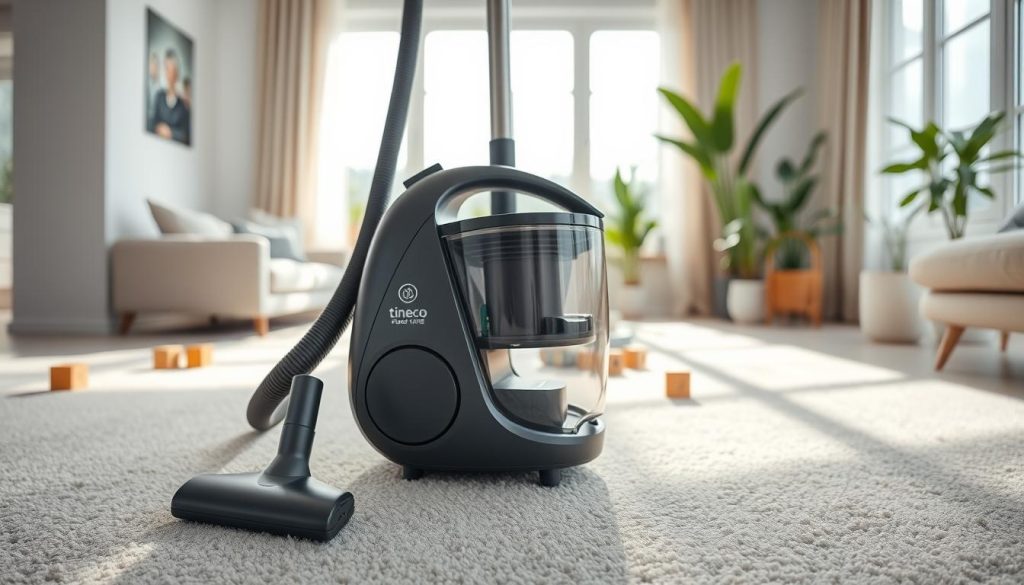
Tineco Floor One Switch S7 Stretch
Why it works: the Tineco floor one design pairs a large clean water tank and roomy dirty tank so we spend less time refilling and emptying during a full living‑room pass.
Suction reaches up to 22,000 Pa, which helps lift debris from low‑pile rugs and handle damp spills without repeated passes. The dual‑tank layout (1,000ml clean, 720ml dirty) keeps clean water separate from dirty water for hygienic results.
Smart iLoop sensors adjust suction and water flow automatically as they detect wet or dry messes. A dual‑side brush roller reaches close to skirting lines (~0.5cm) to pick up edge dust where mats collect dirt.
Runtime is practical: up to 50 minutes as a floor washer and about 70 minutes as a vacuum. The unit swaps to a stick format with attachments, so we use it for stairs, upholstery and tight corners without a second device.
- Clean tank: 1,000ml
- Dirty tank: 720ml
- Suction: up to 22,000 Pa
- Runtime: up to 50 minutes (washer), up to 70 minutes (vacuum)
Best for pet hair and everyday carpet refresh
A reliable everyday unit turns shed hair and small spills into a five‑minute job rather than an ordeal. We use the Bissell CrossWave X7 Cordless Pet Pro when quick rug refreshes and spot jobs are the priority.
Bissell CrossWave X7 Cordless Pet Pro
Why it fits pawrents: this cordless model pairs targeted suction (up to 20,000 Pa) with a rotating brush to lift pet hair and trapped debris. A Turbo Pet mode boosts agitation for tracked‑in dirt, food smears and small accidents.
Tank sizes and practical impact
The clean tank holds 820ml and the dirty tank 420ml. In practice that means a few rooms or several spot cleans before refills. We find the split tanks keep clean water separate and make emptying hygienic.
Runtime and real‑world use
Expect up to 30 minutes on a full battery — fine for quick sessions, not whole‑home deep cleans. Use standard mode for routine hair pickup; switch to Turbo Pet for stubborn messes.
| Spec | Value | What it means |
|---|---|---|
| Suction | Up to 20,000 Pa | Strong pull to lift hair and crumbs from low piles |
| Clean / Dirty tank | 820ml / 420ml | Good for multiple spots; less frequent refills |
| Runtime | Up to 30 minutes | Ideal for quick jobs and daily maintenance |
Best premium option for stubborn stains and oily spills
When greasy spills and stubborn stains are a regular concern, a heat-assisted model changes how we tackle oily messes. We look at whether hot water treatment truly shifts the cleaning outcome in kitchen-adjacent zones.
Dreame H15 Pro Heat
Hot water mopping at 85°C helps break down grease and lift sticky residues that cold passes leave behind. We use hot water precisely where oil and set-in grime need thermal action rather than on light dust or quick refresh jobs.
Power and capacity for longer sessions
The unit pairs 22,000 Pa suction with an 800ml clean tank and a 650ml dirty tank. That tank capacity reduces refill stops during medium sessions and keeps clean water separate from dirty water for hygienic results.
Runtime varies. Expect up to 70 minutes in normal mode, but hot water mode shortens that to roughly 25 minutes. Plan hot passes for problem spots and use normal mode for broader floor runs.
Handling considerations and floor compatibility
At about 6kg the H15 Pro Heat feels solid. Flat‑folding design and auto-traction wheels ease manoeuvring and offset heft, but tight flats may still find it tiring to lift or carry.
Be cautious on delicate timber and some hard floors. Test a small patch, use gentler settings where possible, and avoid prolonged hot-water contact on sensitive finishes.
| Feature | Value | Practical impact |
|---|---|---|
| Hot water temperature | 85°C | Breaks down grease and loosens sticky residues |
| Suction | 22,000 Pa | Strong pull to lift grime from low piles and rugs |
| Tank (clean / dirty) | 800ml / 650ml | Fewer interruptions; separate reservoirs for hygiene |
| Runtime | Up to 70 min (normal), ~25 min (hot) | Plan hot cycles for targeted stain work |
| Weight & design | 6kg, flat-folding, traction wheels | Stable handling; may be heavy for long sessions in tight spaces |
Most manoeuvrable for tight spaces and fast clean-ups
Tight layouts demand a nimble machine that turns quick jobs into low-effort routines. In small Singapore flats we prioritise agility, turning radius and under‑sofa reach over bulky tanks.
Narwal S20 Pro
The Narwal S20 Pro is a light, pro‑style model that feels easy to move at ~4.27kg. It pairs 20,000 Pa suction with a split reservoir (clean 790ml, dirty 720ml) so you cover several rooms before emptying.
AI Dirt Sense and five cleaning modes
AI Dirt Sense raises suction and flow when sensors detect heavier dirt. That means we don’t have to switch modes manually during a mess.
- Eco — low power for quiet, everyday upkeep.
- Standard — balanced cleaning for mixed floors and light debris.
- Boost — deeper pull at entryways and dining spots.
- Spot — focused passes for visible stains.
- Auto — sensor-led changes between the above modes.
Runtime and charging
Expect up to 60 minutes runtime on a single charge, which usually covers small‑to‑mid flats in one session. Recharge time is about 3.5 hours, and the cordless design makes room‑to‑room moves painless.
Triple‑sided edge cleaning and a flat‑folding layout help with skirting lines and tight corners. For those who value quick, frequent touch‑ups, the S20 Pro’s features make daily upkeep simpler.
Best budget wet dry option for smaller flats
When space and budget matter, a compact wet dry option can make daily upkeep far easier. We look at the Simplus Cordless Wet-Dry Vacuum Cleaner as a sensible, low-cost choice for small Singapore flats.
Simplus Cordless model at a glance
Key specs: 21,000 Pa suction, a 500ml clean tank and a 550ml dirty tank. The unit weighs about 4.4kg and gives up to 50 minutes runtime on a full charge. Charge time is roughly 4.5 hours.
How it performs in daily use
With 21,000 Pa of suction it handles crumbs, dust and light debris on rugs and hard floors well. We use the 6.5cm brush head and the ~180° flat-folding joint to reach corners and under low furniture.
Practical trade-offs
The 500ml clean water capacity keeps the design compact but means more frequent refills during longer sessions. The 550ml dirty water tank helps keep soils separate and makes emptying straightforward.
Where it fits best
Who should consider it: those wanting a cordless, easy-to-store option for routine cleaning, quick spills and reset cleans across mixed floors. It’s not a substitute for deep extraction, but it is a cost-conscious, effective daily tool.
| Spec | Value | Why it matters |
|---|---|---|
| Suction | 21,000 Pa | Good pull on low pile and high-traffic areas |
| Clean / Dirty tank | 500ml / 550ml | Compact footprint; frequent but simple refills |
| Runtime | Up to 50 minutes | Sufficient for evening touch-ups in small flats |
Best odour-control design for hygiene-focused homes
Humidity speeds up odour formation in tanks and rollers, so features that fight smells matter more than raw suction in Singapore flats.
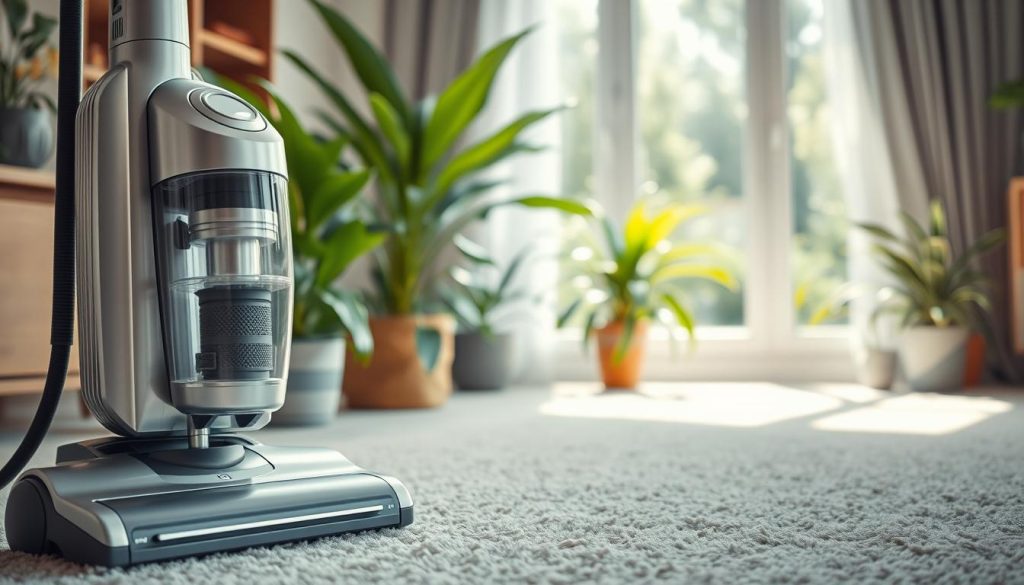
Shark HydroVac WD210SM is a practical wet-dry vacuum option aimed at hygiene-conscious households. It pairs a compact design with antimicrobial brush rollers that limit bacterial build-up on contact points.
Antimicrobial brush rollers and why they matter
Antimicrobial rollers reduce colonies that cause smells in humid weather. We still recommend emptying, rinsing and leaving parts to dry after each session to keep odours away.
Runtime and tank trade-offs
The WD210SM offers up to 30 minutes runtime on a single charge and uses a 500ml clean water tank and a 360ml dirty water tank. That capacity keeps the unit light and easy to store but means more frequent emptying during longer cleaning jobs.
Practical tips: empty the dirty reservoir carefully to avoid splashes, rinse the seal, and air-dry tanks in a shaded spot. This prevents smells if your utility area is compact.
Who it suits: households that want a hygiene-first, cordless option with simple upkeep and a modest footprint for quick spot cleaning on mixed floors.
Dyson water vacuums in Singapore: which Submarine model suits you
Dyson pitches the Submarine line at buyers who want a light, premium stick that handles small damp jobs and everyday dry pickup. The idea is a compact, well‑finished cordless tool that pairs sealed tanks with strong engineering and neat filtration.
Dyson V12s Origin Submarine — lighter handling
Key facts: 300ml clean water, 360ml dirty water, 130 Air Watts suction, ~2.2kg weight, up to 60 minutes runtime and about 3.5 hours charge time.
We find the Origin excels at quick spot jobs and routine upkeep. Its low weight makes hand‑held passes easy and lifting stairs or upholstery less tiring.
Dyson V12s Detect Slim Submarine — visibility and HEPA
Key facts: same tank sizes and runtime, but 140 Air Watts and a Fluffy Optic head plus HEPA filtration to show and trap fine dust on hard floors.
The Detect Slim helps when fine dust is the main nuisance. The optic head reveals particles so we can target trouble spots, and HEPA gives reassurance for allergy-aware homes.
What “Air Watts” means in day-to-day suction performance
Air Watts measure real airflow and suction combined. In practice, a higher Air Watts number usually means faster pick‑up of loose dust and crumbs across floors.
That said, small clean and dirty tanks (300ml/360ml) limit wet runs. These Submarine units suit spot cleaning and quick maintenance rather than long, continuous wet sessions.
- Choose Origin if lighter handling and an easier hand‑held feel matter most.
- Choose Detect Slim if seeing fine dust and HEPA filtration are priorities.
Tank capacity, runtime, and charging time: what matters for real cleaning time
Practical cleaning time depends as much on tank design as it does on headline minutes. A generous tank reduces interruptions, while a long runtime without adequate water tank capacity still forces frequent stops.
Matching tanks to carpet size and cleaning frequency
For daily spot cleaning in a small flat, a 500–820ml water tank usually covers quick passes on rugs and short hallways.
Weekly refreshes of a living room and two bedrooms benefit from 800–1,000ml capacity so we refill less often and finish in one session.
Minutes per run: what 30, 50, 60 and 70 minutes covers
30 minutes: a single-zone touch-up (kitchen entry, one bedroom). This suits short battery life models.
50 minutes: most small flats — living area plus a bedroom or two with light spills.
60 minutes: covers medium flats comfortably, including several rooms and deeper passes.
70 minutes: long sessions or combined wet and dry work; useful if you want fewer charge cycles.
| Runtime (minutes) | Typical coverage | Tank recommendation |
|---|---|---|
| 30 | Single room or spot jobs | 500–600ml |
| 50 | Small flat — living + one bedroom | 700–820ml |
| 60 | Medium flat — multiple rooms | 800–1,000ml |
| 70 | Extended runs or mixed modes | 1,000ml+ |
Battery life falls under heavier modes. Manufacturers quote ideal runtimes; heavy suction or hot modes cut minutes substantially. Plan charge time (3.5–4.5 hours typical) and use docking or staggered cleaning to avoid mid‑session downtime.
Decision framework: choose agility and small tanks if you do quick daily touch-ups. Choose bigger tanks and steadier runtime if you clean larger flats or run weekly refreshes.
Choosing the right brush, mode, and water flow for carpets
Matching brush agitation to pile depth helps lift trapped dust so suction can do the rest. We focus on brush roll design that agitates without damaging fibres. A softer brush suits low to medium pile; a firmer, ribbed roller helps shift embedded debris in short‑pile rugs.
Brush roll design that lifts dust and debris
Brush shape and bristle layout determine how much dirt and hair escape the pile. We prefer dual‑material rollers that mix soft bristles with rubber ribs; this balance dislodges dust and guides debris to the suction inlet.
When to use higher power modes versus auto modes
Use higher power when stubborn dirt or heavy debris is visible. Auto modes, driven by sensors like iLoop or AI Dirt Sense, save water and power by adjusting suction and flow. Trust sensors for routine passes; switch to manual power for set‑in stains.
Managing moisture so carpets dry faster
Limit water flow, make fewer overlapping passes and run a fan or open windows in Singapore’s humid climate. Always vacuum loose dust with a dry vacuum first, then follow with a controlled wet dry pass to avoid over‑soaking.
- Tip: empty and dry tanks after use to prevent odours.
- Tip: test a hidden patch before hot‑water cycles.
Buying in Singapore: pricing, retailers, and practical ownership tips
A smart purchase in Singapore combines a good deal with solid warranty and sensible upkeep needs. We shop widely and check listings closely so the product we choose stays reliable over time.
Where we typically find competitive deals
Look at Lazada, Shopee and Amazon alongside major electronics retailers. These channels often list bundles that include extra brushes or docks.
Check the listing for missing accessories and seller ratings to avoid grey sets or incomplete models.
Warranty, after‑sales and consumables to budget for
Warranty matters: confirm cover for battery, docks and seals. Batteries age; brush rollers and filters need replacement over time.
Budget for replacement rollers, HEPA filters and brand cleaning solutions so running costs stay predictable.
Storage and maintenance advice
Empty dirty water immediately and rinse tanks after each session. Let parts air‑dry in a ventilated spot to prevent odours and mould.
Keep a compact dock near a power point but out of main walkways so a self‑cleaning dock does not become a trip hazard.
“Plan charge time and routine drying so your cordless product is ready when you need a quick clean.”
| Item | Tip | Why it matters |
|---|---|---|
| Battery | Store charged ~50% if unused | Extends life and keeps the unit ready |
| Water tanks | Rinse and dry after use | Prevents smells and performance loss |
| Consumables | Keep spares (rollers, filters) | Avoid downtime and costly shipping |
Conclusion
Conclusion
We recommend choosing a wet‑dry unit that matches your flat, mess types and the time you can spend on upkeep.
The Tineco Floor One Switch S7 Stretch stands out for balanced suction, generous tank layout and easy emptying. For pet hair choose the Bissell CrossWave X7; for greasy spills opt for the Dreame H15 Pro Heat. Pick the Narwal S20 Pro if manoeuvrability matters, the Simplus if budget is tight, or the Shark HydroVac for odour control. Dyson Submarine models suit light spot work.
Tip: confirm tank sizes, realistic minutes of runtime, charge time, brush fit for rugs and storage. Keep a dry vacuum handy for deep dust and high‑pile care.
Decide on the model that fits your Singapore layout and weekly cleaning routine.

