

We offer a practical range of heavy‑duty units for workshop and garage use. Our selection suits renovation dust, workshop debris and site spill recovery where a standard home model struggles.
With a larger drum capacity you make fewer stops to empty the bin during big jobs. That saves time on site and keeps workflows moving.
We position this as a commercial‑intent buying page so you can compare key specs, confirm electrical compatibility for Singapore, and pick the right configuration before checkout.
We explain the two core job types — wet dry pick‑up and general suction — and preview the main buying considerations: suction performance, hose reach, filters, tools, storage and safe wet pick‑up. We also show why power should be judged by airflow, sealed pressure and air watts, not just motor ratings.
Use this page to match a product to your garage, workshop or site clean‑up needs and to the common debris you face. For extraction and mould guidance, see our detailed advice at mould and water extraction guide.
12 gallons wet and dry vacuum cleaner for workshops, garages and site clean-ups in Singapore
When a job throws dust, screws and occasional spills at us, a beefy drum helps maintain momentum on site.
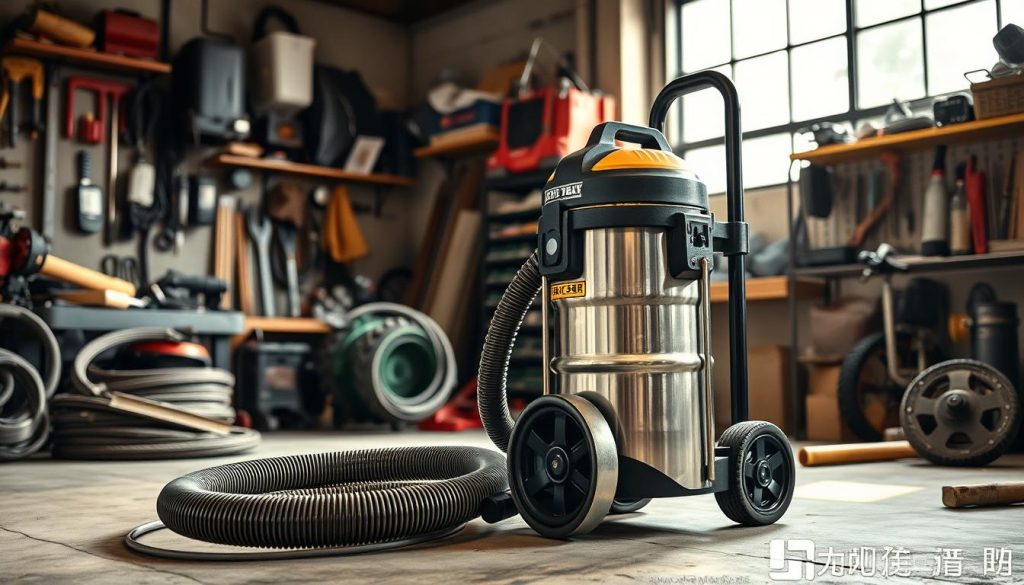
Wet and dry pick-up in one rugged drum
One robust drum handles both dry collection and water recovery. That reduces machine changes and keeps our crew focused during renovations and sanding work.
Blower and suction modes for flexible clean-up
Some products offer blow/suction operation. Moving the hose to the rear blower port makes clearing ledges, paths and corners fast.
Built for tougher environments with practical storage and carry handling
We look for solid caster movement, a secure handle and a carry handle for loading into vehicles.
Tool storage keeps the hose, wands and nozzles organised so we can get back to work quickly.
| Feature | Why it matters | What we check |
|---|---|---|
| Drum capacity | Fewer stops on bigger jobs | Easy drain, durable tank |
| Hose & blower | Flexible reach and clearing power | Locking hose, rear blower port |
| Handling | Site mobility and lift safety | Casters, carry handle, sturdy base |
Performance and technical specifications that matter
Consistent airflow at the nozzle is the clearest sign of a machine built for repeat site use. We judge performance by steady suction at the tool end, stable airflow and a motor designed for frequent start/stop cycles.
Motor technology and longevity
SVX2 motor design delivers more usable power and longer life compared with a standard equivalent motor. This matters when we run tools all day and need dependable operation.
Airflow, sealed pressure and air watts
Trustable metrics are airflow, sealed pressure and air watts. Practical tested figures reach up to 135 CFM, 65 inches sealed pressure and 285 peak air watts with a 2.5″ hose. These numbers explain pick-up strength at the nozzle.
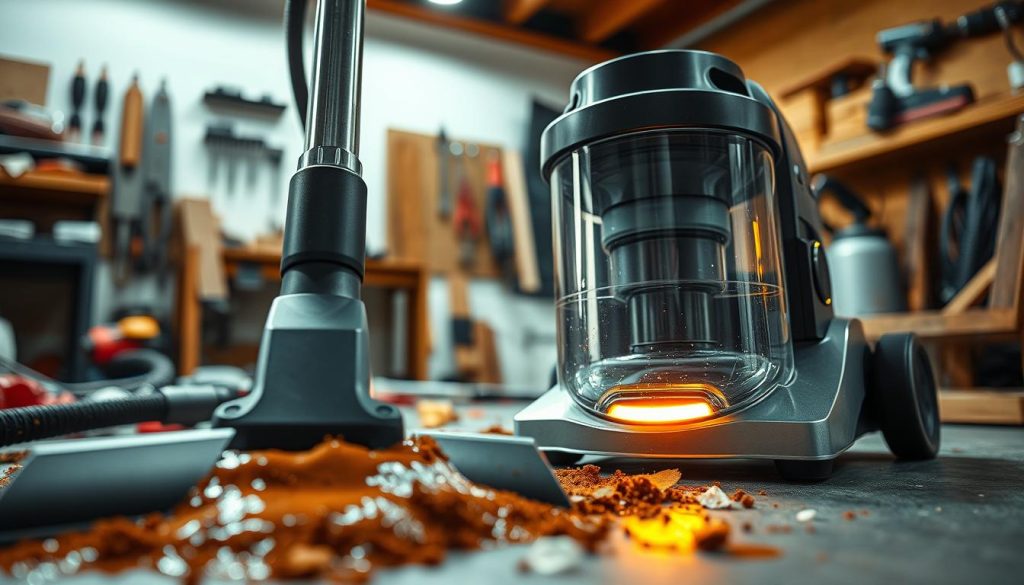
Electrical and cable considerations
We list models with 220V compatibility for Singapore sites. Cord options vary from 15 to 20 ft; a longer cord reduces re‑plugging across large garages.
Hose diameter, reach and accessories
Common hose sizes are 2.1/2″–2.5″ with a lock‑on connection. A locking hose reduces accidental pull‑off, while extension wands extend reach for floors, corners and overhead work.
| Spec | Typical value | Why it matters |
|---|---|---|
| Motor | SVX2 design (longer life) | Durable starts/stops for workshop use |
| Airflow / Pressure / Air watts | 135 CFM / 65 in / 285 AW | Shows real pick‑up power at the tool |
| Hose & reach | 2.1/2″–2.5″, lock‑on, 2 extension wands | Prevents disconnects and extends access |
| Cord | 15–20 ft options, 220V listings | Less re‑plugging; confirm site plug type |
Design, filtration system and included accessories
A well‑designed machine saves minutes every day through smarter storage and faster emptying. We look at tank materials, filter choices and the tools supplied so you can see how a product performs on real jobs.
Tank and drain
Stainless steel tanks resist corrosion and wipe clean after water pick ups. Rugged construction also reduces dents and helps the drum stay stable when rolling across site floors.
We favour a dedicated drain spout. A drain speeds up water emptying far more than lifting and tipping a heavy tank.
Filter set‑up
Use the correct filter for each task. A cartridge filter suits general dry pickup while a foam sleeve is essential for wet work. For fine particles, fit the fine dust bag.
Using the wrong filter cuts suction and can clog the system.
Included tools, storage and usability
- Tools supplied: 14‑inch floor nozzle, crevice tool, two extension wands, utility nozzle, wet nozzle and dusting brush.
- Onboard storage keeps accessories close at hand. A Lock‑on hose connection prevents accidental disconnects and tidy cord management speeds set‑up.
Noise and exhaust
A muffler diffuser softens exhaust flow and reduces harsh directional blast. Consider a diffuser accessory if workspace comfort or ventilation is limited.
Check the manual for correct assembly, filter installation and maintenance intervals before switching modes.
How we recommend using it for common Singapore cleaning jobs
Here we map typical Singapore cleaning jobs to simple steps that keep performance high.
Garage, basement and workspace debris
For dusting and general debris we use a dry vacuum setup with the fine dust accessory. Start high and work down. This catches loosened dust before it settles again.
Choose the crevice tool for corners and the floor nozzle for broad surfaces. That reduces re‑circulating dust and speeds the job.
Water pick‑up and safe emptying
Switch to the correct wet configuration before recovery jobs. Avoid overfilling the drum and empty through the tank drain to reduce lifting strain.
Use a foam sleeve in the filter position for liquid pick‑up and replace or clean it after each heavy use.
Blower port and hard‑to‑reach clearing
Move the hose to the rear blower port to displace debris from ledges, drains and pathways. Blow light material away from corners before suctioning for a cleaner finish.
Maintaining suction
Clogged filters slash airflow. Clean filters regularly and replace worn items as required. Check the hose, seals and accessory fit if performance drops.
| Task | Recommended setup | Key tip |
|---|---|---|
| Workshop dust | Fine dust bag, floor nozzle | Work top→bottom; finish with floor tool |
| Water spill | Foam sleeve, drain open | Avoid overfill; drain to waste point |
| Outdoor clearing | Rear blower port, wide nozzle | Blow first, then pick up loosened debris |
Conclusion
Match capacity to the job, and favour a unit that suits your daily workload rather than the highest spec on paper.
We prioritise the right gallon size and clear litre gallon labelling so shoppers can compare listings quickly. Check 220V compatibility and the power cord length—choose a 4.5 power option with a 4.5 power cord if your work area needs sustained suction.
Ease of ownership matters: look for stable caster sets, a reliable handle and a carry handle, plus rugged construction for long service life. Drainage and correct wet/dry setup affect safety and emptying speed.
Match hose diameter, locking connections and supplied tools to how you clean (garage corners, benches or paths). For an independent overview, see our shop‑vac review.
Choose the product that fits your space and routine, then complete your order online for fast fulfilment.

