

We set clear expectations for this how-to at home in Singapore. This short guide shows what we can safely do ourselves and when to call specialists.
Our approach follows an ordered flow: inspect, prepare, maintain, respond to spills, treat stains, consider deeper options and dry thoroughly. Each step aims to lower risk to the fabric and finish.
Fast action matters. Blotting liquids with a clean white cloth and never rubbing usually makes removal easier and helps protect the seat’s finish.
We adopt a “do no harm” mindset: match products to the label, avoid over-wetting and prioritise ventilation so the home stays fresh. You will learn how to handle common stains and which water or solvent options to try.
– What home tasks we can perform safely; when to get experts.
– A clear, step-based routine to reduce harm.
– Practical tips such as blotting, testing hidden areas and ensuring full drying in humid climates.
Why sofas get dirty so quickly in Singapore homes
Everyday life in Singapore loads our living room seating with grease, crumbs and moisture. These small inputs build up over time and change how the upholstery looks and smells.
Everyday causes of stains, discolouration and odours
Daily snacks, spilled drinks and body oils press into the fabric. Pet paws and airborne dust add more grit and create visible stains and greyed areas.
Coffee, fizzy drinks, sauces and makeup can oxidise or attract further dirt. That makes a fresh stain harder to remove later.
How humidity can worsen smells and mildew risk
High humidity makes moisture linger in fibres. Poor ventilation encourages mildew and stronger odours, so sofas need more frequent attention.
| Cause | Effect | Early sign |
|---|---|---|
| Food and drinks | Discolouration and sticky residue | Dark patches on seating |
| Body oils & sweat | Fabric darkening | Greyed armrests |
| Humidity | Mildew and musty smell | Faint damp odour |
Our way forward is simple: spot warning signs early, act quickly and choose gentler, faster-drying methods suited to local climate. Routine care reduces emergencies and keeps sofas looking newer for longer.
What to check before cleaning: sofa fabric, tags and cleaning codes
We start by checking labels and materials so we choose safe solutions. Confirming the tag stops guesswork and lowers the risk of dye loss or fibre damage.
Common fabric types and what they need
Cotton blends usually tolerate gentle water-based treatment. Linen marks easily and needs light handling.
Polyester blends are hard-wearing, and microfiber copes well with homes that have pets or children. Suede and specialty weaves often need professional care or solvent-only methods.
Understanding upholstery label codes
Labels show practical guidance. We read these before we apply any product.
| Code | Meaning | Our practical action |
|---|---|---|
| W | Water-based cleaners safe | Use mild water solutions and blot, do not over-wet |
| S/W | Both solvent and water options | Start with water; move to solvent if needed |
| S | Solvent-only | Use solvent products or seek pros for tough stains |
| X | Vacuum only | Do not apply liquids; get professional help for stains |
Why testing a cleaner in a hidden area matters
Even labelled products can react with dyes or finishes. We always try a cleaner on a less visible area first to confirm colourfastness.
- Locate the tag and confirm the codes.
- Test the mildest cleaner on an inconspicuous area.
- Confirm no discolouration before proceeding.
Cleaning a sofa starts with the right prep
A careful setup makes every step that follows faster and safer. We gather tools, clear the zone and create good airflow before we begin.
What we gather
We bring together a vacuum with an upholstery tool, a soft-to-stiff brush, and several white cloths. Also ready: a small bowl of water and the correct products matched to the label.
Protecting the area and avoiding over-wetting
Remove loose cushions, clear side tables and place a towel under the work area to catch drips. This protects floors and keeps the work tidy.
We use the brush first to loosen dried grit, then use vacuum to lift debris. That prevents dry particles from turning into muddy streaks during wet work.
Never apply solution directly to fabric. Dampen the clean cloth and work in small areas so moisture does not sit long in humid Singapore conditions. Use only white cloths to avoid dye transfer; coloured fabric may bleed when damp.
Safety basics: ensure good ventilation, keep products away from children and pets, and never mix chemicals beyond manufacturer guidance.
Routine sofa cleaning for dust, crumbs and dirt build-up
A simple weekly routine stops dust and crumbs from sinking into fabric. This short habit reduces embedded grit and keeps seats presentable in humid Singapore.
How we vacuum a fabric sofa properly
We remove cushions and work top-down. Use the upholstery tool and run over arms, back and seat panels.
Pay special attention to seams, piping and crevices where crumbs lodge. For deeper spots, detach covers if label permits and use low suction.
When a dry brush helps lift dried-on debris
If crumbs have crusted, we gently loosen with a very dry stiff brush before we use vacuum. This prevents dragging particles across fabric and dulling fibres.
Weekly maintenance that makes stain removal easier later
Weekly vacuuming of favourite seats reduces dirt and pet hair. Rotate cushions and increase frequency in homes with children or pets.
Our tip: regular light care is the lowest-risk form of cleaning and often gives the biggest visual gain with minimal products.
- Use vacuum after brushing when needed.
- Vacuum sofa areas twice weekly if used heavily by pets.
- Keep white cloths on hand for quick spot checks.
When spills happen: quick-action steps that prevent a set-in stain
When a spill lands on an upholstered seat, the first few minutes decide the outcome. We act fast to limit penetration into fibres and reduce the chance of permanent marks.
Blot liquids with a clean white cloth
Press and lift with a clean cloth rather than rubbing. We swap to a dry section as the cloth soaks up liquid.
Why this works: gentle blotting moves moisture out of the fabric and stops pigment from spreading.
Lift solids using the vacuum
For crumbs or semi-solids, we vacuum first. Brushing dried debris then vacuuming stops particles from embedding deeper.
Work from the outside in
Begin at the outer edge and work toward the centre. This one simple step prevents the spill from forming a larger ring.
- Speed matters: the first few minutes are critical.
- Use just enough water to dampen; avoid saturation to prevent tide marks.
- These immediate steps often help us remove stains without stronger products.
Natural methods we use for fabric sofa cleaning
We favour gentle, natural methods that suit most common upholstery fabrics used in Singapore homes.
When the label allows water-based care, we choose low-toxicity options first. These methods lift light soil and neutralise odours without heavy solvents.
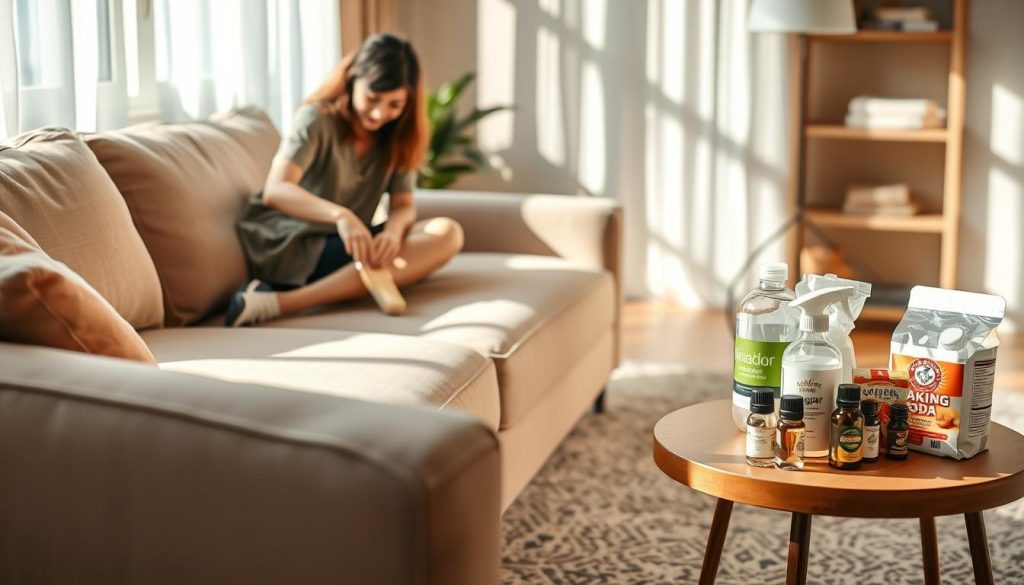
Baking soda paste: paste method and waiting time
Mix baking soda with a little water to make a spreadable paste. Apply lightly to the stained patch and leave until dry—about 20 minutes.
After roughly 20 minutes, brush or vacuum the residue. This helps remove dirt and reduces lingering odours. Note that baking soda lifts surface soils but may not remove deep-set stains.
Vinegar solution for stain removal: dilution and technique
We prepare an equal-parts water and white wine vinegar solution. Use a slightly damp clean white cloth to dab and lift the mark.
Rinse the cloth often to avoid redepositing dirt and repeat short cycles rather than soaking the fabric. Always test first on a hidden patch to confirm colourfastness.
| Method | Recipe | Key benefit |
|---|---|---|
| Baking soda paste | Baking soda + water; dry ~20 minutes | Neutralises odours; lifts light dirt |
| Vinegar solution | 1:1 water : white wine vinegar | Good for light stains; low-toxicity |
| When to call pros | Persistent or deep-set marks | Specialist extraction or solvent work |
For more on gentle approaches, see our guide to fabric sofa cleaning.
Using store-bought cleaners and sofa shampoos safely
Before we reach for any bottle, we match the product to the upholstery codes and test in a hidden patch. This simple check prevents shrinkage, rings or dye loss and keeps the work low risk for Singapore’s humid climate.
Choosing water-based options versus solvents
When the tag reads W or S/W, we prefer water-based cleaners first. For S codes, we select solvent-based products or call professionals.
Let the product do the work
We apply a small amount to the test area, wait, then gently dab or use a soft brush. Harsh scrubbing harms fibres; light agitation lifts soil while preserving texture.
Rinse and change cloths often
We rinse white cloth frequently and replace water as it discolours. Dirty passes redeposit grime and cause patchy results.
- Follow label codes and product instructions (Castlery, 20 Mar 2024).
- If colour shifts, fabric distorts or the stain spreads, stop and seek professional cleaners.
How we treat common sofa stains without damaging the fabric
Identifying the stain type gives us the best chance of safe removal. We sort marks by chemistry so we use the correct method and avoid harming the fabric or dye.
Water-based marks such as coffee or fizzy soda respond well to a few drops of mild dish soap mixed into water. We blot with a clean white cloth and keep the area lightly damp. This patient approach often helps to remove stains without rings.
Oil-based spills need careful blotting first. Where safe for the fabric, we press isopropyl alcohol on the cloth to lift grease, then follow with a gentle soap-and-water pass to remove residue.
Protein marks like milk or blood must stay cold. We use cold water only; heat will set the stain and make removal far harder.
Ink and dye transfer require controlled solvent work. We dab with rubbing alcohol, rinse with cold water, or use a timed dish-soap plus white vinegar solution in cold water for up to thirty minutes. Avoid vigorous scrubbing.
Mould and mildew start with vacuuming loose spores. Then we spray an equal-parts water and vinegar solution, wait 10–15 minutes, blot dry and finish by sprinkling baking soda. Leave baking soda for hours or overnight, vacuum and ensure full drying to remove odours.
Our routine rules: work from the outside in, swap to clean cloth sections, and stop immediately if colour lifts. Removing a stain should never remove the dye.
Deep cleaning options: steam cleaner, extraction and leather care
Deep treatments reach what weekly upkeep cannot, targeting trapped soil and stubborn odours. We reserve these methods for heavy use, persistent marks or when allergens and bacteria need reducing.

Steam cleaner: strengths and limits
Steam cleaner uses hot vapour that sanitises effectively and kills germs, bacteria and allergens—about 99% efficacy for microbial control. It freshens upholstery and works well on synthetic fibre.
Note: steam may not remove visible surface dirt or heavy deposits. Expect sanitising and freshness rather than complete stain removal.
Extraction cleaning: deeper soil removal
Extraction combines specialised chemicals with a powerful extractor. This method lifts embedded grime and withdraws most moisture, which helps lighten stains and cut odour.
Extraction suits natural fibre better for deep soil removal while reducing shrinkage risk. Drying time is typically four to six hours.
Leather care: sanitise and condition
For leather, we use pH-balanced, antibacterial solutions that cleanse without stripping oils. Sanitising is followed by conditioning to prevent drying and cracking in air-conditioned Singapore homes.
Regular conditioning keeps leather supple and extends useful life.
- What deep cleaning targets: embedded soil, allergens, bacteria and persistent odours that vacuuming cannot fully shift.
- When to choose steam: for sanitising and freshening synthetic upholstery; not a guaranteed stain remover.
- When to choose extraction: for deep grime in natural fibre and stronger stain/odour reduction.
- Leather routine: sanitise, then condition to prevent cracks.
| Method | Best for | Effectiveness | Typical dry time |
|---|---|---|---|
| Steam cleaner | Synthetic fibres | 99% germ/allergen kill; may not remove surface dirt | 4–6 hours |
| Extraction | Natural fibre, heavy soiling | 99% effective in soil removal, reduces odour | 4–6 hours |
| Leather care | Genuine leather | Sanitises and conditions to prevent cracking | 2–4 hours (surface dry) |
| Frequency recommendation | Homes generally | Baseline every six months; every 3 months with pets/ high humidity | Plan for 4–6 hours downtime |
Drying, aftercare and prevention for a longer-lasting clean
Once the wet work ends, our priority is to remove moisture quickly so fibres dry evenly. Proper drying preserves the finish and helps prevent musty odours in Singapore’s humid climate.
Air-drying plan and what to expect
We allow 4–6 hours of air-drying after any wet treatment. Increase ventilation and use a fan to speed drying; avoid blowers that can push water deeper into the fabric.
While it dries, we fluff and separate cushions where possible. We do not sit on damp areas so the clean fabric finish stays even and free from fresh marks.
Protective covers, throws and fabric protectors
Washable sofa covers are our first line of defence. In high-traffic homes, covers and washable throws take spills and wear, keeping the upholstery beneath in better condition.
Fabric protectors can buy time to blot spills before they penetrate, but they do not replace regular care. We treat protectors as a preventive layer, not a permanent solution.
Simple habit changes to reduce stains
We keep trays for snacks and coasters for drinks to limit mess on seating. Declaring a gadget or craft area keeps messy activities away from main seating areas.
Sunlight, humidity and long-term care
To avoid fading, we limit prolonged direct sunlight on vulnerable panels. We also manage indoor moisture with a dehumidifier to cut mildew and persistent odours.
- Quick checklist: allow 4–6 hours to dry; use a fan, not a blower.
- Fluff cushions and avoid sitting on damp areas to keep the clean sofa look.
- Use washable sofa covers and throws as primary protection for fabric sofas.
Conclusion
Clear steps and calm action protect fabric from needless harm.
We summarise our safest way: identify the material and tag codes, set up tools, then follow each step methodically. Act fast, blot (never rub) with a white cloth and test products on a hidden area before use.
Prevention saves time and money—weekly vacuuming, prompt spill response and covers reduce intensive work. To remove stains, match method to type (water, oil, protein, ink, mould) and keep moisture controlled so drying is swift.
If the tag shows X, the fabric is delicate, stains persist, or mould appears, we call professional cleaners. For more on practical care see our guides on fabric care and leather upkeep.

