

We explain why a proper bed refresh matters in Singapore’s warm, humid climate. Mattresses gather dust, sweat and oils over time, and humidity makes odour and mould risk more likely. A routine at-home process helps us sleep fresher and extend a mattress lifespan.
By “deep clean” we mean more than a quick tidy. Surface tidying removes crumbs and dust. A true deep clean includes stripping, vacuuming, deodorising with baking soda, thorough drying and a final vacuum before remaking the bed.
We state safety rules up front: avoid over-wetting, favour airflow and gentle products, and use correct technique to protect fabric and foam. For heavy soiling or embedded allergens, professional methods such as steam or dry extraction may be wiser.
Our step-by-step process is realistic for Singapore flats with basic vacuum attachments and limited sun. For stain treatment and an equipment checklist, see our handy guide on how to get stains out here.
Why a clean mattress matters for healthier sleep in Singapore
What sits inside our beds affects how we feel each morning in Singapore’s humidity. A clean mattress is more than a tidy cover; it stops organic build-up from becoming a health issue.
What builds up over time
Dust, dead skin, sweat and body oils collect through months of use. We can shed vast numbers of skin cells daily, which feeds tiny pests and adds to visible dirt.
How heat and moisture make things worse
Singapore’s warm, moist air holds moisture in fabrics. Poor ventilation and solid bed bases trap dampness. That makes odours, yellowing and, in extreme cases, mould growth more likely.
Common symptoms linked to an unclean sleep surface
We often see runny noses, itchy or watery eyes, coughing and eczema flare-ups tied to dust mites and bacteria in bedding. These signs are practical cues to review our cleaning habits.
Keeping a regular routine helps us sleep fresher and reduces allergy triggers.
How often we should deep clean a mattress
A clear schedule helps us balance hygiene with busy Singapore life. We recommend a baseline rhythm so the work stays manageable and effective.
Baseline timetable
Every three to six months is our typical target for a full service. This cadence interrupts gradual buildup of dust, moisture and allergens before odours or discolouration set in.
When to act more often
Some situations need tighter routines. If you have children, pets, frequent night sweating, visible stains mattress, or anyone with dust mite or sinus sensitivities, aim for quarterly or even monthly checks.
Risk-based frequency guide
- General maintenance: every 4–6 months.
- Stained mattress or recurring spills: every 3 months.
- Allergy-prone homes: every 1–2 months.
Immediate triggers that mean it’s time now include lingering smells, visible stains, dampness after spills, or waking congested or itchy more often than usual.
Note: a protector helps reduce soiling but does not stop all contamination. To keep mattress clean and prolong freshness, follow a routine and tackle stains promptly.
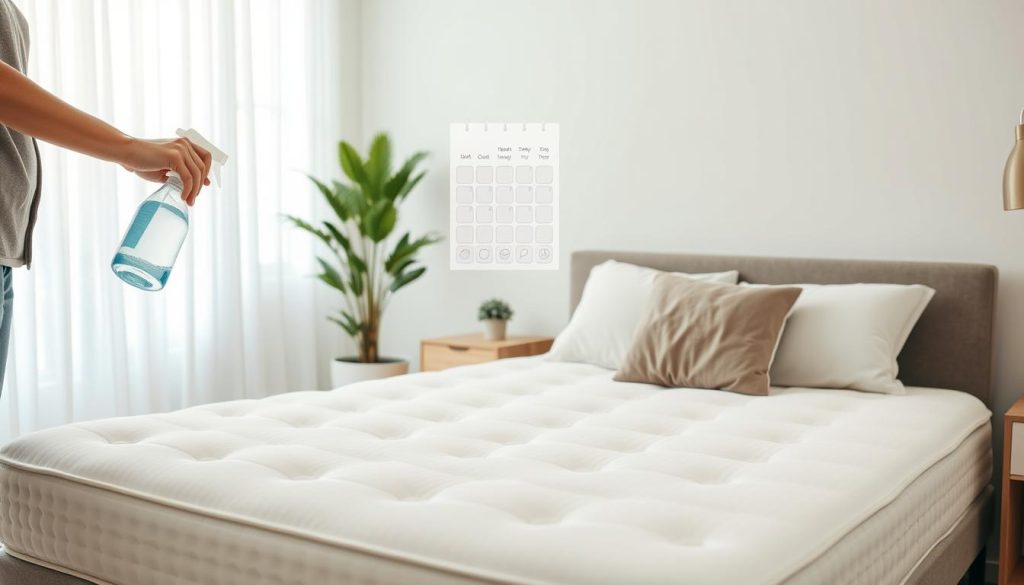
Regularity keeps each job smaller, reduces the chance of stubborn stains setting and helps us keep mattress freshness consistent between full treatments. For a detailed how-to, see our guide on how to deep clean mattress.
Deep mattress cleaning: our step-by-step process
Start by making space — a neat work area keeps contaminants from spreading. A clear set-up helps us move around the bed and avoid re-soiling the surface.
Prep the area and strip the bed
We remove all bedding, covers and the protector. Place laundered items aside and keep a clean surface to stand on.
Vacuum thoroughly with sanitised attachments
We use a sanitised vacuum head and work the top, sides, seams and edges. Slow, methodical passes pull trapped dirt from seams and piping.
Deodorise and lift dirt with baking soda
Apply an even layer of baking soda across the fabric. Leave for several hours or overnight to absorb moisture and stale odours.
Use light and airflow to help drying
When possible, let sunlight reach the bed and open windows. A fan speeds drying and reduces residual moisture in Singapore’s humid air.
Final vacuum and reset
Vacuum again to remove baking soda residue and any loosened particles. Only remake the bed when the surface feels dry and free of powder.
- Sniff test: ensure no lingering smell.
- Visual check: look for powder residue or damp spots.
- Hand sweep: confirm the fabric feels dry and smooth.
This process keeps our bedrooms fresher between professional treatments and makes each periodic deep clean more effective.
Spot cleaning mattress stains without damaging the fabric
A calm, measured approach to stains prevents excess moisture and fabric harm. Our priority is to remove marks while keeping the interior dry in Singapore’s humid air.
Golden rule
Blot, don’t scrub. Use a clean cloth and press to lift the stain. Keep liquids to a minimum so we do not drive residue deeper or create hidden damp patches.
Vinegar-and-water solution for fresh stains
Mix equal parts white vinegar and water in a spray bottle. Lightly spritz the stain, then blot repeatedly with a clean cloth until the mark lifts. Vinegar suits fresh spills and light odours.
Dishwashing liquid suds for general marks
Mix a drop of gentle dishwashing liquid with water and whip to create foam. Apply the suds—not the watery mix—then blot away with a cloth. This method reduces how much water reaches the fabric core.
Enzyme cleaner for protein stains
For sweat, urine or blood, use an enzyme cleaner. Allow 15–20 minutes’ dwell so enzymes break down the proteins, then blot with a damp cloth and dry promptly.
- Stubborn stains: aim to lighten rather than fully remove older marks.
- Fabric caution: spot-test first and avoid bleach unless the maker permits it.
Always ventilate and ensure the area is fully dry before remaking the bed to prevent mould risk.
Removing odours, moisture and dust mites between deep cleans
A light, regular refresh keeps the bed smelling pleasant and cuts down on allergens. This routine works well for Singapore’s humid climate and fits into a busy home schedule.
Baking soda as a routine deodoriser: Sprinkle a thin, even layer of baking soda across the surface. Leave it for at least a few hours, then vacuum thoroughly to remove powder and absorbed stale odours. Baking soda also soaks up minor moisture, which helps make the sleep surface less inviting to dust mites.
Essential oils with baking soda: For a longer-lasting scent, mix 15–20 drops of skin-safe essential oil (lavender, eucalyptus or peppermint) into the baking soda, stir well, then sprinkle and leave for a few hours. Vacuum as usual. Avoid strong fragrances where infants, pets or anyone with sensitivities live; skip oils entirely if needed.
For persistent smells, a light 1:1 white vinegar-and-water spritz can neutralise odour. Spray sparingly, then air the bed with windows open and a fan on until fully dry. For guidance on more thorough treatments, see our expert advice on deep clean your mattress.
When we recommend professional mattress cleaning services in Singapore
Sometimes DIY stops short of what a professional team can reach beneath the surface. Even with careful vacuuming and baking soda, embedded dirt, dust and allergens often remain. We cite this as the main reason to consider a professional mattress service.
What DIY can miss
- Embedded dirt and bacteria lodged in layers below the fabric.
- Persisting dust mites and, in rare cases, bed bugs that need specialist treatment.
- Allergens that cause repeated symptoms despite home care.
Popular professional methods
Services commonly offer three main approaches. Dry methods use low moisture for delicate fabrics. Steam sanitises with heat and is chemical-free. Extraction or shampoo-style methods agitate and pull out residues with powerful suction.
Choosing a safe service
We look for eco-friendly products and clear explanations of which method suits each fabric type. A reputable service will outline drying plans suited to humid Singapore flats and avoid unnecessary wet treatments on sensitive bases.
What to expect from the process
Most professional mattress cleaning jobs follow a set flow: an initial assessment, targeted treatment, extraction and a drying-time plan. Ask for a written estimate, recommended aftercare and a realistic timeline before you book.

| Method | Best for | Pros | Considerations |
|---|---|---|---|
| Dry | Delicate fabrics, low-moisture needs | Fast, low mould risk | Less effective on deep stains |
| Steam | Sanitising, heat-tolerant types | Chemical-free, kills bacteria | Requires good drying; not for all fabrics |
| Extraction/Shampoo | Heavily soiled or odorous units | Deep removal of dirt and residues | Higher moisture; drying time must be managed |
Conclusion
Here are the short, practical actions we repeat to keep our sleep surface healthy.
Routine: aim for a deep clean every three to six months, with light refreshes using baking soda between full sessions.
Quick process at a glance: strip, vacuum, leave baking soda to absorb odour and moisture, allow airflow, then final vacuum. This simple step sequence helps us keep a clean mattress and reduce allergens.
Stains and spot care: treat marks early, blot rather than scrub, use minimal liquid. Try a 1:1 vinegar solution for fresh odours, dishwashing suds for general marks or an enzyme product for protein stains. Accept that older stains may only lighten; priority is hygiene and odour reduction.
If odours persist or contamination is heavy, consider professional methods—dry, steam or extraction—and choose eco-friendly products and a clear drying plan. For more on whether professional work is necessary, see this guide.
Result: fresher sleep, fewer irritants and a practical way to keep mattress care manageable at home.

