

We tested budget machines for Singapore homes and chose models that balance power, upkeep and value.
Our aim was clear. We defined what “affordable” currently means in Singapore and kept focus on units that still trap fine dust and hair effectively.
Among our recommendations, the Airbot Supersonics Pro stood out as a best-value pick. It offered strong suction (up to 25,000 Pa) and E13-grade HEPA, and it is sold via brand stores and local marketplaces.
We preview practical use cases: daily tidying in HDB flats, quick car and sofa touch-ups, and wet-and-dry spills in kitchens and dining areas. Our testing combined measurable specs (Pa, runtime, tank size) and real use (noise, weight, manoeuvrability).
Read on to see how we weighed trade-offs so you can choose the right machine for your space and routine.
Why we’re reviewing budget-friendly vacuum cleaners in Singapore
Singapore homes need compact cleaning tools that actually capture fine dust and fit small storage spaces.
We examined how local pricing maps to real needs. Electrolux notes some models drop to budget levels during promotions, while PowerPacSG covers the entry band. Retail examples include the Xiaomi G20, Airbot, Morries and Black+Decker Dustbuster at various price points.
What “low price” typically looks like across retailers
For cordless sticks, a moderate price point is a common sweet spot. Handhelds are usually the most affordable option. At lower price points, expect compromises in runtime, bin size and accessories.
How filtration helps with fine dust and allergens
Water capture can trap heavier debris and cut down dust plumes when emptying. By contrast, an HEPA or E13-grade system targets the tiny particles that bother allergy sufferers.
“Suction power only counts if seals, air paths and the filter system keep airflow steady under real dust loads.”
- Compact design matters for flats and condos.
- Don’t compromise basic hygiene—safe handling and genuine hepa filter protection are non-negotiable.
How we shortlisted and assessed each vacuum cleaner model
To shortlist effectively, we combined spec sheets with hands-on trials in typical flats and cars in Singapore.
Suction benchmarks we referenced (kPa, Pa and watts)
We compared kpa suction and Pa numbers across like-for-like categories. For example, Airbot and Xiaomi list ~25 kPa (25,000 Pa), Morries 20 kPa and NNIO 13 kPa.
That allowed us to judge pickup on hard floor versus rugs. We noted that watts and air watts help, but real suction and airflow under load matter most.
Runtime realities for cordless cleaning
Battery life varies: Xiaomi and Morries claim ~60 minutes, Airbot ~45 minutes (Eco) and 10–15 minutes on Boost. Dreame reaches longer runtimes in our data.
We flagged that advertised minutes runtime in Eco rarely covers a deep clean if Boost is used for edges or pet hair.
Filtration standards we prioritised
We favoured multi-stage cyclone systems and E13-grade hepa where present. These systems reduce dust plumes when emptying and help allergy control.
Practicality checks
We checked weight for above-floor work, bin/tank size (Xiaomi’s 600 ml is notable), storage options and noise levels — NNIO at ~80 dB was a clear caution for close quarters.
“Suction power only counts if seals, air paths and the filter system keep airflow steady under real dust loads.”
- Local availability: only models sold via authorised Singapore channels made the cut.
- Design and layout: we looked for compact format that fits typical HDB and condo service yards.
Quick comparison of our top picks for suction, filtration and price
We present a compact snapshot so readers can see how each model performs for everyday tasks. The table below contrasts suction, filtration and runtime to help match a choice to your flat size and routine.
Best value cordless option for everyday dust
Airbot Supersonics Pro excels as a cordless vacuum cleaner for daily maintenance. It pairs strong suction with an E13 hepa filter and sensible runtime for typical Singapore flats.
Best wet-and-dry solution for hard floors and spills
Dreame H15 Pro Heat is our pick for rapid spill recovery on hard floors. It combines wet dry cleaning and heated wash cycles for sticky messes while keeping emptying tidy.
Best handheld for cars and tight spaces
NNIO handheld suits drivers and quick touch-ups. It delivers about 13 kPa, HEPA capture and ~20 minutes run time — a practical grab‑and‑go option.
| Model | Suction | Filtration | Runtime (typical) |
|---|---|---|---|
| Airbot Supersonics Pro | ~25 kPa | E13 HEPA | Eco ~45 min / Boost 10–15 min |
| Dreame H15 Pro Heat | ~22 kPa | Multi‑stage + washable elements | Up to ~70 min (varies by mode) |
| NNIO handheld | ~13 kPa | HEPA | ~20 min |
“Suction only helps if emptying and seals keep dust contained.”
Quick takeaways:
- For daily sweeping on tiles and vinyl, ~20–25 kPa is usually sufficient.
- Choose a wet dry vacuum for kitchens and sticky spills to save time.
- Handheld devices are best for cars and tight gaps; check runtime and HEPA capture.
For a broader list of tested models and deeper comparatives, see our roundup at best vacuum cleaner.
Our best low price vacuum cleaner with water filter picks for Singapore homes
We organised picks to match how people actually clean in Singapore: quick daily dry runs, weekly deeper work, and on-the-spot spill recovery.
Wet-and-dry cordless options that vacuum and wash in one pass
Wet dry stick models combine vacuuming, mopping and washing into a single pass. They excel at kitchen spills, dining messes and greasy films that a basic broom can’t remove.
Examples we tested include the Dreame H15 Pro Heat and Philips AquaTrio. These are best when you want instant floor recovery without dragging out separate tools.
Dry vacuum cleaner options with strong HEPA filtration on a budget
For daily dust removal, a dry-only model with E13 or HEPA capture is the smarter pick. Airbot, Xiaomi and Morries strike a balance of suction and genuine HEPA protection at accessible tiers.
Bagless vacuum cleaner formats are common at lower costs. They save on consumables but need regular bin emptying and filter washing to keep performance high.
Handheld and stick formats for small-space storage
Handheld vacuum cleaner units and cordless stick vacuum designs suit HDB flats and condos. They free up storage space and make quick touch-ups effortless.
When shortlisting, match choices to your floor mix (tiles/vinyl versus rugs), dust sensitivity and whether wet cleaning in one pass is essential.
Best value cordless stick vacuum for strong suction and HEPA filtration
We focused on three cordless stick models that balance real-world suction, minutes runtime and manageable upkeep for Singapore homes.
Airbot Supersonics Pro
Airbot delivers up to 25,000 Pa, a multi-stage cyclone and an E13 hepa filter. The 0.8 L washable dust cup and reusable components cut ongoing costs. Handheld mode is light at ~1.2 kg and charging takes about four hours.
Xiaomi Vacuum Cleaner G20
The Xiaomi G20 pairs 25 kPa suction with up to 60 minutes runtime and a 600 ml bin. That larger capacity means fewer empties for whole‑flat maintenance and steadier suction on hard floors.
Morries MS20KPAHCV
Morries offers 20 kPa, a five‑level cyclone and HEPA capture. A detachable battery suits condo living: you can add a spare pack rather than replace the whole unit. It weighs roughly 1.15 kg for above‑floor work.
- Why these three: strong suction, light design and filtration that helps control fine dust.
- Runtime reality: Boost modes serve edges and hair clumps; Eco or Standard covers daily passes.
- Pick guide: choose Airbot for filtration focus, Xiaomi for longer runtime and bin size, Morries for modular battery options.
For tips on maintaining washable components and preserving suction, see our guide on cleaning a vacuum filter.
Best low-priced handheld vacuum cleaner for quick clean-ups and car interiors
For fast spot cleans and car duty, handheld models give the best balance of convenience and power. We tested four compact units that suit HDB flats and drivers who need a dependable grab‑and‑go tool.
NNIO Cordless Handheld
NNIO offers two modes, about 13 kPa suction and an E13 hepa filter. It runs up to 20 minutes and is loud at ~80 dB. Best for quick crumbs and seat rails; sold via ModernHome.
Bosch GAS 18V‑1
Bosch is robust at ~1.3 kg. The benefit is tool ecosystem compatibility, but the 18V battery and charger are sold separately, which affects total cost.
Black+Decker 16V MAX Dustbuster
This model has a 600 ml bin and washable dustbowl and filter. It’s simple to maintain and offers strong value for repeated use.
Eufy Clean HomeVac H20
Eufy runs up to 30 minutes, weighs about 0.65 kg, and includes car detailing tools plus an in‑car charger — ideal for drivers who clean between errands.
- Practical tips: prioritise crevice and brush tools for seat rails and vents.
- Choose washable components to keep suction steady in humid Singapore.
Best wet dry cordless vacuum for hard floors, spills and sticky messes
For sticky spills and regular floor upkeep, one-pass wet cleaning changes the routine for many Singapore homes.
We tested models that combine vacuuming and mopping so you see results fast on hard floors. Each entry notes suction, runtime and practical trade-offs for small flats.
Dreame H15 Pro Heat
Key: ~22,000 Pa suction; hot-water mop (~85°C); self-cleaning base; up to 70 min battery.
Philips PerfectCare 9000 AquaTrio
Key: 3‑in‑1 system; AquaSpin brushes at 4,000 RPM; ~45 min per battery (90 with spare); auto‑clean dock.
Dibea HC26
Key: 16 kPa; dual 700 ml tanks; ~42 min Auto; self-clean and cool‑air drying.
Tineco Floor One S9 Artist Steam
Key: Steam to 140 °C boiler (≥99 °C at floor); ~22 kPa; anti‑tangle; up to 75 min.
Russell Taylors V10 iClean & Roidmi Neo
Both suit spot-clean duty. V10 gives ~40 min for quick response. Roidmi is a 3‑in‑1 sweep, vacuum and mop with ~35 min and a 690 ml waste tank.
“One-pass wet-dry systems often cut the need for a follow-up mop, but edges and under-cabinet reach may still need a hand pass.”
| Model | Suction / Function | Runtime (typical) | Standout feature |
|---|---|---|---|
| Dreame H15 Pro Heat | 22,000 Pa / hot-water mop | Up to 70 min | Hot-water grease breakdown |
| Philips AquaTrio 9000 | Multi‑mode / AquaSpin brushes | 45 min (90 w/ spare) | Auto-clean dock, fast brushes |
| Dibea HC26 | 16 kPa / dual tanks | ~42 min (Auto) | Value dual-tank design |
| Tineco S9 Steam | 22 kPa / steam cleaning | Up to 75 min | High-temp steam for hygiene |
Our take: choose hot‑water or steam for grease and odour. Pick compact dual‑tank or spot models if storage and quick response matter more than base‑station bulk.
Best for pet hair and long hair: anti-tangle brush and filtration features we’d prioritise
Pet hair and long strands reveal weak points in a machine faster than plain dust ever does. Hair clogs brush bars, cuts airflow and exposes poor seals that drop performance.
Anti‑tangle brush bars for hair wrap prevention
What we look for: comb-like structures, scrapers and softer brush fibres that guide long hair away from the rotating core. Brands such as Dyson V12s, Dreame H15 Pro Heat and Tineco S9 list anti‑tangle or TangleCut systems that reduce manual clearing.
HEPA performance for pet dander and fine dust
Filtration matters because dander is airborne and tiny. A good hepa filter and tight seals keep dust and allergens from escaping back into the room.
- Use mini motorised heads for sofas, mattresses and car seats where hair embeds.
- Trim wrapped hair from brush bars weekly; wash and fully dry washable filters to avoid smells and mildew.
- Decide if a wet & dry unit helps for paw prints—else a strong dry vacuum cleaner plus a mop is often more cost‑effective.
| Feature | Why it helps | Brands / examples |
|---|---|---|
| Anti‑tangle brush bar | Prevents hair wrap, maintains suction | Dyson V12s, Dreame H15, Tineco S9 |
| HEPA / E13 | Captures dander and fine dust | Airbot, Xiaomi, NNIO (where fitted) |
| Mini motorised tool | Extracts embedded hair from upholstery | Common on mid and high tiers |
Best for small flats: lightweight design, quiet cleaning and easy storage
When space is tight, ease of handling matters more than top-end specs. A true lightweight feels easy to lift for curtains, to angle under beds and to carry between rooms. We consider about 1–4 kg the practical band for regular use: Airbot’s handheld mode at ~1.2 kg is very easy to work with, while Dibea sits near 3.85 kg for fuller stick duty.
What “lightweight” looks like in real use
We judge by how the device performs during short, frequent tidies. A slim design and balanced centre of gravity cut the strain of above‑floor work. Cordless formats help here: no cable snagging and faster nightly passes.
Noise and storage considerations
Noise matters in close living. NNIO can reach ~80 dB, which is loud in tight blocks. Electrolux models often include noise reduction suited to HDB flats; choose a quieter option if family or neighbours are nearby.
Storage tips: pick wall mounts or narrow docks, and ensure accessories stow together. If you need one‑pass washing, expect heavier wet & dry units (Dreame near 6 kg) and plan cupboard space before buying a cleaner or handheld for regular home use.
When paying more makes sense: premium features that genuinely save time
Sometimes spending extra is about reclaiming time and reducing chores—not just chasing specs.
We found two premium models that illustrate why higher cost can be justified in Singapore homes. The Samsung Bespoke Jet AI Ultra pairs up to 400 W suction power with AI Cleaning Mode 2.0, an auto-empty Clean Station using sealed dust bags, and up to 160 minutes total runtime from dual batteries. That combination targets households that value hygiene and long sessions without interruption.
The Dyson V12s Detect Slim Submarine adds laser dust detection and anti-tangle engineering. It runs up to 60 minutes, supports wet-floor capability and uses whole-machine filtration that captures 99.99% down to 0.3 microns. The laser head helps spot fine dust on hard floor surfaces that you’d otherwise miss.
Who benefits most?
- Allergy-aware families who prefer sealed bag disposal and less bin exposure.
- Homes with long hair or pets where anti-tangle tech saves hours per month.
- Large apartments where swappable battery packs halve downtime for deeper cleaning sessions.
Sanity check: if you mainly perform short, light passes in a small flat, a well‑priced cordless vacuum may suffice. Premium models repay their cost when convenience, hygiene and fewer repeat passes matter.
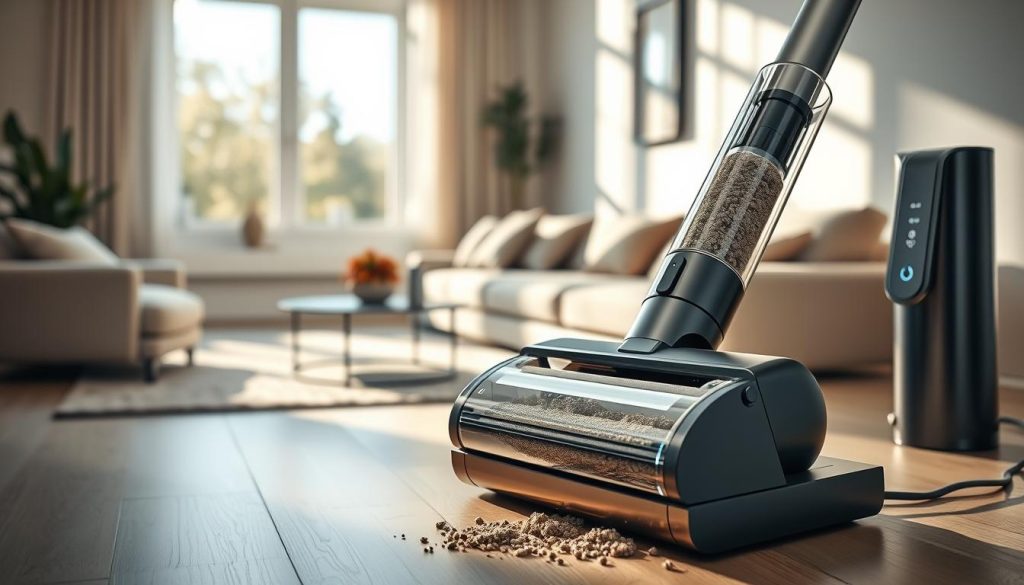
| Feature | Samsung Bespoke Jet AI Ultra | Dyson V12s Detect Slim Submarine |
|---|---|---|
| Suction / Power | Up to 400 W | High-efficiency motor (model spec) |
| Runtime | Up to 160 minutes (dual batteries) | Up to 60 minutes |
| Hygiene / Emptying | Auto-empty Clean Station, sealed bags | Auto-empty compatible, whole-machine filtration |
| Smart / Detection | AI Cleaning Mode 2.0 | Laser dust detection, anti-tangle head |
| Best for | Allergy-aware homes, long sessions | Hard-floor detail, hair & pet households |
Before investing, check after-sales support and warranty options. For product servicing and parts in Singapore, reliable support can be as valuable as the initial feature set. For related cleaning systems and maintenance advice, see our guide on premium cleaning systems.
Water filter vs HEPA filter vs multi-stage cyclone: what actually matters for dust control
Different capture methods change how much airborne dust you actually remove from a room.
What HEPA and E13-grade HEPA capture
HEPA traps tiny particulates that ordinary separators miss. An E13-grade HEPA, such as Airbot’s system, captures about 99.97% of particles. Dyson’s whole‑machine approach reaches ~99.99% down to 0.3 microns.
How washable parts affect costs and performance
Washable pre-filters and dustbowls (Black+Decker is an example) cut consumable spend. They demand careful drying and routine washing to avoid odour and reduced airflow.
- Separation vs final capture: cyclones shed larger debris; HEPA is the final barrier for fine dust.
- Bagless hygiene: emptying a bagless vacuum cleaner can stir dust—slow emptying and bin wipes help.
- Suction consistency: damp or clogged pre‑filters mimic lost suction even when the motor is fine.
Decision rule: prioritise clear hepa claims and tight seals for allergy control. If running costs matter more, favour washable, well‑drained components and good maintenance routines.
Choosing the right vacuum type for your home layout in Singapore
Picking the right machine often comes down to what your rooms look like and how you clean day-to-day.
Stick vacuum cleaner and cordless stick vacuum for daily vacuuming
Stick formats suit flats and condos. They are light, store on a wall mount and make quick vacuuming easy on tiles and vinyl.
Cordless stick vacuum models handle crumbs and routine dust. Brands like Airbot and Xiaomi are practical examples we tested for Singapore homes.
Handheld vacuum for sofas, mattresses and car detailing
A handheld vacuum is ideal for upholstery, mattresses and vents. It reaches fan‑coil areas and tight car seats when you need a fast spot clean.
Wet and dry vacuum for kitchens, dining areas and hard floors
Wet dry systems combine suction and mopping in one pass. They suit kitchens and dining zones where sticky spills beat a two‑step clean.
When a canister vacuum cleaner still wins for deep cleaning
Canister units excel on carpets and long sessions. Choose one if you want larger dust capacity, quieter running and stronger deep‑clean performance.
“Match the tool to your space: storage, floor type and spill frequency are the deciding factors.”
Choose in 60 seconds: tile/hard floors + small storage = stick; lots of upholstery or cars = handheld; frequent spills = wet dry; deep carpet work = canister.
Bagged vs bagless vacuum cleaner: hygiene, maintenance and value over time
We compare sealed-bag systems and open-bin designs to see which keeps dust handling simplest for high‑rise living.
Why sealed bags suit allergy-sensitive homes
Bagged models use sealed disposal. Electrolux data shows this reduces contact with dust during emptying. For households with pets or sensitive occupants, sealed bags cut the chance of a dust plume.
What to expect from a bagless bin
A bagless vacuum offers lower recurring cost but needs more hands‑on care. Expect frequent bin emptying, periodic filter washing and careful drying to avoid odour and lost suction.
- Empty slowly, ideally at a chute or outdoors to limit dust spread.
- Wipe seals and check gasket integrity to keep airflow steady.
- Dry washable parts fully before reassembly to prevent mildew.
| Aspect | Bagged | Bagless |
|---|---|---|
| Hygiene | Sealed disposal, low dust contact | Bin exposure; can stir dust on emptying |
| Maintenance | Replace bags periodically | Empty often; wash and dry filter and bin |
| Value over time | Ongoing bag cost | Time cost and potential part wear |
“Bagged models are usually the most hygienic choice for allergy-prone homes.”
Match style to your tolerance for upkeep. If minimal dust contact matters, choose sealed bags; if running cost and visibility of debris matter more, a bagless option can work well in a small home.
What we’d look for in suction power, battery life and floor tools before buying
We distil technical specs into a short checklist so buyers in Singapore can match features to real cleaning needs. Below we explain how to read suction numbers, minutes runtime claims and which heads and attachments actually help under beds, along skirting and on sofas.
Matching suction strength to hard floors, carpets and fine dust
Suction power matters differently by floor type. For tiles and vinyl, moderate suction plus a good brush head often beats raw numbers. For rugs, aim for higher suction and a motorised roll.
For allergy control, combine suction and filtration to trap fine dust rather than rely on suction alone.
Minutes runtime that realistically cover typical room sizes
Take minutes runtime claims as a guide, not a guarantee. Boost mode cuts runtime sharply; Eco modes extend it.
Plan ~10–15 minutes for a bedroom, ~20–30 for a living area and short bursts for the kitchen. If you need longer sessions, consider detachable batteries or a spare battery pack.
Brushes, crevice tools and LED floor heads for edges and under-bed dust
Look for LED floor heads and edge-friendly designs to spot under‑bed dust. ModernHome and Airbot list LED heads; Xiaomi bundles multiple brush types and a 600 ml bin for fewer empties.
- Crevice tool for skirting and sofa seams.
- Soft dusting brush for shelves and electronics.
- Mini motorised tool for mattresses and upholstery.
Practical tip: if you choose a cordless vacuum cleaner, check charge time and whether the battery is removable so you can swap in a second pack for longer jobs.
For broader buying guidance see our roundup of the best vacuum cleaners.
Where to buy in Singapore: authorised sellers, marketplaces and delivery considerations
Buying from trusted sellers reduces hassle and keeps warranty claims straightforward. We recommend starting at brand stores and major retailers for clearer service paths and easier returns.
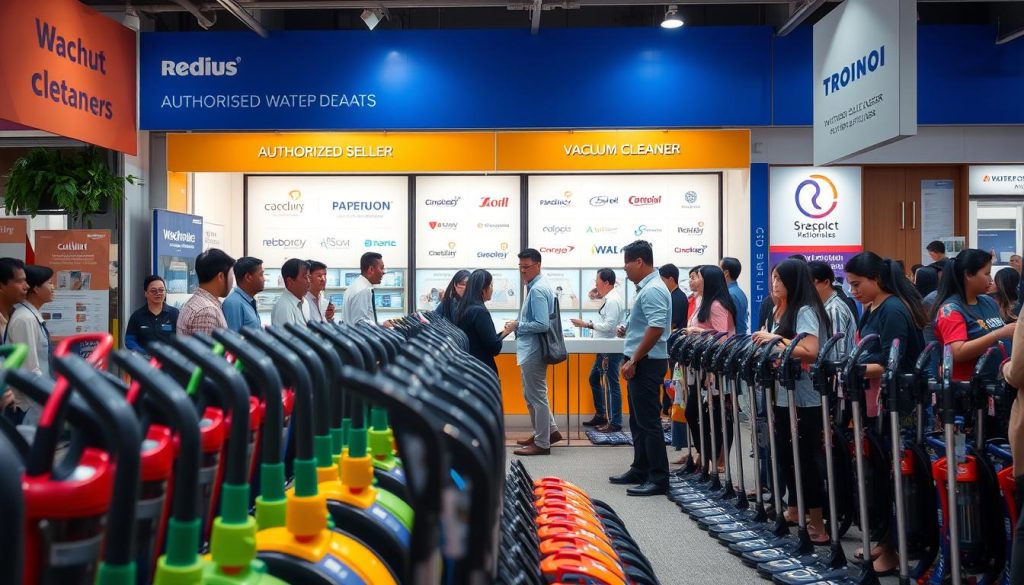
Brand stores and major retailers
Authorised channels include Samsung, Philips, Courts, Harvey Norman, FairPrice, Gain City and Tangs. These outlets usually list local stock and offer in‑store demos.
Why choose them: official warranty handling, expert support and often online-only deals that include free shipping.
Marketplace options and warranty checks
Shopee, Lazada and Amazon carry many models but buyer caution matters. Always verify the seller is authorised and confirm local warranty coverage before checkout.
- Check product pages for Singapore warranty notes and authorised reseller badges.
- Ask whether batteries or spare parts are covered locally; some bundles omit support.
- Compare bundle value: extra filters or a spare battery can save money over time.
Delivery and promo considerations
For bulky wet dry vacuum units or heavier sticks, confirm box dimensions and stair/lift access ahead of time. That avoids delays and possible damage during handover.
Look for: delivery free or free shipping promotions on brand sites and big retailers. Electrolux and others often list delivery free deals that include installation or expert support.
“Confirm local warranty and seller authorisation before you pay—it’s the simplest way to protect your purchase.”
| Where to buy | What to expect | Benefits |
|---|---|---|
| Brand stores (Samsung, Philips) | Official stock, service centre access | Clear warranty handling, demos, occasional free shipping |
| Major retailers (Courts, Harvey Norman, FairPrice) | Local delivery options, showrooms | After‑sales support, bundle promotions, delivery free on larger items |
| Marketplaces (Shopee, Lazada, Amazon) | Wide selection, competitive deals | Potential savings; verify authorised seller and warranty details |
Delivery checklist
- Confirm dimensions and weight for stair or lift access.
- Check return policy for transit damage.
- Ensure bundled items (spare brush, filter or battery) are listed in the invoice.
In short, we prefer authorised retailers for peace of mind, and we use marketplaces when the seller is verified and warranty terms are clear. Look for free shipping and delivery free offers as meaningful add‑ons, especially for heavier models and bagless vacuum cleaner formats.
Keeping performance high: cleaning routines for filters, tanks and brushes
Routine upkeep is the unsung factor that keeps suction and hygiene reliable over months of use.
We found that simple, regular care avoids many service trips and keeps a machine’s suction steady. Small tasks take minutes but protect performance.
How often we’d wash filters and dry components to prevent odours
In humid Singapore we wash washable pre‑filters every 2–4 weeks depending on use. Rinse gently, squeeze excess water and air‑dry fully for at least 24 hours.
Never reassemble damp parts. Dampness causes smells and reduces airflow, which often explains reports of lost suction.
Self-cleaning docks and what they do (and don’t) replace
Self‑cleaning bases (Dreame, Philips, Dibea, Tineco) rinse brush rolls and dry some tanks. They cut routine work but do not replace periodic deep cleaning.
We still remove hair from rollers, wipe tank seals and dry dirty‑water compartments after each wet‑dry session. That prevents odour and residue build‑up.
| Item | Interval | Action | Why |
|---|---|---|---|
| Pre‑filter / HEPA | 2–4 weeks | Rinse, air‑dry 24h | Keep airflow and trap fine dust |
| Brush roll | Weekly (or after heavy hair) | Remove tangles, check end caps | Prevent motor strain and tangling |
| Dirty‑water tank (wet dry) | After every use | Rinse, empty, dry upright | Avoid smells and bacterial growth |
| Battery & contacts | Monthly check | Keep terminals clean; avoid long flat storage | Preserve charge and docking reliability |
Quick tip: follow manufacturer instructions (Airbot, Black+Decker, ModernHome notes) and keep a small maintenance schedule. That simple discipline keeps a unit efficient and saves time in the long run.
Conclusion
Finally, here is a practical recap to help you pick the right machine for daily life.
For everyday dust we favour a best‑value cordless stick; for spills choose a wet dry vacuum that handles sticky messes in one pass; for cars and quick jobs pick a compact handheld or a small dry vacuum.
Match suction power and heads to your floors, then pick filtration and upkeep levels that fit your household. Prioritise a genuine hepa filter and tight seals over headline numbers for fine‑dust control.
Pay more when sealed emptying, anti‑tangle tech or longer runtime save time. Otherwise, a well‑maintained budget model often serves a small Singapore home just fine.
Buy from authorised Singapore channels for clear warranty support, especially for batteries and docking systems, and choose the model that suits your space and routine—consistency beats occasional deep cleans.

