
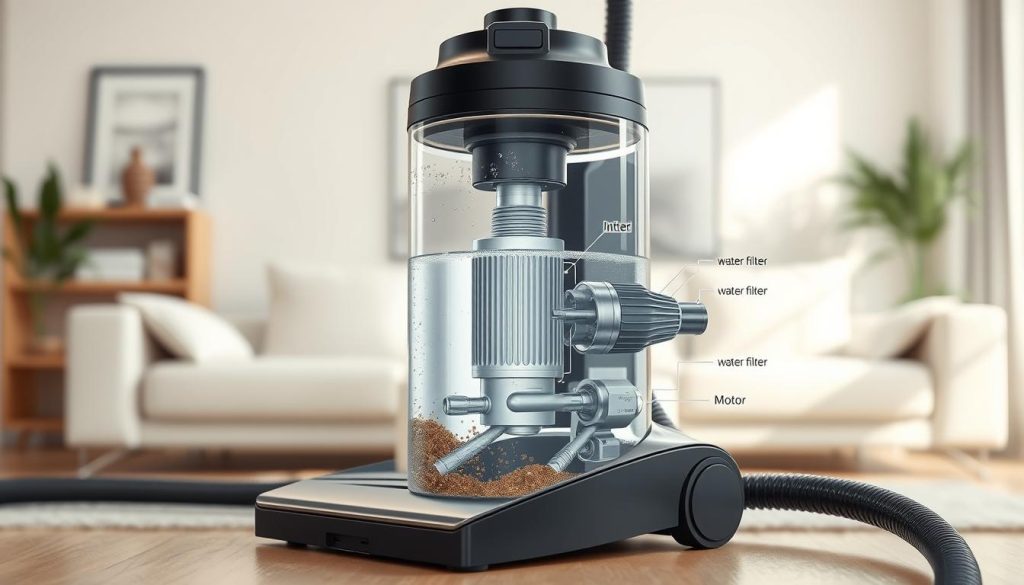
We introduce a compact guide that explains what this all-in-one unit does for homes and businesses in Singapore.
Our aim is to show why a wet dry machine lifts spills and picks up dry debris in one pass. The core idea is simple: motorised suction, safe liquid capture and effective filtration.
We set clear expectations. Readers will learn what fits sealed floors, what to avoid (no hot liquids) and how the dual tanks separate solids from fluids.
We note common uses and quick tips from the market, plus a practical link for extra examples, such as unusual uses that show blowing, suction and post-wash drying tasks.
By the end we will explain system parts, suitable surfaces, maintenance in humid conditions and safe use so you can make informed choices.
What a wet dry vacuum cleaner is and why it’s become a go-to cleaner
Here we explain why a hybrid floor tool has become common in compact Singapore homes and busy businesses.
Definition: The wet dry vacuum is a vacuum/mop hybrid that captures solids while lifting liquid spills. It usually uses separate clean and dirty tanks, a brush or roller to agitate grime, and sealed airflow to cope with moisture.
Design differences: Traditional dry vacuum cleaner models are tuned for dust only. Introducing water forces changes: improved seals, moisture-safe materials, dedicated tanks and revised airflow paths to prevent damage.
Workflow benefits: Users often dry vacuum first then mop. A wet dry vacuum lets us finish both steps in one pass, saving time and reducing fuss. That convenience suits busy kitchens, entryways and small flats.
Types to consider: Cordless stick models, commercial units and versions with built-in drying exist. These devices match different needs and space limits. Later sections unpack sealed airflow and dual tanks in detail.
How does a wet and dry vacuum cleaner work in practice
We trace the machine’s routine, from measured fluid delivery to filter capture and tank storage.
Dispensing and agitation
Measured water and a light solution are released ahead of the roller. This prevents puddles while softening grime.
The brush roller then scrubs sticky spots and loosens embedded dirt so suction can lift particles and liquids together.
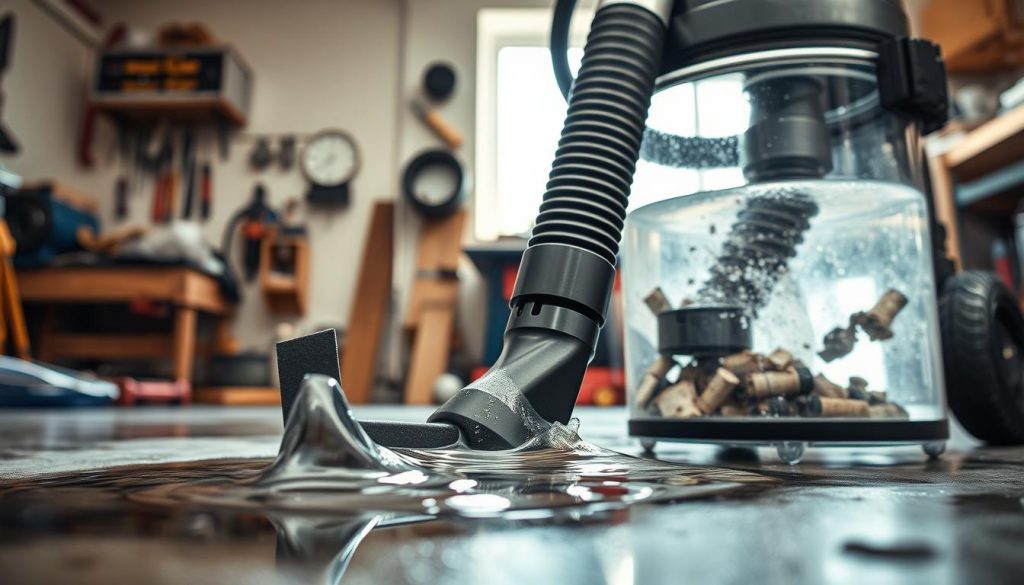
Suction, motor and sealed paths
The motor creates pressure differences that draw water, debris and dirt into the device. Consistent suction power matters more than raw wattage.
Sealed airflow paths and moisture-safe construction route wet flow away from delicate parts to avoid damage.
Tanks, filters and self-clean
Dual tanks keep fresh water separate from dirty water for hygiene. Filters capture fine dust while permitting liquid pickup.
“One-button self-clean cycles flush rollers and channels, reducing residue and odours.”
| Stage | Function | Benefit |
|---|---|---|
| Dispense | Controlled water delivery | Prevents over-wetting |
| Agitate | Brush roller scrubs | Releases sticky dirt |
| Collect | Dual tank + filters | Hygienic separation, easy rinse |
Some models speed drying as they clean, so floors reopen sooner — useful in busy Singapore venues. For product examples, see wet vacuum cleaner examples.
What you can clean with wet dry vacuums and when to use dry vacuum mode
We outline where this tool truly earns its keep around the home and in busy public spots.
Everyday mixed messes: For crumbs plus spills, a wet dry vacuum clears mixed messes in a single pass. We remove sticky sauce and loose debris together without dragging particles across floors.
High-traffic areas: Kitchens, entryways and pet corners often present damp grit and fur. These areas favour machines that switch modes so we can pick up liquid spills and then revert to dry for loose dust.
Commercial settings: Retail aisles, restaurant dining floors, hotel corridors and clinic waiting areas benefit from faster turnaround. Quick cleaning reduces blocked-off areas and keeps customers moving.
“One-pass cleaning saves time and reduces rework in busy spaces.”
When to use dry mode: Choose dry vacuum mode for quick pick-ups of dust or crumbs when no moisture is present. For daily resets we run the wet option sparingly and schedule deeper cleans less often to protect surfaces and reduce streaking.
For practical guidance on safe water handling and usage tips, see our recommended guide at wet dry vacuum usage advice.
Wet and dry vacuum cleaner benefits for Singapore homes
In tight flats where storage is scarce, one multipurpose machine often replaces several bulky cleaning tools.
Compact layouts: We use one device instead of a separate vacuum, mop and bucket. That reduces clutter in small kitchens and living rooms. It also means we are more likely to clean small spills straight away.
Humidity and grime: Singapore’s climate speeds floor soiling. Controlled water delivery and separate dirty-water collection help reset surfaces without soaking edges or leaving residue.
Time savings: With roughly 42 hours at work many weeks, quick cleaning sessions matter. Shorter setup and one-pass cleaning save us time after meals or guest visits.
Hygiene for barefoot households: Dual tanks keep used water away from fresh supply. That reduces cross-contamination and lowers odour risk between cleans.
- Replaces multiple tools, saving storage space.
- Adjustable water flow prevents overwetting laminate edges.
- Faster sessions fit busy Singapore routines.
| Benefit | Why it matters | Practical tip |
|---|---|---|
| Space saving | Fewer items to store in small flats | Choose compact units with dock storage |
| Controlled water use | Prevents floor damage and puddles | Use low-flow setting on delicate floors |
| Time efficiency | Quicker cleanup after dinner or play | Opt for units with fast emptying tanks |
| Hygiene | Separation of clean and dirty water | Rinse dirty tank after each heavy clean |
“One appliance can turn a long chore into a short routine.”
Next step: Not every model fits every household. We recommend comparing tank size, runtime, noise and maintenance costs before choosing one for your home.
Key features to compare before you buy a wet dry vacuum in Singapore
Before we buy, we must weigh practical trade‑offs that affect daily use in compact flats and condos. Specs matter, but day‑to‑day ergonomics decide whether a model becomes our go‑to tool.
Tank capacity trade‑offs
Choose tank size for real use. Around 500–700 ml per tank suits most small homes.
Larger tanks mean fewer stops but add weight. That affects manoeuvrability in tight hallways.
Edge cleaning and low‑profile heads
Low heads and narrow profiles reach skirting boards and under sofas. Check edge clearance specs; some models clean within 0.6 cm of baseboards for better results.
Runtime, charging and dock storage
We look for 20–30 minutes runtime to match typical sessions. A dock makes storage and charging effortless so the device is ready when needed.
Noise, hygiene and washable components
Quieter units suit shared living. Washable filters and parts cut ongoing costs and improve hygiene in humid climates.
Maintenance costs and local parts
Check replacement rollers, filters and local stock. Models like NNIO WEDEE and Dreame show how specs translate into cleaning results and maintenance needs.
How to use a wet and dry vacuum cleaner for better results
We begin with simple prep steps that stop clogs and speed up each session.
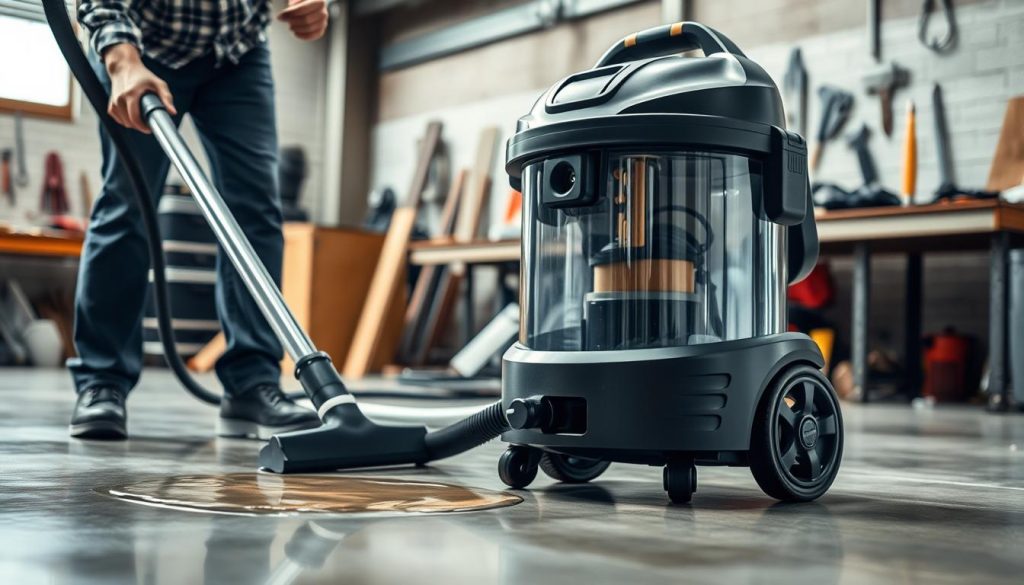
Preparing surfaces
Pick up large debris first. Remove food chunks, stones and visible grit by hand or with the handheld tool so rollers and channels do not clog.
Choose water flow to suit the mess: low for dusty or moisture‑sensitive surfaces, higher for sticky spills or greasy patches.
One-pass technique
Use slow, steady strokes to let the roller scrub and the suction recover dirty water. Move at a pace that keeps the head uniformly damp, not puddled.
Overlap each pass slightly and pause for a second on stubborn spots. If your model supports a final suction-only pull, finish with that to reduce streaking.
Surface checks
Confirm sealed hardwood is suitable and follow manufacturer guidance for laminate; use low moisture settings where indicated.
Tiles and vinyl tolerate wetter passes, but always keep water within the recommended fill lines for system protection.
Safety limits
Avoid hot liquids entirely — heat harms seals and internal parts. Always respect fill markers and switch to dry mode for routine dust and crumbs.
“Preparation and measured flow are the simplest steps to steady suction and streak-free results.”
- Prep: remove large debris to prevent clogs.
- Flow: lighter for sensitive floors, higher for sticky messes.
- Technique: steady strokes, overlap, finish suction-only if possible.
Maintenance and protection to keep your vacuum cleaner performing
Simple maintenance habits protect components and extend useful life. We treat upkeep as routine, not a chore. Regular care preserves suction, cuts smells and prevents early damage.
Post-clean routine: empty and rinse the dirty tank
After every session we empty the dirty container promptly. Rinse the tank and wipe seals to stop residue becoming odour or bacterial build-up.
Never leave dirty water overnight. That simple step avoids many common faults in humid climates like Singapore.
Roller and channel care
Use self-clean cycles when available; they clear rollers and channels after regular use.
For hair wrap or stubborn sludge we deep-clean manually. Remove the head, trim tangles and flush channels with fresh water.
Filter upkeep and airflow
Clean or replace filters to keep airflow strong and dust capture effective. Washable filters must dry completely before refitting.
Drying and storage
Air-dry tanks, rollers and the collection container in a ventilated spot. Store the device with lids open to reduce mould risk.
“Consistent upkeep preserves suction, reduces smells, and extends device life.”
- Empty and rinse the dirty tank after each use.
- Run self-clean for routine clearing; deep-clean monthly or after heavy messes.
- Dry filters fully; store components in the open to avoid mildew.
- Avoid sealing wet parts in cupboards or leaving water to sit.
| Task | Frequency | Why it matters | Quick tip |
|---|---|---|---|
| Empty dirty tank | After every session | Prevents odour and bacterial growth | Rinse immediately and wipe seals |
| Self-clean / flush channels | After routine use | Removes surface residue and keeps rollers free | Use machine cycle, then air-dry parts |
| Deep-clean head & rollers | Monthly or after hair clogs | Stops blockages and mechanical strain | Trim hair and scrub stubborn sludge |
| Filter maintenance | Weekly visual check, wash as needed | Keeps airflow and dust capture effective | Ensure filters dry fully before reinstall |
Conclusion
To finish, we offer a simple decision lens for mixed cleaning needs.
In short, wet dry systems apply measured solution, agitate to loosen dirt, then recover liquids plus debris into a separate dirty tank. This differs from bag designs by using a rinseable canister made for liquids, which helps hygiene and avoids bag failure.
For Singapore flats, the best results appear in kitchens and entryways where quick floor readiness matters. Prioritise tank size, edge reach and dock storage over raw power when you choose a wet dry vacuum or vacuum cleaner.
Final note: rinse and air-dry parts after each use to protect performance and prolong the life of your vacuum cleaner.

