

Dealing with pet accidents can be frustrating, especially when they leave behind stubborn stains and odors. Acting quickly is essential to prevent permanent damage to your floors. Whether it’s hardwood, carpet, tile, or laminate, each surface requires a specific approach to ensure effective results.
Natural solutions like vinegar and baking soda are popular choices for tackling these issues. They are not only effective but also safe for both your floors and your furry friends. For tougher stains, commercial products designed for pet accidents can provide a more powerful solution.
Protecting your home and your pet’s health is a priority. Using pet-safe methods ensures that your floors remain in great condition while keeping your dog safe from harmful chemicals. With the right techniques, you can maintain a clean and fresh living space.
Key Takeaways
- Quick action prevents permanent stains and odors.
- Different surfaces require specific cleaning methods.
- Natural solutions like vinegar and baking soda are effective and safe.
- Commercial products can handle tougher stains.
- Pet-safe methods protect both floors and pets.
Introduction: Why Cleaning Dog Urine Quickly is Essential
Quick action is crucial when dealing with unexpected messes. Urine left untreated can seep into surfaces like wood grain or carpet padding, causing long-term damage. The pH level in urine can break down floor finishes in as little as 20 minutes, making immediate cleanup vital.
Health risks are another concern. Lingering odors not only attract repeat accidents but can also harm indoor air quality. For example, a basement concrete floor absorbed cat urine, requiring a multi-step cleanup process to eliminate the smell and restore the area.
Delayed cleaning can lead to costly repairs. Hardwood floors may need sanding and refinishing, while carpets might require professional cleaning. Acting within the golden hour—the first 60 minutes after an accident—ensures the best chance of preventing stains and odors.
| Issue | Impact | Solution |
|---|---|---|
| Urine pH | Damages floor finishes | Clean within 20 minutes |
| Lingering Odors | Attracts repeat accidents | Use enzyme-based cleaners |
| Delayed Cleaning | Costly repairs | Act within the golden hour |
Protecting your home from damage is essential. By addressing spills promptly, you can maintain a fresh and healthy living environment for both you and your pets.
How to Clean Dog Urine from Hardwood Floors
Maintaining the beauty of wood surfaces requires quick and effective action. Spills can cause lasting damage if not addressed promptly. With the right steps, you can protect your hardwood floors and keep them looking pristine.
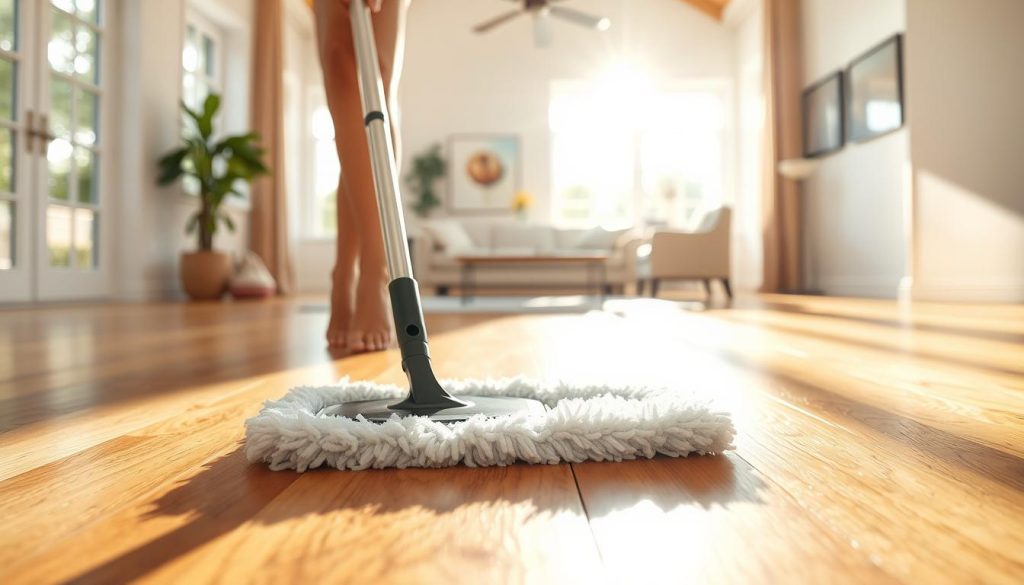
Blot the Spill Immediately
Start by blotting the area with layered paper towels. Place a newspaper underneath to absorb excess moisture. This prevents the liquid from seeping into the wood grain.
Use a Vinegar and Water Solution
Mix ½ cup of vinegar with a gallon of water for a safe cleaning solution. Dampen a cloth with the mixture and gently wipe the affected area. Avoid oversaturating the wood to prevent warping.
Apply Baking Soda for Stubborn Odors
Sprinkle baking soda over the spot and let it sit for a few hours. This natural remedy neutralizes odors without harming the wood. Vacuum the residue once it’s dry.
Consider Hydrogen Peroxide for Deep Stains
For tough stains, use a 3% hydrogen peroxide solution. Apply it to the area and cover with plastic wrap for two hours. Note: Test this method on a hidden spot first, as it may discolor certain wood types.
“Always test cleaning solutions on a small, hidden area to ensure they won’t damage your floors.”
| Step | Material | Tips |
|---|---|---|
| Blotting | Paper towels, newspaper | Layer for better absorption |
| Vinegar Solution | Vinegar, water, cloth | Use a damp, not wet, cloth |
| Baking Soda | Baking soda, vacuum | Let it sit for a few hours |
| Hydrogen Peroxide | 3% solution, plastic wrap | Test on a hidden area first |
By following these steps, you can effectively address spills and maintain the quality of your hardwood floors. Quick action and the right techniques ensure a clean and fresh home environment.
Cleaning Dog Urine from Carpets and Rugs
Accidents happen, and when they do, carpets and rugs often bear the brunt. Soft surfaces can trap liquids and odors, making immediate action essential. By following a few simple steps, you can effectively address spills and keep your home fresh.
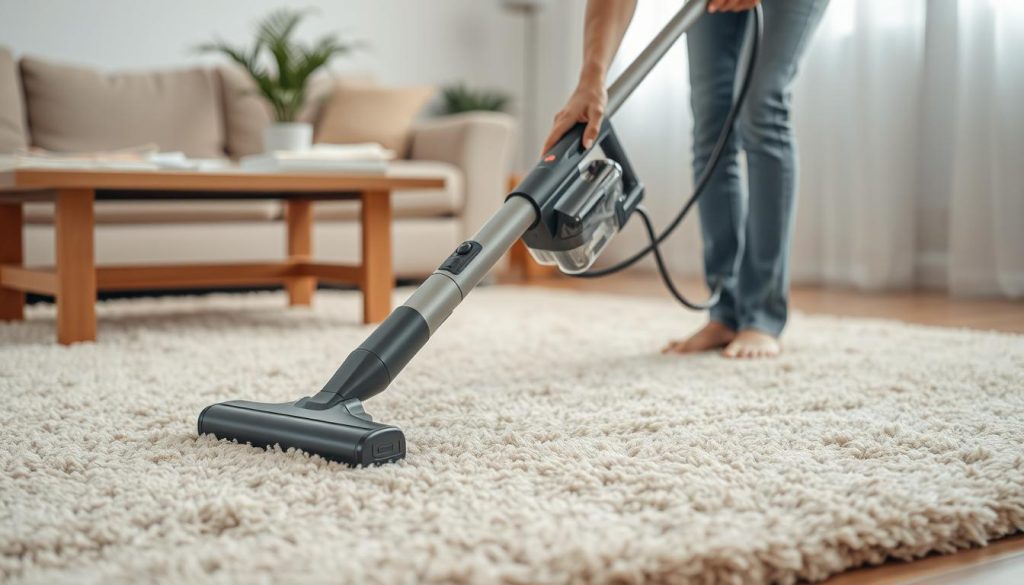
Step 1: Absorb as Much Urine as Possible
Start by blotting the affected area with clean towels. Layering them helps absorb more liquid quickly. Avoid rubbing, as this can push the spill deeper into the fibers. For larger spots, consider using a wet-dry vacuum to remove excess moisture.
Step 2: Use an Enzyme-Based Cleaner
Enzyme-based cleaners, like Rocco & Roxie’s formula, break down proteins in urine, eliminating both stains and odors. Apply the cleaner according to the instructions and let it sit for the recommended time. This ensures it penetrates deep into the carpet fibers.
Step 3: Try Baking Soda and Vinegar for Natural Cleaning
For a natural approach, mix baking soda and vinegar to create a fizzing reaction. This helps lift embedded odors and stains. Sprinkle baking soda over the spot, spray a vinegar-water solution, and let it sit for 15 minutes. Blot the area clean and allow it to dry.
“Enzyme cleaners are highly effective for removing pet stains and odors, as they target the source of the problem.”
For hidden stains, consider using a UV urine detector to locate affected areas. Avoid steam cleaners for dried spills, as they can lock in odors and promote mold growth. Regularly vacuuming with a device like the eufy S1 Pro can also help prevent lingering smells.
By acting quickly and using the right methods, you can protect your carpets and rugs from lasting damage. Whether you choose commercial products or natural solutions, the key is to address spills promptly and thoroughly.
DIY Solutions for Removing Dog Urine Smell
Natural remedies can be a game-changer when tackling persistent odors at home. With simple ingredients like vinegar, baking soda, and hydrogen peroxide, you can get rid of unwanted smells effectively. These DIY solutions are not only affordable but also safe for your living space.
Vinegar and Water Mixture
A vinegar and water solution is a popular choice for neutralizing odors. Mix equal parts of white vinegar and water in a spray bottle. Lightly mist the affected area and let it sit for 10-15 minutes. Blot the spot with a clean cloth to remove the solution and any lingering smells.
Baking Soda and Hydrogen Peroxide Combo
For tougher odors, combine baking soda with hydrogen peroxide. Mix 1 cup of hydrogen peroxide with 1 teaspoon of dish soap. Apply the mixture to the stained area and let it foam. After 10 minutes, blot it clean. Note: Avoid using this on dark carpets, as hydrogen peroxide may cause bleaching.
Enzyme Cleaners for Persistent Odors
Enzyme cleaners are highly effective for breaking down organic matter and eliminating odors. Products like Nature’s Miracle target the source of the problem. For a homemade alternative, mix baking soda with water and a few drops of essential oils like lavender or citrus for added freshness.
“Enzyme cleaners are a reliable way to tackle persistent odors, ensuring your home stays fresh and clean.”
By following these steps, you can maintain a fresh and odor-free environment. Whether you choose commercial products or natural remedies, the key is to act promptly and thoroughly.
How to Clean Dog Urine from Tile and Laminate Floors
Tile and laminate surfaces require specific care when addressing spills to maintain their appearance and durability. Quick action is essential to prevent stains and odors from setting in. Different materials, such as ceramic and porous stone, need tailored approaches for effective results.
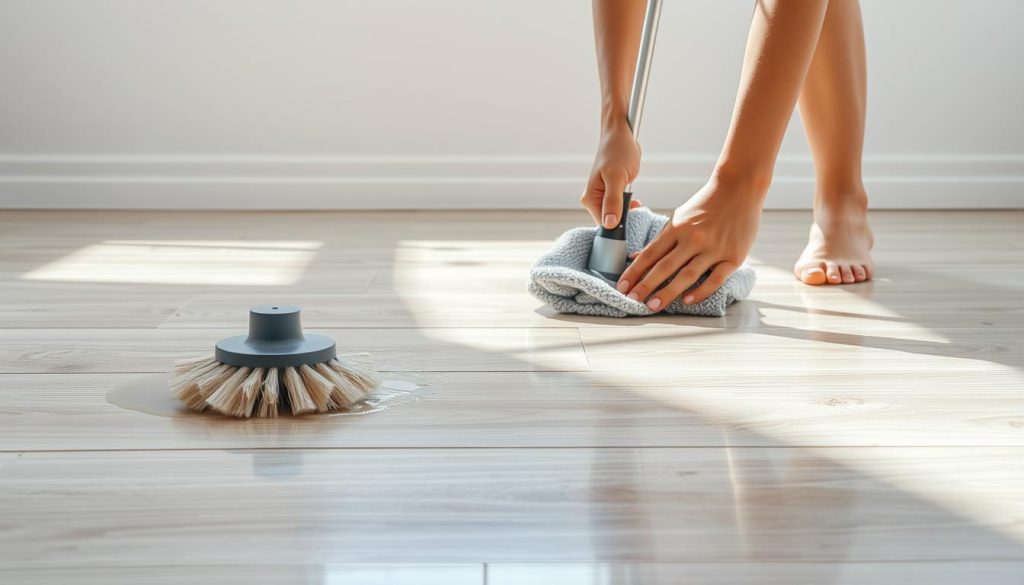
Step 1: Wipe Up the Spill Immediately
Start by blotting the affected area with a clean cloth or paper towels. Layering them helps absorb more liquid quickly. Avoid rubbing, as this can spread the spill further. For larger spots, consider using a squeegee to prevent liquid from seeping into plank flooring.
Step 2: Use a Mild Detergent or Vinegar Solution
Mix a mild detergent with water or create a vinegar solution by combining equal parts vinegar and water. Dampen a cloth with the mixture and gently wipe the area. For grout lines, use a stiff-bristle brush with oxygen bleach to remove embedded odors.
Step 3: Dry the Area Thoroughly
After cleaning, ensure the area is completely dry to prevent moisture damage. Use a dry cloth or fan to speed up the process. Avoid wax-based cleaners on laminate, as they can leave a residue and dull the surface.
“Using enzyme cleaners on grout lines can effectively break down odors and prevent repeat accidents.”
| Surface | Cleaning Method | Tips |
|---|---|---|
| Ceramic Tile | Mild detergent or vinegar solution | Use a damp cloth, avoid oversaturating |
| Porous Stone Tile | Oxygen bleach and stiff-bristle brush | Focus on grout lines for deep cleaning |
| Laminate | Water and vinegar solution | Avoid wax-based cleaners |
By following these steps, you can protect your tile and laminate floors from lasting damage. Whether you choose natural solutions or commercial products, the key is to act promptly and thoroughly.
When to Call in the Professionals
Sometimes, DIY methods aren’t enough to tackle stubborn issues at home. When odors persist or damage worsens, it’s time to consider expert help. Professionals can address problems like subfloor damage or inaccessible leaks, ensuring your flooring remains in top condition.
Watch for red flags like soft spots, recurring odors, or discolored wood. These signs often indicate deeper issues that require specialized attention. For example, a case study showed how enzymatic treatments effectively restored a basement after severe urine damage.
Costs can vary depending on the extent of the problem. Refinishing might be a budget-friendly option, but full floor replacement could be necessary for severe damage. Tools like the Bissell SpotClean Pro offer a way to handle deep cleaning yourself, but for complex issues, professional services are the best product.
“Professional cleaners have the tools and expertise to handle even the toughest stains and odors.”
If accidents become frequent, consult a vet. Health issues like urinary tract infections could be the cause. Addressing the root problem ensures your pet’s well-being and protects your home.
Conclusion: Keeping Your Home Fresh and Clean
Maintaining a fresh and odor-free home is achievable with the right tools and routines. Enzyme cleaners and baking soda are excellent for tackling accidents, while robot vacuums help keep floors spotless. Immediate blotting and weekly odor checks ensure spills don’t linger.
Preventative measures like pee pads and potty training refreshers can reduce future mishaps. Even stubborn smells yield to persistence, so don’t give up! Share your #1 urine cleanup hack in the comments and help others keep their spaces fresh.

