

We know that intestinal gas is normal: it comes from swallowed air or bacteria breaking down food in the large intestine. Most dogs pass gas several times a day and this is usually mild.
In Singapore’s enclosed, air‑conditioned flats, odour can linger on soft furnishings, bedding and carpets. Quick cover‑ups often fail; proper ventilation and cleaning work far better. We will show a fast plan for today and clearer steps for longer term control.
Our immediate steps are fresh air exchange, targeted cleaning and safe odour neutralisers. For lasting change we focus on diet, feeding habits and microbiome support.
We will also help you spot the source — swallowed air versus fermentation by gut bacteria — so you choose the right fixes. Where patterns or symptoms suggest a problem, we recommend seeking veterinary advice.
Why dog flatulence can linger in your home
Confined living spaces magnify odour hold‑over because textiles and stagnant air act like sponges for gas.
What the gas is: Expelled gas comes from swallowed air moving through the gastrointestinal tract or from fermentation when bacteria break down food in the large intestine.
Normal amounts and warning signs
Many pets pass gas five to twenty times a day. Brachycephalic breeds often show a higher amount because they swallow more air while eating and drinking.
When to be concerned: Noticeable increases, very smelly gas, or a sudden change alongside diarrhoea, vomiting or appetite loss suggest an underlying gut or diet issue and warrant a check with a vet.
Why odour stays behind
- Trapped air slows dissipation in rooms with poor ventilation.
- Upholstery and bedding absorb volatile compounds and release them later.
- Cleaning that masks odour often leaves residues that hold scent.
| Origin | Typical scent | Action |
|---|---|---|
| Swallowed air | Mild, less odorous | Slow feeding, manage air intake |
| Bacterial fermentation | Often foul, sulphurous | Review diet, consider probiotic support |
| Environmental build‑up | Lingering indoors | Improve ventilation and deep clean fabrics |
How to get rid of dog flatulence smell in house quickly
Immediate action makes a noticeable difference. We advise a 10–30 minute rapid-response routine that moves air and treats fabrics so scent does not linger.
Air the space effectively
Open opposing windows or doors to create cross-ventilation. Use fans positioned to push indoor air outside rather than recirculate it.
In humid Singapore conditions, brief, vigorous “air flushes” work best. Run a dehumidifier afterwards if the room feels damp.
Clean soft furnishings and bedding
Soft items trap volatile compounds. Wash sofa throws, curtains, rugs and pet bedding with a pet-safe detergent and dry fully in sun or a hot dryer cycle.
Spot-clean upholstery with enzyme cleaners for organic odours. For stubborn residue, professional steam cleaning helps.
Manage resting spots and habits
Designate washable covers and rotate bedding weekly. Avoid placing beds in corners with poor air flow where scent concentrates.
Regular vacuuming and routine airing cut repeat odours. Persistent issues may indicate dietary or health issues and need vet input.
Use safe odour-control products
Choose enzyme-based cleaners and true odour neutralisers labelled pet-safe. Avoid irritant aerosols that can worsen respiratory problems.
Make sure the animal stays away until surfaces dry and the room has been ventilated. For further reading on gut-focused approaches that may help reduce gas, see our detailed guide here.
| Action | Purpose | Quick result |
|---|---|---|
| Cross-ventilation | Remove stale air | Odour disperses within minutes |
| Enzyme cleaner on fabrics | Break organic residues | Reduces source of recurring scent |
| Washable covers & rotation | Limit fabric saturation | Fewer repeat episodes |
| Pet-safe neutralisers | Neutralise volatile compounds | Immediate smell improvement |
Spot the source: swallowed air vs gut bacteria
Start by narrowing the likely source: is the odour linked to mealtimes or appearing hours later? That simple timeline steers our next steps.
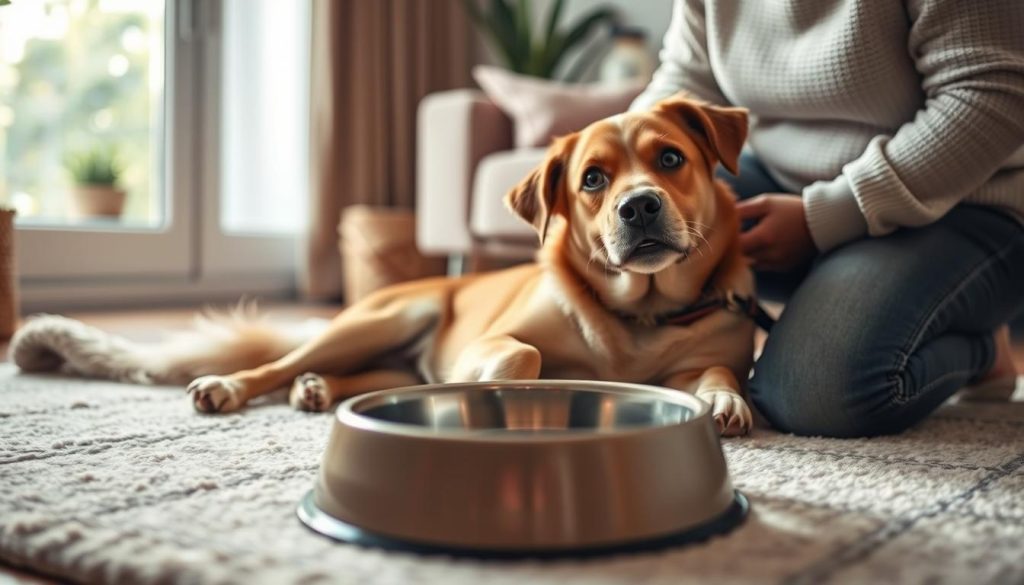
Aerophagia from eating too fast and why it matters
Aerophagia happens when a dog eats quickly and swallows a lot air. That air travels through the digestive tract and exits as gas soon after a meal.
Common signs include gulping, frantic eating, or racing other pets at the bowl. These behaviours raise the chance of frequent episodes and stronger indoor odour.
Fermentation in the large intestine and smelly gas production
Bacterial fermentation occurs later in digestion when gut bacteria break down harder-to-digest ingredients. This process often produces more pungent gases.
Smells that arise hours after feeding or that follow certain foods point to fermentation rather than swallowed air.
| Source | Timing | Clues | Practical action |
|---|---|---|---|
| Aerophagia (swallowed air) | Immediately or soon after meals | Gulping, bowl competition, fast eating | Use slow-feeders; separate meals; change bowl |
| Bacterial fermentation | Hours after eating | Food-specific, foul sulphurous scent | Adjust diet composition; consider probiotic support |
| Mixed or environmental factors | Variable | Persistent odour despite quick fixes | Deep-clean fabrics; reassess diet and habits |
Decision point: identify the likely cause first so we choose the right fixes and avoid wasted effort. From here, we tailor feeding tools for swallowed air or diet changes for fermentation-driven gas production.
Diet triggers that commonly cause excessive gas in dogs
Certain common foods in our kitchens are frequent triggers for strong canine gas. We look at ingredients and patterns that often worsen indoor odour and digestive upset.
High‑fibre and complex carbohydrates
Peas, lentils, beans and some legumes are healthy but fermentable. When bacteria break these down in the large intestine they produce extra gas.
Soy and filler ingredients
Soybean meal and soya hulls have been linked with increased intestinal and faecal‑smelling gas in studies. Labels often hide these as cheap fillers.
Sulphur‑rich foods
Eggs, broccoli and cauliflower can raise hydrogen sulphide production. That compound gives the classic rotten‑egg scent that makes rooms feel stale.
Dairy and lactose intolerance
Many adult pets lack sufficient lactase. Dairy products can therefore cause loose stools, discomfort and increased gas.
High‑fat and spicy items
Rich or spicy human food can upset digestion and worsen odour. Offer plain, low‑fat treats as safer alternatives.
| Trigger | Typical effect | Practical action |
|---|---|---|
| Complex carbs / high fibre | Extra fermentation; more gas | Introduce gradually; monitor portion size |
| Soy-based ingredients | Increased intestinal and faecal gas | Read labels; choose limited‑soy formulas |
| Sulphur-rich foods | Hydrogen sulphide; smelly gas | Limit servings; avoid regular table scraps |
| Dairy products | Lactose intolerance; loose stools | Trial exclusion; use lactose-free options |
Practical tip: keep a short elimination log of food and treats. This helps us spot the most likely causes and simplifies any vet discussion.
Fix feeding habits to reduce dog gas indoors
Small changes at mealtime can sharply reduce the amount of air a pet swallows. We focus on behaviour and tools that cut aerophagia so the amount of gas produced falls, even if diet stays the same.
Slow-feeding tools that limit swallowed air
Slow bowls, puzzle feeders and lick mats break a meal into smaller actions. These devices force slower chewing and reduce the volume of air taken with each bite.
Timed dispensers add pauses, which calm eager eaters and lower overall gas production.
Adjust kibble texture and moisture
Lightly wetting dry kibble softens pieces and shortens vigorous gulping. That change often helps reduce gas by encouraging slower mastication.
We advise small tests: change one meal and watch for fewer episodes over a week.
Manage mealtimes and treats
In multi-pet homes, separate feeding stations so competition does not prompt rapid eating. Keep portions consistent and limit rich extras that stress the digestive system.
“Behavioural fixes can cut indoor odour more quickly than diet swaps alone.”
| Action | Why it works | Expected result (time) |
|---|---|---|
| Slow-feeder bowl | Reduces gulping and air intake | Noticeable in 3–7 days |
| Licking mat / puzzle | Encourages steady, prolonged eating | Noticeable in 1–2 weeks |
| Lightly wet kibble | Softens texture; reduces fast chewing | Immediate to a few days |
| Separate meals for each pet | Removes competition and stress | Immediate improvement |
Try a two-week plan, changing one variable at a time. Observe the digestive system and note any drop in episodes. Above all, make sure changes are gradual and suit your pet’s age and activity level.
Transition dog food the right way to protect the digestive tract
A sudden swap in a pet’s bowl often unsettles the gut and raises gas within days.
Abrupt food changes disrupt gut bacteria. The digestive tract needs time to adapt to new ingredients and nutrient profiles. Without a slow plan, we commonly see diarrhoea and excessive gas.
Simple seven-day schedule
- Day 1–2: 75% current food / 25% new dog food.
- Day 3–4: 50% / 50% mix.
- Day 5–6: 25% current / 75% new.
- Day 7: 100% new food, if stools remain normal.
Adjust slower for sensitive dogs. Move over two weeks when prior stomach upsets exist.
Monitor and respond
Check stool quality every day. If diarrhea appears, pause and revert to the last tolerated ratio. Keep water available and increase hydration if loose stool continues.
“A careful transition reduces digestive upset and the amount of gas released indoors.”
- When switching between kibble and wet food, mix textures gradually and watch portions.
- Limit treat changes during the period — treats can sabotage progress.
- Keep a brief log of time, portions and any symptoms for vet review if needed.
Well-managed transitions cut digestive disturbances, which in turn lowers episodes of gas and the odour that follows. For carpet and fabric cleaning tips during a transition, consider the Lura wet‑dry cleaner at Lura wet‑dry cleaner.
Support digestive health by improving gut microbiome balance
A stable community of gut microbes keeps digestion steady and limits sudden odour spikes.
What balanced looks like: diversity matters. A varied mix of beneficial bacteria supports nutrient absorption, immune function and steady digestion. That mix reduces excess gas and softer stool variation.
Disruptions that unbalance bacteria
Antibiotics and rapid diet shifts can wipe out helpful strains. Pets often show more fermentation and stronger gas within days or weeks after such changes.
Support with targeted supplements
Probiotics add live cultures that repopulate helpful bacteria. Prebiotics feed them, and postbiotics supply beneficial metabolites.
- Choose dog-specific probiotics and introduce slowly.
- Monitor stool quality and adjust over a few weeks.
When testing helps
We recommend a microbiome test for recurring symptoms, repeated food failures or after multiple antibiotic courses. Results guide precise diet and supplement choices and save time.
“Microbiome support often yields calmer bellies, firmer stools and fewer room-clearing episodes.”
| Action | Why | Expected time |
|---|---|---|
| Probiotic plus prebiotic | Restore balance | 2–6 weeks |
| Gradual diet change | Protect bacteria | 1–3 weeks |
| Microbiome test | Pinpoint issue | Results in 1–2 weeks |
Home remedies and supplements: what may help with smelly gas
Certain supplements change gas chemistry, lowering the worst odour components while we work on diet and feeding habits.
Activated charcoal, zinc acetate and Yucca schidigera
A UK study reported that activated charcoal, zinc acetate and Yucca schidigera reduced hydrogen sulphide levels in canine flatulence. That means less offensive scent, though total gas volume often remains unchanged.
Yoghurt, ginger and gentle digestive aids
Plain yoghurt can supply live cultures that support digestion when given in small amounts. Ginger may soothe an upset stomach and calm occasional episodes.
Introduce these options slowly and watch the bowel output for changes.
When to avoid over-the-counter products and check with your vet
We treat home remedies as optional add-ons, not replacements for diet change or feeding tools. Avoid human formulations with unverified dosing. Check ingredient lists and interactions if your dog is on medication.
Seek veterinary advice if smelly gas is persistent, severe, or accompanied by diarrhoea, vomiting or weight loss.
| Remedy | Evidence | What it affects |
|---|---|---|
| Activated charcoal | Clinical reduction in hydrogen sulphide | Odour chemistry, not total gas |
| Zinc acetate | Study shows lower sulphide levels | Less foul scent |
| Yucca schidigera | Shown to reduce gas odour | Targets volatile sulphur compounds |
| Plain yoghurt / ginger | Traditional/limited clinical support | Support digestion and comfort |
When dog flatulence signals a health issue that needs a vet
Persistent, unusually foul gas may indicate more than diet — it can be a sign of an underlying medical problem. We must treat repeated or severe episodes as potential medical concerns.

Warning signs that move this from nuisance to urgent include persistent excessive gas, ongoing diarrhoea, repeated vomiting, weight loss, lethargy or blood in stool.
Common medical causes vets investigate
Parasites such as worms and Giardia, plus bacterial or viral infections, often produce extra gas and loose stool. Treating the root cause restores comfort and reduces household odour.
Chronic gastrointestinal and pancreatic problems
Conditions like IBD, colitis, SIBO or EPI commonly affect the bowel and digestive system. Pancreatic disease can follow a high-fat meal and needs prompt assessment.
Allergy, anal glands and odour clues
Food allergy or intolerance may cause recurrent episodes tied to certain proteins. Anal gland issues often give a skunk or fishy scent. A metallic smell can signal internal bleeding and requires urgent veterinary care.
| Sign | Possible cause | When to see a vet |
|---|---|---|
| Persistent gas + diarrhoea | Parasites, infection, IBD | Within 48 hours or sooner if worsening |
| Weight loss or poor appetite | EPI, chronic GI disease, cancer | Prompt investigation |
| Skunk/fishy/metallic odour | Anal glands, liver/kidney, bleeding | Immediate vet assessment |
What to bring to the clinic: recent diet and treats list, symptom timeline, photos of stool, copies of medications and any prior test results. This information helps vets identify causes faster and plan effective treatment.
“Early diagnosis protects our pet’s comfort and restores household wellbeing.”
Conclusion
A simple mix of immediate cleaning and longer-term diet changes gives the best results. Open the room for fresh air, deep-clean fabrics and use pet-safe products that neutralise rather than mask odour.
We separate causes into swallowed air and fermentation by gut bacteria. Match the fix to the cause and you save time and frustration. For many dogs, slow feeding and a careful change in diet cuts episodes of gas quickly.
Review food ingredients, support the gut with probiotic strategies and move slowly when changing food. Persistent or severe issues may signal medical concern in the digestive tract and need veterinary input.
Pick one immediate action and one longer-term step this week. For practical home remedies and a concise plan for gas relief, see our gas relief home remedy guide — then reassess after a short period to help reduce repeat episodes and protect your pet’s comfort.

