

We explain exactly how we approach cleaning sofa with steam cleaner at home in Singapore. Our method uses hot vapour to lift grime, freshen upholstery and target odours and dust that hide deep in fibres.
Before we switch the machine on, we always check the care label and test a hidden area for heat sensitivity. This step helps avoid water marks and texture changes.
We keep the process simple and repeatable. Short passes, controlled moisture and quick drying matter, especially in humid flats where airing is limited.
Our aim is clear: lift surface dirt, loosen embedded debris and improve freshness without over-wetting. If a fabric reacts badly, we stop and choose vacuuming, extraction or professional help instead.
Why we steam clean sofas regularly in Singapore homes
In busy Singapore homes, upholstery quietly gathers a mix of dust, food scraps and pet hair that standard tidying often misses.
What builds up in upholstery over time
Daily life deposits dust, crumbs and pet fibres into the weave. Small particles and secretions attract mites and leave matter hidden below the surface.
Kids eating on the set and delivery meals in a compact room speed the process. Even a tidy-looking seat can hold stubborn dirt.
What steam helps with
Hot vapour penetrates fibres to loosen deeper-seated dirt and to freshen odours that vacuuming cannot reach.
It also assists our hygiene goals by reducing mite matter and loosening embedded dust so we can remove it more easily.
Where steam fits into a routine
We pair frequent vacuuming as a quick surface routine with periodic steam cleaning as a deeper refresh. Vacuum often; plan a deep session every three to six months depending on pets, toddlers or persistent smells.
“Our aim is a sofa that looks good, smells neutral, and feels comfortable, without turning upkeep into an all-day task.”
Before we start: checking fabric, safety and the right cleaning method
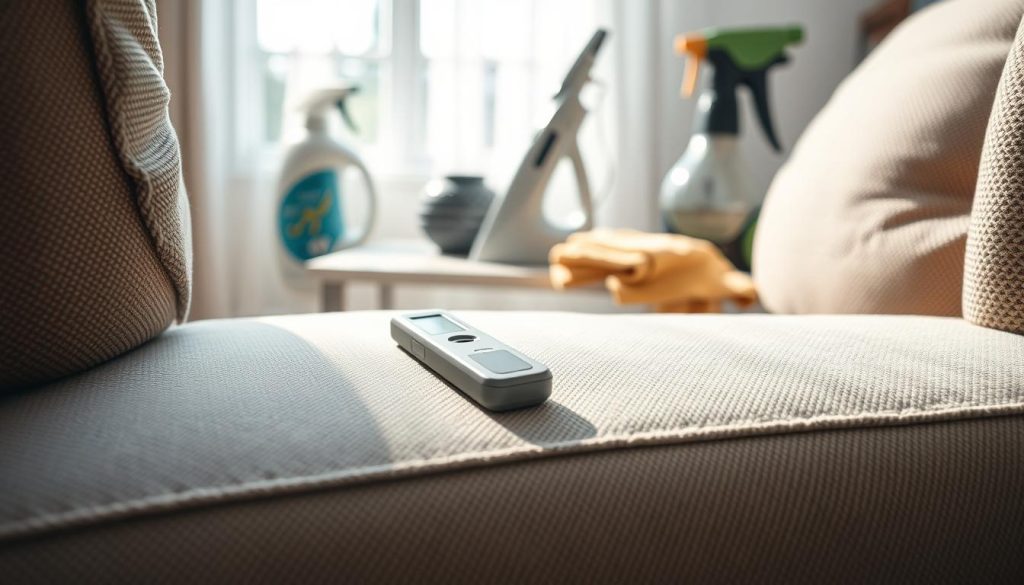
Our first step is to verify the label code; it tells us if water or solvents are allowed on the material. We treat that tag as the rulebook for each fabric so we do not set a stain or distort the fibres.
Understanding label codes
W means water-safe, S means solvent-only, SW accepts both, and X signals professional care. Reading this saves time and prevents costly mistakes.
Running a hidden area test
We always test an inconspicuous spot — behind a cushion or under the skirt — to check temperature tolerance and colour-fastness. During the test we watch for colour transfer on a white cloth, texture change, pile flattening or a watermark as it dries.
When heat or moisture is a bad idea
Leather, velvet and fine microfibre can react badly to heat and excess water. For these materials we use vacuuming and a light wipe with a damp cloth and specific products. If the label shows X or the hidden area fails, we stop and consider professional cleaners or consult a useful leather care guide at leather care guide.
What we gather for steam cleaning upholstered furniture
Essential machines and tools
Steam cleaner fitted with a wide head for broad surface work and a detail nozzle for spots.
We also bring a good vacuum cleaner with upholstery tools to lift crumbs and pet hair before any vapour passes.
Cloths, blotting and moisture control
We keep several microfibre cloths to catch loosened grime during spot work.
A dedicated clean, dry cloth is reserved solely for blotting moisture around seams and piping.
Optional products and odour control
We plan whether to use any upholstery-safe products and use them sparingly to avoid residue that attracts dirt.
Bicarbonate of soda is our go-to deodoriser; we may sprinkle it, wait, then vacuum it away.
- Lay out kit by area: seat cushions, backrests and armrests.
- Clear throws and small items so we don’t stop mid-pass.
- Identify a dry spot to place damp cushions and ensure good ventilation.
| Tool | Purpose | Tip | When to use |
|---|---|---|---|
| Steam cleaner | Loosen embedded dirt | Use minimal steam to limit moisture | Stubborn soiled patches |
| Vacuum cleaner | Remove surface dust and hair | Use turbo upholstery or narrow nozzle | Always before any vapour work |
| Microfibre cloths | Catch loosened debris | Keep one dry for blotting | Spot treatment and seams |
| Bicarbonate of soda | Neutralise odours and lift residue | Sprinkle lightly, then vacuum | Before or after vacuuming |
Cleaning sofa with steam cleaner: our step-by-step process
We follow a clear, repeatable routine so each treatment is effective and gentle on the fabric. Small, controlled moves matter; haste or excess moisture causes marks and distortion. Below is how we work in practice.
Vacuuming first
We begin by removing loose debris and vacuuming seams, creases and cushion joins. This prevents loose dust and dirt from being pushed deeper during any vapour work.
Setting up the machine
We set the unit to a low output and check instructions. Minimal steam controls moisture and keeps the surface from soaking.
Working by area
We tidy in order: seats, backrests, armrests and high-touch patches. Working systematically avoids re-soiling and gives even drying across panels.
Technique and spot work
We keep the nozzle moving and never park it. For small stains we angle the detail head and hold a microfibre cloth beside the jet to capture loosened grime. Repeat passes only where improvement shows.
Finish: we touch the fabric with the back of our hand to check moisture. If damp, we allow more drying time before replacing covers or using the set.
How we tackle stains without damaging the sofa material
We treat spills like first aid: prompt, calm and targeted. Acting quickly reduces the chance the mark will set and makes it easier to remove stains without harsh action.
Act on wet spills: for a fresh spill we blot immediately using a clean, dry cloth. We never rub; rubbing pushes liquid deeper and distorts the fabric.
Check solubility: about 90% of marks respond to water. We test a hidden spot by dabbing lukewarm water on a white cloth. If the stain lifts, a gentle water-based approach is safe.
Household remedies, used sparingly: bicarbonate of soda is useful for odour and light lifts — sprinkle, wait, then vacuum. For red wine-style marks we try mineral water and salt to absorb the spill locally. Grease responds best to a mild soap solution; apply lightly and work from the edge inwards to avoid enlarging the stain footprint.
Prevent residue: we always rinse lightly where the fabric allows. Leftover products attract dirt and speed re-soiling, so minimal product and a careful rinse keep the fabric looking better for longer.
These principles also apply to car upholstery: quick blotting, measured use of products and minimal moisture help avoid tide marks and lasting odours. For further practical stain-removal guidance, see this helpful guide on how to remove couch stains: remove stains in upholstery.
Drying, deodorising and keeping the sofa cleaner for longer
Allowing adequate air movement after treatment is as important as the work we do on the upholstery itself.
In humid Singapore conditions we expect drying time to be several hours. Commonly this takes four to six hours, though a warm, well-ventilated room can shorten that period.
We avoid trapping moisture by spacing cushions and covers apart so air can circulate. Never stack damp cushions; instead, place them in a dry area until the deeper fibres feel dry to the touch.
Only return covers and cushions when the inside is fully dry. Surface dryness is misleading and can hide damp spots that cause mildew or odour later.
Finishing touches and routine care
Once dry we vacuum again to lift revived fibres and remove residual dust. Ideally do a follow-up vacuum the next day to ensure no trapped dirt remains.
| Condition | Expected time | Action |
|---|---|---|
| Warm, ventilated room | 3–4 hours | Space cushions; open windows or use a fan |
| Humid, low airflow | 4–6 hours | Use dehumidifier or increase ventilation; check deeper fibres |
| Spot deodorising | Short | Sprinkle bicarbonate, wait, then vacuum |
| Routine upkeep | Weekly | Regular vacuuming and quick spot treatment |
We deodorise sparingly, using bicarbonate of soda where suitable rather than heavy fragrances. For ongoing care, we keep a clean cloth handy for quick blotting, designate pet areas or use washable covers, and vacuum regularly to reduce mites, pet hair and dirt.
Conclusion
In closing, we highlight the few rules that make routine maintenance reliable and safe.
Follow the label codes (W, S, SW, X) and test a hidden patch before any work. Vacuum first, then use short, moving passes on areas that accept heat.
Avoid leather, velvet and delicate microfibre; for those materials use a damp cloth or seek professional assistance. If stains are widespread or the tag shows X, consider extraction by trained cleaners to remove more moisture and shorten drying time.
Plan sessions during daylight in well‑ventilated rooms in Singapore. The aim is simple: a sofa that looks better, smells fresher and feels hygienic for daily life at home.

