
We set expectations up front: this roundup explains what a water vacuum cleaner is built to do, who it suits in Singapore, and how our picks match different homes and budgets.
We frame common local messes — rainy-day puddles at the entrance, fine dust, sand from parks and beaches, and kitchen spills — so you can quickly spot which use case fits your lifestyle.
At a glance: our top choices cover overall performance, pet needs, tight flats, budget picks and premium models. We judge value beyond price by time saved, fewer tools and easier maintenance.
We also clarify terms we use: wet and dry versus dry-only, and “floor washer” style versus drum units. Next, we explain why wet-dry systems are trending in Singapore, how we test suction and filters, and which accessories matter for corners and cars.
Why we’re choosing a wet and dry vacuum for Singapore homes right now
In dense, humid Singapore, a single machine that handles spills and dust saves us time and hassle.
What it does that a dry model cannot: A wet dry vacuum lifts loose dust, hair and grit, then collects liquids safely. That means we avoid running a separate mop after hoovering. The combined design uses stronger suction and more power to cope with mixed messes.
Where it helps most: Wet and dry cleaning wins at rainy entrances, damp bathrooms and quick kitchen spills. It also catches fine dirt before it spreads on tiled floors, and handles muddy footprints without swapping tools.
Trade-offs to expect
Higher suction and power usually bring more noise and weight. Units with tanks are bulkier and need more storage than a slim dry vacuum. Filling and emptying clean and dirty water adds a small routine, but often reduces overall cleaning time.
- Keep a dry option if your home is mostly carpeted, has few spills, or storage is tight.
- Choose wet dry if you want one versatile machine for indoor and outdoor daily tasks.
How we tested and compared each water vacuum cleaner
Practical performance — not specs on paper — guided every part of our testing process. We ran timed runs in flats and cars, noting how each unit coped with mixed messes common in Singapore.
Suction and suction power: what we prioritised for dust, dirt and spills
We set a simple benchmark for suction power: lift fine dust and grit, then clear small spills without streaks. Tests included tile, vinyl and short-pile rugs so suction behaviour was realistic.
Filter system and filters: from microfilters to HEPA-style allergen control
We compared microfilter designs with HEPA-style systems and scored on ease of replacement and capture rate. If allergies matter, a tight filter system made the biggest difference.
For filter care, we linked practical maintenance in our notes and a step-by-step guide for cleaning filters found at filter cleaning steps.
Capacity and tank design: clean/dirty water separation, volume and emptying
We judged capacity on whether the design kept clean and dirty sections distinct and how easy emptying felt. Volume suited quick touch-ups or long runs influenced overall score.
Nozzles, accessories and reach: corners, car interiors and multi-surface tools
Nozzle fit and tool usefulness defined day-to-day value. We checked edge reach, crevice tools for sofas and brushes for trapped hair.
We also consulted broader buying guides such as the best vacuum guides when weighing accessory sets.
Cordless vs corded: runtime, cable length and workshop-ready practicality
We compared cordless freedom to corded endurance. Cordless scored for mobility between rooms and cars; corded units scored for uninterrupted runtime and workshop tasks.
Design and convenience: self-cleaning functions, storage and hygiene features
We favoured units with self-cleaning cycles, easy-drain tanks and tidy docking. Good design reduced mess when handling dirty water and made regular upkeep quicker.
Our top picks for the best water vacuum cleaner in Singapore
Our shortlist highlights the models that balance daily convenience with real-life performance in Singapore flats. Each pick suits a clear buyer type so you can match features to your routine quickly.
Overall best smart all-rounder: Tineco Floor One Switch S7 Stretch
Why we like it: The iLoop sensor auto-adjusts suction and water flow for mixed messes. It offers 22,000 Pa, large 1000ml/720ml tanks and separate runtimes for floor-washing (50 min) and stick vacuum mode (70 min).
Best for pet hair and everyday mess: Bissell CrossWave X7 Cordless Pet Pro
Why we like it: Turbo Pet mode targets hair and stains. Expect up to 20,000 Pa and roughly 30 minutes of cordless runtime — handy for daily touch-ups.
Best budget buy: Simplus Cordless Wet-Dry
Why we like it: Offers 21,000 Pa and 50 minutes runtime at a lower price. The 180° flat-folding head helps reach under low furniture in small flats.
Most manoeuvrable for tight flats: Narwal S20 Pro
Why we like it: Triple-sided edge cleaning, AI Dirt Sense and hot water mopping make it nimble for edges and high-traffic zones. Runtime is about 60 minutes.
Best premium cordless pick: Dyson Submarine series
Why we like it: Premium handling, advanced filtration on select models and Fluffy Optic illumination. Choose a model by trade-offs: lightness, power and runtime.
| Model | Power / Suction | Tanks (clean/dirty) | Runtime (approx) |
|---|---|---|---|
| Tineco S7 Stretch | 22,000 Pa | 1000ml / 720ml | 50 min (wash) / 70 min (stick) |
| Bissell CrossWave X7 | 20,000 Pa | 820ml / 420ml | ~30 min |
| Simplus Cordless | 21,000 Pa | 500ml / 550ml | ~50 min |
| Narwal S20 Pro | 20,000 Pa | 790ml / 720ml | ~60 min |
| Dyson Submarine (range) | 130–140 Air Watts | 300ml / 360ml (varies) | ~40–60 min (model-dependant) |
- Families: Choose larger tanks and smart sensing (Tineco).
- Pet owners: Prioritise pet modes and brush heads (Bissell).
- Small flats: Look for foldable heads and compact design (Simplus, Narwal).
- Design-led buyers: Opt for premium cordless styling and filtration (Dyson).
Workshop and garage-ready wet dry vacuum options for heavy-duty clean-ups
For heavy-duty jobs in the garage or workshop, domestic models often fall short.
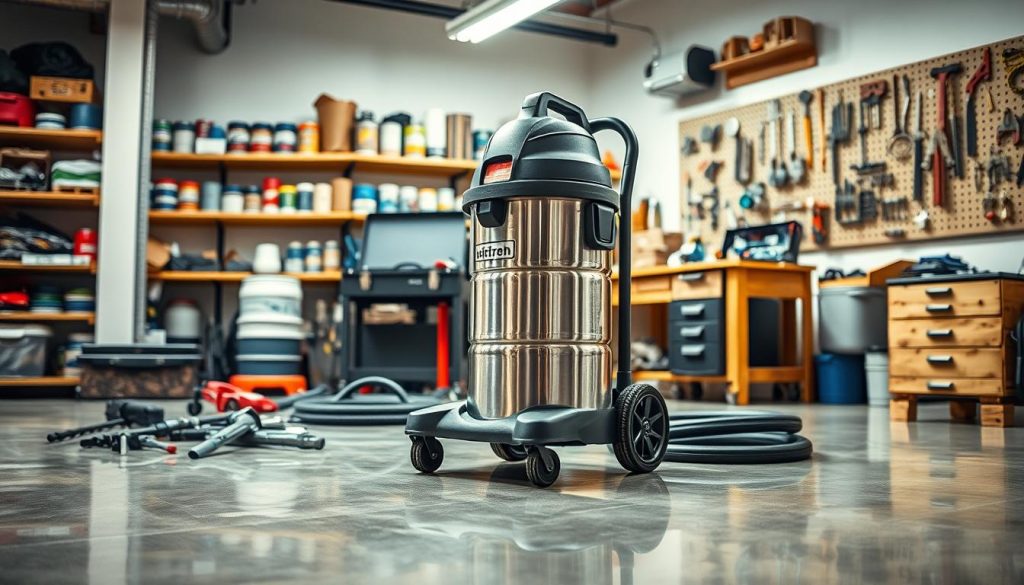
When to step up: choose a workshop-grade unit for renovation rubble, large puddles, shards and tough car-boot spills. These jobs need greater suction power and larger containers than everyday cordless machines.
Kärcher WD range: built for rough use
The Kärcher WD range pairs robust build with strong suction power and fast, residue-free pickup. Metal and reinforced containers cope with coarse debris. Models often include a built-in power outlet so you can run a power tool and capture chips as you work.
Blower function for outdoor clear-ups
A blower changes the workflow: shift leaves and gravel first, then run a wet dry vacuum over the area for final pickup. That two-step approach resets patios and entrances quickly.
Accessory-driven cleaning
- Narrow nozzles for between car seats.
- Stiff floor heads for coarse debris and rubble.
- Specialised tools to adapt a workshop unit for occasional living-space use.
Convenience that matters
For compact Singapore homes, look for onboard accessory storage, a tidy footprint and filters that reduce contact with mess during emptying. Expect these devices to be louder and bulkier, but far better suited to workshop and garage tasks.
Electrolux wet and dry vacuum cleaner range: which format suits our space
From robust drum units to nimble stick designs, Electrolux designs its range around real household needs. We map formats by what they handle best so you can match a model to your flat, workshop or family home in Singapore.
Drum wet and dry: power, capacity and durability for larger messes
Drum models like the Flexio Power Z823 prioritise power and volume. They are corded, offer large tanks and often include a blower for workshop or renovation debris.
These units suit long sessions where capacity and 360° manoeuvrability matter. Onboard storage keeps nozzles and tools close at hand for tougher jobs.
Stick wet dry cordless: integrated vacuuming and mopping for hard floors
Stick formats aim for one-pass upkeep on tiles and vinyl. Electrolux cordless models combine suction and mopping with quick handling for daily touch-ups.
They trade tank size for mobility, making them ideal where frequent short runs beat long, heavy sessions.
Feature highlights we like
TriAction nozzle vacuums and mops together for higher debris pick‑up. Selected models add smart dirt detection to adjust cleaning power automatically.
Self-cleaning functions reduce odour and grime build‑up. Microfilters and antibacterial tanks boost hygiene for households that care about tank cleanliness.
Price and value in Singapore
Electrolux models generally span a wide local price range. Lower prices buy basic cordless convenience; higher tiers add inverter motors, detachable hand units and advanced nozzles.
Official-store perks — free delivery, 0% instalments and promotional discounts — often shift the effective price. If we handle heavy debris regularly, a drum unit gives better capacity and power per dollar. For daily floor upkeep, a stick format usually delivers better value.
Choosing the right model for our floors, lifestyle and budget
Pick a model that fits your floors and the real rhythms of your household, not the biggest spec sheet. Start by matching machine type to surfaces and how often spills happen.
Surfaces and floor types
Tiles and vinyl benefit most from a wet dry approach. These surfaces clean quickly and dry fast. For rugs, choose a model that limits moisture and has a gentle brush roll.
Hair, sand and debris
Look for anti-tangle brush heads, sealed collection systems and wide nozzles for gritty entrance dirt. Pet hair needs a motorised roll or specialised pet mode to lift fibres well.
Noise level and cleaning time
Higher power shortens cleaning time but raises sound. In flats we favour quieter modes for daily runs and a boost setting for deep cleans.
Maintenance and hygiene
Rinse tanks after each wet run, dry parts quickly and check filters monthly. HEPA-style filters help if allergies matter and preserve suction on longer jobs.
Accessories that matter
Prioritise crevice nozzles, an extension wand and onboard storage. These reduce setup time and keep tools ready for cars, shelves and tight corners.
| Floor | Recommended type | Key accessory |
|---|---|---|
| Tiles / Vinyl | Wet dry stick or cordless | Flat mop head |
| Short rugs | Dry vacuum or wet dry with dry mode | Gentle brush roll |
| Entrances (sand, grit) | Wet dry with sealed system | Wide nozzle + crevice tool |
Conclusion
To conclude, prioritise real‑world performance on the floors you have, plus hygiene and ease of handling when tanks are full.
Choose a route that fits your routine: smart all‑rounders for most homes, pet‑focused picks for fur and daily spills, budget models for first‑time buyers, and premium designs for effortless upkeep.
Before you buy, check cleaning performance on hard floors, filter care and whether a device matches how you actually clean, not an aspirational wish list.
Sanity‑check storage footprint, how often you empty dirty water, and how manageable the unit feels when full. For renovation or heavy outdoor mess, step up to a workshop‑grade option to protect your home tools.
Next step: shortlist two or three models, compare included tools and docks, and wait for local promotions to secure the best value.

