

We introduce what a wet dry vacuum is and why many Singapore homes with rugs, kids or pets find one useful for day-to-day upkeep.
Carpets trap dirt, dust and spilled liquids deeper than hard floors. A good vacuum lifts dry debris and reduces surface grime, but it will not replace professional deep cleaning for set-in stains, odours or contamination.
Our main principle is simple: on soft floors we favour Dry/Carpet Mode and the correct brush to protect fibres and maintain suction. We set clear expectations so readers know what is realistic.
After the steps here, expect cleaner-looking carpets, less visible dust and better control of hair and tracked-in dirt from entryways. We define scope, note pile and material checks, and preview safety tips for humid Singapore—moisture risks, drying and odour prevention.
Use the guide to jump to compatibility checks, step-by-step vacuuming, spill handling or basic maintenance.
Why carpets need a wet/dry vacuum cleaner in Singapore homes
Soft floor fibres act like tiny nets, catching grit and residues that sweepers miss. In many homes this means dust, dander and tracked-in dirt sit below the pile where a simple sweep or quick pass cannot reach.
Fibres, humidity and trapped residues
Carpet threads behave like a filter: they hold food crumbs, hair and fine grit. In humid Singapore, residues can feel sticky and set into fibres if not removed promptly.
When a wet/dry unit helps with everyday cleaning
We use a wet/dry device for fast pick-up of dry debris and hair in bedrooms and hallways. It also makes deeper passes down high-traffic lanes where surface suction falls short.
- Quick wins: remove loose dust and grit before stains settle.
- Technique: slow, overlapping passes give better dirt removal than rushing.
- Fit the right head: a carpet brush agitates fibres and lifts embedded dust.
Note: wet pick-up is not automatically safe on soft floors. For safe wet handling and detailed steps consult our quick cleaning guide.
Is a wet and dry vacuum good for carpets and when it is not enough
Routine suction keeps a carpet looking fresh, but it cannot cure every problem.
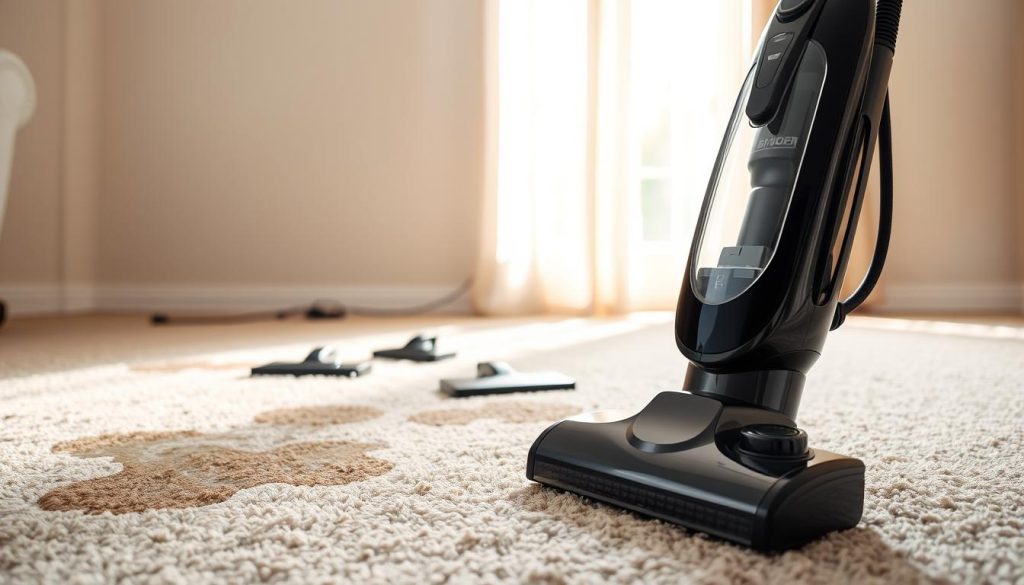
What these machines remove: loose dust, hair, crumbs and light surface residue sit near the pile and respond well to a wet dry unit in dry mode. Short emergency picks of spills and surface damp are manageable.
Why wet capability does not replace extraction: suction that lifts liquid is not the same as a rinse-and-extract process. Residue and cleaning solution can remain unless fibres are flushed and rinsed by specialist equipment.
When we call professionals
- Contamination from floodwater, sewage backflow or widespread soaking.
- Set-in stains that have bonded with fibres and resist spot treatment.
- Persistent odours or underlay saturation that can harbour mould.
| Problem | Wet dry help | Professional needed |
|---|---|---|
| Loose dirt / hair | Yes | No |
| Surface spills | Short-term pickup | Only for large volumes |
| Set-in stains / odours | Limited | Yes — deep cleaning required |
| Flood or contamination | No | Immediate professional action |
Risk note: over-wetting can swell fibres, weaken backing and prolong drying in humid Singapore. We treat wet dry units as part of a toolkit: regular vacuuming, careful spot treatment and professional carpet cleaning when restorative work is needed.
Carpet compatibility checks before you start vacuuming
Not every rug copes with the same suction levels or brush heads; a quick compatibility check saves damage.
We begin with a short checklist so we make sure the machine matches the carpet, not the other way round.
Pile height and performance ranges
Low-pile (
Medium-pile (1/4″–1/2″) performs best with 8,000–22,000 Pa and balanced airflow to lift dirt without clogging.
High-pile (>1/2″) often demands higher airflow (22,000–25,000+) so the head does not seal against fibres and stall.
Materials and moisture behaviour
Wool and nylon are durable but can retain moisture. Cotton blends soak quickly and dry slowly.
Synthetics resist stains and hold less moisture, so they are easier to maintain with a dry vacuum.
Brush head and nozzle choice
A carpet brush agitates fibres without snagging. The wrong nozzle can seal to fibres, reduce airflow and hurt performance.
We make sure attachments are correct, watch for reduced pickup, head sticking or a higher motor pitch as signs of suction loss.
- Quick checks: read care labels, test on an edge, confirm nozzle fit.
- Final note: when in doubt, lower suction or choose a softer brush to protect loops and pile.
How to use wet and dry vacuum cleaner for carpet step-by-step
Start each session by making the room safe and clear; small items and loose clutter will block hoses and slow progress.
Prepare the area. Remove toys, clips and small objects. Do a quick dust of surfaces so settled particles are collected during vacuuming.
Fit the carpet brush and select settings
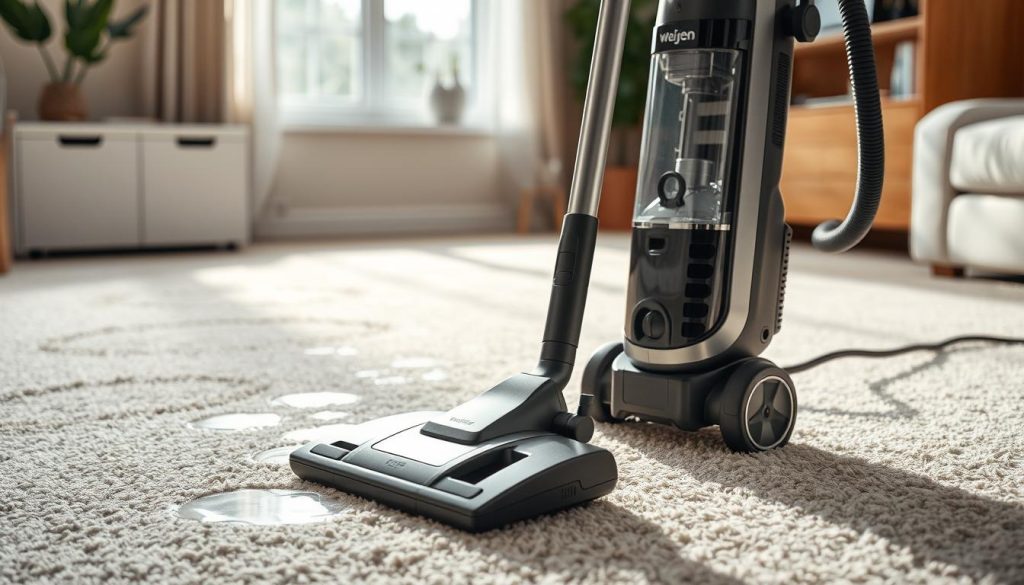
Attach the dedicated carpet brush and switch to Dry/Carpet Mode. Choose a suction level that lifts dirt but lets the head glide across fibres.
Work in sections with slow, overlapping passes
Divide the room into halves or quadrants. Move slowly with overlapping strokes for better dust and dirt pickup.
For high-traffic lanes, make a second pass at a 90° angle to lift fibres and catch embedded debris.
Detail work for edges and corners
Use a crevice tool for skirting boards, under radiators and tight corners where hair and grit collect. Pause briefly to clear wrapped hair from the brush roll.
“Empty the bin when it reaches 50–75% full to protect airflow and motor performance.”
After-care and maintenance
Empty the dirty tank and rinse filters as recommended. Allow filters and tanks to dry fully before reassembly.
Inspect hoses and airflow paths, remove trapped fibres from the brush and keep any mop head separate when moving between hard floors and rugs. For a quick reference on spot treatment and safe wet handling, consult our quick cleaning guide and read details on machine suitability at this wet vacuum resource.
Wet Mode, spills and stains: what we do to avoid carpet damage
A quick, wrong response to a wet mess can lock water into fibres and lead to lasting odour or structural harm. For typical home units we follow one clear rule: we do not activate Wet Mode on soft floors. Over-wetting and incomplete extraction raise the risk of musty smells and backing damage in humid Singapore.
Safer spill workflow and spot treatment
Blot first. Use clean towels and press gently, working from the outside in to avoid spreading stains. Do not rub; aggressive action distorts fibres.
If a small stain remains, apply a light cleaning solution per product label. Stop and consult professionals for large volumes, unknown contaminants or persistent staining.
Blotting, drying time and airflow
Drying discipline is essential. We make sure the area is fully dry before normal vacuuming resumes. Vacuuming damp pile reduces pickup and helps residue stick.
- Open windows and create cross-airflow.
- Run a fan or dehumidifier aimed across the patch, not directly onto it.
- Isolate the area from foot traffic until fibres recover.
- Reserve mop functions for hard floor surfaces and keep tools separate to avoid moisture transfer.
“Limit wet contact and speed drying; this prevents odour, protects backing and keeps carpets performing well.”
| Issue | Our action | When to call pros |
|---|---|---|
| Small spill | Blot, light spot treatment, increase airflow | No, unless stain persists |
| Large water exposure | Contain, blot, use dehumidifier | Yes — professional extraction recommended |
| Unknown contamination | Isolate area, avoid Wet Mode, seek advice | Immediate professional intervention |
Maintenance and best practices for consistent suction and cleaner air
Keeping airflow clear is the single most effective step we can take for lasting performance. Regular maintenance preserves suction power and reduces dust recirculation in Singapore homes.
Emptying and blockage checks
We empty the bin or bag when it reaches roughly 50–75% full. This keeps suction power steady and prevents the motor from straining.
After each session we check tubes, inlets and head channels for blockages. A quick wipe of nozzles and attachments stops fine debris building up.
Brush care and anti-tangle routines
Hair and fibres wrap around the roller and reduce performance. We cut away tangles with scissors, then pull trapped strands free.
Inspect bristles and rollers regularly so the brush keeps agitating pile without dragging.
Filter hygiene for cleaner air
We wash fine dust filters monthly when allowed by the manufacturer. Clean filters help keep dust out of living spaces and reduce allergen spread.
Replace HEPA filters every 6–12 months in allergy-sensitive homes to maintain air quality.
“Dry tanks fully and store tools neatly; this prevents odour and keeps the machine ready.”
Good upkeep makes vacuums last longer and keeps carpets looking better between deep cleans. Small routines protect performance and preserve indoor comfort.
Conclusion
Smart choices about attachments and suction deliver better results than raw power. Choose a strong, balanced power setting and the correct brush for your pile. Slow, overlapping strokes and compatibility checks protect fibres and lift more dirt.
We emphasise safety: for routine home cleaning treat spills by blotting and fast drying rather than activating the wet mode on soft floor coverings. For set‑in stains, odour issues or contamination, seek specialist deep cleaning or professional support.
Keep simple maintenance habits — empty tanks, de‑tangle rollers and wash filters — and test one room first. For model guidance and further reading see this wet vacuum resource.

