

We know how persistent smells can be in Singapore flats. High humidity and limited airflow let odours linger and spread beyond bedding into the whole room.
In this short guide we set realistic expectations. Light smoke smell often improves within hours after deodorising. Stubborn odours may need several days of steady care.
Our approach is practical and stepwise: ventilate and sun the item where possible, then use baking soda for deep deodorising, followed by a light vinegar-and-water mist. We add targeted options if the problem persists.
Safety matters. We always check fabric labels and avoid over-wetting since trapped moisture can worsen odours and increase mould risk.
Success means a clean surface that no longer releases smoke smell when pressed or after the room is closed overnight. We also preview prevention: a good protector and improved airflow help stop smells returning, even in HDB or condo settings where outdoor airing is limited.
Why smoke smell lingers in mattresses and why it matters for sleep
What seems like a surface smell can actually be trapped deep inside fabric and foam. We find particles work into seams, padding and the inner dust that builds up in a bed.
Smoke particles bind to fibres and mix with sweat, body oils and dust. Those organic inputs feed bacteria and create ongoing odors that simple airing can’t fix.
There are red flags to watch for: damp patches, visible mould or mildew, and poor air circulation under the base. These point to a bigger moisture problem that keeps smells alive.
Why this matters: persistent smells reduce sleep quality and can worsen allergies or respiratory issues. We also see a hit to confidence when the room smells unpleasant for guests.
“Controlling moisture and removing debris is as important as deodorising — otherwise the scent will return.”
Our plan tackles both the smell and the conditions that feed it: deodorise, neutralise, dry thoroughly, and improve airflow to stop re‑absorption.
Before we start: what to check and gather for safe, effective cleaning
We begin with a quick inspection of the care label and the material type so we choose a safe approach. Checking manufacturer guidance prevents damage to memory foam, natural latex and glued seams.
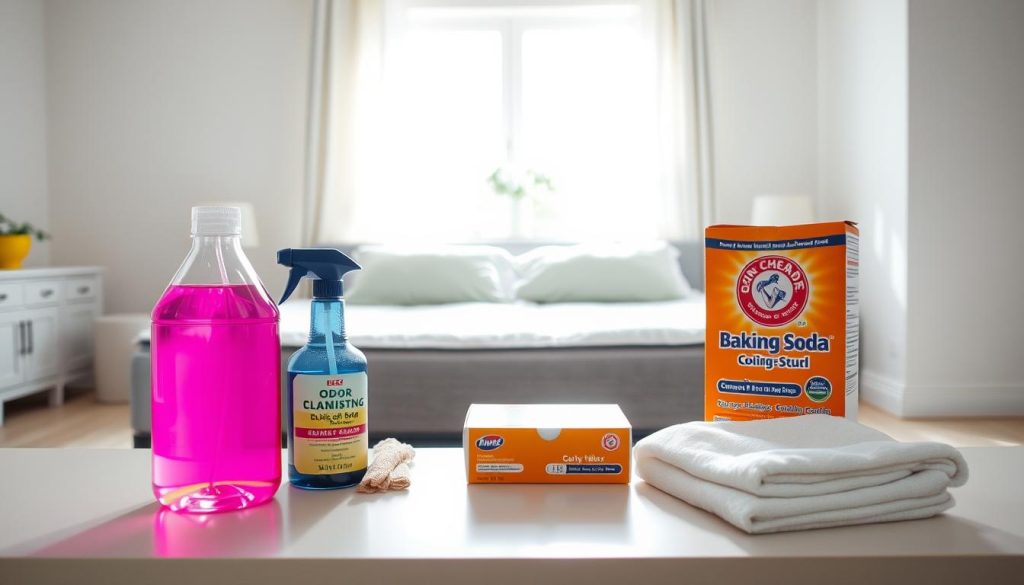
What we check first
We confirm any temperature limits, solvent warnings and whether the product can be lightly misted. This helps us avoid costly mistakes.
What we prepare at home
- Vacuum with a clean upholstery attachment — this is our first step and it removes dust and debris.
- Clean cloths for blotting, baking soda, a spray bottle filled with water and white vinegar for light mists.
- Plan a day with several free hours so baking soda or other solutions can dwell without interruption.
How we protect the room
Open windows and run a fan toward the exit to keep any scents from spreading into the flat. We keep fresh bedding out of the space until the surface is fully dry.
Our mindset is dry-first: light mists and spot cleaning instead of soaking. If the item came from a smoker’s home or a second-hand sale, we consider professional cleaning for sanitation rather than risking partial fixes at home.
Ventilation and sunlight: airing the mattress outside the right way
A careful airing routine is the simplest, low-cost step that often makes the biggest difference. We use controlled sunlight and steady airflow to lift trapped particles and moisture from the padding.
Placing it for best airflow and UV exposure
We raise the bed off the ground and choose a sunny, dry spot. This lets air move under and across the surface while UV helps reduce bacteria.
How long we let fresh air work
For light cases we air for several hours. For stubborn smoke smell we repeat this for a few hours each day over several days rather than one marathon session.
If outdoor airing isn’t practical
In flats we prop the item upright by an open window and run a fan across it. Keep the door closed to stop smells spreading through the home.
Drying discipline
We bring the mattress in at night and avoid exposing it to damp evenings. Before using deodorising treatments we press a clean towel onto seams — if it feels cool or damp we dry longer.
| Step | Duration | Action |
|---|---|---|
| Initial airing | 3–4 hours | Sunny spot, flip after 90 mins |
| Stubborn cases | Several hours/day for 3–7 days | Daylight exposure, bring in at night |
| Indoor alternative | 3–6 hours/day | Upright near window with fan |
For detailed step-by-step care at home see our guide on freshening and cleaning.
Mattress smoke odor removal with baking soda for deep deodorising
We use baking soda as our first deep‑clean step because it does more than mask scents. It binds acidic molecules and helps lift trapped particles from the fabric and padding.
Start by sprinkling baking soda generously and evenly across the entire surface, focusing on the head and torso areas. Sprinkle baking soda rather than dumping it in one spot to maximise coverage.
How we work it in
Gently work the baking powder into the texture with a clean, dry cloth or a soft brush. This helps the soda reach light creases and seams without damaging fibres.
Dwell time for best absorption
We leave the baking soda for several hours — ideally 4–6 hours — or overnight when possible. More time improves absorption of odour molecules.
Vacuuming and the final check
After the dwell period we vacuum slowly with a clean upholstery attachment. We pay extra attention to seams and edges until no white residue remains.
- Do this in a well‑ventilated area or outdoors and keep windows open while the soda rests.
- Repeat the process if dust or lingering smells persist.
- If the smell remains after vacuuming, we move on to a light vinegar spray as the next step.
For a step-by-step on spotting and treating stains before deodorising, see our guide on treating stains and deep care.
Vinegar-and-water spray bottle method to neutralise smoke smell
A simple vinegar mist can neutralise lingering scents without leaving residues if used carefully.
Mixing the solution
We mix equal parts white vinegar and water in a clean water spray bottle and shake gently so the solution is even. This keeps the acid level low while remaining effective.
How we apply it
We use a light, even spray across the surface, concentrating on seams and edges where scents cling. Stop as soon as the fabric looks slightly damp — do not soak.
Managing the temporary smell and speeding drying
The vinegar smell is temporary. We keep windows open and use a fan or sunlight to move air and speed drying. As the solution dries, the vinegar scent fades and the original smoke smell diminishes.
Practical cadence and safety
One light misting, full dry, then re‑assess. Repeat only if needed. If a care label warns against acidic treatments, we skip vinegar and choose specialist sprays or professional help instead.
| Step | Why | Key action |
|---|---|---|
| Mix | Safe acidity | Equal parts water and white vinegar in a bottle; shake |
| Apply | Targeted neutralisation | Light spray on seams and edges; avoid soaking |
| Dry | Remove temporary scent | Use fan, open windows or sunlight until fully dry |
Extra odour-busting options when smoke odours persist
When routine steps fall short, a few targeted additions can make a real difference. We treat these as finishing touches that complement cleaning and drying, not as substitutes.
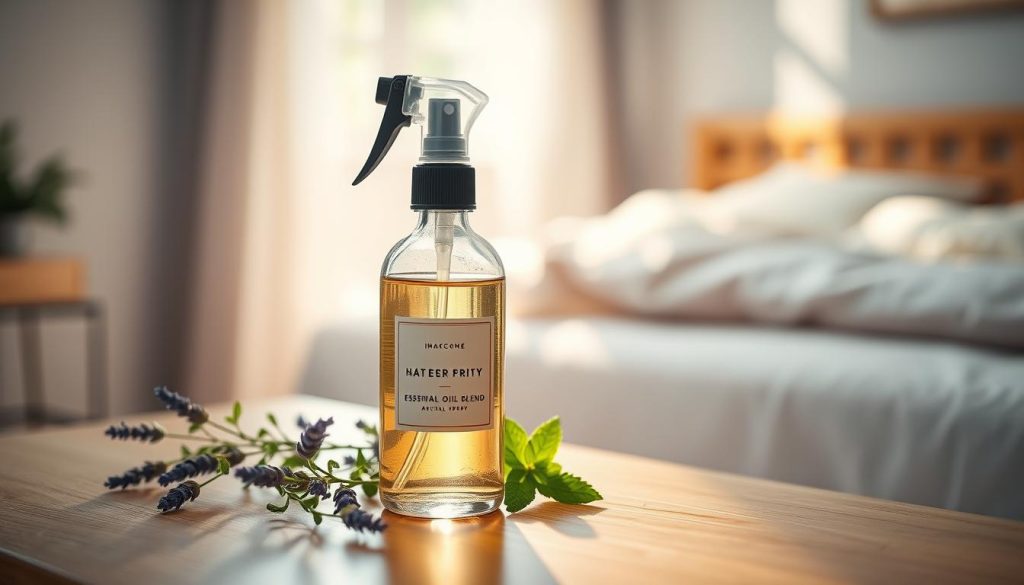
Essential oils in a light water spray
We add a few drops of lavender, eucalyptus or tea tree oil to a spray bottle of water for a fresher finish. Use just 3–5 drops per 250ml to keep the scent subtle.
Apply only after the surface is dry and largely freshened. Mist lightly and allow full drying with a fan or sun to avoid trapping moisture.
Activated charcoal sachets and coffee grounds
Activated charcoal sachets absorb odours and moisture over several days. We place several sachets around the bed and on the surface for continuous absorption.
As a low-cost helper, fresh coffee grounds on plates can sit overnight to mask and absorb lingering smells. Replace the grounds each night until the smell fades.
Specialist fabric fresheners and steam cleaning
There are ready-made products designed for mattresses and upholstery. Brands such as Febreze or OdoBan offer odour-neutralising sprays and disinfectant options.
Use these sparingly to avoid wetting the filling. Always follow the product instructions and test a small area first.
Steam cleaning sanitises and removes bacteria-feeding debris like sweat and skin flakes. Only choose steam cleaning if the item can be safely dried fully afterwards.
| Option | Why we use it | How we apply |
|---|---|---|
| Essential oils spray | Light fragrance; potential antimicrobial lift | 3–5 drops in 250ml water; mist lightly after full drying |
| Activated charcoal sachets | Absorb odours and moisture over days | Place several sachets on and around the bed; replace after 7–10 days |
| Coffee grounds | Quick overnight absorber and mask | Fresh grounds on plates in room; remove next morning |
| Specialist sprays (e.g. Febreze, OdoBan) | Targeted odour-neutralising product | Spot test; light application; allow full dry time |
| Steam cleaning | Sanitises and extracts debris | Only if material permits; ensure rapid, complete drying |
If persistent smells remain after these solutions, we recommend professional cleaning. Contact a professional cleaning service when odours return after several cycles, or when mould is suspected. For a related guide on deep care and techniques, see our detailed furniture freshening guide.
Preventing smoke and everyday odours from returning
Small daily habits stop smells from settling and save time on deep cleaning later. We focus on simple, repeatable steps that protect the surface and keep the room fresh.
Use a protector or full encasement
A quality protector is the single easiest prevention step. It blocks sweat, spills and airborne scents from sinking in, so regular cleaning takes less time.
Simple maintenance routine
We vacuum the surface every few weeks to lift dust and debris that feed bacteria. Rotate (and flip where the design allows) to avoid localised build‑up.
Wash sheets, pillowcases and protectors weekly and ensure everything is fully dry before remaking the bed.
Control humidity and airflow
Use a slatted frame or breathable base and avoid placing the item on the floor. Good air circulation under the bed cuts moisture and lowers the risk of mould.
In Singapore’s humidity, a dehumidifier and a fan near an open window help prevent stale air. Act quickly on spills and keep damp laundry away from the sleeping area.
When to call professionals
If smells return after several cycles, or after haze exposure or a guest who smoked, book professional cleaning. Professional cleaning is the prudent step when home care can’t restore freshness.
Conclusion
To finish, we give a compact, repeatable process: vacuum and prep, ventilate and sun where possible, use baking soda, then apply a light vinegar mist and add targeted solutions if needed.
Give the method time — some improvements appear in hours, but stubborn smoke smells can take several days of steady work. In Singapore’s humidity, complete dryness is non‑negotiable; if the surface is even slightly damp, smells can return and mould risk rises.
If the scent reduces day by day, continue the routine; if there is no change or a musty note appears, seek professional help. For a full step‑by‑step guide and extra options, see our detailed deodorising guide.
Prevention is the long‑term win: use a protector, keep good airflow under the bed and follow a simple cleaning routine. Do a final overnight sniff test in a closed room — that’s the clearest way to confirm the smell is gone.

