
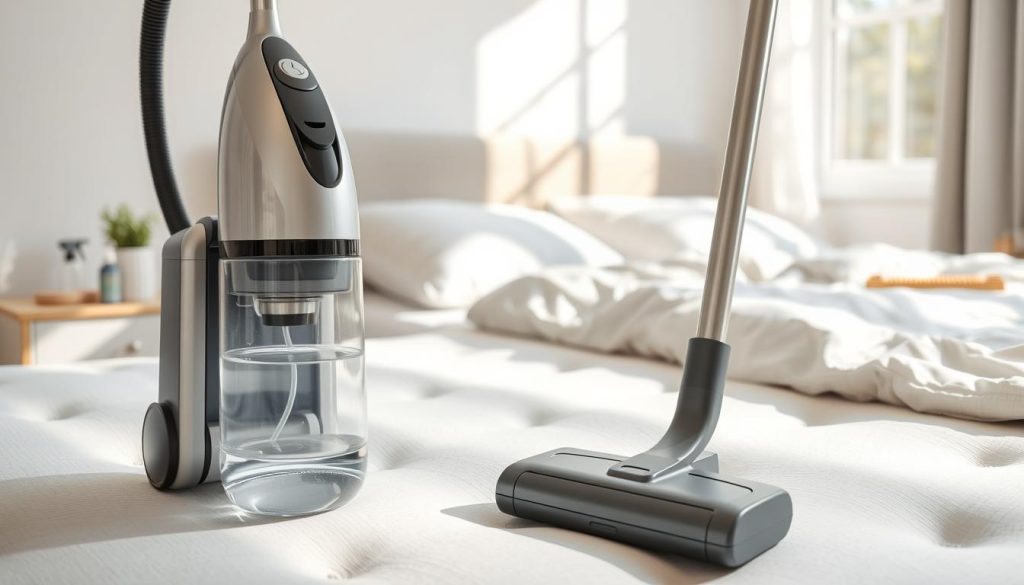
We explain what mattress dust mite removal means in clear, practical terms. These microscopic, eight‑legged creatures thrive in warm, humid bedrooms and can trigger year‑round allergies. Our aim is realistic control rather than complete eradication.
In Singapore’s climate, we focus on reducing the population and removing allergen particles that build up over time. We will show how to prepare the bed, the step‑by‑step cleaning methods we use, what to avoid and how to keep levels low afterwards.
Who benefits? Anyone with allergies or asthma, families with children and hygiene‑minded sleepers who want a cleaner bed and better sleep. We also note the tools we may use — HEPA vacuum, baking soda, dehumidifier and optional steam/UV — and why technique matters as much as products.
For a full, practical routine and tool recommendations, see our detailed guide at how to clean at home with.
Why dust mites in mattresses are a problem in Singapore bedrooms
Singapore’s warm, humid bedrooms create ideal conditions for tiny creatures to thrive in our bedding. We explain what these organisms are, why we cannot see them and how they affect sleep and health.
What a dust mite is and why we can’t see them
A dust mite is an eight‑legged arthropod about one‑third of a millimetre long. They are invisible to the naked eye, yet millions can live in a single mattress surface. We notice their effect, not the creature itself.
What they feed on in bed
They thrive on a steady supply of human skin flakes, body oil, sweat and settled dust. This mix builds up on sheets, pillows and the mattress cover and supports mould growth too.
Allergens and symptoms
The main problem is allergens from mite bodies and especially faeces. These fine particles become airborne and trigger reactions.
- Common symptoms: runny nose, watery eyes, sneezing, wheezing and asthma flare‑ups.
- Different people react differently — from mild irritation to severe attacks in those with asthma or eczema.
| Trigger | Why it matters | Typical symptoms |
|---|---|---|
| Skin flakes & body oil | Primary food source for mites | Runny nose, sneezing |
| High humidity (75–80%) | Improves survival and reproduction | Worsened wheeze, night symptoms |
| Accumulated dust & mould | Holds allergens and spores | Itchy eyes, blocked nose |
We rarely solve the issue with a single method. For a practical routine that combines cleaning and humidity control, see our guided explanation at why dust mites thrive in mattresses.
Before we start: how to prepare your bed, bedding and room
Preparation matters: we stage the bed, sort linens and clear clutter so subsequent steps work properly.

Wash sheets and pillowcases at high temperatures
We remove all sheets and pillowcases and wash them on hot cycles where labels allow. High temperatures reduce allergens and help us remove dust mites from linens before they return to the bed.
Freeze pillows to kill pests when washing is hard
For pillows that cannot be washed, we seal them in plastic bags and freeze for at least 48 hours. This simple step helps kill mites in cushions and soft pillows without wet cleaning.
Declutter and review soft furnishings
We strip the bed fully, bag laundry immediately and keep clean items separate to avoid reintroducing particles. We also check throws, curtains, plush toys and fabric headboards that trap dust and act as reservoirs for mites.
- Quick room reset: open windows briefly if outdoor air is suitable, and plan dehumidifying or air-conditioning to manage humidity.
- Drying space: ensure the bed and bedding can dry fully after any wet method before reassembly.
| Task | Why it helps | Action |
|---|---|---|
| Wash sheets & pillowcases | Reduces allergen load | Hot cycle; bag clean linen separately |
| Freeze pillows | Kills mites in non-washable items | Seal in plastic; freeze 48+ hours |
| Declutter soft furnishings | Removes reservoirs of particles | Remove throws, toys, heavy curtains or wash them |
| Stage the room | Prevents recontamination | Strip bed, bag laundry, ventilate briefly |
These steps form the foundation for effective mattress cleaning methods. For more background on household control and steps we recommend, see our guide on house dust mite care.
Mattress dust mite removal methods we use, step by step
We follow a simple workflow: change the environment, loosen debris, then capture particles. This order gives the best balance of comfort and effectiveness in Singapore’s climate.
Reduce humidity to make the room less friendly
We aim to keep relative humidity lower than the 75–80% range where mites thrive. A practical target is under 50% for control while keeping sleep comfortable.
Note: lowering humidity reduces reproduction but does not remove existing allergen particles embedded in the surface.
Baking soda deodorising and thorough vacuuming
We sprinkle an even layer of baking soda and work it gently into the fabric with a soft brush. Leave it for at least an hour where time allows; 15 minutes is a useful short option.
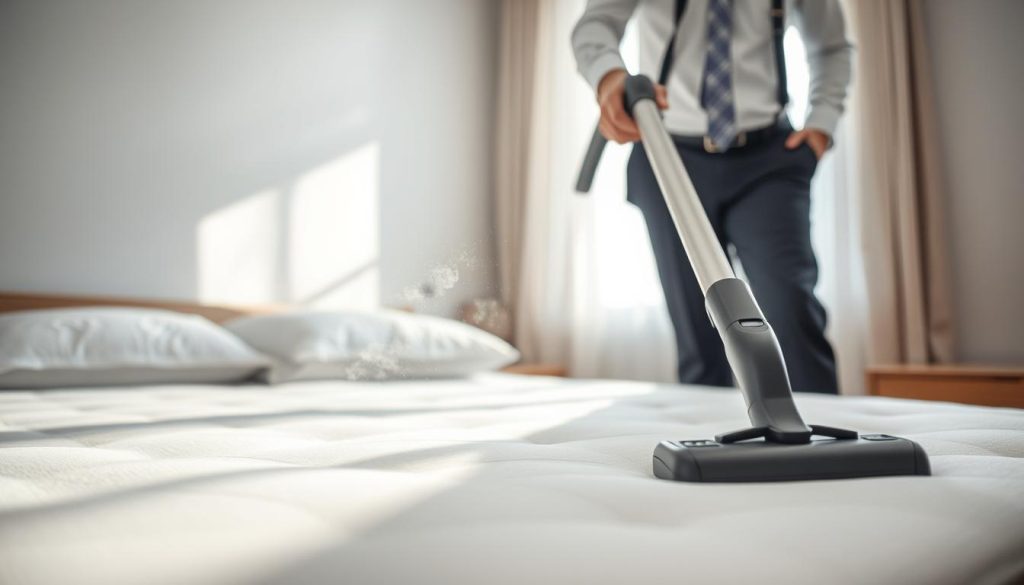
Then we vacuum slowly and methodically, paying special attention to seams and edges to lift trapped particles from the surface.
Why a HEPA-filter vacuum matters
HEPA vacuums trap very fine particles that ordinary machines can blow back into the air. We make multiple slow passes and use crevice tools to contain allergens rather than spread them.
Steam cleaning: pros and cons
Steam can kill near-surface mites by heat, but it rarely reaches deep layers in thicker beds. If steam leaves dampness, it can raise humidity and worsen the problem.
Sunning: what it helps and limits
Direct sun for several hours can reduce live mites and some mould. It does not remove allergen particles, can take up to six hours, and may shorten the life of certain materials such as latex.
- Our recommendation: combine environment control and physical removal rather than rely on one method to get rid of the issue.
- Order of work: humidity control → baking soda and brushing → HEPA vacuuming → optional steam or sunning where suitable.
What to avoid and when it’s time to call a professional
When tackling embedded allergens, the wrong approach can temporarily worsen symptoms. We outline common pitfalls, health risks from harsh products and when professional help is sensible in Singapore.
Why vacuuming alone often disappoints
Scientific studies show vacuuming removes surface particles inconsistently. Allergens and debris sit deep in the structure and a simple vacuum often leaves much behind.
Aggressive vacuuming can also disturb embedded material and bring allergens up, increasing exposure during cleaning if the room is not well managed.
Chemical treatments: irritation risks for sensitive people
Many commercial sprays contain fragrances or residues that trigger allergy and asthma symptoms. We avoid heavy scents, harsh sprays and any product that might leave vapour or film.
For people with respiratory concerns, even short‑term irritation is unacceptable. If a provider plans to use chemicals, ask for full ingredient details first.
Choosing non‑chemical options for suitable beds
Prefer steam or ultraviolet where the surface material allows. These approaches reduce live organisms without leaving chemical residues, but effects are often short term.
Note compatibility: steam and UV suit fabric‑topped mattresses but can damage latex or layered cores. Professional help makes sense when night symptoms persist, stains or mould smell remain, or asthma flare‑ups continue despite good home cleaning.
| Check | Ask the provider | Why it matters |
|---|---|---|
| Non‑chemical options | Do you use steam or UV? | Reduces residue and irritation |
| Moisture control | How do you manage damp after treatment? | Prevents mould growth |
| Material suitability | Is my mattress compatible? | Avoids heat or sun damage |
Keeping dust mite levels down after cleaning
Small, consistent habits in the bedroom make the biggest difference to allergen control. After a full clean, we turn actions into a routine that slows re‑growth and keeps sleep more comfortable.
Weekly sheet changes
Change sheets weekly to cut the supply of skin flakes, body oil and sweat that feed mites and support mould. Clean linens reduce allergen build‑up and help bedding feel fresher each night.
Control humidity and temperature
A practical target: aim for under 50% relative humidity. Use air‑conditioning or a dehumidifier sensibly so the room stays cool without excess dampness.
Flooring and materials
Avoid heavy carpets if household members are highly sensitive. Wood, tile or linoleum are easier to mop and hold fewer particles.
Protective covers and materials: use removable, washable covers for mattress and pillow protection. Latex is naturally resistant to mites; tightly woven cotton covers help manage moisture.
| Action | Why it helps | Cadence |
|---|---|---|
| Change sheets | Removes skin flakes and sweat | Weekly |
| Control humidity | Makes environment less hospitable | Maintain |
| Flooring choice | Reduces reservoirs of particles | Prefer wood/tile/linoleum |
| Use protective covers | Stops allergens entering layers | Washable covers; replace when worn |
Conclusion
We take a sensible approach: steady control rather than total eradication. Small, regular steps keep allergen loads low and protect sleep quality.
Our core method combines careful preparation, targeted physical removal with HEPA‑contained tools, and environmental control to limit thrive. This layered approach works better than relying on a single technique.
For many Singapore homes the most effective stack is weekly linen hygiene, humidity control under 50%, measured surface cleaning and cautious use of steam or sun for short periods. Use each method only where it suits your mattress type.
What matters most is reducing exposure to allergen particles through consistent routines. Small, sustainable habits keep mites and allergens manageable so sleep improves over time.

